A gastrobistro is defined as a restaurant format that combines the casual, convivial spirit of a traditional bistro with the technical precision and ingredient quality of fine dining. The industry term for this concept is bistronomie (bistronomy in English), a movement that reshaped how chefs think about accessible, chef-driven cooking. You get a short, focused menu, market-fresh seasonal ingredients, and cooking that requires real skill, all served in a room where you feel comfortable rather than scrutinized. The gastrobistro sits squarely between a neighborhood bistro and a Michelin-starred restaurant, and that middle ground is exactly what makes it worth understanding.
What is a gastrobistro and where did the concept come from?
The bistronomy movement originated in early 2000s France, when trained chefs left the rigid hierarchy of haute cuisine kitchens to cook simpler, seasonal food in relaxed settings. These chefs were not abandoning their skills. They were choosing to use those skills differently, prioritizing local producers, shorter menus, and a dining room where guests could actually talk to each other.
What made bistronomy distinct was its social philosophy. The movement emphasized culinary teamwork and conviviality over competition and Michelin obsession. Chefs shared techniques, collaborated openly, and measured success by whether guests came back, not by how many stars hung above the door. That spirit produced a dining culture that felt genuinely democratic.
The term gastrobistro grew from this foundation. It signals a specific promise: you will eat food that required real culinary knowledge to prepare, in a space that does not require a dress code or a special occasion. The format spread quickly across Europe, taking root in Spain, Portugal, and Italy, each country adapting it to local ingredients and dining habits.
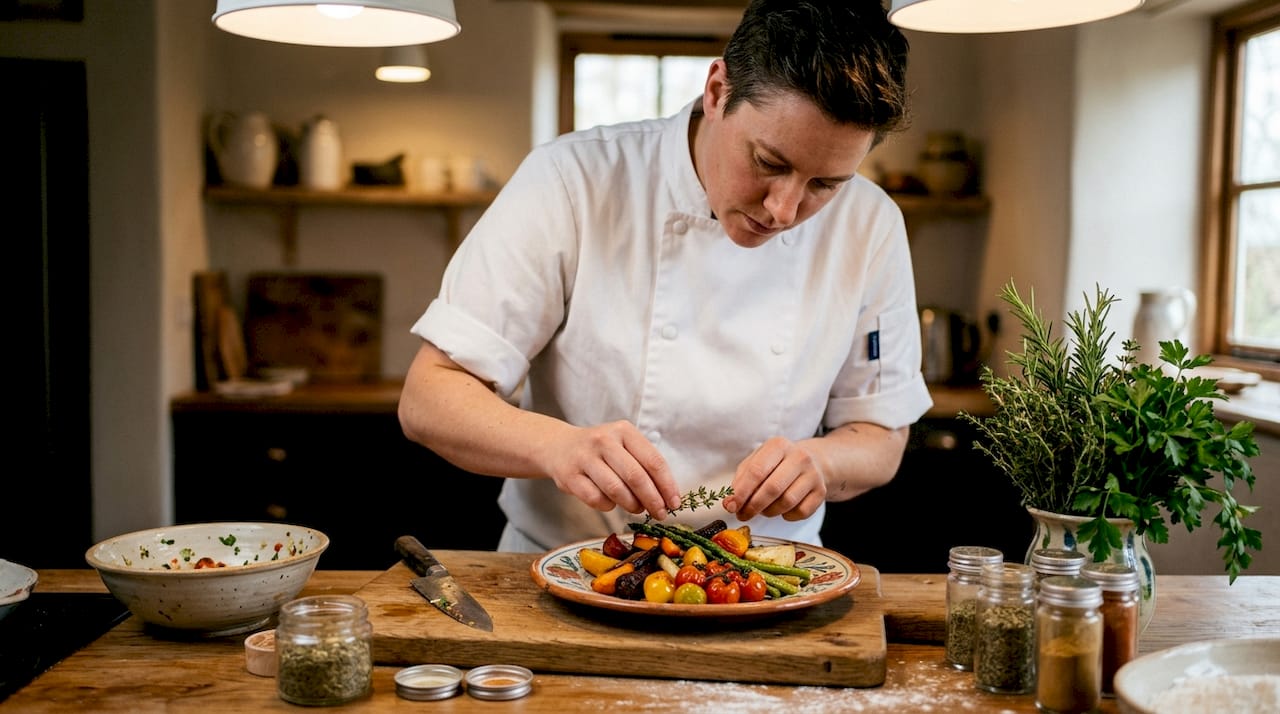
Post-2020, the term has evolved. The gastrobistro label is now applied more loosely, sometimes to menus that are genuinely sophisticated and priced accordingly, sometimes to restaurants that simply want to sound elevated. That fluidity makes it more important to know what the concept actually means, rather than trusting the label alone.
Pro Tip: When researching a gastrobistro before visiting, look for a menu that changes with the season. A static menu that never shifts is a strong sign the kitchen is not sourcing fresh, local produce the way the format demands.
How does a gastrobistro differ from bistros, gastrobares, and gastropubs?
These four formats share a commitment to quality food in informal settings, but they are not interchangeable. Each has a distinct service model, menu structure, and dining atmosphere.
A traditional bistro is a small, casual restaurant built around simple, often home-style cuisine. Think roast chicken, lentil soup, and crème brûlée. The cooking is honest and comforting, but it does not require the technical precision of a gastrobistro. Pricing is mid-range, the wine list is short, and the atmosphere is cozy rather than curated.
A gastrobar, particularly in Spain, operates from a bar format. Spanish gastrobares serve chef-driven, modern tapas and shareable plates in casual bar settings. You order at the bar or from a server who moves quickly. The focus is on small bites designed for sharing, and drinks are central to the experience. A gastrobistro, by contrast, offers full table service and plated meals designed to be eaten in a specific order.
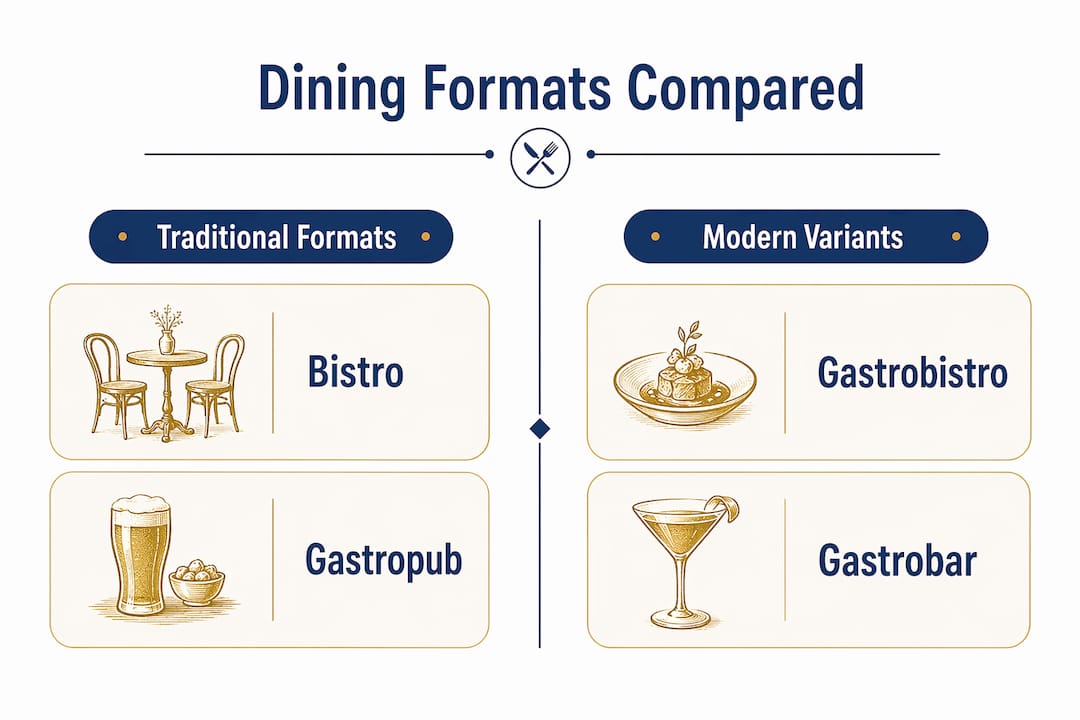
A gastropub follows a similar logic to the gastrobar but in a British pub context. The bar anchors the space, and elevated food is the secondary draw. Gastrobistros put the food first and the bar second.
| Format | Service style | Menu focus | Atmosphere |
|---|---|---|---|
| Traditional bistro | Table service | Simple, home-style cooking | Cozy, neighborhood feel |
| Gastrobistro | Full table service | Chef-driven, seasonal, plated | Relaxed but culinarily serious |
| Gastrobar | Bar or counter service | Shareable plates, modern tapas | Casual, drink-forward |
| Gastropub | Bar-anchored service | Elevated pub food | Pub setting, informal |
The clearest distinction is the dining format. In Spain specifically, a bistro offers polished table-service dining with thoughtful plated meals, while a gastrobar keeps the bar at the center of the experience. Both focus on quality local produce, but the way you eat and how the room is organized are fundamentally different.
What defines the culinary and service experience in a gastrobistro?
The kitchen is the defining feature of any genuine gastrobistro. A true gastrobistro prioritizes market-fresh seasonal produce and specific culinary techniques such as house-made sauces and expert protein preparation. These are not decorative details. They are the evidence that a trained chef is making real decisions about what goes on the plate.
The menu structure reflects this discipline. Expect a short list of options, typically four to six starters and a similar number of mains. A short menu signals that the kitchen is cooking what is available and good right now, not managing a warehouse of frozen ingredients. The wine list is usually curated rather than exhaustive, chosen to complement the food rather than to impress with length.
Service in a gastrobistro is friendly and knowledgeable but never ceremonial. Gastrobistro dining is designed to feel spontaneous and relaxed, with service that avoids the pomp found in fine dining. Your server should be able to explain how a dish is prepared and why a particular wine pairs well with it, without making you feel like you are being lectured. Excessively formal service is a red flag, not a sign of quality.
The atmosphere is built for conversation. Tables are close enough to feel lively, lighting is warm, and the noise level sits comfortably above a whisper. You are meant to stay for two hours, not rush through three courses and leave.
Here is how to recognize a genuine gastrobistro before you sit down:
- The menu changes regularly. Weekly or monthly updates signal a kitchen that shops at markets, not warehouses.
- The menu is short. Fewer than ten mains is a good sign. A laminated booklet with forty options is not.
- The chef’s background is visible. Look for a bio, a social media presence, or staff who can speak to the chef’s training.
- Pricing is mid-range, not budget. Quality ingredients and skilled labor cost money. Suspiciously low prices often mean corners are being cut.
- The room feels lived-in. Genuine gastrobistros prioritize comfort over Instagram aesthetics.
Pro Tip: Ask your server what the kitchen is most proud of that week. A confident, specific answer tells you the team is engaged with the food. A vague or uncertain response tells you something else entirely.
How do gastrobistros fit into modern culinary trends?
The gastrobistro format thrives in cities with strong food cultures and access to quality local producers. France and Spain remain the clearest examples, but the concept has spread to urban dining scenes across Europe and beyond. Modern Spanish gastronomy has embraced the format particularly well, blending traditional regional ingredients with contemporary technique in exactly the way bistronomy intended.
The format suits food enthusiasts in 2026 for a practical reason. Fine dining has become more expensive and more theatrical, while fast casual has moved in the opposite direction. The gastrobistro holds the middle ground: you eat food that required genuine skill to prepare, in a room where you feel at ease, at a price that does not require a special occasion. That combination is genuinely rare.
Evaluating a gastrobistro by menu focus, ingredient quality, and service tone rather than by branding alone is the right approach, because the market sometimes misuses these labels. A restaurant calling itself a gastrobistro is making a claim. Your job as a food enthusiast is to check whether the evidence supports it.
A few things to look for when you visit a new city and want to find the real thing:
- Proximity to a market. Restaurants near covered food markets often source directly from vendors. That proximity shows up on the plate.
- Local wine on the list. A gastrobistro that ignores regional producers is missing the point of the format.
- A dining room that fills up with locals. Tourists follow guides. Locals follow quality.
- A chef who is actually in the kitchen. Celebrity chef restaurants where the named chef rarely cooks are a different category entirely.
Barcelona is a strong city for this format. The combination of Spanish food traditions, Mediterranean produce, and a dense restaurant culture creates the conditions where gastrobistro principles translate naturally into daily dining.
Key Takeaways
A gastrobistro is defined by chef-driven technique, seasonal ingredients, and relaxed table service, not by the label a restaurant chooses for itself.
| Point | Details |
|---|---|
| Core definition | A gastrobistro combines bistro casualness with fine-dining technical precision and ingredient quality. |
| Historical roots | The bistronomy movement began in early 2000s France, built on conviviality and chef-level cooking in informal settings. |
| Key distinction from gastrobars | Gastrobistros offer full table service and plated meals; gastrobares center on bar service and shareable plates. |
| Authenticity signals | Short seasonal menus, house-made components, and knowledgeable but unpretentious service confirm the real format. |
| Label caution | Post-2020, the term is used loosely. Evaluate by food quality and service cues, not by what the sign says. |
Why the gastrobistro still matters more than the label
The gastrobistro concept resonates with me because it solved a real problem in dining culture. Fine dining had become a performance. The food was often extraordinary, but the experience was exhausting. Bistronomy said: keep the skill, drop the theater. That was a genuinely useful idea.
What I find frustrating now is how freely the label gets applied. A restaurant with exposed brick, a short menu printed on kraft paper, and a natural wine list is not automatically a gastrobistro. The format requires a kitchen that actually knows what it is doing. The bistronomy movement was built on dismantling fine dining hierarchies, not on aesthetics. When restaurants use the label as a design choice rather than a culinary commitment, they dilute something that was genuinely worth protecting.
My honest advice: ignore the category entirely and focus on the evidence. Is the menu short and seasonal? Does the food show real technique? Does the service feel warm rather than scripted? If yes, you are in the right place, whatever the restaurant calls itself. The best gastrobistro experiences I have had were in rooms that never used the word at all.
— YellowRock
Kokcha: where gastrobistro values meet Mediterranean cooking
Kokcha is a Barcelona restaurant near the Sagrada Familia that embodies the principles behind the gastrobistro format. Chef-driven preparation, fresh locally sourced ingredients, and a menu built around Mediterranean tradition define every dish.

The paella selection at Kokcha shows this commitment clearly. From the chicken paella to the seafood paella, each option is prepared with the technical care and ingredient quality that the gastrobistro concept demands. The setting combines a warm interior with a terrace that captures the relaxed, convivial atmosphere the format is built on. If you are in Barcelona and want to experience elevated Mediterranean cooking without formality, Kokcha is the right table to book.
FAQ
What does gastrobistro mean?
A gastrobistro is a restaurant that combines the relaxed atmosphere of a traditional bistro with the technical cooking quality of fine dining. The concept originates from the French bistronomy movement of the early 2000s.
How is a gastrobistro different from a bistro?
A traditional bistro serves simple, home-style food in a cozy setting, while a gastrobistro applies chef-level technique and seasonal precision to a similarly informal environment. The cooking skill required is significantly higher in a gastrobistro.
What should you expect at a gastrobistro?
Expect a short, seasonal menu, knowledgeable but unpretentious service, and dishes that show real culinary technique such as house-made sauces and carefully sourced proteins. The atmosphere is relaxed and the pricing is mid-range.
How do you find an authentic gastrobistro?
Look for a menu that changes with the season, a short list of options, and staff who can explain dishes with confidence. Navigating restaurant menus with these criteria in mind helps you separate genuine gastrobistros from restaurants that only use the label.
Is a gastrobar the same as a gastrobistro?
No. A gastrobar centers on bar service and shareable plates, while a gastrobistro offers full table service and individually plated meals. Both focus on quality, but the dining format and room layout are fundamentally different.