Restaurant atmosphere is the total sensory and emotional environment created by physical space, lighting, sound, decor, and service dynamics that together shape how guests feel, behave, and remember a meal. The industry term for this is atmospherics, a concept borrowed from environmental psychology and applied directly to hospitality design. Understanding what is a restaurant atmosphere matters because the setting you eat in influences your mood, your perception of food quality, and whether you ever return. Research confirms that atmospheric factors drive perceived quality and word-of-mouth, two of the strongest predictors of revisit intention. This guide breaks down every layer of that environment so you can read a room, choose a restaurant that fits your mood, and understand why some meals feel magical even before the food arrives.
What is a restaurant atmosphere made of?
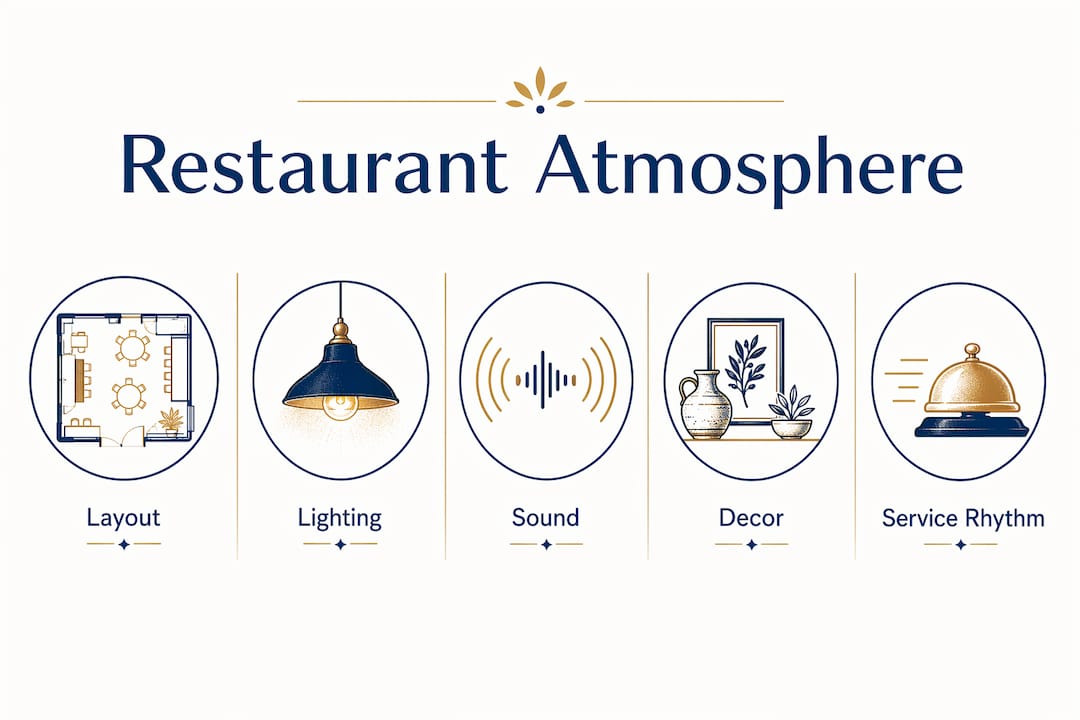
Restaurant atmosphere, or atmospherics, is not a single design choice. A 2026 framework defines it as the combined product of Space × Light × Sound × Service × Sensory comfort, separating physical elements from operational ones. That formula is more useful than it looks. It tells you that a beautiful room with bad acoustics and indifferent service still fails on atmosphere.
Here are the core elements that work together to build the dining environment:
- Space and layout. How tables are arranged, how wide the aisles are, and how guests move through the room. Tight spacing creates energy but sacrifices privacy. Open layouts feel relaxed but can feel cold.
- Lighting. Ambient light sets the overall mood. Task lighting keeps menus readable. Accent lighting draws attention to art, architecture, or the food itself. Wrong lighting reduces well-being and makes a room feel clinical or harsh regardless of the decor.
- Sound and music. Volume, tempo, and genre all affect how long guests stay and how much they spend. A jazz playlist at low volume signals a different experience than a curated electronic set at conversation-level volume.
- Service rhythm. The pace and warmth of staff interaction is an invisible atmosphere lever. Warm, personalized service combined with thoughtful atmospherics enhances satisfaction and loyalty in ways that decor alone cannot replicate.
- Sensory comfort. Temperature, scent, and seating quality are the most overlooked factors. Poor seating comfort after 30 minutes can ruin the entire atmosphere feel, no matter how good the food or how beautiful the room.
Pro Tip: When evaluating a restaurant’s atmosphere before you sit down, check the noise level and seating density first. Those two factors will affect your experience more than the art on the walls.
How does layout compare to décor in shaping atmosphere?
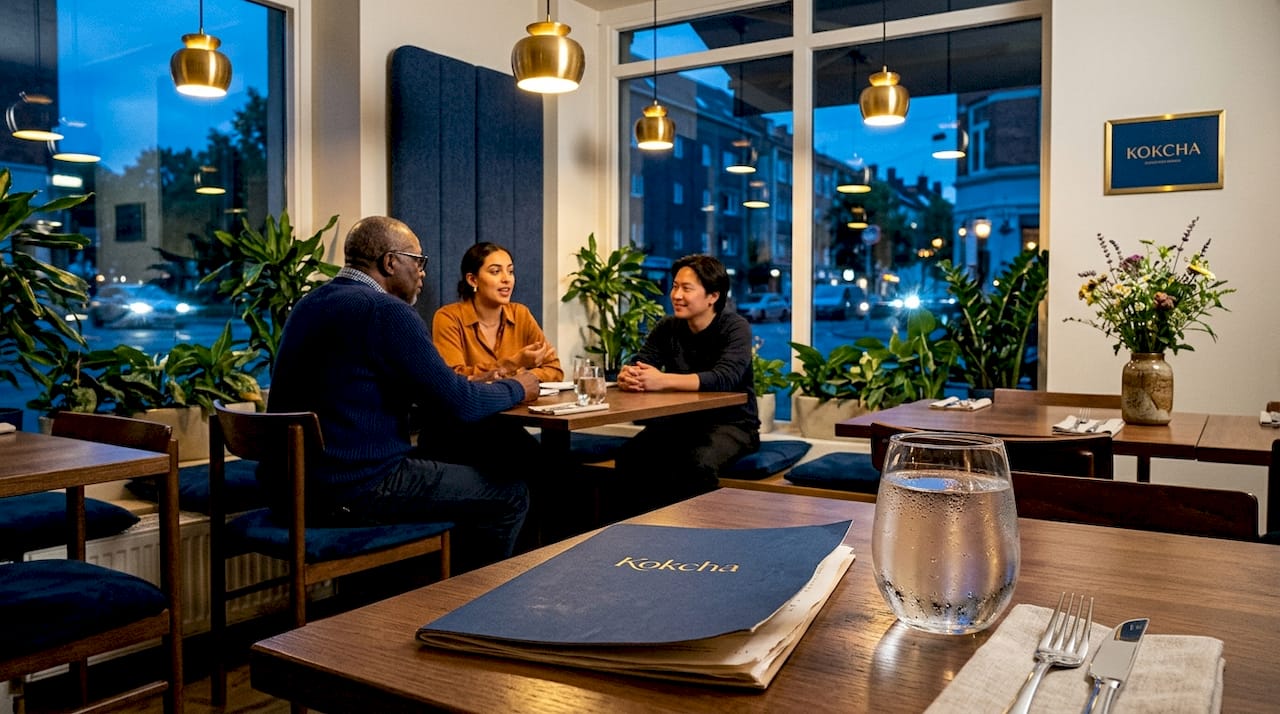
Most diners assume that decor drives atmosphere. The research says otherwise. A 2025 empirical study tested five atmosphere dimensions including facility aesthetics, ambiance, lighting, layout, and employees. Layout scored the highest effect size on guests’ behavioral intentions. Facility aesthetics scored the lowest. That gap matters.
Here is a direct comparison of how the major atmosphere sub-elements rank in their impact on guest behavior:
| Atmosphere element | Impact on behavioral intentions | Why it matters |
|---|---|---|
| Layout and spatial flow | Highest | Controls comfort, privacy, wait perception, and movement ease |
| Employees and service rhythm | High | Shapes emotional tone and perceived care throughout the meal |
| Lighting | Moderate to high | Affects mood, food appearance, and perceived quality |
| Ambiance (sound, scent) | Moderate | Sets emotional register and influences dwell time |
| Facility aesthetics (décor) | Lowest | Creates first impression but fades quickly in guest memory |
Layout works because it affects the body, not just the eyes. When tables are too close together, guests feel exposed and rushed. When flow is poor, servers bump into chairs and guests feel the friction. Spatial configuration and guest movement flow are more crucial to atmosphere perception than the aesthetic choices most people notice first. Décor creates a first impression, but layout determines whether guests stay comfortable for two hours or mentally check out after forty-five minutes.
This is why a restaurant with modest decor but excellent spatial design often outperforms a visually stunning room with cramped seating. The body registers discomfort before the mind articulates it.
What types of restaurant atmospheres exist?
The types of restaurant atmospheres fall into three broad categories, each built around a different emotional contract with the guest.
Casual atmospheres prioritize ease and accessibility. Seating is typically relaxed, lighting is bright or neutral, music plays at a conversational volume, and service is friendly rather than formal. The goal is to make guests feel at home quickly. Think neighborhood bistros, tapas bars, and Mediterranean terraces where the setting invites lingering without ceremony.
Fine dining atmospheres use restraint as a signal of quality. Lighting is dim and directional, often with candles or warm accent fixtures. Music, if present, stays low and unobtrusive. Table spacing is generous, service is choreographed, and every sensory detail is controlled. The atmosphere communicates that the guest’s time and comfort are the priority.
Immersive or thematic atmospheres go further by using architectural and sensory cues to transport guests entirely. Cave-like entrances and scent layering create experiential shifts that begin before the first dish arrives. These environments work because they give guests a story to tell, which directly feeds word-of-mouth and social sharing.
Each atmosphere type shapes emotional engagement differently:
- Casual settings lower social pressure and encourage longer visits with friends or family.
- Fine dining settings heighten anticipation and signal that the meal is an event worth savoring slowly.
- Thematic settings create novelty and surprise, which amplifies memory formation and perceived value.
The key insight for diners is that atmosphere sets expectations. When the environment matches the food and service, the experience feels coherent and satisfying. When they clash, even excellent food feels off. A Mediterranean dining experience in Barcelona illustrates this well: the open terrace, warm tones, and relaxed service rhythm all reinforce the cuisine’s identity rather than working against it.
How can you use atmosphere awareness to improve your dining experience?
Understanding the elements of restaurant atmosphere gives you a practical tool for choosing where to eat and when. Atmosphere is not just background. It is behavioral engineering that shapes satisfaction, willingness to pay, and how you feel about the meal afterward.
Start by reading the room before you commit to a table. Noise level tells you whether the space supports conversation or competes with it. Lighting tells you whether the setting is designed for romance, efficiency, or social energy. Seating density tells you how much privacy you will have. These cues take thirty seconds to read and will predict your comfort level far better than online photos, which almost always favor the best-lit corner of the room.
Match the atmosphere type to your occasion. A business lunch needs moderate noise, good lighting, and enough table spacing for a private conversation. A celebration dinner benefits from warm lighting, attentive service, and a room that feels special. A casual catch-up with friends works best in a lively, relaxed setting where the energy of the room adds to the conversation rather than interrupting it.
Pay attention to sensory comfort factors that most diners overlook. Temperature is one of the most common atmosphere failures. A room that is too cold signals that the operator has not thought carefully about guest comfort. Scent is another. A restaurant that smells of fresh bread or citrus creates a positive sensory frame before a single dish arrives. These subtle cues accumulate across the entire dining journey, from arrival to departure, and they shape your overall memory of the meal.
Pro Tip: Book tables at off-peak times if noise sensitivity affects your enjoyment. The same restaurant at 7 p.m. on a Saturday and at 1 p.m. on a Tuesday can feel like two completely different atmospheres, even with identical decor and menus.
Key takeaways
Restaurant atmosphere is a system of interdependent elements where layout and service rhythm drive guest satisfaction more than décor, and where sensory comfort determines whether guests stay, return, and recommend.
| Point | Details |
|---|---|
| Layout outranks décor | Spatial configuration has the highest impact on behavioral intentions; aesthetics score the lowest. |
| Service is part of atmosphere | Warm, personalized service rhythm shapes emotional tone as much as any physical design element. |
| Sensory comfort is often overlooked | Temperature, scent, and seating quality determine whether guests stay comfortable or mentally disengage. |
| Atmosphere type sets expectations | Casual, fine dining, and thematic environments each create a different emotional contract with the guest. |
| Atmosphere drives revisit decisions | Perceived quality and word-of-mouth, both shaped by atmosphere, are the strongest predictors of return visits. |
Why atmosphere deserves more credit than it gets
Most diners walk into a restaurant and judge it by what they see. The menu, the art on the walls, the table settings. That instinct is understandable but incomplete. After years of paying close attention to what actually makes a dining experience memorable, I am convinced that the most powerful atmosphere elements are the ones you feel rather than see.
The restaurants I return to most often are not always the most visually striking. They are the ones where the noise level lets me hear the person across from me, where the seating does not make my back ache by the second course, and where the service feels attentive without being intrusive. Those are operational decisions, not aesthetic ones. They require the operator to think about the guest’s body and comfort, not just the photographer’s angle.
The future of restaurant atmosphere design is moving toward multi-sensory consistency, where scent, sound, temperature, and spatial flow are designed as a unified system rather than separate choices. The restaurants getting this right are building loyalty that no social media campaign can replicate. When a space makes you feel genuinely good from the moment you walk in to the moment you leave, you come back. And you bring people with you.
The practical takeaway for diners is simple. Stop evaluating restaurants by their photos and start evaluating them by how the room makes you feel in the first five minutes. Your body is a better atmosphere sensor than any review site.
— YellowRock
Experience Mediterranean atmosphere at Kokcha in Barcelona

Kokcha sits steps from the Sagrada Família in Barcelona and puts every atmosphere principle covered in this article into practice. The spatial layout balances an intimate interior with an open terrace, giving guests the choice between a sheltered dining room and an outdoor setting with views that reinforce the Mediterranean identity of the menu. Warm lighting, a relaxed service rhythm, and a menu built around tapas, paellas, and fresh seafood create the kind of sensory coherence that makes a meal feel complete. If you want to experience what a thoughtfully designed Mediterranean atmosphere actually feels like in practice, Kokcha is a direct example worth visiting.
FAQ
What is the restaurant ambiance definition?
Restaurant ambiance, also called atmospherics, refers to the combined sensory environment created by lighting, sound, spatial layout, decor, and service that shapes how guests feel and behave during a meal.
Why is atmosphere important in dining?
Atmosphere directly influences perceived food quality, satisfaction, and the likelihood that guests will return and recommend the restaurant. A survey of 250 guests found that exterior and interior design strongly affect word-of-mouth and revisit intentions.
What element of restaurant atmosphere matters most?
Layout and spatial configuration have the highest impact on guest behavioral intentions, according to a 2025 study. Facility aesthetics, meaning visible decor, scored the lowest effect size among all atmosphere dimensions tested.
How does lighting affect restaurant atmosphere?
Lighting shapes mood, food appearance, and perceived quality. Ambient, task, and accent lighting each serve different functions, and the wrong combination can make a room feel unwelcoming regardless of how well the rest of the space is designed.
How do I choose a restaurant based on atmosphere?
Read the room before committing to a table by checking noise level, seating density, and lighting tone. Match the atmosphere type to your occasion, and pay attention to sensory comfort factors like temperature and scent, which predict your comfort level more accurately than photos or ratings.