Fresh ingredients are the foundation of Mediterranean cuisine, determining its flavor, nutritional value, and cultural identity. The role of fresh ingredients in Mediterranean food goes far beyond simple cooking choices. Clinical dietary guidelines from Harvard Health and the National Institutes of Health both identify fresh produce, seafood, and olive oil as the non-negotiable pillars of this eating pattern. What separates a genuine Mediterranean dish from an imitation is not technique alone. It is the quality and freshness of every ingredient on the plate.
What types of fresh ingredients define Mediterranean cooking?
Fresh, seasonal vegetables, fruits, legumes, and olive oil form the base of every authentic Mediterranean meal. These ingredients are consumed primarily in their natural, minimally processed state. That commitment to freshness is what gives the cuisine its clean, vivid character.
The core categories break down clearly:
- Vegetables and fruits: Tomatoes, eggplant, zucchini, bell peppers, artichokes, cucumbers, and citrus fruits appear across the entire Mediterranean basin. They are eaten raw, roasted, or lightly cooked to preserve texture and vitamins.
- Legumes: Chickpeas, lentils, white beans, and fava beans provide plant-based protein and fiber. They are typically cooked from dried form, which preserves their nutritional density better than canned alternatives.
- Seafood: Sardines, anchovies, mackerel, sea bass, octopus, and shrimp are central to seafood in Mediterranean cooking. Small, fatty fish deliver omega-3 fatty acids and are consumed 2–3 times per week according to clinical guidelines.
- Olive oil: Extra virgin olive oil is the primary fat in Mediterranean cuisine. It is used in cooking, as a dressing, and as a finishing drizzle. No other fat comes close to its role in flavor and nutrition.
- Fresh herbs: Oregano, basil, rosemary, thyme, and mint are key for depth and flavor across the region. They replace heavy sauces and salt as the main flavor drivers.
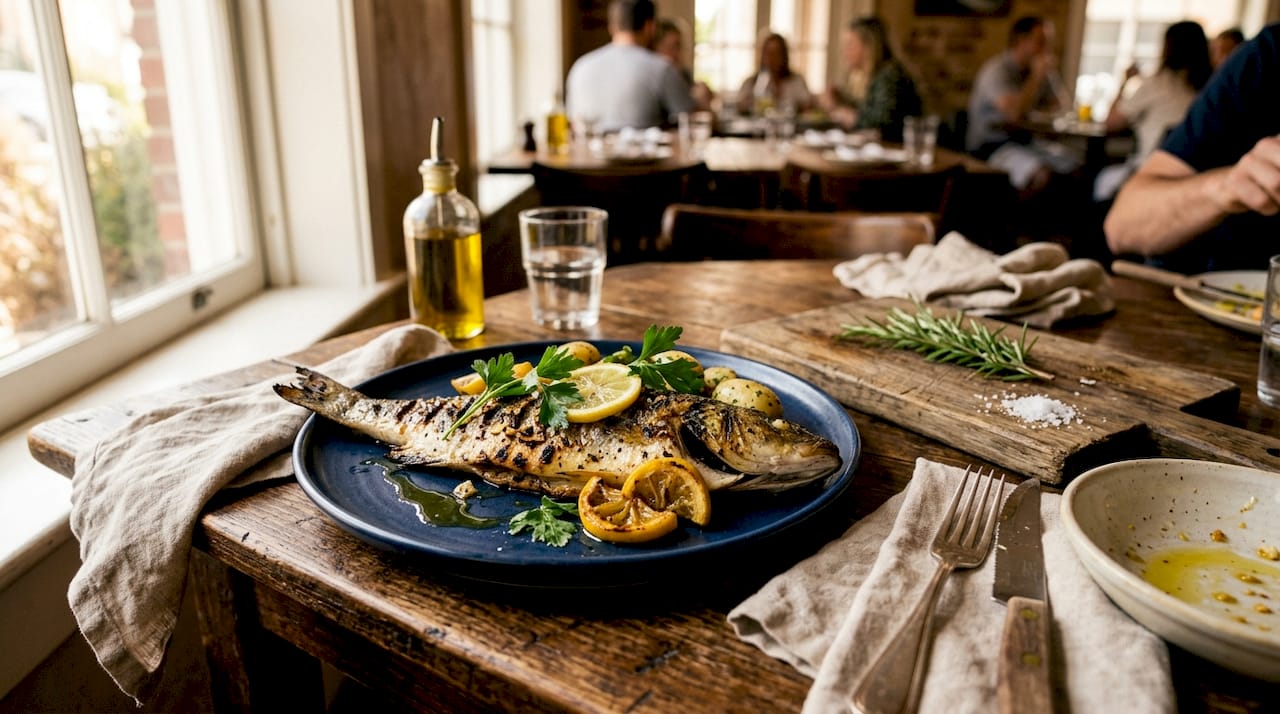
Each category reinforces the others. A simple dish of grilled sea bass with lemon, olive oil, and fresh oregano works because every element is at peak freshness.
How do fresh ingredients influence flavor and nutritional quality?
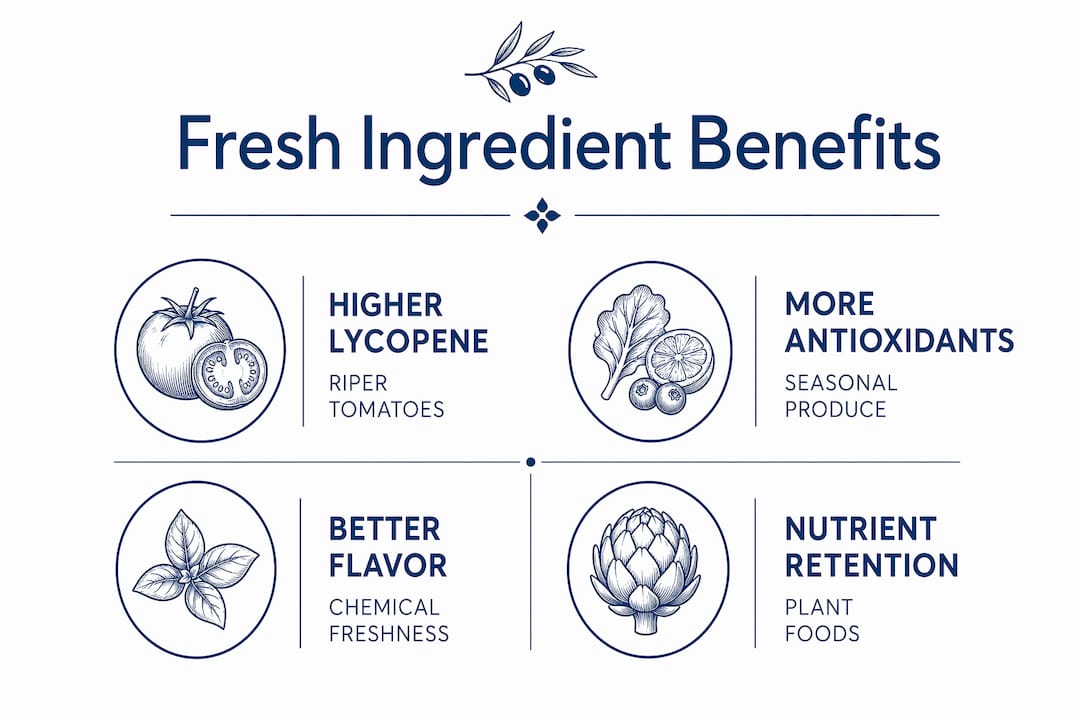
Freshness changes flavor at a chemical level. Ripe tomatoes contain higher concentrations of glutamates, the compounds responsible for savory depth. Fresh herbs release volatile aromatic oils that disappear within hours of cutting. Processed or preserved alternatives simply cannot replicate these effects.
The nutritional argument is equally direct. Fresh plant foods retain vitamins C and B, folate, and antioxidants that degrade during processing and long storage. Olive oil’s monounsaturated fats support cardiovascular health in ways that refined seed oils do not. The Mediterranean diet’s clinical reputation for reducing heart disease risk is built on these fresh, unprocessed ingredients, not on any single superfood.
Seasonal eating amplifies both benefits. A tomato picked in august at full ripeness contains more lycopene than one harvested early and ripened in transit. Home cooks who align their shopping with the local growing season get better flavor and better nutrition from the same recipe.
Pro Tip: Buy tomatoes, stone fruits, and leafy greens from a farmers market or local produce stand whenever possible. The difference in flavor compared to supermarket produce shipped from hundreds of miles away is immediate and obvious.
The contrast with processed ingredients is stark. Canned fish in brine, jarred roasted peppers, and pre-made sauces all introduce sodium, preservatives, and oxidized fats that work against the Mediterranean diet’s core health benefits. Fresh is not a preference in this cuisine. It is the standard.
What cooking methods showcase fresh Mediterranean ingredients?
Mediterranean cooking techniques are designed to protect freshness, not mask it. The goal is always to let the ingredient speak. Here are the four methods that define the cuisine:
- Grilling over high heat: Grilling fish, vegetables, and seafood over charcoal or a hot grill creates caramelization on the surface while keeping the interior moist and tender. This method works because fresh ingredients have the structural integrity to handle direct heat without falling apart.
- Sautéing in olive oil: A quick sauté in extra virgin olive oil at moderate heat preserves the color, texture, and nutrients of vegetables. The olive oil itself becomes part of the flavor, absorbing aromatics from garlic, herbs, and citrus zest.
- Raw and marinated preparations: Dishes like ceviche-style fish, fresh salads, and herb-dressed legumes rely entirely on ingredient quality. There is no heat to hide behind. Low-sodium preparations using olive oil, citrus, and fresh herbs are the standard approach for showcasing the natural brine and texture of fresh seafood.
- Slow braising with aromatics: Lamb, legumes, and root vegetables are sometimes braised low and slow with tomatoes, wine, and herbs. This method extracts deep flavor from fresh ingredients over time without destroying their nutritional value.
Each technique shares one principle: minimum interference. The cook’s job is to apply the right amount of heat and seasoning to reveal what is already there. That philosophy only works when the starting ingredient is genuinely fresh.
How can home cooks source and select fresh Mediterranean ingredients?
Sourcing quality ingredients is the skill that separates good Mediterranean cooking from great Mediterranean cooking. Knowing what to look for at the market matters as much as knowing how to cook.
- Vegetables and fruits: Choose produce that feels heavy for its size, has vibrant color, and smells like itself. A ripe melon smells sweet at the stem end. A fresh tomato has a slight give under gentle pressure. Avoid anything with soft spots, dull skin, or no scent.
- Seafood: Fresh fish has clear, bright eyes, firm flesh that springs back when pressed, and a clean ocean smell. Avoid fish with cloudy eyes, soft flesh, or a strong ammonia odor. For the role of fresh seafood in authentic dishes, prioritize small, fatty fish like sardines and mackerel, which are also the most sustainable and affordable options.
- Olive oil: Look for extra virgin olive oil with a harvest date on the label, not just an expiration date. Oil pressed within the last 12–18 months will have a peppery, grassy finish. Flat or buttery oil is old. Store it away from heat and light.
- Fresh herbs: Buy herbs with firm, upright stems and no yellowing or wilting. Basil bruises easily, so handle it gently. Rosemary and thyme last longer and can be stored loosely wrapped in a damp paper towel in the refrigerator.
- Legumes: Dried legumes from the current year’s harvest cook faster and taste better than older stock. Check the packaging date. If dried legumes are unavailable, local substitutes like chickpeas for lentils work well without sacrificing the dish’s character.
Pro Tip: Visit your local fish counter early in the morning when the day’s delivery has just arrived. Ask the fishmonger what came in that day and build your meal around that answer rather than a predetermined recipe.
Seasonality is the simplest sourcing guide available. Ingredients in season locally are fresher, cheaper, and more flavorful than out-of-season imports. A Mediterranean flavors guide built around seasonal produce will always outperform one built around a fixed ingredient list.
What health benefits come from fresh ingredients in the Mediterranean diet?
The Mediterranean diet’s clinical reputation rests directly on its fresh ingredient base. Dietary guidelines recommend three servings of fresh fruit daily as a replacement for high-sugar desserts. That single swap reduces refined sugar intake while increasing fiber, potassium, and antioxidant consumption.
At least 35% of daily calories should come from fats in the Mediterranean diet, primarily from olive oil’s monounsaturated and unsaturated fatty acids. This fat profile is directly linked to reduced LDL cholesterol and lower cardiovascular disease risk. The benefit disappears when olive oil is replaced with refined vegetable oils or butter.
Seafood consumption at 2–3 servings per week, with an emphasis on small, fatty fish, delivers EPA and DHA omega-3 fatty acids. These compounds reduce systemic inflammation and support brain health. Fresh fish provides these fats in their most bioavailable form.
| Health benefit | Key fresh ingredient | Mechanism |
|---|---|---|
| Reduced cardiovascular risk | Extra virgin olive oil | Monounsaturated fats lower LDL cholesterol |
| Lower inflammation | Sardines, mackerel, anchovies | Omega-3 fatty acids (EPA and DHA) |
| Improved gut health | Chickpeas, lentils, fava beans | Dietary fiber feeds beneficial gut bacteria |
| Antioxidant protection | Tomatoes, citrus, leafy greens | Vitamins C and E, lycopene, polyphenols |
| Blood sugar regulation | Fresh fruit, whole vegetables | Fiber slows glucose absorption |
The Mediterranean diet is best understood as a flexible eating pattern rather than a rigid prescription. That flexibility makes it sustainable long-term, which is where its health benefits actually accumulate.
Key Takeaways
Fresh ingredients are the single most important factor in authentic Mediterranean cooking, determining both the flavor and the proven health benefits of the cuisine.
| Point | Details |
|---|---|
| Fresh produce is non-negotiable | Seasonal vegetables, fruits, and legumes define Mediterranean flavor and nutritional value. |
| Olive oil is the primary fat | Extra virgin olive oil provides monounsaturated fats and is used in cooking, dressing, and finishing. |
| Seafood belongs on the weekly menu | Eating small, fatty fish 2–3 times per week delivers omega-3s and authentic Mediterranean character. |
| Technique protects freshness | Grilling, sautéing in olive oil, and raw preparations are designed to showcase ingredients, not hide them. |
| Sourcing determines the outcome | Buying seasonal, local produce and day-fresh fish is the most direct path to authentic results at home. |
Why freshness is the one thing you cannot fake in Mediterranean cooking
I have eaten Mediterranean food across Barcelona, Valencia, and the coast of Catalonia, and the pattern is always the same. The best meals are the simplest ones. A plate of grilled sardines with lemon and olive oil at a good restaurant beats an elaborate dish built on mediocre ingredients every single time.
Home cooks often focus on recipes and techniques, which makes sense. But the real leverage is at the market, not the stove. When you start with a tomato that actually tastes like a tomato, you need almost nothing else. The cuisine’s genius is that it trusts its ingredients.
The one challenge I see consistently is that home cooks outside the Mediterranean region struggle to find the same quality of produce and seafood. The solution is not to substitute aggressively. It is to cook less often with fresh ingredients and do it properly when you do. One excellent meal a week built on genuinely fresh components teaches you more than seven mediocre ones.
The Mediterranean approach to cooking is not about restriction or complexity. It is about paying attention to what is in front of you and respecting it enough not to overcook it.
— YellowRock
Mediterranean cuisine worth experiencing in Barcelona
Kokcha sits steps from the Sagrada Familia in Barcelona, and the menu reflects exactly what this article describes: fresh seafood, quality olive oil, seasonal produce, and herbs that arrive daily.

If you want to see how innovative Mediterranean trends for 2026 translate to an actual plate, Kokcha’s menu is a practical reference. The seafood paella and grilled seafood dishes demonstrate what happens when fresh ingredients meet the right technique. Whether you are a visitor to Barcelona or a local looking for a benchmark meal, Kokcha offers a direct, honest example of Mediterranean cooking done with fresh ingredients at the center.
FAQ
What is the role of fresh ingredients in Mediterranean food?
Fresh ingredients define Mediterranean cuisine’s flavor, nutrition, and cultural identity. Seasonal produce, extra virgin olive oil, fresh herbs, and day-fresh seafood are the building blocks of every authentic dish.
How often should you eat seafood on a Mediterranean diet?
Clinical guidelines recommend eating fish and seafood 2–3 times per week, with a preference for small, fatty fish like sardines, anchovies, and mackerel for their omega-3 content.
Why is extra virgin olive oil so important in Mediterranean cooking?
Extra virgin olive oil is the primary fat source in the Mediterranean diet, providing monounsaturated fats that support heart health. At least 35% of daily calories in this eating pattern come from these healthy fat sources.
What fresh herbs are most used in Mediterranean cuisine?
Oregano, basil, rosemary, thyme, and mint are the most common Mediterranean herbs. They add aromatic depth and replace heavy sauces and excess salt as the main flavor drivers.
Can you follow a Mediterranean diet without access to fresh local produce?
Yes. Dietary guidelines recognize that access to fresh ingredients varies by region and recommend flexible substitutions, such as using chickpeas in place of lentils or canola oil when olive oil is unavailable, without losing the diet’s core benefits.