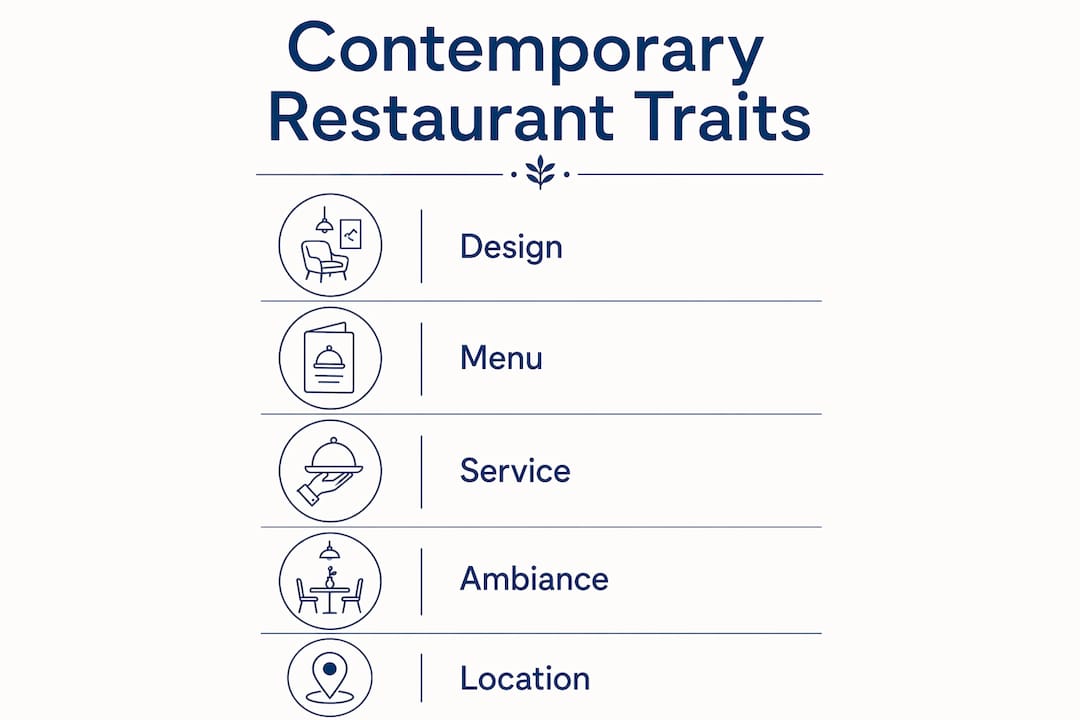
A contemporary restaurant is an experience-first venue built on four visible pillars: design that creates shareable moments, a menu that treats tradition as a launching pad rather than a ceiling, service pacing that follows the guest rather than the clock, and sensory cues that make you want to stay longer than you planned. Spot these four and you’re looking at the real thing.
Quick signals you can read in under a minute:
- Open kitchen or visible pass where you can watch the chef work
- Shareable plates listed before individual mains on the menu
- Warm natural materials: rattan, warm wood, linen, or deep navy and gold tones
- Beverage list that includes low-ABV options or theatrical cocktails alongside wine
- Lighting that shifts warmer as the evening progresses
- Staff who describe dishes rather than just recite them
Pro Tip: Don’t confuse “contemporary” with “fusion.” The best contemporary Mediterranean venues use classic technique as a foundation, not a constraint. A paella made with fire-led cooking and local saffron is more contemporary than a deconstructed one served in a jar.
NIQ’s analysis of Mediterranean on-premise dining confirms the shift: venues are moving toward all-day, fluid formats that serve more substantial menus across multiple dayparts, a structural change that separates genuinely contemporary concepts from restaurants that simply updated their Instagram.
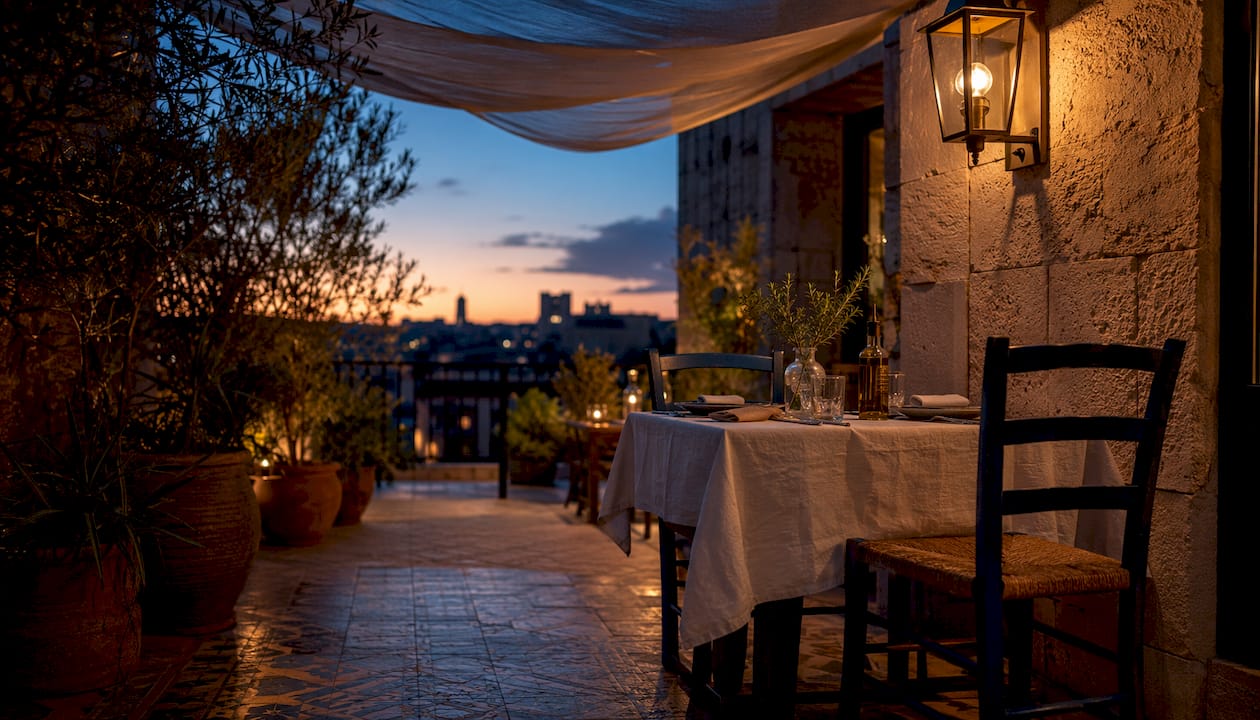
Table of Contents
- What do the design cues of a contemporary restaurant actually tell you?
- How does the menu tell you a restaurant is genuinely contemporary?
- How does service signal a contemporary dining experience?
- What should you expect near the Sagrada Família in Barcelona?
- How Kokcha shows what contemporary Mediterranean dining looks like
- How to choose a contemporary Mediterranean restaurant in Barcelona
- Key Takeaways
- A local perspective on dining contemporary Mediterranean in Barcelona
- Book a contemporary Mediterranean meal near the Sagrada Família
- Sources and further reading
What do the design cues of a contemporary restaurant actually tell you?
Intentional aesthetics correlate with higher average checks and stronger evening bookings, according to industry design commentary. That’s not an accident. The materials, lighting, and layout of a contemporary Mediterranean venue are chosen to make you feel something specific.
What to look for in the room:
- Natural materials: teak, rattan, warm-toned stone, unbleached linen napkins
- Layered lighting with warm bulbs at table level, not overhead fluorescents
- Mixed seating zones: banquettes alongside communal tables, not rows of identical two-tops
- A visible wine display or open cellar, not a laminated wine list tucked behind the menu
- Acoustic treatment that keeps conversation comfortable, even when the room is full
The open kitchen as a performance stage is one of the clearest signals. When you can see the chef at the pass, the kitchen becomes part of the dining room. That transparency builds trust and turns a meal into something worth watching.
| Venue type | Materials and finishes | Lighting strategy | Kitchen visibility |
|---|---|---|---|
| Casual terrace bistro | Plastic chairs, basic tile | Bright, uniform | Closed or hidden |
| Modern gastrobistro | Warm wood, linen, rattan | Layered, warm-toned | Partial or open pass |
| Elevated tasting menu | Stone, custom ceramics, velvet | Dramatic, dimmed | Fully open or chef’s table |
Pro Tip: Marketing photos always show the best table at golden hour. When you arrive, look at the ceiling fixtures and the chair material. A restaurant that invested in acoustic panels and natural-fiber seating is making a long-term bet on guest comfort, not just aesthetics.
How does the menu tell you a restaurant is genuinely contemporary?
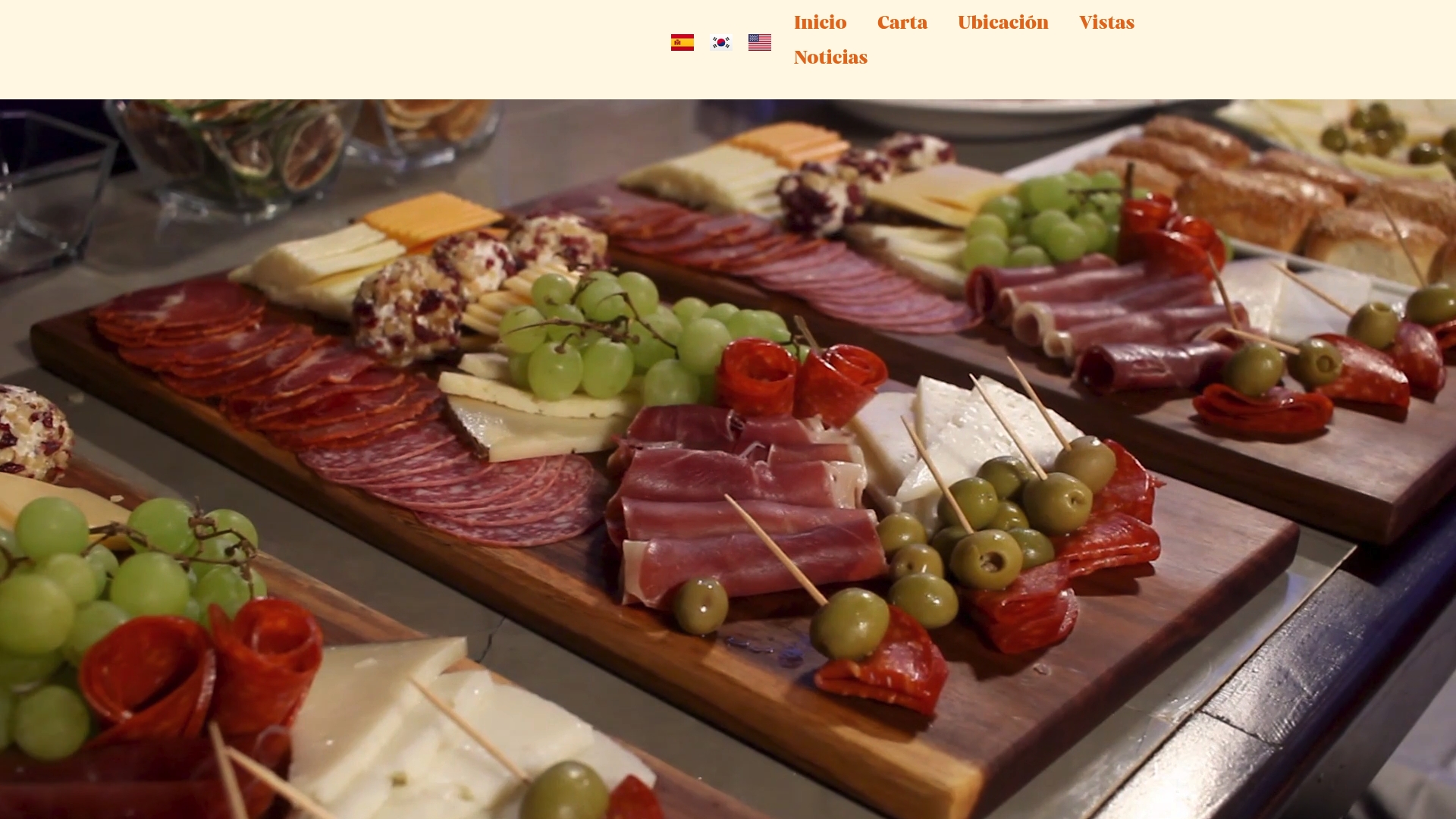
The menu format is the fastest honest signal. A contemporary Mediterranean menu typically opens with vegetable-forward small plates, moves through seafood, and arrives at shared mains like paella or grilled fish. That tasting sequence structure supports communal, conversational dining rather than the individual-plate-per-person model that defines older formats.
Industry analysts describe this as “elemental innovation”: using Mediterranean tradition as a base for health-forward, flavor-rich dishes, supported by contemporary pizza ovens for UK outdoor use, which showcase elemental and fire-led cooking techniques. Think nose-to-tail seafood preparations, fire-led cooking, and paella variants that honor the original technique while incorporating seasonal local produce. Servers who frame dishes with origin stories turn a meal into a narrative, which increases perceived value without changing the plate.
Beverage programs matter just as much. Cocktail theatricality and low-ABV options function as affordable luxury that extends the guest experience and performs well online. A contemporary venue offers wine-forward lists alongside spritzes, low-alcohol aperitifs, and at least one visually dramatic cocktail. Check the Mediterranean food trends shaping 2026 for a fuller picture of where menus are heading.
Pro Tip: Scan the menu for seasonal language: “today’s catch,” “market vegetables,” or a rotating section. A static menu printed six months ago is the clearest sign a restaurant is coasting on its look rather than its cooking.
How does service signal a contemporary dining experience?
Experience is the new currency in hospitality. Every sensory detail functions as a cue, and service is where contemporary venues either earn that claim or lose it.
Guest-led pacing is the most reliable test. Courses arrive when your table is ready, not on a rigid 20-minute rotation. Hosts and servers read the room: a lingering conversation means the next dish waits. That deliberate operational choice creates relaxed stays and higher perceived value without adding a single ingredient to the plate.
Signs of experience-first service:
- Servers invite sharing and suggest a sequence rather than taking individual orders
- Bilingual or bespoke recommendations based on what you’ve already ordered
- Music level stays conversational, not performative
- Lighting shifts noticeably warmer between 8 PM and 10 PM
- Tableware is tactile and considered: heavy linen, ceramic plates, not laminated placemats
Emotional architecture, particularly lighting designed to encourage longer stays, determines whether a place feels genuinely contemporary or just superficially trendy. A restaurant that dims the lights at 9 PM is making a deliberate choice about how long it wants you to stay. For more on how these elements work together, the restaurant ambiance guide breaks down the operational logic behind each cue.
Pro Tip: Ask the server: “What would you order to share first?” A contemporary venue’s staff will answer without hesitation and with genuine enthusiasm. A tourist-trap will hand you the menu again.
What should you expect near the Sagrada Família in Barcelona?
The Sagrada Família corridor runs hot with tourist traffic, which means the gap between genuinely contemporary venues and styled-up tourist traps is wider here than almost anywhere else in the city.
Practical expectations:
- Price band: a contemporary Mediterranean meal with shared plates, a main, and drinks typically runs in a moderate to upper price range at mid-to-upper-moderate venues
- Reservations: it is advisable to book ahead for dinner; weekend terraces often fill several days in advance
- Peak hours commonly occur in the early afternoon for lunch and the late evening for dinner; walk-in availability is better outside these busy periods
- Bilingual service: Spanish and English are standard at contemporary venues; Catalan is a bonus signal that the staff serves locals too
- Seasonal menus and local wine lists indicate a venue is cooking for the neighborhood, not just the tour groups
NIQ’s recommendation that operators pair macro trends with granular local data applies directly here: venues that show rotating menus and local sourcing are future-proofing their concept, not just chasing trends.
| Signal | Tourist-oriented | Genuinely contemporary |
|---|---|---|
| Menu language | English only, static | Bilingual, seasonal updates |
| Terrace | Plastic furniture, no shade | Natural materials, view-oriented |
| Wine list | House wine only | Regional Spanish and local labels |
| Reservation system | Walk-in only | Online booking, advance recommended |
- Check the reservation platform: a contemporary venue uses an online system, not just a phone number.
- Look at the terrace furniture before you sit down.
- Ask whether the menu changes by season before you commit to a table.
How Kokcha shows what contemporary Mediterranean dining looks like
Kokcha sits a short walk from the Sagrada Família and covers the full range of what a contemporary Mediterranean menu should do: tapas, paellas, grilled meats, seafood, pasta, tacos, salads, and desserts, with a terrace that frames city views rather than just adding outdoor seating.
Where Kokcha matches the contemporary checklist:
- Shareable plates across multiple categories, from tapas to paella variants
- Beverage flexibility: wine list plus cocktail options that work across dayparts
- Bilingual service in Spanish and English, with staff who describe dishes rather than recite them
- Terrace with views near the Sagrada Família that make the outdoor space a destination, not an afterthought
- Menu breadth that supports all-day dining from breakfast through late dinner
For a concrete test of the contemporary format, try the seafood paella as a shared main or the vegetable paella for a plant-forward option. Both demonstrate the fire-led, tradition-grounded approach that defines elemental innovation in practice. The chicken paella is the more accessible entry point if you’re ordering for a mixed group.
Pro Tip: Book a terrace table for 9:00 PM on a weekday. The Sagrada Família lights up after dark, and the combination of that view with a shared paella and a low-ABV spritz is exactly what “experience-first dining” means in practice.
How to choose a contemporary Mediterranean restaurant in Barcelona
- Check the menu format online: shareable plates listed before individual mains is a strong signal.
- Look at the terrace or outdoor space in photos: natural materials and a view beat plastic chairs every time.
- Read two or three recent reviews for mentions of service pacing or staff recommendations.
- Confirm the menu has seasonal language or a rotating section.
- Verify bilingual service if you need it: call ahead or check the website language options.
Three questions to ask when you arrive:
- “What would you suggest we share to start?” (Tests whether staff know the menu or just carry plates.)
- “Does the menu change by season?” (A yes with specifics is a green flag.)
- “Is the terrace available, and what’s the best time to catch the view?” (Shows whether the venue thinks about the full experience.)
Red flags to avoid:
- A menu that hasn’t changed in over a year, printed in five languages with photos of every dish
- Terrace seating with no acoustic separation from street noise and no shade
- Servers who can’t describe a single ingredient or suggest a pairing
- A “contemporary” label on the signage but a rigid prix-fixe structure with no sharing option
Key Takeaways
A contemporary Mediterranean restaurant is defined by four things you can verify before you order: intentional design, a tradition-rooted but flexible menu, guest-led service pacing, and sensory cues that make the experience worth staying for.
| Point | Details |
|---|---|
| Design signals | Natural materials, layered warm lighting, and an open kitchen are the three fastest reads. |
| Menu format | Shareable plates, seasonal language, and a structured tasting sequence mark a genuine contemporary concept. |
| Service pacing | Guest-led timing and staff who narrate dishes separate experience-first venues from styled tourist traps. |
| Local expectations | Near the Sagrada Família, book 48 hours ahead; expect €30–55 per person at a contemporary mid-to-upper-moderate venue. |
| Kokcha | Kokcha delivers the full contemporary Mediterranean checklist steps from the Sagrada Família, with a terrace, shareable paellas, and bilingual service. |
A local perspective on dining contemporary Mediterranean in Barcelona
Barcelona has no shortage of restaurants that look contemporary. The harder question is which ones actually are. The difference usually shows up in the first five minutes: how the server greets you, whether the menu feels alive or laminated, whether the room sounds like a place people chose to linger or a place designed to turn tables fast.
What makes the Sagrada Família corridor interesting is that it forces the question. The tourist volume is high enough that a venue can survive on foot traffic alone without ever earning a repeat visit. The ones that do earn repeat visits, from locals and travelers alike, are the ones that treat the meal as a designed experience rather than a transaction. Kokcha’s approach, pairing a full Mediterranean menu with a terrace that makes the view part of the meal, is a practical example of what that looks like when it’s done well.
Book a contemporary Mediterranean meal near the Sagrada Família
Kokcha is the straightforward answer for diners who want the contemporary Mediterranean experience without spending an afternoon researching which venues near the Sagrada Família are actually worth it. The terrace, the shareable paella menu, and the bilingual service cover the full checklist in one booking.
For the best terrace availability, book a weekday dinner slot at 9:00 PM through the Kokcha Mediterranean dining page. Groups of four or more should reserve several days ahead to secure outdoor seating with the Sagrada Família view. The 2026 Mediterranean trends guide on Kokcha’s site is worth a read before you go if you want to know what’s new on the menu this season.
Sources and further reading
Sources are grouped by theme. Industry findings informed the design, menu, and service sections; Kokcha’s own pages provided the local case study material.
Industry trends and experience economy:
- NIQ: How Mediterranean On-Premise Is Evolving — all-day dining shifts, beverage trends, emotional architecture, and local data pairing
- NRA Show Mediterranean Restaurant Trends 2026 — elemental innovation, tasting sequence structure, analyst commentary
- Experience Is the New Currency — Concept Your Kitchen — experience economy framing and service as narrative
- A Conceptual Paper on Experiential Dining Experience — Academia.edu — academic framework for multisensory and narrative dining design
Design and atmosphere:
- Remood: Mediterranean Furniture and Restaurant Design 2026 — materials, lighting, and design-to-revenue correlation
- The Met: The Modern Restaurant Experience — open kitchens, guest-led pacing, and emotional architecture
Culinary approach and provenance:
- BILL&COO Mykonos — Luxuriate Life — narrative service and dish provenance as value drivers
- HomeDiningKitchen: What Does Contemporary Mean in Restaurants — definitional framing for contemporary cuisine
Local case study (Kokcha):
- Kokcha: Mediterranean dining in Barcelona — local experience and menu overview
- Kokcha: Terrace views near Sagrada Família — terrace and view positioning
- Kokcha: Mediterranean food trends 2026 — current menu direction and trend alignment