Most people think they already understand tapas. Small plates, shared food, a bit of fun. But that framing misses almost everything that makes Mediterranean tapas genuinely fascinating. According to Collins Dictionary, the word “tapas” literally traces back to the Spanish word for “lid” or “cover,” and that origin alone hints at a richer story. From their roots in Andalusian bars to the sun-drenched terraces of Barcelona, Mediterranean tapas carry centuries of culinary tradition, social ritual, and regional personality. Once you understand what is actually going on, every bite tastes different.
Table of Contents
- What are Mediterranean tapas? Definition and origins
- Flavors, ingredients, and styles: What sets Mediterranean tapas apart
- Tapas culture: Social dining, traditions, and how to eat Mediterranean tapas
- Regional variations and nuances: Beyond ‘tapas’ in Spain
- Why Mediterranean tapas defy fixed rules—and what most guides miss
- Experience Mediterranean tapas for yourself
- Frequently asked questions
Key Takeaways
| Point | Details |
|---|---|
| Tapas are shareable small plates | Mediterranean tapas refer to Spanish-style appetizers meant for sharing and enjoying with drinks. |
| Origins blend history and legend | The tradition comes from social eating and has debated historical roots, including the idea of ‘lid’ or ‘cover.’ |
| Signature Mediterranean flavors | Olive oil, seafood, cured meats, and fresh vegetables are key ingredients in these dishes. |
| Tapas culture is social | Enjoying tapas involves sharing, ordering in rounds, and moving between places in a lively ritual. |
| Regional variations add diversity | Tapas have many forms, and other terms like pintxos reflect local customs across Spain. |
What are Mediterranean tapas? Definition and origins
To truly understand Mediterranean tapas, let’s break down their meaning and trace their Spanish heritage.
At their core, tapas are small snacks or appetizers, traditionally eaten alongside drinks rather than as a dedicated meal. As Collins Dictionary explains, the term refers both to the food itself and to its Spanish cultural context, where small plates and social drinking go hand in hand. But that simple definition barely scratches the surface.
The word “tapa” means “cover” or “lid” in Spanish, and this etymology feeds several popular origin legends. One of the most repeated stories claims that bartenders in Andalusia used to place a small slice of bread or a piece of cured meat on top of a glass of wine or sherry to keep flies out. Over time, the cover became the attraction. Another legend ties the tradition to a royal decree by King Alfonso XIII, who reportedly ordered that food be served with drinks to prevent intoxication among working people. These stories are colorful, but as The Local points out, the exact origin of tapas culture is genuinely debated and no single settled story has ever been confirmed.
“Tapas culture in Spain is inseparable from the bar-going rhythm: ordering rounds, sharing bites, and moving between places. The food and the social practice evolved together.”
What is clear is that tapas culture became embedded in Spanish bar life over centuries. It was never just about the food. It was about the whole experience of gathering, talking, drinking, and grazing through an evening. Exploring authentic tapas favorites helps reveal how this tradition has evolved while staying true to its roots.
Key qualities that define Mediterranean tapas as a cultural tradition:
- Social context. Tapas are designed for sharing, not solo consumption.
- Flexibility. There is no fixed tapas menu. What you order depends on the region, the bar, the season, and the mood.
- Rhythm. A traditional tapas outing involves moving between several spots, not settling in one place for a formal meal.
- Drinks first. Tapas accompany beverages, from cold beer to local wine to vermouth.
Understanding these qualities makes the whole experience feel less like ordering food and more like joining a living tradition.
Flavors, ingredients, and styles: What sets Mediterranean tapas apart
With origins clarified, now see what makes Mediterranean tapas especially flavorful and varied.
The Mediterranean approach to tapas leans heavily on a core group of ingredients that the region does better than almost anywhere else. As The Mediterranean Dish explains, when people talk about “Mediterranean tapas,” they typically mean small, shareable dishes built around Spanish and Mediterranean flavors: olive oil, seafood, cured meats, fresh vegetables, and cheeses. There is no strict international “Mediterranean tapas” category with rigid rules. The label describes a sensibility, not a certification.
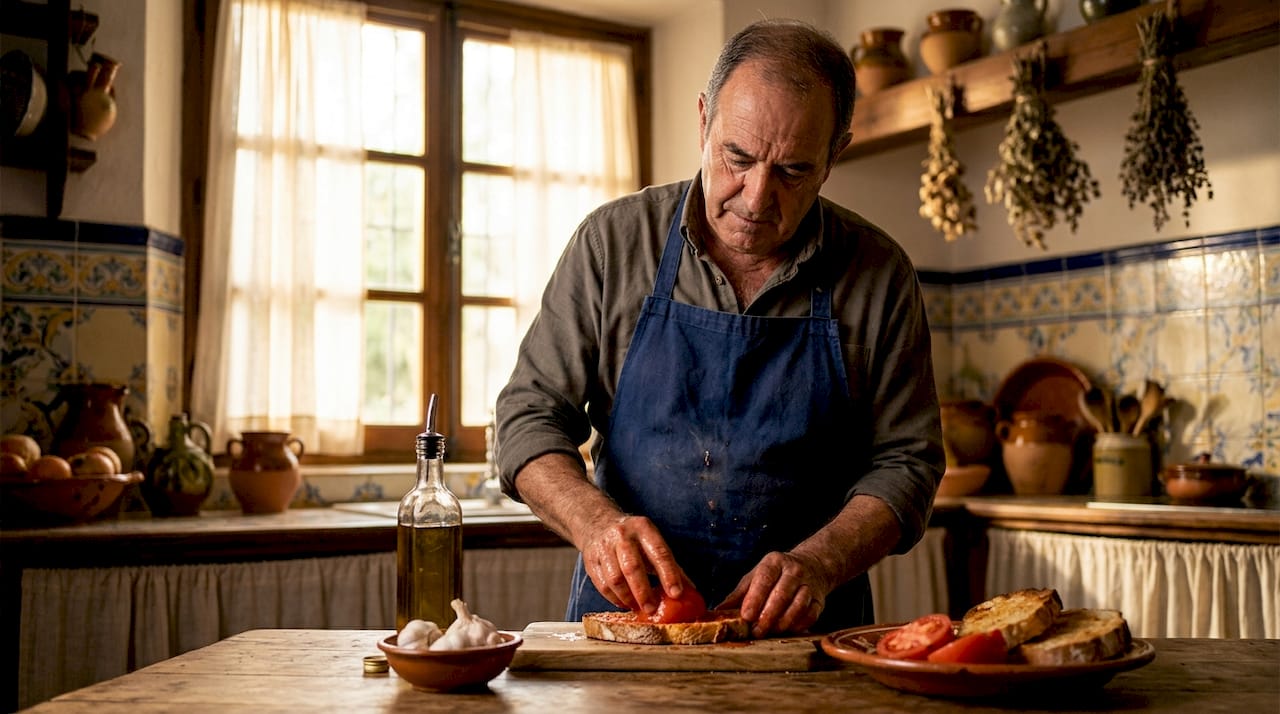
That sensibility is about freshness and simplicity. Ripe tomatoes rubbed onto toasted bread with a generous pour of olive oil. A small bowl of marinated olives. Slices of Jamón Ibérico laid across a wooden board. Gambas al ajillo, meaning shrimp sautéed in garlic and olive oil, still sizzling in a clay dish. These dishes are not complicated. Their quality depends entirely on the ingredients and the technique behind them.
| Style | Examples | Temperature | Typical setting |
|---|---|---|---|
| Cold tapas | Jamón, cheeses, marinated vegetables, anchovies | Room temp or chilled | Any bar or restaurant |
| Hot tapas | Patatas bravas, gambas al ajillo, croquetas | Served hot | Bars with a kitchen |
| Pintxos | Skewered bites on bread | Usually room temp | Northern Spain, Basque region |
| Montaditos | Toppings on small slices of bread | Room temp or warm | All of Spain |
The distinction between hot and cold tapas matters more than most visitors realize. Cold tapas can be prepared in advance and placed on the bar for customers to grab themselves. Hot tapas require a kitchen, which means the experience changes depending on where you go. A simple bar in a village square might offer only a handful of cold options. A restaurant in Barcelona might plate fifteen or twenty carefully composed hot dishes throughout the evening.
Pro Tip: When exploring Mediterranean tapas for the first time, start with two or three cold plates alongside your first drink. Once you get a feel for the place and the flavors, move to the hot tapas. You will appreciate the contrast and avoid filling up too quickly.
The unique Mediterranean flavors that define these dishes come from a combination of geography and culinary philosophy. The Mediterranean basin produces some of the world’s best olive oil, the freshest seafood, and an extraordinary range of cured and preserved ingredients. Tapas showcase all of that in the most direct way possible. And the full Mediterranean dining experience is something that goes far beyond just the food itself.
Tapas culture: Social dining, traditions, and how to eat Mediterranean tapas
Once you know the flavors, ingredients, and styles, learning the cultural habits completes the tapas experience.
Tapas culture is not really about food rules. It is about social behavior. The Local describes tapas culture in Spain as fundamentally tied to the bar-going rhythm: ordering rounds of drinks, moving between different spots, and sharing bites along the way. Understanding that rhythm transforms you from a tourist eating small plates into someone who actually gets it.
Here is how to eat Mediterranean tapas the way Spaniards do:
- Start with drinks. Order your first round of beverages before you even think about food. Tapas come second.
- Order two or three dishes to start. Do not order everything at once. Tapas are meant to arrive in waves, keeping the conversation going between plates.
- Share everything. Tapas are placed in the center of the table. No one has their own plate. Sharing is not optional; it is the whole point.
- Move when the mood calls for it. A proper tapas outing in Spain involves at least two or three different bars. Each place has its specialty. Sample one or two dishes per stop.
- Pay as you go. In many traditional tapas bars, especially in southern Spain, you settle the bill when you are ready to leave, not between courses.
- Go late. Spaniards typically start their evening tapas outing after 8:00 pm. Arriving at 6:00 pm will often mean an empty bar.
This ritual is something modern Mediterranean dining in Barcelona has adapted beautifully. The city blends the traditional Spanish tapas pace with a more cosmopolitan energy, making it accessible to visitors while keeping the social heart of the tradition intact. And Barcelona’s outdoor dining culture adds another dimension entirely, especially when you are on a terrace in warm weather with a glass of local wine in hand.
Pro Tip: Ask locals where they actually go for tapas, not where they send tourists. The best tapas bars rarely need a sign out front. Word of mouth is everything in Spanish bar culture.
Regional variations and nuances: Beyond ‘tapas’ in Spain
To fully appreciate Mediterranean tapas, it is helpful to see how they are interpreted in different regions and formats.
Spain is not a single culinary culture. It is a collection of distinct regional traditions that happen to share geography. As Visit Spain and Mediterranean explains, the word “tapa” is often used as a catch-all term for Spanish small bites, but the country actually uses a variety of terms for related formats, and the differences show up in how they are presented, ordered, and eaten.
| Term | Region | How it’s served | Key distinction |
|---|---|---|---|
| Tapa | All of Spain | On a plate or small dish | The broad category |
| Pintxo | Basque Country | Skewered on bread, laid on the bar | Ordered by pointing or grabbing |
| Montadito | Mainly southern Spain | Topping on small bread slice | Similar to open-faced mini sandwich |
| Ración | All of Spain | Larger shared plate | A bigger portion of a tapas dish |
| Media ración | All of Spain | Half portion of a ración | Good for smaller groups |
These distinctions are not just academic. They change how you eat and how much you spend. A tapa in Andalusia might come free with your drink, a tradition that still exists in cities like Granada and Almería. In Barcelona or Madrid, tapas are almost always paid for separately. In the Basque Country, pintxos are displayed on the bar counter and you grab what you want, with the bartender counting your skewers to calculate your bill at the end.
Regional differences go beyond naming conventions too. The ingredients shift depending on what the land and sea produce locally. In Galicia, tapas lean toward octopus, mussels, and razor clams. In Catalonia, you will find tomato-rubbed bread (pa amb tomàquet) as a starting point for almost anything. In Valencia, rice-based dishes creep into the small plate format. These variations are worth celebrating, not flattening into a single category.
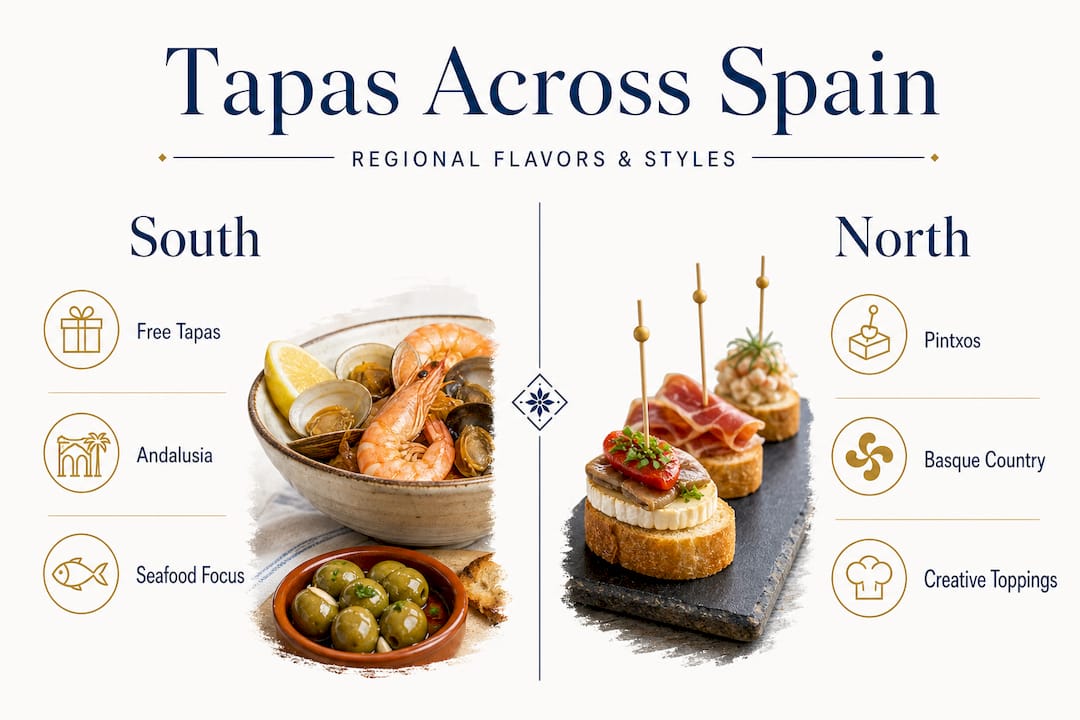
The local Barcelona tapas scene reflects this regional richness. Barcelona sits at the crossroads of Catalan culinary identity and broader Spanish influences, making it one of the most interesting cities in Spain for exploring how tapas evolve while staying rooted in tradition.
Key things to remember about regional tapas variations:
- Free tapas still exist in parts of southern Spain, particularly in Granada, Jaén, and Almería.
- Pintxos in the Basque Country are a distinct format and should not be confused with standard tapas.
- Raciones give you a way to order more food from the same dish without changing the social dynamics.
- Seasonal menus mean what is available shifts throughout the year, especially for seafood.
Why Mediterranean tapas defy fixed rules—and what most guides miss
Most food guides reduce tapas to a list of dishes. They tell you to order patatas bravas and croquetas and call it a day. That approach completely misses what makes Mediterranean tapas valuable as a culinary and cultural experience.
The truth is that tapas are not a formula. They never have been. The whole tradition grew out of improvisation, out of bartenders putting whatever was available on top of a glass, out of cooks adapting to what came in from the market that morning. The dishes that became “classic” tapas did so because they worked, because they paired well with drinks and travel easily between hands. Not because someone wrote them into a rule book.
Real tapas culture rewards flexibility. When you walk into a bar and ask what is good today, you are participating in the tradition more authentically than if you arrive with a rehearsed list. The cook’s specialty changes. The season changes. The region changes. Mediterranean flavor differences are built into the geography of the food itself, and a rigid approach to ordering will cause you to miss the best of what any particular kitchen has to offer.
What passionate food lovers gain from embracing this flexibility is enormous. You stop comparing what you are eating to some imagined perfect version and start appreciating what is actually in front of you. A perfectly fried croqueta in a tiny bar in Barcelona’s Eixample neighborhood might be more memorable than anything you have eaten in a famous restaurant, not because it is technically superior but because you found it by following your instincts rather than a guidebook.
The other thing most guides overlook is how much tapas culture is about the people you are eating with. The food is the medium, not the message. Sharing a plate of jamón with someone you just met, arguing about whether patatas bravas should come with aioli or just salsa brava, these are the moments that make Mediterranean dining genuinely different from eating in other parts of the world. The plate in the center of the table is an invitation, not just a dish.
Experience Mediterranean tapas for yourself
Ready to explore Mediterranean tapas firsthand? Here is where to start your culinary adventure.
Understanding tapas on paper is one thing. Tasting them in the right setting is something else entirely. If you are in Barcelona, you are already in one of Spain’s most vibrant cities for Mediterranean cuisine, with an incredible range of flavors, venues, and experiences within walking distance of some of the world’s most iconic landmarks.
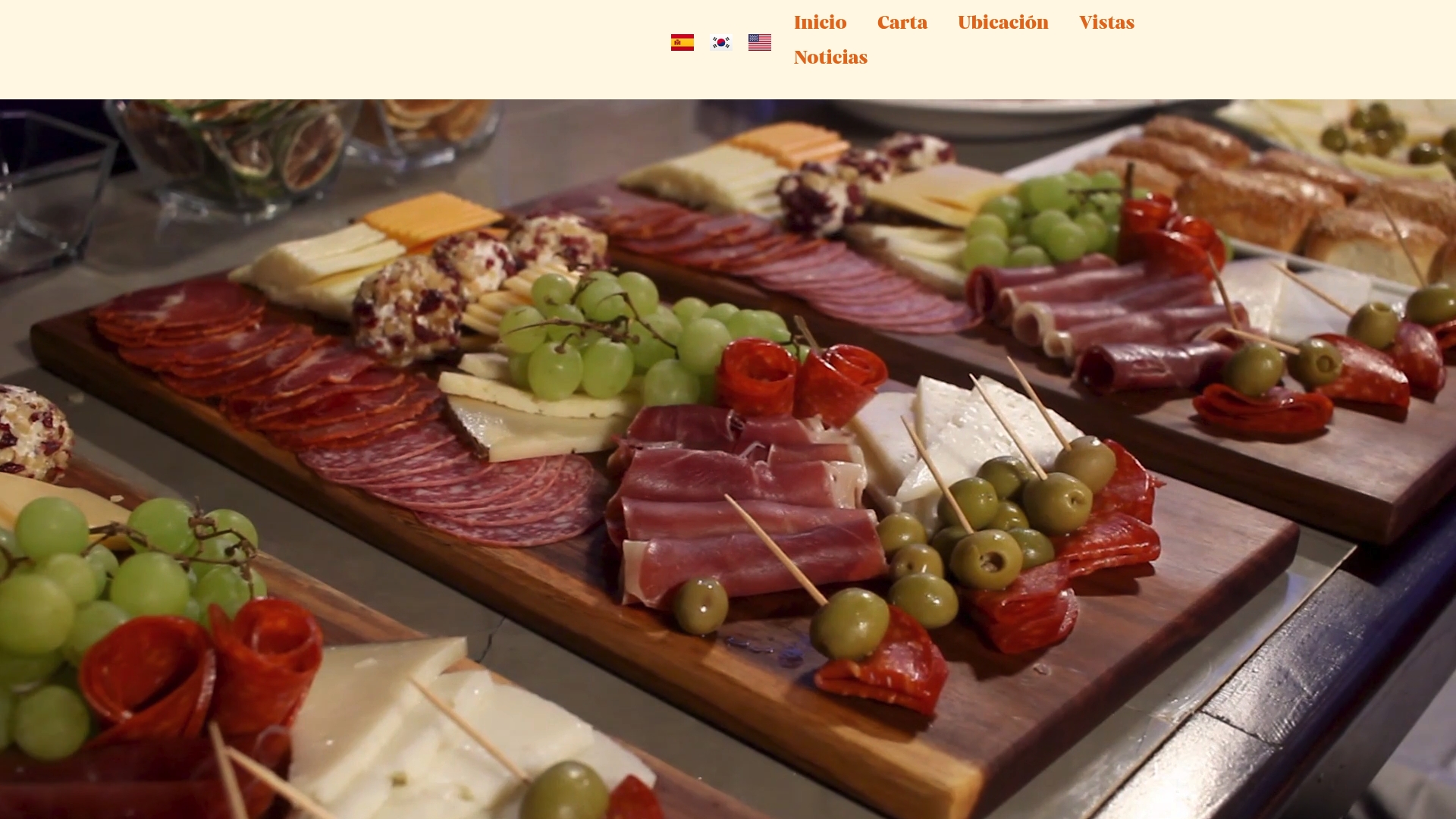
At Kokcha, located steps from the Sagrada Família, we bring together everything that makes Mediterranean tapas exceptional: fresh ingredients, bold flavors, a welcoming atmosphere, and a terrace that puts you right in the heart of Barcelona. Whether you are a first-time visitor or a seasoned food lover, our menu offers a genuine taste of what authentic tapas in Barcelona can be at their best. Come for the food, stay for the experience.
Frequently asked questions
Are Mediterranean tapas always Spanish?
Mediterranean tapas are rooted in Spanish tradition, but the concept has broadened to include small, shareable dishes built around Mediterranean flavors and ingredients from across the region.
What are the most common ingredients in Mediterranean tapas?
Olive oil, seafood, cured meats, cheeses, and fresh vegetables are the foundation of most Mediterranean tapas dishes, reflecting the region’s agricultural and coastal richness.
How are tapas traditionally eaten in Spain?
Tapas are shared among friends and family, enjoyed with drinks while moving from bar to bar, with no fixed schedule or formal structure.
Are there differences between tapas and pintxos?
Yes. Pintxos are a distinct format from northern Spain, particularly the Basque Country, while “tapa” is a broader term used across all of Spain for small plates in various styles.