Classic Mediterranean pasta is defined as a family of dishes built on olive oil, fresh herbs, and coastal pantry staples rather than heavy cream or butter sauces. These recipes come from a coastline stretching from Sicily to the Amalfi Coast to the shores of Spain, and every dish carries the flavor logic of the Mediterranean diet. Understanding what are classic Mediterranean pastas means understanding a cooking philosophy: let quality ingredients do the work. The shapes, the sauces, and the techniques are all in service of that single idea.
What ingredients and flavors define classic Mediterranean pasta recipes?
The pantry is the foundation of every traditional Mediterranean pasta recipe. Sardines, anchovies, olives, capers, raisins, and pine nuts create the layered, complex flavors that define dishes like Pasta con le Sarde and Strombolana. That combination of briny, sweet, and earthy notes in one bowl is not accidental. It reflects centuries of trade routes and cultural exchange across the sea.
Extra virgin olive oil is the fat of choice across every regional variation. Olive oil, fresh herbs, and vegetables replace the cream and butter common in northern European pasta traditions, keeping the dishes lighter and more ingredient-forward. The quality of the oil matters more than most home cooks realize. A grassy, peppery extra virgin olive oil from Andalusia or Puglia changes the character of a finished dish entirely. For a deeper look at selecting the right oil, pairing olive oil by flavor profile is a skill worth developing.
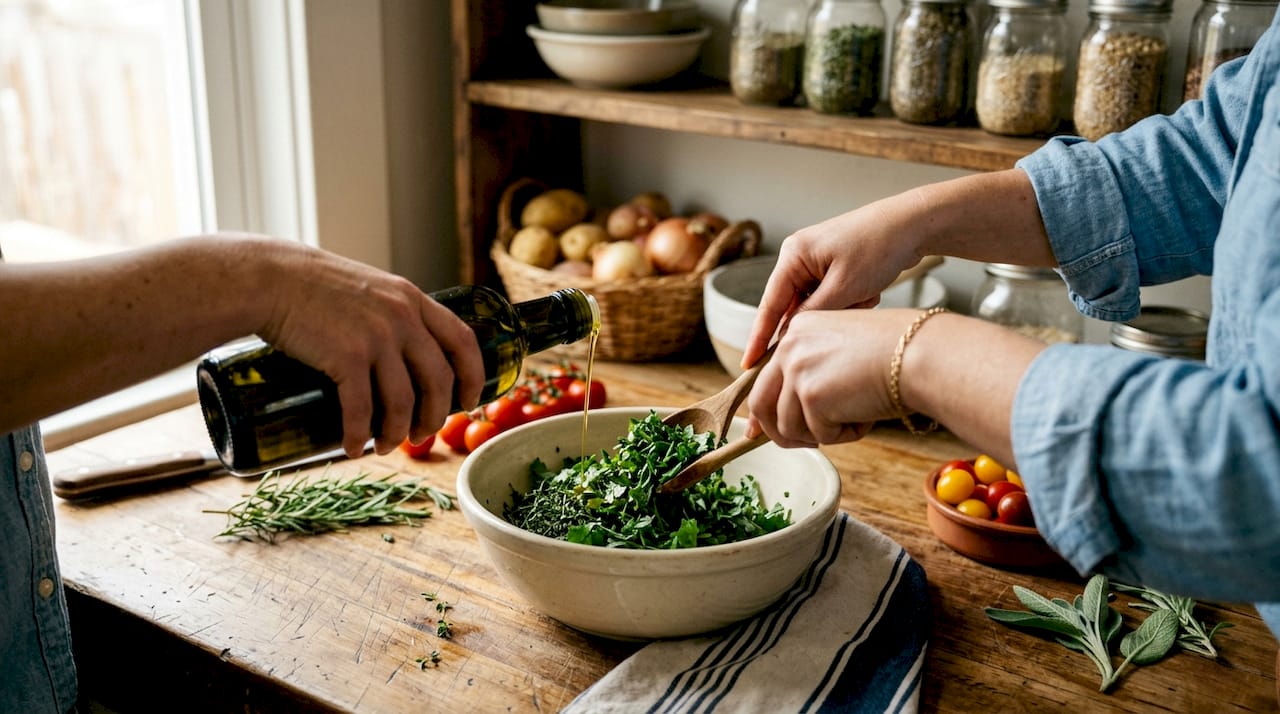
Herbs are not a garnish in Mediterranean cooking. They are structural. Basil, oregano, flat-leaf parsley, and wild fennel each play specific roles in specific dishes. Wild fennel, for example, is non-negotiable in Pasta con le Sarde. Swapping it for cultivated fennel fronds changes the dish’s character noticeably.
Pro Tip: Buy anchovies packed in salt rather than oil when possible. Rinse and fillet them yourself. The flavor is cleaner and more nuanced than oil-packed fillets, and it makes a real difference in simple sauces where anchovies are a lead ingredient.
The flavor contrasts in Mediterranean pasta are deliberate. Sweet raisins against briny sardines, sharp capers against mild artichoke hearts, and pungent garlic against delicate lemon zest all follow the same logic: cultural synthesis from Southern Europe, North Africa, and the Middle East produces balanced complexity rather than one-note richness.
Which pasta shapes work best in Mediterranean dishes?
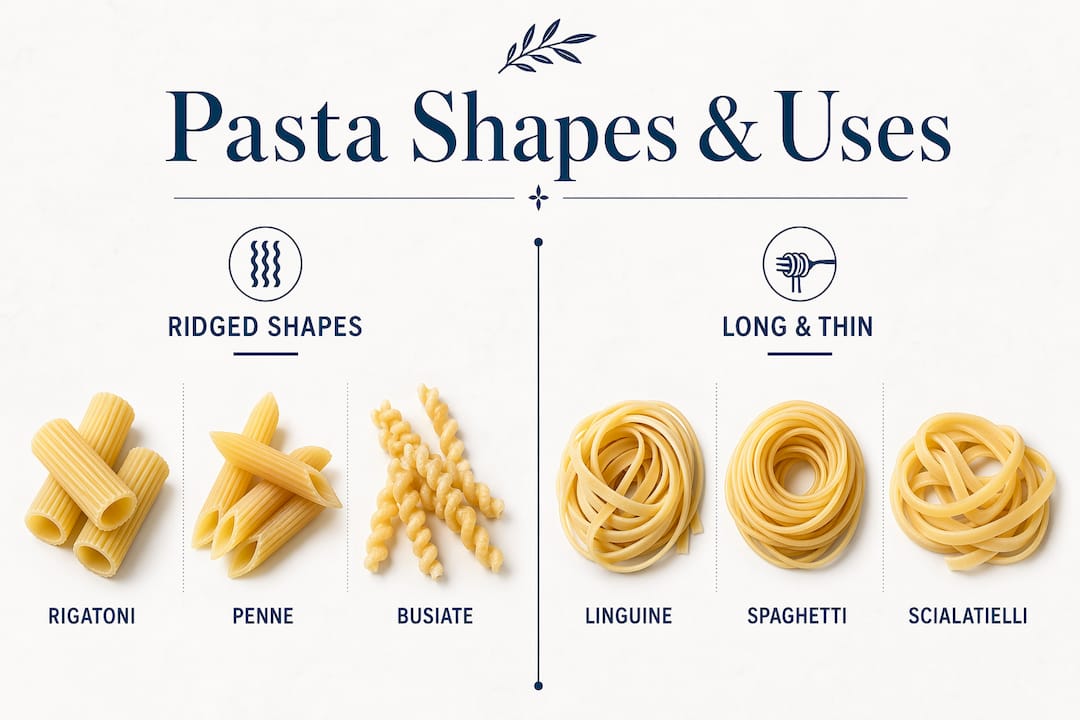
Pasta shape selection is a skilled decision, not an afterthought. Ridged or hollow shapes like rigatoni and penne catch chunky vegetable sauces and emulsions far more effectively than smooth, flat shapes. The ridges create surface area. The hollow centers trap sauce inside each bite.
| Pasta Shape | Best Use in Mediterranean Cooking |
|---|---|
| Rigatoni | Chunky vegetable or seafood sauces; ridges hold thick emulsions |
| Penne | Olive, caper, and tomato sauces; tubes carry sauce through every bite |
| Linguine | Delicate seafood sauces like colatura di alici; flat surface coats evenly |
| Spaghetti | Light herb and olive oil bases; classic with clams or sardines |
| Busiate | Traditional Sicilian shape; spirals grip pesto trapanese perfectly |
| Scialatielli | Thick, short Amalfi Coast noodle; pairs with shellfish and fresh herbs |
Busiate and scialatielli are less familiar to American home cooks but worth seeking out. Busiate is a hand-rolled Sicilian pasta that looks like a loose corkscrew. Its spiral shape was designed specifically to grip thick nut-based pestos. Scialatielli is a short, thick noodle from the Amalfi Coast that holds up to assertive seafood sauces without turning soft. Choosing the right pasta shape is central to authentic Mediterranean cooking because the shape determines how flavors and textures land on the palate.
How do regional variations shape classic Mediterranean pasta?
The Mediterranean coastline is not a single cuisine. It is a collection of distinct regional traditions that share an ingredient logic but express it differently. Mediterranean pasta dishes celebrate the marriage of sea and land by blending anchovies with wild fennel or combining herbs from multiple regional cuisines. That cultural layering is what makes regional variation so interesting to study.
Sicily produces some of the most complex traditional pasta recipes in the Mediterranean world:
- Pasta con le Sarde combines fresh sardines, wild fennel, saffron, raisins, and pine nuts in a sauce that reads as both ancient and precise. The sweet-savory balance is unlike anything in northern Italian cooking.
- Pasta Ntaganata is a baked Sicilian pasta built on wild fennel and anchovies. The dish is assembled and oven-finished, which concentrates flavors and creates a texture that stovetop cooking cannot replicate.
- Pasta alla Norma uses fried eggplant, tomato, basil, and ricotta salata. It is simpler than Pasta con le Sarde but equally specific about its ingredients.
The Amalfi Coast offers a different expression. Linguine con Colatura di Alici uses colatura di alici, an amber-colored anchovy sauce from the town of Cetara, to build a dish of extraordinary depth from very few ingredients. The sauce is never cooked directly. It is emulsified raw with olive oil and tossed with hot pasta, which preserves its fermented complexity.
Spain’s Mediterranean coast takes a different path entirely. Macarrones con Sepia uses red wine to deglaze the pan, creating a rich, velvety glaze that coats the pasta and contrasts sharply with the lighter, herb-forward approach of Italian seafood pasta. The cuttlefish releases natural gelatin into the sauce as it cooks, giving the dish a body that olive oil alone cannot produce. This is a distinctly Spanish technique, and it shows how geography shapes cooking logic even within the same broad culinary tradition. For more on how Spanish Mediterranean flavors differ from Italian ones, the contrast between these two pasta styles is a good starting point.
What preparation techniques set classic Mediterranean pastas apart?
Speed and restraint define Mediterranean pasta technique. Classic Mediterranean pasta dishes are typically prepared in under 30 minutes, with active prep times as short as 5 to 15 minutes. That efficiency is not a shortcut. It reflects the ingredient quality. When your sardines are fresh and your olive oil is excellent, you do not need an hour-long braise to build flavor.
The most important techniques to understand:
- Cook pasta to very al dente before baking. In dishes like Pasta Ntaganata, undercooking pasta before it goes into the oven prevents mushiness. The pasta finishes cooking in the oven and absorbs the surrounding flavors without turning soft.
- Never heat colatura di alici directly. Colatura di alici must be emulsified raw with olive oil and tossed with hot pasta off the heat. Direct heat destroys the fermented enzymes that give it its depth.
- Build the sauce in the pasta water. Reserve a full cup of starchy pasta cooking water before draining. Add it gradually to the sauce to create an emulsion that coats every strand or tube evenly.
- Finish with raw olive oil. A drizzle of cold extra virgin olive oil added after plating adds a fresh, grassy note that cooked oil cannot provide. Expert chefs consistently stress that simplicity and ingredient quality are the defining principles of authentic Mediterranean pasta.
- Deglaze with intention. In Spanish-style cuttlefish pasta, red wine deglazing is not optional. It is the step that creates the glaze. Use a wine you would drink, and let it reduce fully before adding other liquids.
Pro Tip: Salt your pasta water until it tastes like mild seawater. Under-salted water is the single most common reason Mediterranean pasta tastes flat at home, regardless of how good the sauce is.
How can home cooks recreate classic Mediterranean pasta dishes?
Recreating traditional Mediterranean pasta recipes at home starts with the pantry. Stock these ingredients and you can build most classic dishes on demand:
- Anchovies packed in salt (or high-quality oil-packed fillets as a substitute)
- Extra virgin olive oil from Spain, Italy, or Greece. Artisanal olive oil production methods affect flavor significantly, so buy from producers who list the harvest date.
- Capers in brine (rinse before using to control saltiness)
- Canned or jarred sardines in olive oil
- Dried pasta in at least two shapes: a ridged tube and a long strand
- Pine nuts and raisins for Sicilian-style dishes
Adapting recipes is acceptable, but understand what you are changing. Wild fennel is hard to find outside specialty markets. Cultivated fennel fronds work as a substitute in Pasta con le Sarde, but the anise flavor is milder. The dish will still be good. It just will not be identical to the Sicilian original. That distinction matters if your goal is authenticity. Understanding Mediterranean flavor profiles helps you make smarter substitutions without losing the dish’s character.
Start with three dishes to build your foundation: Pasta con le Sarde for Sicilian complexity, Linguine con Colatura di Alici for Amalfi Coast restraint, and a simple pasta with olive oil, garlic, capers, and olives for weeknight cooking. Each one teaches a different technique and a different flavor logic. Once you understand those three, regional variations across the Mediterranean become much easier to read and reproduce.
Key Takeaways
Classic Mediterranean pasta is defined by ingredient quality, shape selection, and regional technique rather than complex sauce-making.
| Point | Details |
|---|---|
| Pantry staples drive flavor | Anchovies, capers, olives, raisins, and pine nuts create layered complexity without heavy sauces. |
| Shape selection is functional | Ridged tubes like rigatoni catch chunky sauces; long strands like linguine suit delicate seafood preparations. |
| Regional technique varies widely | Sicilian baked pasta, Amalfi Coast fermented anchovy sauce, and Spanish red wine glazes each follow distinct logic. |
| Heat control is critical | Colatura di alici must never be heated directly; baked pasta must start very al dente to finish correctly. |
| Speed reflects quality | Most classic Mediterranean pasta dishes cook in under 30 minutes because the ingredients do not need long cooking to deliver flavor. |
Why Mediterranean pasta rewards patience more than effort
The first time I made Pasta con le Sarde properly, I was surprised by how little I had to do. The sardines broke down in the pan in minutes. The wild fennel softened fast. The raisins and pine nuts went in at the end. The whole thing took less time than most pasta dishes I had made before, and it tasted more complex than almost any of them.
That is the counterintuitive truth about classic Mediterranean pasta. The technique is not difficult. The challenge is trusting the ingredients. Most home cooks are trained to build flavor through long cooking, reduction, and layering of fats. Mediterranean pasta asks you to do the opposite. Buy better anchovies. Use more olive oil than feels comfortable. Stop cooking before you think you should.
The regional variation is also worth taking seriously rather than treating as a curiosity. Spanish Macarrones con Sepia and Sicilian Pasta Ntaganata are not variations on the same dish. They are expressions of completely different culinary cultures that happen to share a coastline. Cooking both teaches you more about Mediterranean food than reading about it ever could.
My honest recommendation: start with the simplest dish you can find, cook it with the best ingredients you can afford, and resist the urge to improve it. The tradition has already done the improving over several hundred years.
— YellowRock
Mediterranean pasta at Kokcha in Barcelona
Barcelona sits at the intersection of Spanish and broader Mediterranean culinary traditions, which makes it one of the best cities in the world to experience classic pasta dishes in their proper context.
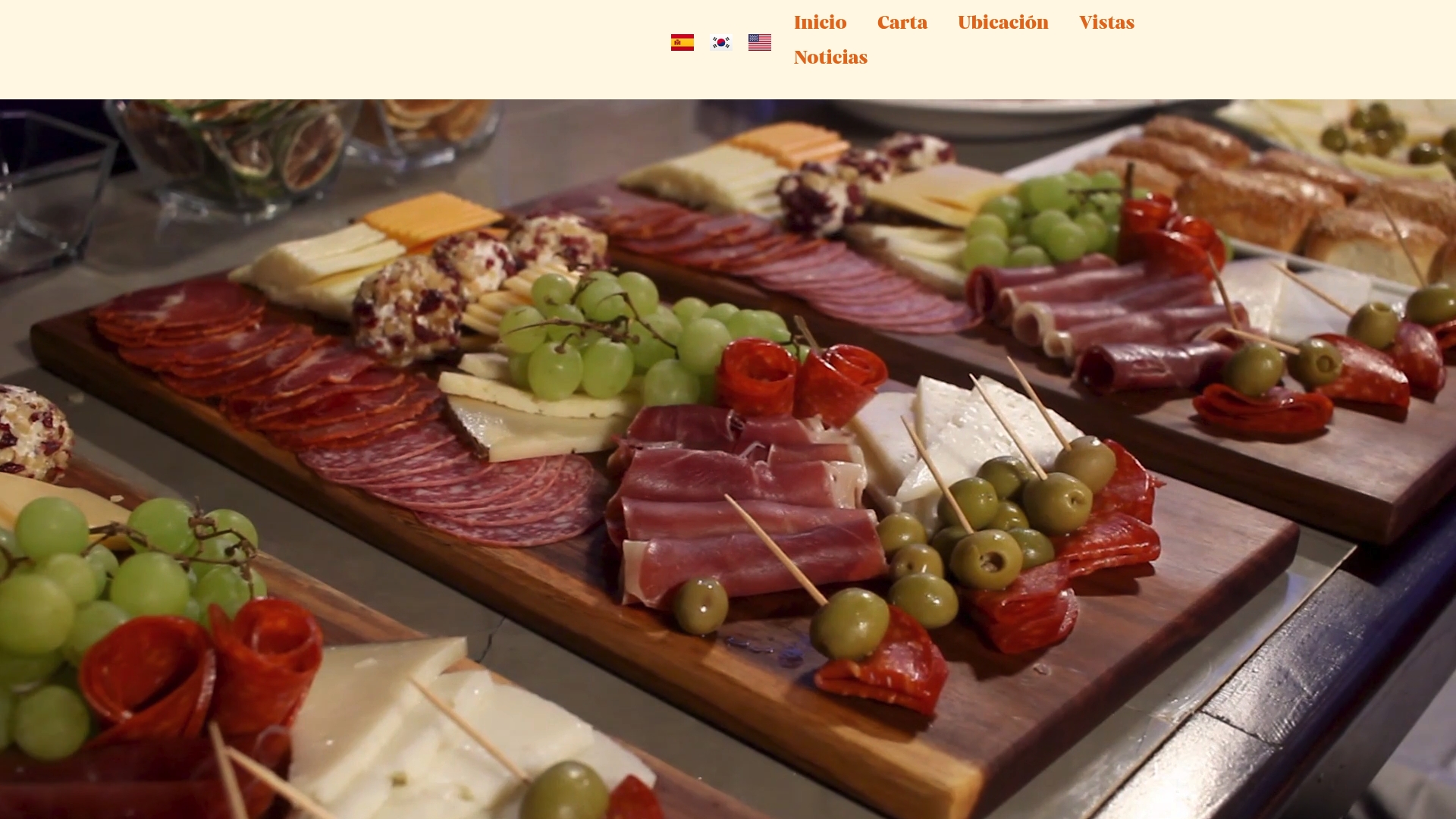
Kokcha is a Mediterranean restaurant located steps from the Sagrada Familia, and its menu reflects the full range of the tradition: seafood, pasta, tapas, and dishes that draw from both Spanish and Italian coastal cooking. If you want to understand how Mediterranean gastronomy unites cultures through a single meal, Kokcha’s setting and menu offer exactly that. The restaurant’s terrace adds a sensory layer that makes the food taste the way it was meant to: outdoors, with good company, and without rushing.
FAQ
What are classic Mediterranean pastas?
Classic Mediterranean pastas are dishes built on olive oil, fresh herbs, and coastal pantry staples like anchovies, sardines, capers, and olives. They originate from regions including Sicily, the Amalfi Coast, and the Spanish Mediterranean coast.
What pasta shapes are most common in Mediterranean cooking?
Rigatoni, penne, linguine, spaghetti, busiate, and scialatielli are the most common shapes. Ridged and hollow shapes catch chunky sauces, while long strands suit lighter seafood preparations.
What makes Mediterranean pasta different from other Italian pasta?
Mediterranean pasta avoids cream and butter, relying instead on olive oil, fresh herbs, and fermented or cured seafood for depth. The flavor profiles reflect cultural influences from Southern Europe, North Africa, and the Middle East.
How long does it take to cook classic Mediterranean pasta?
Most classic Mediterranean pasta dishes cook in under 30 minutes, with active prep times as short as 5 to 15 minutes. The short cooking time reflects the quality and intensity of the core ingredients.
Can I substitute ingredients in traditional Mediterranean pasta recipes?
Substitutions are possible but change the dish’s character. Cultivated fennel fronds can replace wild fennel in Pasta con le Sarde, but the flavor will be milder. Keeping core pantry staples like quality olive oil and salt-packed anchovies preserves the dish’s essential profile.