A Mediterranean dinner is defined by slow, shared eating across multiple courses, built on plant-forward dishes, quality olive oil, and genuine conversation. This style of dining, sometimes called Mediterranean table culture, is less about any single recipe and more about how you structure the entire meal. Whether you are planning a dinner at home or looking for a guide to celebrating at Mediterranean restaurants, the principles stay the same: pace yourself, share everything, and stay at the table longer than feels comfortable. That is exactly where the magic happens.
How to enjoy a mediterranean dinner: start with the right dishes
The foundation of any great Mediterranean meal is what goes on the table. A Mediterranean-style plate emphasizes an abundance of plant foods, including fruits, vegetables, whole grains, nuts, and legumes, with olive oil as the principal fat source. Fish and poultry appear a few times per week, while red meat stays limited. Understanding this structure helps you choose Mediterranean dishes that feel authentic rather than assembled at random.
Here are the core building blocks of a well-rounded Mediterranean dinner:
- Olive oil: Used as the primary cooking fat and finishing drizzle. The Mediterranean diet tradition calls for at least 4 tablespoons per day. That is not a garnish; it is a flavor base.
- Vegetables: Roasted eggplant, zucchini, tomatoes, peppers, and leafy greens appear in nearly every course.
- Legumes: Chickpeas, lentils, and white beans serve as protein anchors in salads, stews, and dips like hummus.
- Whole grains: Bulgur, farro, and whole-grain bread provide texture and substance.
- Fish and seafood: Grilled sardines, baked sea bass, and shrimp are classic choices.
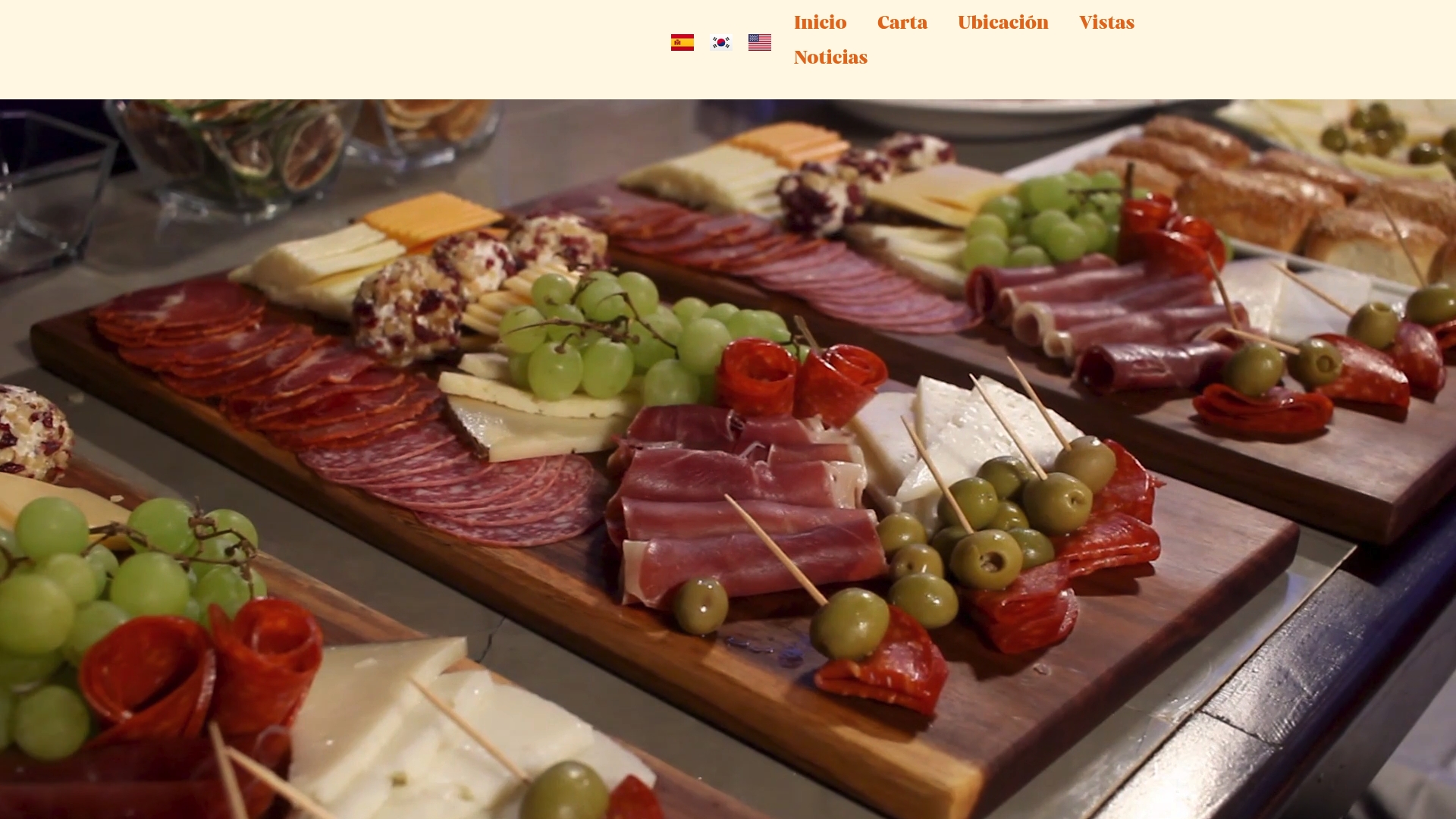
- Mezze and tapas: Small shared plates such as tzatziki, baba ghanoush, stuffed grape leaves, and marinated olives open the meal and set the sharing tone.
The table below shows how to build a balanced Mediterranean dinner spread:
| Course | Example Dishes | Primary Ingredient |
|---|---|---|
| Mezze / Starters | Hummus, olives, grilled flatbread | Legumes, olive oil |
| Salad | Greek salad, fattoush, tabbouleh | Fresh vegetables, herbs |
| Main Course | Grilled fish, roasted chicken, paella | Protein, saffron, rice |
| Side | Roasted vegetables, lentil pilaf | Seasonal produce |
| Dessert | Fresh fruit, baklava, yogurt with honey | Fruit, nuts |
Learning what sets Mediterranean menus apart from other cuisines comes down to this balance. No single ingredient dominates. The variety is the point.
How do you structure a mediterranean dinner for maximum enjoyment?
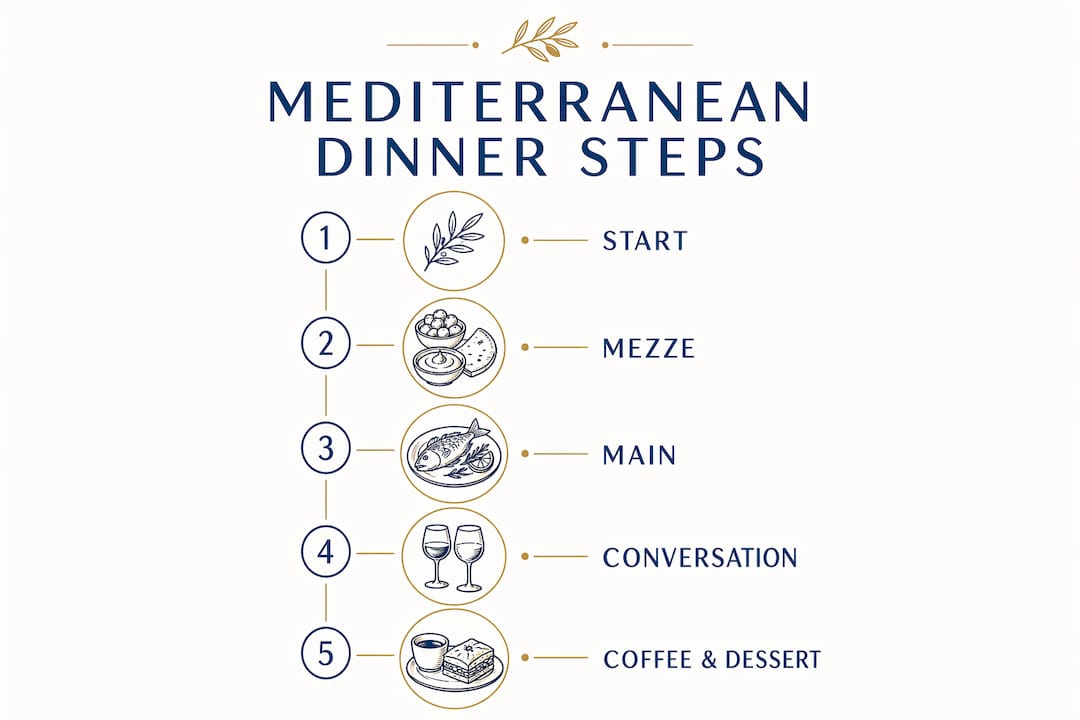
The dining rhythm is what separates a Mediterranean dinner from a regular weeknight meal. Food arrives in waves: mezze or tapas-style small plates come first, followed by a main course, and the meal closes with coffee, sweets, or fresh fruit. This structure keeps the table active and the conversation flowing for 1–3 hours.
Follow this sequence to get the pacing right:
- Open with mezze. Set out 3–5 small shared dishes before anyone sits down. Olives, bread, hummus, and a simple salad work perfectly. This removes the pressure of a formal first course and lets people graze naturally.
- Slow the transition to the main. Wait at least 20–30 minutes before bringing out the main dish. Grazing on small shared dishes allows ongoing sampling and social interaction, making the meal feel alive even before the centerpiece arrives.
- Serve the main family-style. Place a large dish or two in the center of the table. Paella, roasted fish, or a braised chicken all work well for this format.
- Linger after the main. Planning natural endpoints like coffee and sweets instead of rushing to clear the table is a core Mediterranean custom. Keep the table open longer with second-wave dishes or a cheese plate.
- End with something small and sweet. Fresh fruit, a square of baklava, or Greek yogurt with honey signals the close without abruptly ending the gathering.
Pro Tip: Set a timer for 90 minutes when you sit down. If the meal ends before that, you moved too fast. Mediterranean dining culture treats time at the table as the reward, not the cost.
Mediterranean dining is an extended social ritual rather than rushed eating. Americans often find this pace unfamiliar at first. Lean into it.
What are the best tips for a mediterranean dinner at home?
Home cooks do not need a professional kitchen or rare ingredients to pull off an authentic Mediterranean meal. The best Mediterranean dishes are built from pantry staples that most people already own. A simple Mediterranean dinner might include a tray of roasted vegetables with olive oil and a protein or beans, assembled in about 30 minutes.
Here is how to keep it practical without losing authenticity:
- Stock the right pantry. Tinned tomatoes, canned chickpeas, dried lentils, garlic, onions, and good olive oil cover most recipes. These four ingredients alone can produce a dozen different dishes.
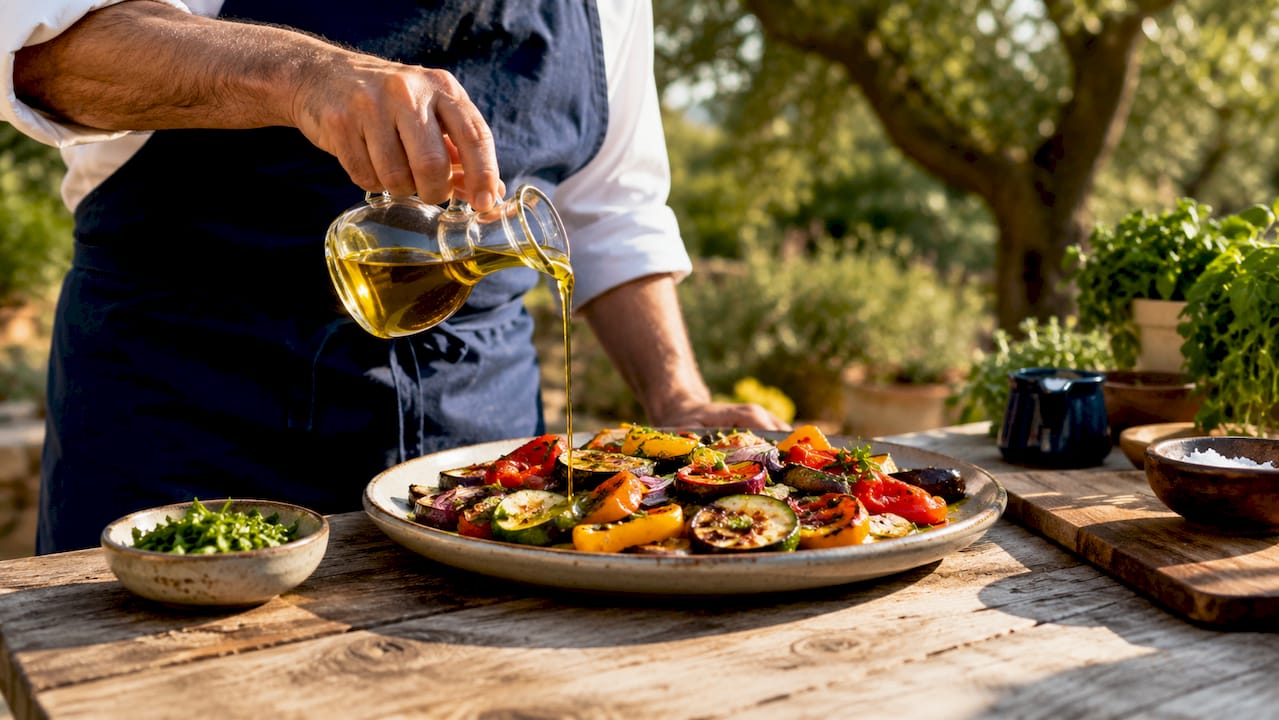
- Roast instead of fuss. A sheet pan with seasonal vegetables, olive oil, salt, and dried oregano takes 25 minutes in the oven. Add a piece of fish or a can of white beans for protein.
- Use parsley as a multi-function ingredient. It works in dressings, salads, grain bowls, and as a garnish. Buy one bunch and use it across three dishes.
- Batch prep two components. Cook a pot of grains and roast a tray of vegetables on Sunday. Both reheat well and combine with different proteins throughout the week.
- Keep the mezze simple. Store-bought hummus, a jar of olives, and sliced cucumbers with olive oil and lemon is a legitimate mezze spread. Authenticity is about the sharing format, not the labor.
Pro Tip: Finish every dish with a drizzle of raw olive oil just before serving. This single step adds depth and signals the Mediterranean flavor profile more than any spice blend.
The Mediterranean diet supports flexible eating focused on plant variety and olive oil, without demanding perfect meals every time. That flexibility is what makes it sustainable for busy home cooks. For more ideas on Spanish small plates and how to build a mezze-style spread, the format translates directly to home entertaining.
How to set the table and create the right atmosphere
The atmosphere at a Mediterranean dinner table is as deliberate as the food. Phones are put away, conversation flows, and the table itself signals that this is a shared experience. Setting the table correctly takes five minutes and changes the entire feel of the meal.
Focus on these elements:
- Use multiple small bowls and plates. A table with many dishes invites sharing. Replace the single-plate setup with clusters of small bowls, a bread basket, and a bottle of olive oil at the center.
- Add bread as a table anchor. Warm flatbread or a crusty loaf placed in the center gives people something to reach for immediately. It also slows the pace naturally.
- Put olives out first. A bowl of olives on the table before anyone is seated signals that the meal has already begun. It removes the awkward waiting period.
- Dim the lights or add candles. Bright overhead lighting pushes people toward efficiency. Softer light encourages people to stay.
- Remove phones from the table. Mediterranean meals are moments of connection, not timed events. A no-phone rule for the first hour is the single highest-impact change most American households can make.
Understanding why locals love Mediterranean food in Barcelona comes down to this cultural investment in presence. The food is excellent, but the table culture is what makes the meal memorable.
Key takeaways
A Mediterranean dinner succeeds when pacing and sharing take priority over any single dish or recipe.
| Point | Details |
|---|---|
| Structure the meal in waves | Serve mezze first, then a main course, then coffee or sweets to extend the meal naturally. |
| Olive oil is non-negotiable | Use it as a cooking fat and finishing drizzle across every course for authentic flavor. |
| Pantry staples are enough | Tinned tomatoes, beans, garlic, and olive oil cover most authentic Mediterranean recipes. |
| Time at the table is the goal | Plan for a 1–3 hour dining window and treat lingering as part of the experience. |
| Atmosphere shapes the meal | Multiple shared dishes, bread, olives, and no phones create the right social conditions. |
What i’ve learned from eating the mediterranean way
Most American dinner tables are designed for efficiency. One plate per person, one course, done in 30 minutes. The Mediterranean approach treats that as a missed opportunity, and after years of eating this way, I agree completely.
The counterintuitive truth is that slowing down actually makes the food taste better. When you graze through mezze for 30 minutes before the main course arrives, you arrive at that dish with genuine anticipation. You are not starving, but you are ready. The contrast between the light, bright starters and a rich, slow-cooked main is something you simply cannot replicate by rushing straight to the entree.
The other thing most guides miss is that imperfection is built into this style of dining. A slightly overcooked piece of fish disappears when it is surrounded by five other dishes. Nobody notices because nobody is staring at a single plate. That social buffer is enormously freeing for home cooks who feel pressure to execute perfectly.
My honest recommendation: start with just the pacing change. Do not overhaul your menu. Just add a mezze course, wait 30 minutes, and see what happens to the conversation. The food will follow.
— YellowRock
Experience authentic mediterranean dining at Kokcha in barcelona
Kokcha is a Mediterranean restaurant located steps from the Sagrada Familia in Barcelona, and it brings together the full range of what this cuisine does best. The menu spans tapas, paellas, fresh seafood, grilled meats, and seasonal salads, all served in a setting designed for exactly the kind of slow, shared dining this article describes. The terrace with views of the Sagrada Familia makes the atmosphere as memorable as the food itself.
If you want to see how Mediterranean culinary trends in 2026 are shaping the dining experience, Kokcha is a strong starting point. From a classic seafood paella to grilled shellfish and creative tapas, the menu gives you a full tour of the Mediterranean table in a single visit. Reservations are available directly through the Kokcha website.
FAQ
What is the best way to start a mediterranean dinner?
Open with a mezze spread of 3–5 small shared dishes such as hummus, olives, and flatbread. This sets the sharing tone and slows the pace before the main course arrives.
How long should a mediterranean dinner last?
A traditional Mediterranean dinner runs 1–3 hours, with time built in for conversation, second helpings, and a post-meal coffee or dessert. The extended duration is a feature, not a flaw.
What are the most important ingredients for mediterranean cooking?
Olive oil, fresh vegetables, legumes, whole grains, and fish are the core building blocks. Olive oil serves as the primary fat in both cooking and finishing, and no Mediterranean dinner is complete without it.
Can i host a mediterranean dinner on a weeknight?
Yes. Roasting a tray of vegetables with olive oil and pairing it with fish, chicken, or beans takes about 30 minutes. Add store-bought hummus and olives for a mezze course and the format is complete.
What wine pairs well with a mediterranean dinner?
Dry whites like Albariño or Vermentino work well with seafood courses, while a light red such as Grenache complements roasted meats and vegetable dishes. For a deeper look at pairing wines for entertaining, matching the wine to the course rather than the full meal gives you more flexibility.