Wine is defined as a cultural cornerstone of Mediterranean dining, not simply a beverage served alongside food. The role of wine in Mediterranean meals spans three distinct dimensions: cultural tradition rooted in millennia of shared history, scientifically supported health benefits within the Mediterranean diet, and practical flavor enhancement that makes each dish taste more complete. Research from the PREDIMED and SUN cohorts shows that moderate wine consumption within the Mediterranean diet reduces overall mortality by 33%. Dr. Miguel Ángel Martínez-González confirms those benefits depend entirely on dietary context, not wine alone. Understanding all three dimensions changes how you approach every Mediterranean meal.
What is the role of wine in Mediterranean meals?
Wine belongs at the Mediterranean table the way olive oil belongs in the pan. It connects flavors, marks the rhythm of a meal, and signals that eating is a social act worth slowing down for. The Spanish Foundation for Digestive Health (FEAD) describes wine as optional but culturally traditional within the Mediterranean diet, always consumed during meals and never in isolation from food. That framing matters. Wine in this tradition is not a standalone pleasure. It is part of a larger system.
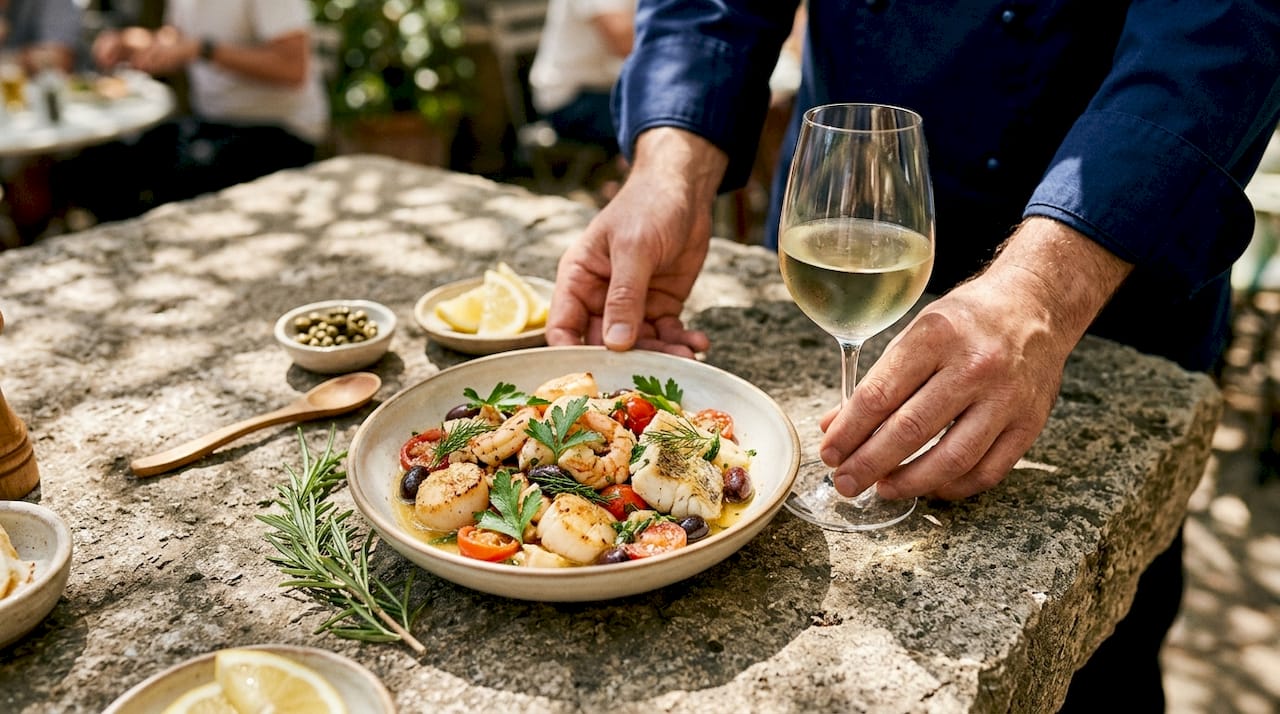
The culinary term for this integration is “food and wine pairing,” but Mediterranean cultures practiced it long before the phrase existed. Fishermen in Catalonia poured local white wine over grilled seafood. Farmers in Sicily drank Nero d’Avola with braised lamb. The pairing was instinctive, regional, and tied to what the land produced. That instinct is what food enthusiasts and home cooks can learn to replicate.
What is the historical and cultural significance of wine in Mediterranean meals?
Viticulture arrived in the Mediterranean roughly 3,000 years ago, carried by Phoenician traders who spread grape varieties and winemaking techniques from the Levant westward across the sea. Archaeological sites in the Penedès region of Catalonia date wine production to the 7th–9th centuries BCE. That is not ancient trivia. It means wine has been woven into Mediterranean food culture for longer than most modern nations have existed.
The cultural practices that grew around wine reveal a lot about Mediterranean values:
- Dilution with water was standard in ancient Greece. Drinking undiluted wine was considered antisocial. The practice prioritized conversation and connection over intoxication.
- Communal pouring at shared meals signaled hospitality and trust between host and guest.
- Regional identity became inseparable from local wine styles. A wine from Jerez tasted like Andalusia. A wine from Samos tasted like the Aegean.
- Trade and diplomacy moved through wine. Fortified wines like Jerez, Marsala, and Samos served as traveling wines linking regions for centuries, and they are now candidates for UNESCO intangible cultural heritage status.
“Wine in the Mediterranean was never just a drink. It was a language spoken between people who shared a table, a harvest, and a coastline.”
That social dimension explains why Mediterranean wine culture survived every political upheaval across three millennia. The drink became inseparable from the ritual of eating together.
How does wine contribute to the health benefits of the Mediterranean diet?
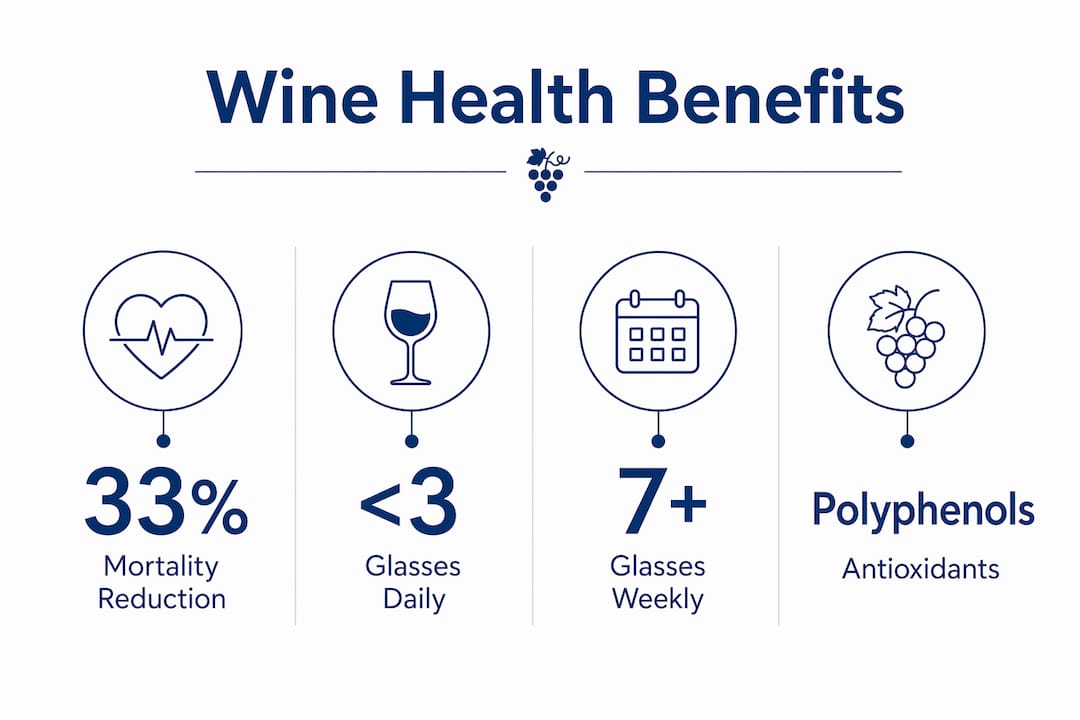
The health case for wine in Mediterranean meals is real, but it comes with a precise set of conditions. The PREDIMED and SUN cohort studies, tracking more than 17,000 participants over 22 years, found that moderate wine intake combined with strict adherence to the Mediterranean diet reduces overall mortality by 33%. That figure represents a 10% additional benefit over the diet alone without wine. The implication is clear: wine amplifies the diet’s protective effect, but only when the diet is already high quality.
Dr. Martínez-González is direct on this point. Wine’s benefits come from synergy with anti-inflammatory foods like olive oil, legumes, fruits, and nuts. Remove those foods, and the protective effect disappears. Wine’s polyphenols and antioxidants work alongside the diet’s other components, not independently of them.
FEAD defines moderation as fewer than 3 glasses per day, with a minimum of 7 glasses per week consumed during meals. The protective effect disappears if consumption exceeds 3 daily glasses or if overall dietary quality is poor. That boundary is not arbitrary. It reflects decades of population data.
Pro Tip: Pair wine with food at every sitting, never drink it on an empty stomach. The Mediterranean tradition of drinking only during meals is not just cultural habit. It is the condition under which the health benefits actually apply.
Wine’s polyphenols, particularly resveratrol found in red wine, act as antioxidants that reduce oxidative stress. They work best when the rest of your plate includes olive oil, vegetables, and legumes. Think of wine as the final ingredient in a recipe that only works when all the other ingredients are already present.
What are the best Mediterranean wine pairings for home cooks?
Pairing wine with Mediterranean food follows a simple logic: match the weight of the wine to the weight of the dish, and let regional origin guide you when in doubt. A wine grown near the sea tends to complement seafood. A wine grown in volcanic soil tends to stand up to bold, spiced meats.
- Seafood and shellfish pair best with crisp, high-acid white wines. Albariño from Galicia, Vermentino from Sardinia, and dry Assyrtiko from Santorini all cut through the brininess of clams, shrimp, and grilled fish without overpowering them.
- Olive oil-based dishes like garlic-roasted vegetables or hummus work well with light-bodied whites or dry rosés. The wine’s acidity mirrors the brightness of the oil.
- Grilled meats and lamb call for medium to full-bodied reds. Tempranillo from Rioja, Nero d’Avola from Sicily, and Xinomavro from northern Greece all have the tannin structure to complement charred, fatty proteins.
- Tapas and shared plates are best served with versatile wines. A chilled fino Sherry or a dry Cava works across multiple small dishes without clashing.
- Fortified wines like Marsala or Jerez shine in cooking. Adding a splash to a pan sauce or a seafood broth deepens flavor in a way that no other ingredient replicates.
Pro Tip: When cooking with wine in Mediterranean cuisine, use a wine you would actually drink. Cooking concentrates flavors, so a poor-quality wine produces a poor-quality sauce.
Wine professionals increasingly emphasize origin and terroir as the most reliable guide to pairing. A wine grown in the same region as the dish’s main ingredient almost always works. That principle makes Mediterranean wine pairings accessible even for home cooks with no formal training.
| Dish type | Recommended wine style |
|---|---|
| Grilled seafood | Crisp white (Albariño, Assyrtiko) |
| Olive oil vegetables | Dry rosé or light white |
| Grilled or braised meats | Medium to full red (Tempranillo, Nero d’Avola) |
| Tapas and small plates | Fino Sherry or dry Cava |
| Pasta with tomato sauce | Light to medium red (Sangiovese, Grenache) |
For a deeper look at how these pairings fit into a full evening, the guide on organizing a wine tasting dinner offers practical structure for home cooks who want to build a full pairing menu.
What are the social and experiential aspects of wine in Mediterranean dining?
Wine in Mediterranean culture does something that no other element of the meal does. It slows people down. A bottle opened at the table signals that the meal is not a transaction. It is an event. Mediterranean dining style is built on this premise: shared food, unhurried conversation, and the pleasure of company over the efficiency of eating.
The social role of wine shows up in specific behaviors that define Mediterranean dining:
- Pouring for others before yourself is a gesture of hospitality that predates modern etiquette guides by centuries.
- Toasting before the first sip marks the beginning of shared time, not just shared food.
- Refilling glasses slowly keeps the pace of the meal deliberate and the conversation continuous.
- Pairing wine with storytelling about its origin connects the drink to place, history, and identity.
“The Mediterranean table is not complete with food alone. Wine is the thread that connects the courses, the people, and the memory of the meal.”
Modern Mediterranean dining treats wine as an experiential element, not just a flavor component. Restaurants and home cooks alike use wine to frame the meal as a cultural act. That framing is what separates a Mediterranean dinner from a meal that happens to include Mediterranean food. You can read more about building that full experience in this guide to Mediterranean dining for practical tips on pacing, pairing, and atmosphere.
Wine also carries cultural identity in a way that food sometimes cannot. Consumers increasingly seek wines tied to origin and story, connecting the glass to a specific coastline, hillside, or harvest. That connection transforms drinking into a form of cultural literacy.
Key Takeaways
Wine’s role in Mediterranean meals is most powerful when it operates as part of a complete system: quality food, moderate consumption, and shared company at the table.
| Point | Details |
|---|---|
| Health benefits require context | Moderate wine reduces mortality by 33% only within a high-quality Mediterranean diet. |
| History shapes the practice | Phoenician viticulture 3,000 years ago embedded wine permanently into Mediterranean food culture. |
| Pairing follows regional logic | Match wine origin to dish origin for the most reliable and authentic flavor combinations. |
| Moderation is the condition | Fewer than 3 glasses per day, consumed during meals, is the threshold for protective effects. |
| Wine is a social tool | Its primary cultural function is to slow meals down and deepen human connection at the table. |
Wine at the table: what I’ve learned from years of Mediterranean dining
Most food writing treats wine pairing as a technical skill you acquire through study. My experience says the opposite. The Mediterranean approach to wine is intuitive first and analytical second. The people who get it most right are not sommeliers. They are grandmothers who pour whatever is local and cold and move on.
What I find genuinely underappreciated is the dilution history. Ancient Greeks watered down their wine deliberately, not because the wine was bad, but because drinking to excess was considered a failure of character. That cultural attitude toward moderation is still embedded in how Mediterranean families drink today. They pour less than you expect. They refill slowly. They make a single bottle last an entire meal for four people.
The health research confirms what the culture already knew. Wine’s benefits are not in the wine. They are in the combination of wine with the right food, the right pace, and the right company. Isolate any one of those elements and the effect diminishes. That is the lesson worth taking home.
For home cooks, the practical takeaway is this: stop treating wine as an accessory and start treating it as an ingredient in the meal’s overall experience. Choose something regional when you can. Serve it with food, not before. Pour less than you think you need. The Mediterranean table has been proving that formula correct for 3,000 years.
— YellowRock
Kokcha and the art of Mediterranean wine pairing in Barcelona
Kokcha, located steps from the Sagrada Familia in Barcelona, brings the Mediterranean table to life with dishes built for exactly this kind of pairing.
The seafood paella is the clearest example: saffron rice, fresh shellfish, and coastal flavors that call for a crisp white or dry rosé. The garlic octopus and garlic parsley shrimp tapas follow the same logic, pairing naturally with light, high-acid wines that let the seafood speak. Kokcha’s full menu is built around the principle that great Mediterranean food and the right wine make each other better. If you want to experience that combination in person, the table is ready.
FAQ
What is the role of wine in Mediterranean meals?
Wine serves as a cultural, culinary, and social element in Mediterranean meals. It enhances flavors, supports health within the Mediterranean diet, and marks the meal as a shared social occasion.
How much wine is considered moderate in the Mediterranean diet?
The Spanish Foundation for Digestive Health defines moderation as fewer than 3 glasses per day, consumed during meals as part of a high-quality diet.
Does wine actually improve health in the Mediterranean diet?
Research from the PREDIMED and SUN cohorts shows a 33% reduction in overall mortality when moderate wine consumption is combined with strict adherence to the Mediterranean diet. The benefit disappears outside that dietary context.
What wines pair best with Mediterranean seafood?
Crisp, high-acid whites like Albariño, Vermentino, and Assyrtiko pair best with Mediterranean seafood. Their acidity complements brininess without overpowering delicate flavors.
Can I use wine in Mediterranean cooking at home?
Yes. Adding wine to pan sauces, seafood broths, or braising liquids deepens flavor significantly. Use a wine you would drink, since cooking concentrates whatever qualities the wine already has.