Mezze is defined as a collection of small, shared dishes that together form a complete meal in Mediterranean and Middle Eastern cultures. The word itself traces back to the Persian “maza,” meaning “taste” or “delight”, and that etymology tells you everything about its purpose. Understanding what is mezze in Mediterranean culture means grasping that it is not just food. It is a social ritual built around sharing, pacing, and hospitality that stretches across Greece, Turkey, Lebanon, Syria, and the Balkans. Every dish on the table carries both flavor and meaning.
What is mezze in Mediterranean culture?
Mezze is a diverse selection of small shared dishes that typically includes 5–10 groups of foods served gradually to the table. The spread covers dips, salads, vegetables, breads, and proteins, all arriving in a deliberate sequence rather than all at once. That gradual flow is the point. The meal is designed to last hours, not minutes.
The tradition appears across the Eastern Mediterranean, the Middle East, and the Balkans, with each region putting its own stamp on the format. What unites them all is the core principle: no individual plates, no rush, and no single dish that dominates. The table belongs to everyone at it.
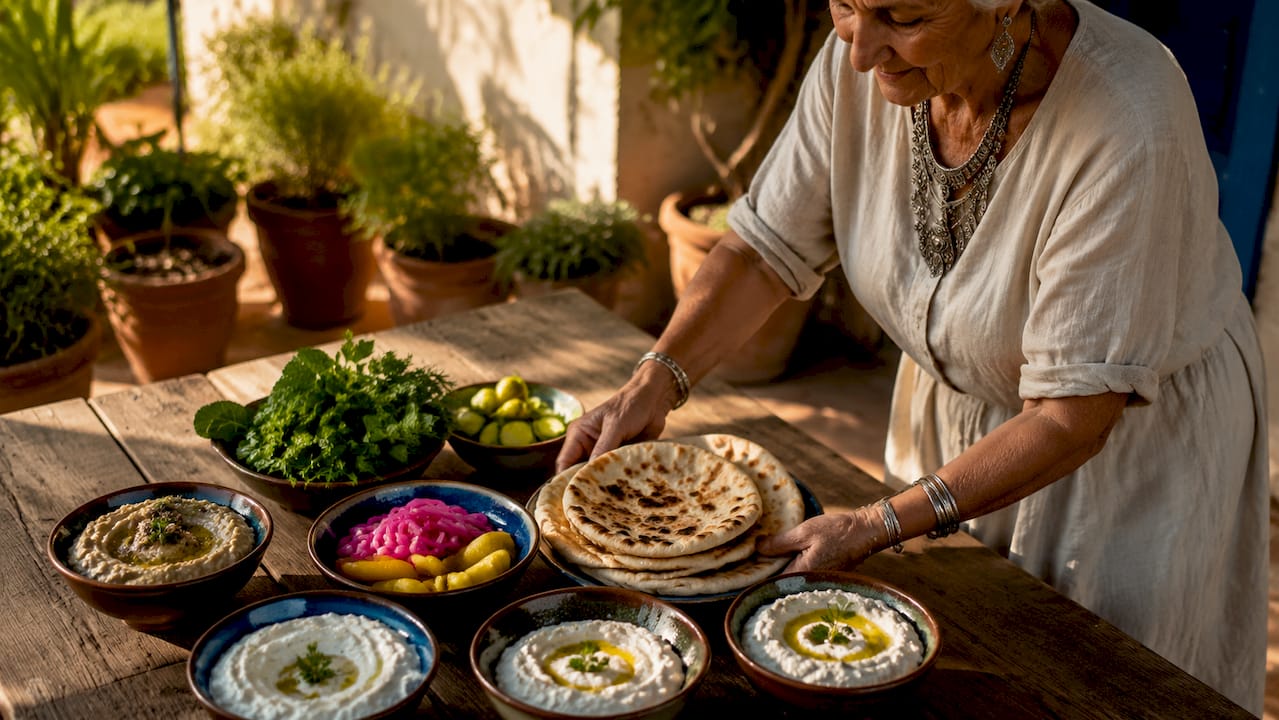
Mezze also carries a clear social contract. Offering mezze to a guest signals trust and generosity. Accepting it signals respect. This is why the tradition has survived for centuries across cultures with very different histories and religions.
What dishes make up a mezze platter?
A classic mezze platter draws from several categories, and the variety of textures and flavors is deliberate. A balanced platter for 6–8 guests includes at least three dips, fresh vegetables, pickled items, and warm bread. That combination creates contrast: creamy against crunchy, cool against warm, mild against sharp.
Common mezze platter examples include:
- Dips: hummus, baba ganoush, tzatziki, muhammara (a roasted red pepper and walnut paste from Syria)
- Salads: tabbouleh, fattoush, Greek salad with feta and olives
- Vegetables: roasted eggplant, stuffed grape leaves (dolmades), marinated artichokes
- Breads: pita, lavash, or sesame-crusted flatbreads
- Proteins: grilled halloumi, lamb kofta, grilled octopus, or falafel for a vegetarian version
- Pickles and extras: pickled turnips, olives, capers, and fresh herbs
The platter is mostly plant-forward by nature. That makes it budget-friendly and accessible without sacrificing depth of flavor. Proteins appear, but they rarely dominate the table the way they would in a Western main course.
Pro Tip: Aim for at least one dish from each category: a creamy dip, something acidic like pickles or a dressed salad, a warm element, and a bread. That four-part structure gives every guest something to reach for.
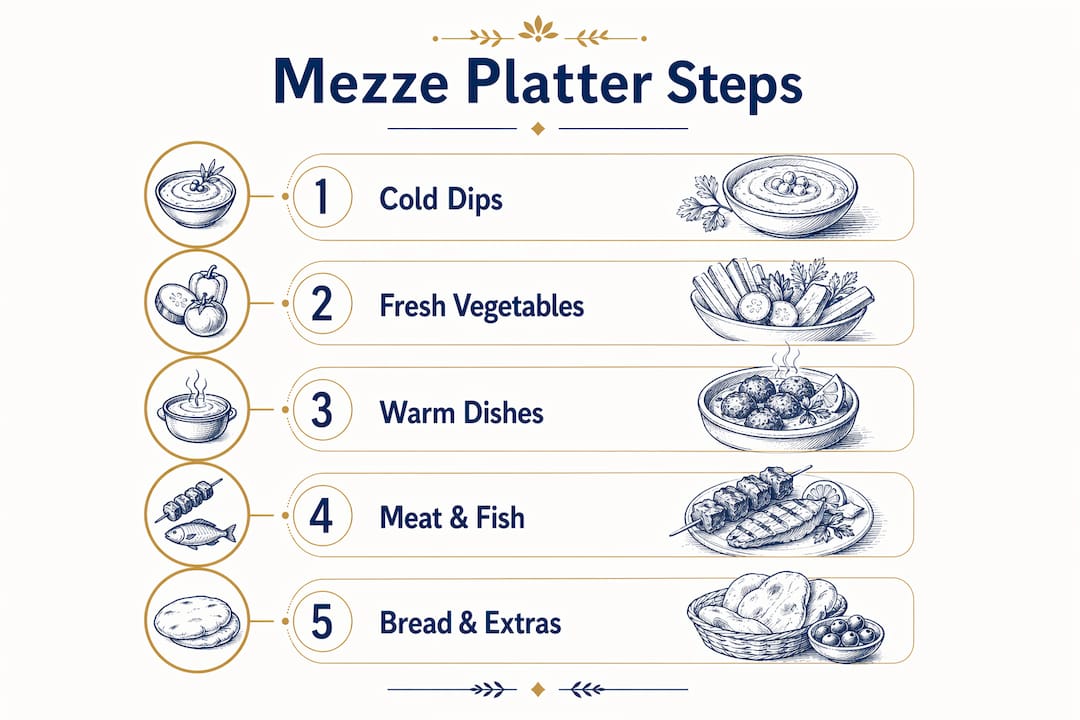
Traditional mezze serving follows a clear order: cold vegetable dips first, then warm dishes, and finally meat or fish stews and grills. This progression manages appetite and keeps the social energy steady throughout the meal.
How does mezze function as a social experience?
Mezze differs from Western appetizers because it acts as a social pace-maker rather than just an edible opening act. The modest portions are sized to pace conversation, not just to satisfy hunger. The meal unfolds through social regulation, and that is a feature, not a limitation.
In Greek culture, the concept of parea, meaning “company” or “good company,” sits at the heart of mezze dining. Communal sharing without individual portions forces interaction. You reach across the table. You ask what someone is eating. You pass the bread. The physical act of sharing creates conversation.
“A messy, well-used mezze table indicates success and warmth, symbolizing trust and erasing social barriers.” — Greek Meze Guide
Hosts and taverns keep the mezze table constantly replenished to create an unpredictable, prolonged dining experience. A new dish arriving unexpectedly restarts the conversation. It signals that the meal is not over, that there is more to share, and that the host wants you to stay.
Pro Tip: When hosting mezze at home, resist the urge to put everything out at once. Bring out two or three dishes first, then add more as the evening progresses. The surprise of a new plate keeps energy at the table alive.
What are the main regional variations of mezze?
Despite sharing core ingredients, each region’s mezze has distinct flavors that reflect local culture and seasonal produce. The differences are real enough that a Turkish mezze table and a Lebanese one feel like different dining experiences, even when both include hummus and olives.
| Region | Key Characteristics | Signature Dishes |
|---|---|---|
| Turkey | Yogurt-based dishes, pomegranate molasses, strong use of spices | Haydari (thick yogurt dip), stuffed mussels, ezme (spiced tomato salad) |
| Greece | Olive oil, fresh vegetables, seafood, feta cheese | Taramosalata, grilled octopus, spanakopita, dolmades |
| Lebanon and Syria | Herb-forward, garlic-heavy, generous use of lemon | Hummus, kibbeh, fattoush, labneh with olive oil |
| Balkans | Grilled meats, cheese-forward, paprika influence | Ajvar (roasted pepper spread), grilled sausages, white cheese platters |
Seasonal ingredients shape the mezze table more than any recipe book. A Greek summer mezze leans on fresh tomatoes, cucumbers, and grilled fish. A Turkish winter spread shifts toward warm, spiced dishes and preserved vegetables. Understanding local and seasonal ingredients is the key to reading a regional mezze menu correctly.
For a deeper look at how these regional differences show up across the broader Mediterranean menu, the differences between Mediterranean dishes guide breaks down flavor profiles by origin.
How does mezze compare to Spanish tapas?
Mezze and tapas are both small-plate traditions, but their purpose and context are fundamentally different. Tapas are eaten as bar food before or alongside drinks, while mezze is served throughout a social meal that can last several hours. Tapas are an appetizer or snack format. Mezze is the meal itself.
| Feature | Mezze | Spanish Tapas |
|---|---|---|
| Role in the meal | Complete meal | Appetizer or bar snack |
| Serving duration | Several hours, gradual | Quick, often all at once |
| Social function | Communal ritual, hospitality | Casual snacking, social drinking |
| Typical protein | Grilled meats, fish, legumes | Jamón, chorizo, anchovies, tortilla |
| Bread role | Central, used to scoop dips | Accompaniment, not central |
The key distinction is intent. A tapas order fills a gap before dinner. A mezze spread replaces dinner entirely while creating a social experience around the table. Both traditions celebrate small portions and sharing, but mezze carries a heavier cultural weight around hospitality and pacing.
For travelers curious about the Spanish side of this comparison, the guide to Spanish small plates at Kokcha covers tapas culture in detail.
How can you build and serve an authentic mezze platter at home?
Building a mezze platter at home is straightforward when you follow a clear structure. The goal is variety, balance, and enough food that the table looks generous without being chaotic.
- Start with three dips. Hummus, tzatziki, and baba ganoush cover creamy, tangy, and smoky. Place them in small bowls spread across the board.
- Add fresh and pickled vegetables. Sliced cucumbers, cherry tomatoes, and radishes go raw. Add a small dish of olives and pickled turnips for acidity.
- Include warm bread. Pita or flatbread should arrive warm. Cut it into wedges so guests can scoop easily.
- Layer in a protein. Grilled halloumi, falafel, or lamb kofta works well. Keep portions small since the dips and vegetables carry the meal.
- Finish with a salad. Tabbouleh or a simple herb and tomato salad adds freshness and color to the board.
Proper mezze layering means placing dips first, then fresh vegetables, then warm items. Avoid overcrowding the board. Visual space between dishes makes the platter look abundant rather than cluttered.
Pro Tip: Use boards or trays with natural edges, like wood or slate, to frame the platter. Small ceramic bowls for dips keep flavors separate and make the spread look intentional rather than improvised.
For more guidance on the flavors and ingredients that define this style of cooking, the Mediterranean flavors home cook’s guide at Kokcha is a practical starting point. If you want to go deeper on platter assembly technique, the charcuterie board guide from Mile High Cook applies directly to mezze presentation.
Key Takeaways
Mezze is a complete meal built on shared small dishes, and its cultural power comes from the social ritual of communal eating, not just the food itself.
| Point | Details |
|---|---|
| Mezze is a full meal | It replaces a main course, not just an appetizer, across Mediterranean and Middle Eastern cultures. |
| Social pacing is central | Dishes arrive gradually to sustain conversation and extend the meal over several hours. |
| Regional variations are significant | Turkish, Greek, Lebanese, and Balkan mezze each use distinct ingredients and serving styles. |
| Mezze differs from tapas | Tapas are bar snacks; mezze is a structured communal meal with hospitality at its core. |
| Home platters need balance | Combine three dips, fresh and pickled vegetables, warm bread, and one protein for a complete spread. |
Why mezze changed how I think about eating
Most food cultures separate eating from socializing. You eat, then you talk. Mezze refuses that division. The first time I sat down to a proper mezze spread in a small taverna outside Athens, I realized the food was almost secondary to what was happening around the table. Dishes kept arriving. Nobody checked the time. The table got messier and louder, and that was the sign things were going well.
What strikes me most about mezze is how it removes the hierarchy of the meal. There is no star dish. Nobody gets a bigger portion. The table is equal, and that equality creates a specific kind of ease that is hard to manufacture in other dining formats. I have seen it break the ice between strangers faster than any cocktail hour.
The lesson for food lovers and travelers is this: do not rush a mezze table. The pace is the point. If you find yourself eating quickly and looking for the main course, you have missed what mezze actually is. Slow down, reach across the table, and let the conversation run longer than the food does. That is when mezze works exactly as it was designed to.
— YellowRock
Mezze and Mediterranean dining worth experiencing in Barcelona
Barcelona sits at the crossroads of Mediterranean food culture, and the city’s best restaurants treat mezze-style sharing as a natural extension of that tradition.
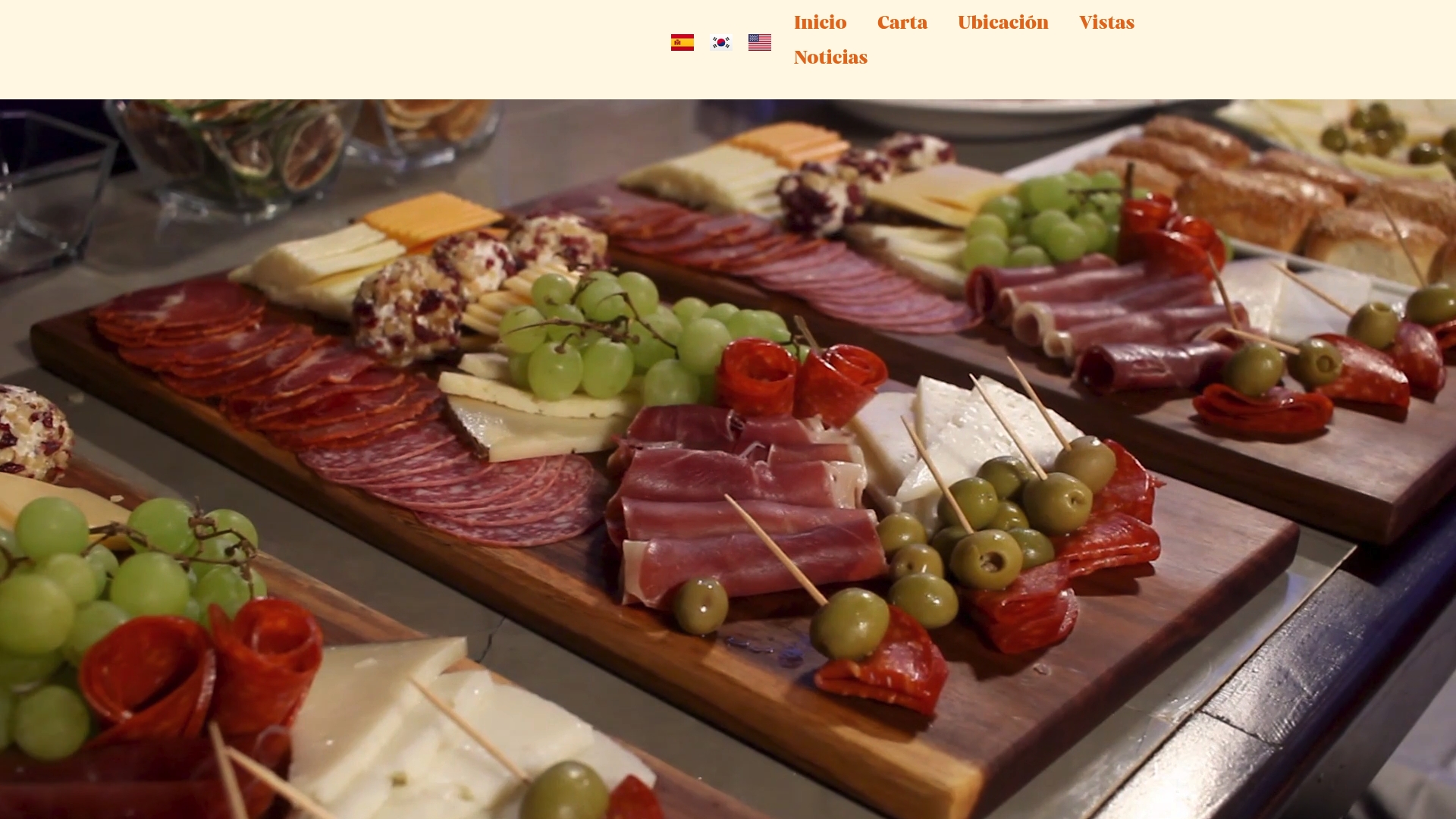
Kokcha, located steps from the Sagrada Familia, brings that spirit to the table with a menu rooted in Mediterranean flavors, shared plates, and seasonal ingredients. Whether you are a traveler looking for an authentic dining experience or a local who wants to explore the region’s culinary range, the Mediterranean cuisine experience in Barcelona at Kokcha is worth your time. For a broader look at where Mediterranean food is heading, the innovative Mediterranean gastronomy trends for 2026 page covers what is shaping menus across the region right now.
FAQ
What does the word “mezze” actually mean?
The word “mezze” derives from the Persian “maza,” meaning “taste” or “delight.” Its journey through Ottoman and Mediterranean languages reflects the shared culinary heritage of the region.
How many dishes should a mezze platter include?
A well-built mezze platter typically covers 5–10 dish groups, including dips, salads, vegetables, bread, and at least one protein. For 6–8 guests, three dips plus supporting dishes is the standard starting point.
Is mezze the same as an appetizer?
Mezze is not an appetizer. It functions as a complete meal served gradually over several hours, unlike Western appetizers that precede a main course.
What makes mezze different from Spanish tapas?
Tapas are bar snacks eaten before or alongside drinks, while mezze constitutes the full meal. The social context and duration of eating are fundamentally different between the two traditions.
Which countries have the strongest mezze traditions?
Greece, Turkey, Lebanon, Syria, and the Balkan countries all have deep mezze traditions. Each region uses local and seasonal ingredients, which is why the same dish like hummus or stuffed grape leaves can taste noticeably different from one country to the next.