Terrace dining is defined as the practice of eating in an open-air or semi-open architectural space that integrates natural light, fresh air, and landscape into the guest experience. The role of terrace dining extends far beyond adding extra seats outside. It shapes a restaurant’s identity, improves guest well-being, deepens social bonds, and carries centuries of cultural tradition. From Barcelona’s Mediterranean terraces near the Sagrada Familia to rooftop venues in major cities, outdoor dining experiences have become a defining feature of modern hospitality. This article breaks down exactly why that matters for food lovers and casual diners alike.
How does terrace dining affect restaurant economics?
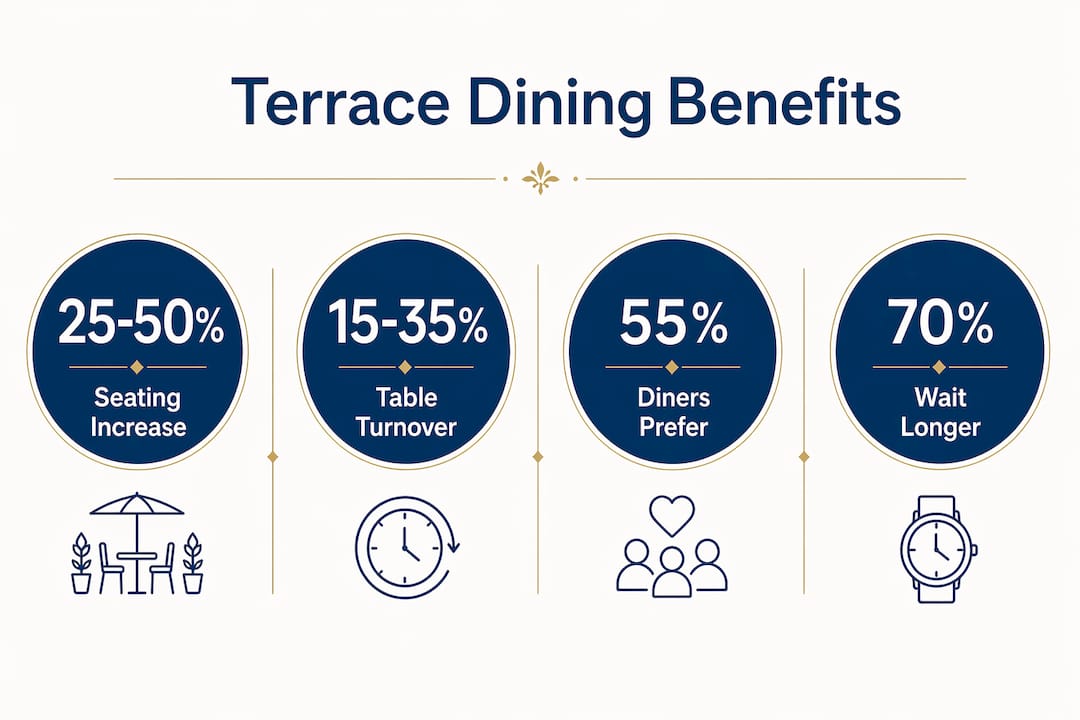
Outdoor seating is one of the most measurable growth levers in the restaurant industry. Outdoor seating increases capacity by 25–50% and annual table turnover by 15–35%. That means a mid-size restaurant adding a well-designed terrace can generate significantly more revenue without expanding its kitchen or core footprint.
Guest preferences back this up. 55% of diners prefer outdoor seating in good weather, and 70% say they will wait longer for an outdoor table. Those numbers tell restaurateurs something clear: the terrace is not a bonus amenity. It is a primary draw.

The advantages of outdoor terrace seating go beyond raw capacity. Comfort elements like shade structures, greenery, warm lighting, and weather-resistant furniture extend how long guests stay. Longer stays mean more drinks ordered, more desserts, and higher average checks. The hidden economic lever in terrace design is managing dwell time, not just headcount.
Social media visibility adds another layer. A well-designed terrace with natural light and distinctive decor generates organic photo sharing. That visibility functions as free marketing, attracting new guests who discover the venue through Instagram or Google image searches before ever reading a review.
Pro Tip: If you are choosing between two restaurants in the same neighborhood, the one with a thoughtfully designed terrace almost always signals higher investment in the overall guest experience.
Why does terrace dining improve mental well-being?
The benefits of dining al fresco are not just atmospheric. They are physiological. Outdoor environments reduce mental fatigue by offering sensory changes that indoor artificial lighting and screens cannot replicate. Natural light, moving air, and greenery work together to soothe the nervous system and shift the body toward a relaxed state.
Research supports a surprisingly low threshold for this effect. Just 15 minutes outdoors in an urban setting can meaningfully reduce stress and anxiety. Short, attentive interactions with nature outperform longer, distracted ones. A 45-minute terrace dinner where you are genuinely present delivers more mental restoration than a two-hour indoor meal spent half-watching a screen.
“Outdoor dining provides a deliberate sensory change that cues the nervous system to relax, making meals feel like an evening wind-down ritual rather than a mundane routine.” — Real Simple
The benefits of outdoor terrace dining build on this in three specific ways:
- Natural light exposure regulates circadian rhythms and supports serotonin production, especially during evening golden-hour meals.
- Fresh air and ambient sound (wind, distant city noise, birds) replace the closed, recycled air of indoor spaces that can feel subtly fatiguing over time.
- Greenery and open sightlines reduce the visual compression that indoor dining rooms create, giving the brain a sense of space and freedom.
Pro Tip: Schedule your next terrace meal for early evening rather than midday. The combination of lower sun angle, cooler air, and softer light maximizes the relaxation effect that makes outdoor dining feel restorative.
Does outdoor dining create stronger social connections?
The social case for terrace dining is one of the most underappreciated arguments for choosing a table outside. Outdoor dining deepens social connections by removing the indoor distractions that fragment attention: televisions mounted on walls, cluttered visual environments, and the reflexive pull toward phones that indoor settings seem to trigger.
Terraces function as what researchers call social friction reducers. When the environment is calm and sensory-rich, conversation flows more naturally. People make more eye contact, speak more openly, and stay present longer. Shared outdoor meals support a process called social co-regulation, where being physically present with others in a relaxed setting actively lowers stress hormones for everyone at the table.
“Terraces reduce indoor distractions such as TVs and clutter, functioning as social friction reducers that enhance conversation quality and social co-regulation.” — Real Simple
Compare this to a typical indoor restaurant experience. Noise levels in enclosed dining rooms regularly exceed 80 decibels, which forces people to lean in, repeat themselves, and expend cognitive energy just to follow a conversation. A terrace with open air and natural acoustic diffusion keeps sound levels lower and communication easier.
The benefits of terrace dining for social bonding are especially relevant for groups. Circular or U-shaped table arrangements common on Mediterranean terraces allow everyone to see and speak to each other without the hierarchy that long rectangular indoor tables create. That layout choice alone changes the social dynamic of a meal.
What makes mediterranean terrace dining culturally distinct?
Mediterranean terrace culture is not a seasonal trend. It is a daily social institution. Mediterranean terraces are designed as social stages with furniture layouts that encourage shared meals, extended conversation, and unhurried rituals. Deep seating, low tables, and circular arrangements are deliberate design choices, not aesthetic preferences.
Terrace dining originated in 19th-century Paris, where merchants placed tables on sidewalks to create fresh-air venues for conversation and community. That tradition traveled south and merged with Mediterranean outdoor living culture to produce something distinct: a dining format where the meal is secondary to the social ritual it anchors.
The contrast with northern European or American outdoor dining is significant.
| Feature | Mediterranean Terrace | Northern Outdoor Dining |
|---|---|---|
| Frequency of use | Daily, year-round | Seasonal, weather-dependent |
| Furniture design | Deep seating, low tables, circular layouts | Standard indoor furniture moved outside |
| Social purpose | Extended communal ritual | Convenience or novelty |
| Meal pacing | Slow, multi-course, unhurried | Similar to indoor pace |
| Cultural weight | Core social institution | Secondary dining option |
Mediterranean patios exemplify what designers call social architecture. Every element, from the height of the table to the depth of the chair cushion, is calibrated to sustain long, low-key communal dining. That design philosophy is why a meal on a Barcelona terrace near the Sagrada Familia feels fundamentally different from eating outside at a northern European café.
How do modern restaurants use terraces as brand identity?
The most forward-thinking restaurants treat the terrace as an extension of their interior design, not a separate space. When outdoor spaces reflect the interior’s design language, terrace dining becomes a brand narrative rather than an afterthought. Matching materials, color palettes, and comfort levels indoors and outdoors creates a coherent guest experience that reinforces the restaurant’s identity at every touchpoint.
This approach transforms what makes terrace dining special from a location choice into a storytelling device. A restaurant that carries its stone finishes, warm lighting, and textile choices from the interior onto the terrace signals that the outdoor space was designed with the same care as the dining room. Guests feel that intention, even if they cannot articulate it.
Multi-functional terrace venues take this further by blending dining, lounging, and socializing in a single outdoor space. Rooftop venues in Barcelona, for example, often combine a full dinner service with a pre-dinner aperitivo area and a post-dinner lounge zone. That flexibility increases dwell time and creates multiple revenue moments within a single guest visit.
- Material continuity: Using the same stone, wood, or ceramic finishes outside as inside signals design coherence.
- Comfort parity: Outdoor furniture that matches indoor comfort levels removes the sense that the terrace is a compromise.
- Lighting design: Warm, layered outdoor lighting extends the usable hours of a terrace well past sunset.
- Acoustic planning: Strategic planting, soft furnishings, and layout choices manage sound levels without enclosing the space.
Pro Tip: When evaluating a restaurant’s terrace, look at whether the outdoor furniture matches the quality of the indoor seating. That single detail reveals how seriously the venue takes its outdoor dining experience.
Key takeaways
Terrace dining delivers measurable value across economics, well-being, social connection, and cultural identity, making it one of the most complete dining formats available to modern food enthusiasts.
| Point | Details |
|---|---|
| Economic impact is real | Terraces increase seating capacity by 25–50% and table turnover by 15–35%. |
| Mental health benefits are fast | Just 15 minutes outdoors reduces stress and anxiety in measurable ways. |
| Social quality improves outside | Removing indoor distractions deepens conversation and supports social co-regulation. |
| Mediterranean design is intentional | Circular layouts and deep seating are built to sustain long, communal meals. |
| Brand coherence matters | Terraces that match interior design quality create stronger guest experiences. |
Why terrace dining is more than a trend
I have spent years paying close attention to how dining environments shape the quality of a meal, and the outdoor terrace consistently outperforms expectations in ways that are hard to explain until you experience them firsthand. The food does not change. The service does not change. But something about sitting under open sky with natural light and moving air shifts the entire register of the experience.
What strikes me most is how Mediterranean cultures never needed research to validate this. They built it into daily life centuries ago. The design of Mediterranean outdoor spaces reflects an intuitive understanding that food tastes better when the body is relaxed and the social environment is open. Modern hospitality is only now catching up with what Barcelona, Athens, and Marseille have always known.
My honest observation is that most diners underestimate how much the environment shapes their perception of the food itself. A well-executed paella on a sun-warmed terrace with a view of the Sagrada Familia is a categorically different experience from the same dish eaten under fluorescent lighting. The food is the same. The experience is not. That gap is exactly what the restaurant atmosphere conversation is really about.
For anyone who has not made terrace dining a deliberate habit, the research and the cultural evidence both point the same direction. Seek it out. The benefits are not subtle.
— YellowRock
Experience mediterranean terrace dining at Kokcha
Kokcha is a Mediterranean restaurant in Barcelona, steps from the Sagrada Familia, with a terrace designed to deliver exactly the sensory and social experience this article describes. The outdoor space pairs authentic Mediterranean flavors with open-air comfort, natural light, and views that make every meal feel like more than just dinner.

The menu covers the full range of Mediterranean cuisine in Barcelona, from tapas and fresh seafood to paellas, grilled meats, and seasonal salads. If you want to understand why terrace dining matters, the most direct path is a table outside with a seafood paella and a view worth staying for. Explore 2026 Mediterranean dining trends and see what Kokcha brings to the table this season. Reservations are available directly through the website.
FAQ
What is the role of terrace dining in hospitality?
Terrace dining serves as a hospitality experience that combines architectural identity, sensory richness, and social connection. It extends the guest experience beyond food by integrating natural light, open air, and landscape into the meal.
How does outdoor dining benefit mental health?
Outdoor dining reduces mental fatigue by replacing artificial indoor environments with natural light, fresh air, and greenery that soothe the nervous system. Even 15 minutes outside can lower stress and anxiety levels.
Why is mediterranean terrace dining different from other outdoor dining?
Mediterranean terrace dining is a daily social ritual, not a seasonal option. Circular seating arrangements, low tables, and deep chairs are designed to sustain long, communal meals rather than replicate indoor dining outside.
Does terrace seating increase restaurant revenue?
Outdoor seating increases a restaurant’s capacity by 25–50% and annual table turnover by 15–35%. Comfortable, well-designed terraces also extend dwell time, which raises average spend per visit.
What should you look for in a quality terrace restaurant?
Look for material and comfort continuity between the indoor and outdoor spaces. When a restaurant invests equally in both environments, the terrace becomes a genuine extension of the dining experience rather than an overflow area.