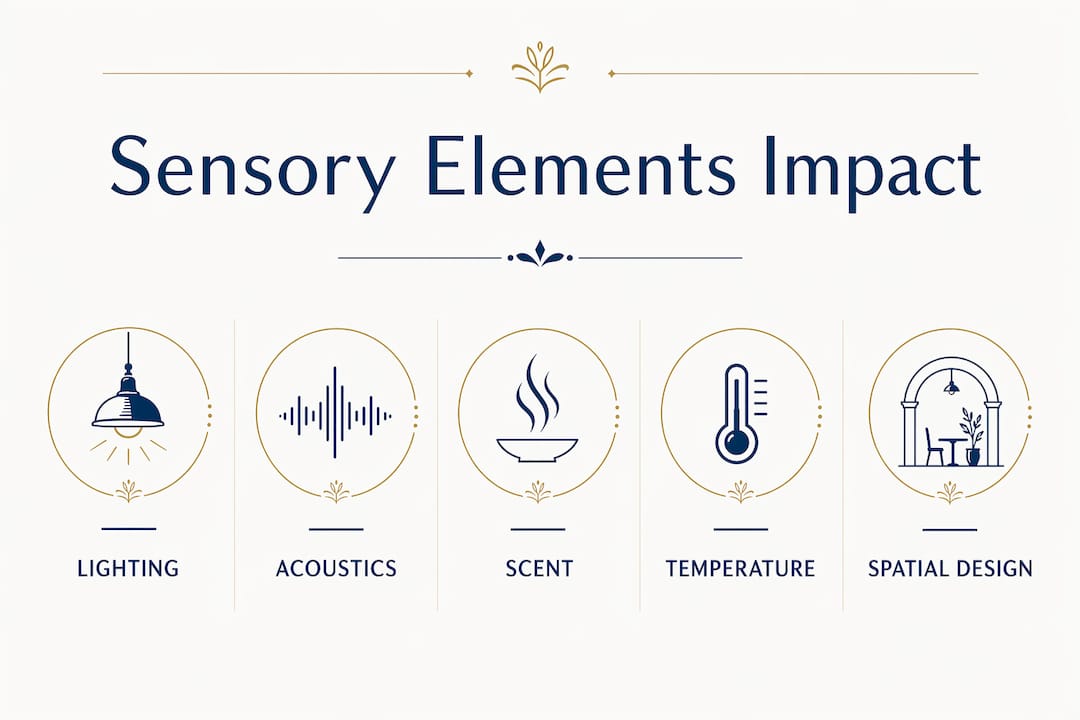
Restaurant ambiance is defined as the full multisensory environment a guest experiences from the moment they walk through the door, including lighting, sound, scent, temperature, and spatial design. The importance of restaurant ambiance goes far beyond decoration. Research confirms that ambiance conditions the brain before a single bite, altering flavor perception and emotional response independently of the food itself. A striking 70% of consumers name atmosphere as their top priority when choosing a venue for romantic dining. That figure alone tells you how much is at stake for any restaurant owner or hospitality professional who treats ambiance as an afterthought.
Why does restaurant ambiance matter so much?
Ambiance functions as a pre-processing sensory engine. Before a guest tastes anything, the environment is already shaping what they expect to feel and how food will register on the palate. This is not a soft claim. Sensory environments alter brain processing of flavor before tasting happens, which means a poorly designed room can make excellent food taste flat, and a well-designed room can make a good dish taste exceptional.
The industry term for this is servicescape, a concept from hospitality research that describes the physical and sensory environment as a strategic management tool. Servicescape thinking moves ambiance out of the interior design department and into operations, marketing, and guest experience strategy. Restaurant owners who understand this shift stop asking “Does it look nice?” and start asking “What does this environment make guests feel, spend, and say?”
Ambiance also acts as a psychological anchor for price sensitivity. An elevated sensory environment makes premium prices feel justified. Guests in a thoughtfully designed space perceive higher overall quality, even before the menu arrives. That perception directly affects revenue.
How do sensory elements shape the dining atmosphere?
Ambiance is not a single lever. It is a system of sensory inputs that must work together. Multisensory coherence, meaning the alignment of lighting, scent, sound, temperature, and spatial layout, drives hospitality experiential value more than any single element in isolation.
Lighting
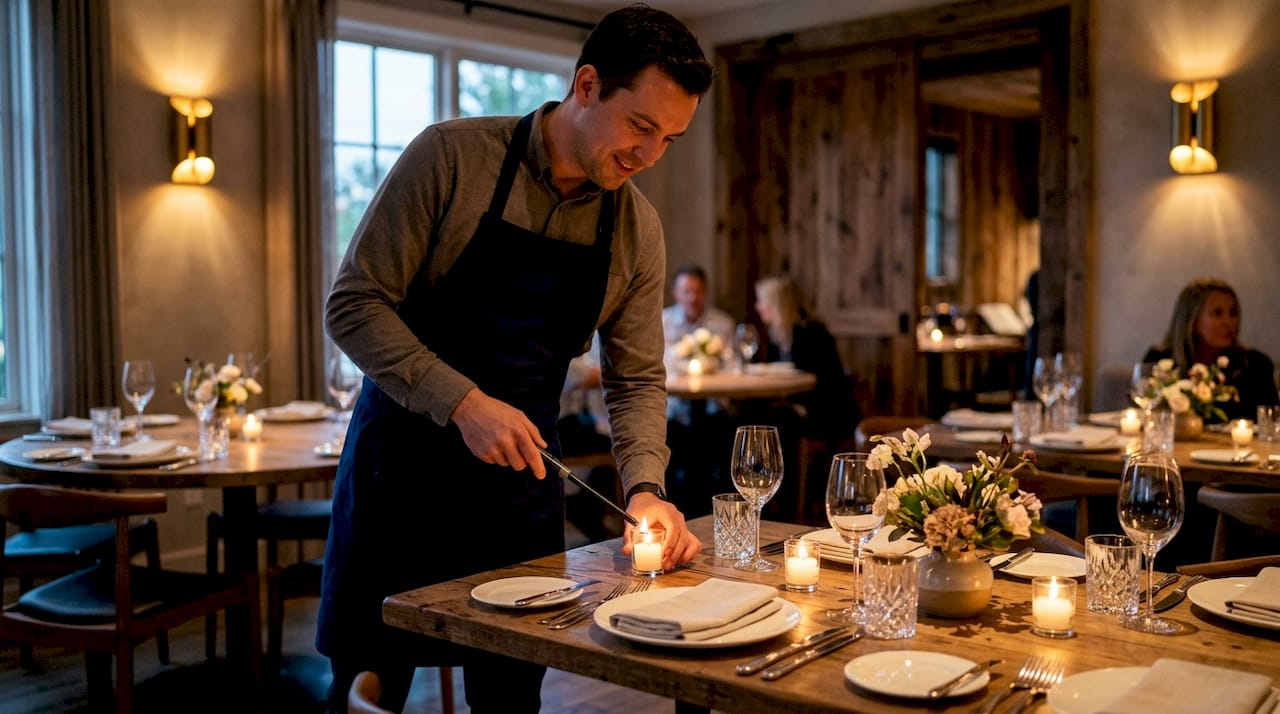
Lighting is the most powerful behavioral tool in a restaurant’s design kit. Dim, warm lighting slows eating pace and encourages guests to order more. Bright, cool lighting accelerates turnover by signaling efficiency. This means your lighting choice is not aesthetic. It is a direct decision about revenue per table and guest experience quality.
Acoustics
Sound shapes flavor. High ambient noise suppresses a diner’s ability to perceive sweet and salty flavors, making food taste flat in loud environments. Guests often blame the kitchen when the real problem is the room. Soft acoustics also extend conversation duration, which increases the likelihood of dessert orders and return visits.
Scent, temperature, and spatial design
Scent operates below conscious awareness but registers emotionally. A subtle, congruent scent, such as fresh herbs in a Mediterranean setting, reinforces the cuisine’s identity and makes the space feel more authentic. Temperature is the most overlooked element. Inadequate temperature regulation causes dissatisfaction even when lighting, scent, and music exceed expectations. Spatial design, including table spacing, ceiling height, and sightlines, determines whether guests feel comfortable enough to linger and recommend the venue.
Pro Tip: Test your restaurant’s sensory coherence by sitting at three different tables during service and noting what you hear, smell, and feel. Inconsistencies between zones are invisible to staff but obvious to guests.
The key insight from hospitality research is that ambiance must be managed as a unified system, not a checklist of individual features. When lighting, sound, and scent contradict each other, guests feel vaguely uncomfortable without knowing why. When they align, guests feel at home and stay longer.
How does ambiance affect customer satisfaction and business results?
The business case for investing in ambiance is direct. Gratification and room aesthetics are the top predictors of positive word-of-mouth recommendations. A guest who feels genuinely comfortable and pleased with the environment will tell others. That recommendation is worth more than any paid promotion.
Spatial design and aesthetics also drive customer loyalty and intention to return. Guests do not just come back for the food. They come back for how the place made them feel. Ambiance is the mechanism that creates that feeling, and it works whether or not the guest can articulate it.
The trade-off every operator faces is between high-energy environments and comfortable ones. Restaurants must choose between high-energy settings that drive table turnover and softer acoustics that support comfort and longer stays. Neither is wrong. The mistake is designing for both simultaneously, which delivers neither outcome effectively.
Pro Tip: Define your revenue model before designing your ambiance. If you rely on high covers per night, design for energy and pace. If you rely on high spend per cover, design for comfort and conversation.
The ambiance-to-revenue connection also runs through perceived food quality. Guests in elevated sensory environments rate the same dishes higher than guests in neutral or poorly designed spaces. This is not a placebo effect to dismiss. It is a documented behavioral pattern that restaurant owners can use deliberately.
| Ambiance element | Business impact |
|---|---|
| Warm, dim lighting | Slows pace, increases order value per cover |
| Controlled acoustics | Extends stay duration, improves flavor perception |
| Coherent scent | Reinforces brand identity, elevates perceived quality |
| Comfortable temperature | Prevents dissatisfaction, supports positive reviews |
| Aesthetic spatial design | Drives loyalty and word-of-mouth recommendations |
Practical tips for designing and managing restaurant ambiance
Hospitality professionals who treat ambiance as a managed system, rather than a fixed design decision, consistently outperform those who set it and forget it.
-
Define your ambiance goal first. Decide whether your priority is efficiency, intimacy, or social energy before choosing any sensory element. Every lighting, acoustic, and layout decision should serve that goal.
-
Audit your acoustics before opening. Hard surfaces, high ceilings, and open kitchens create noise problems that no amount of soft music can fix. Bring in an acoustic consultant or use sound-absorbing panels, upholstered seating, and fabric ceiling treatments to control the room.
-
Use lighting zones. A single lighting scheme rarely works across an entire dining room. Use brighter light near the bar or entrance and warmer, dimmer light at dining tables. Dimmer switches give you control across service periods.
-
Train staff as ambiance contributors. The way a server speaks, moves, and presents dishes is part of the sensory environment. Rushed, loud, or inattentive service breaks the atmosphere regardless of how well the room is designed. Staff training should include ambiance awareness, not just menu knowledge.
-
Monitor temperature actively. A full dining room generates heat. Set your HVAC to a lower baseline than you think you need, and adjust during service. Guests who are too warm leave early and rarely return.
-
Align scent with cuisine identity. Avoid artificial air fresheners. Use natural sources: fresh herbs, wood, citrus, or the kitchen’s own aromas channeled correctly. The scent should feel like a preview of the food, not a mask for it.
Pro Tip: Review your online reviews specifically for ambiance language. Words like “noisy,” “cold,” “cramped,” or “dark” signal specific sensory failures you can fix. Words like “cozy,” “warm,” and “intimate” tell you what to protect.
Understanding horeca spatial design principles gives operators a structured framework for making these decisions systematically rather than by instinct alone.
What makes ambiance so critical for romantic dining?
The role of ambiance in romantic dining is more pronounced than in any other dining context. 70% of consumers name ambiance as their leading factor when selecting a venue for a romantic occasion. That is not a preference. It is a threshold requirement. If the atmosphere fails, the evening fails, regardless of the food.
Romantic ambiance relies on a specific combination of sensory elements:
- Intimate seating. Tables positioned for privacy, with enough distance from neighboring guests to allow conversation without being overheard.
- Soft, warm lighting. Candlelight or low-wattage warm bulbs create a flattering, relaxed visual environment that slows the pace and signals that the evening is not rushed.
- Curated, low-volume music. Background music at a level that fills silence without competing with conversation. The genre should match the restaurant’s identity, not chase trends.
- Controlled noise levels. Romantic dining requires the ability to hear your companion clearly. Acoustic management is not optional in this context.
- Thoughtful details. Fresh flowers, quality linens, and attentive but unobtrusive service all contribute to the emotional storytelling of the evening.
The contrast with casual or high-energy dining formats is sharp. A venue designed for romantic occasions cannot double as a high-turnover lunch spot without compromising both experiences. The role of ambiance in romantic dining is to create a sense of occasion, a feeling that this moment is set apart from ordinary life. That feeling is engineered through sensory design, not left to chance.
Ambiance in romantic settings also carries emotional storytelling power. The environment communicates care, attention, and intention before a word is spoken. Guests who feel that care are more likely to linger, spend more, and return for anniversaries and special occasions.
Key Takeaways
Restaurant ambiance is a managed sensory system that directly determines guest satisfaction, perceived food quality, and the likelihood of repeat visits and recommendations.
| Point | Details |
|---|---|
| Ambiance shapes flavor perception | Sensory environments alter brain processing before tasting, affecting how food registers on the palate. |
| Multisensory coherence drives loyalty | Lighting, sound, scent, and temperature must align as a system to build guest comfort and word-of-mouth. |
| Romantic dining demands atmosphere | 70% of consumers prioritize ambiance above all else when choosing a venue for a romantic occasion. |
| Ambiance anchors perceived value | Elevated sensory environments make premium pricing feel justified and raise perceived food quality. |
| Temperature is the hidden failure point | Inadequate temperature control causes dissatisfaction even when all other ambiance elements succeed. |
The part of ambiance most restaurants get wrong
The most common mistake I see in restaurant ambiance design is treating it as a one-time decision made during the build-out. Owners spend months choosing tile, lighting fixtures, and furniture, then never revisit those choices once the doors open. The room changes every service. A full Saturday dinner crowd generates noise, heat, and energy that a Tuesday lunch does not. Static ambiance design fails dynamic operating conditions.
The second misconception is that ambiance is about aesthetics. It is about behavior. Lighting does not just look good. It tells guests how long to stay. Acoustics do not just sound pleasant. They determine whether guests can taste the food properly. Once you accept that ambiance is a behavioral management tool, every design decision becomes more deliberate and more defensible.
The emerging frontier is sensory technology: adaptive lighting systems that shift color temperature across service periods, sound masking systems that maintain consistent acoustic environments as the room fills, and scent diffusion systems calibrated to cuisine type. These are not luxuries for large hotel restaurants. Entry-level versions are accessible to independent operators and deliver measurable results in guest satisfaction scores.
The restaurants that will win the next decade are not the ones with the best chefs. They are the ones that understand the full restaurant atmosphere experience and manage it as deliberately as they manage the menu.
— YellowRock
Kokcha’s approach to atmosphere-driven Mediterranean dining
Kokcha, located steps from the Sagrada Familia in Barcelona, builds its dining experience around the same sensory principles covered here. The restaurant’s Mediterranean identity runs through every element of its environment, from the terrace with views of one of the world’s most visited monuments to the warm, coherent interior that frames each dish in its proper context.

Kokcha’s menu, featuring paellas, tapas, seafood, and Mediterranean specialties, is designed to be experienced in a setting where ambiance and cuisine reinforce each other. The Mediterranean dining experience at Kokcha reflects the principle that great food deserves a great room. For guests curious about what that looks like in practice, Kokcha’s gastronomic trends for 2026 show how the restaurant continues to align its atmosphere with its culinary direction.
FAQ
What is restaurant ambiance?
Restaurant ambiance is the full sensory environment a guest experiences, including lighting, sound, scent, temperature, and spatial design. Research identifies it as a pre-processing system that conditions the brain before tasting, directly influencing flavor perception and satisfaction.
How does ambiance affect food taste?
High noise levels suppress the perception of sweet and salty flavors, making food taste flat. Conversely, warm lighting and controlled acoustics enhance flavor sensitivity and overall enjoyment of the meal.
Why does ambiance matter for romantic dining?
70% of consumers name ambiance as their top priority when selecting a venue for a romantic occasion. Intimate seating, soft lighting, low-volume music, and controlled noise levels are the core elements that create the sense of occasion romantic dining requires.
Can ambiance justify higher menu prices?
Ambiance acts as a psychological anchor that makes premium prices feel justified. Guests in elevated sensory environments perceive higher overall quality and are less price-sensitive than guests in neutral or poorly designed spaces.
What is the biggest ambiance mistake restaurants make?
The most common failure is treating ambiance as a fixed design decision rather than an active management responsibility. Temperature, noise levels, and lighting all shift during service and require ongoing adjustment to maintain consistent guest satisfaction.