Walk into a Mediterranean restaurant and something shifts almost immediately. The air carries wood smoke and herbs. The light feels warm but not dim. People around you seem to lean in closer, stay longer, order one more round of bread. Understanding what is the atmosphere of Mediterranean restaurants means looking past the surface decor and recognizing a deliberately constructed sensory world designed to make you feel like you belong there.
Table of Contents
- Key takeaways
- What is the atmosphere of Mediterranean restaurants, exactly?
- The sensory elements that build the vibe
- Regional variations in Mediterranean restaurant style
- Cultural practices that shape the social energy
- How to recognize and seek out authentic atmosphere
- My take on what most diners miss
- Experience this atmosphere at Kokcha in Barcelona
- FAQ
Key takeaways
| Point | Details |
|---|---|
| Atmosphere is intentional design | Every sensory element from lighting to scent is curated to evoke the Mediterranean region. |
| Regional styles vary widely | Greek coastal tavernas, Spanish inland spots, and modern multi-zone spaces each offer distinct vibes. |
| Social dining shapes the energy | Family-style meals and unhurried pacing are cultural practices, not just menu choices. |
| Timing changes the experience | Weekend lunches deliver the most lively and authentic Mediterranean restaurant environment. |
| Authenticity has observable signs | Real venues show in material quality, hospitality warmth, and sensory coherence, not just painted walls. |
What is the atmosphere of Mediterranean restaurants, exactly?
Most people assume the atmosphere in Mediterranean dining is mostly about decor. Blue-and-white color palettes, some olive branches, maybe a fishing net on the wall. That assumption underestimates what is actually happening. Mediterranean restaurant atmosphere is highly intentional, designed to connect diners to nature, the sea, and a centuries-old way of eating that treats meals as social rituals.
The best Mediterranean restaurant ambiance works on multiple levels at once. You process the visual warmth of terracotta tiles and raw stone walls. You notice the scent before you even sit down. The pace of service signals that nobody is in a hurry to move you out. All of it works together to place you, mentally, somewhere between a Barcelona terrace and a Greek hillside, even if you are in the middle of a city.
This distinction matters for travelers and food enthusiasts because it changes what you look for when choosing a venue. A restaurant can have Mediterranean-themed decor and still miss the atmosphere entirely. The real thing is a coordinated experience.
The sensory elements that build the vibe
Color, material, and light
The visual foundation of Mediterranean restaurant decor draws from the natural environment of the region. Earthy tones like warm white, terracotta, sun-bleached ochre, and deep olive green dominate. Materials tend toward the honest and textural: rough stone, worn wood, hand-thrown ceramic tableware, linen napkins. These choices signal a preference for the natural over the polished.
Lighting is carefully balanced to feel romantic yet functional enough to actually see what you are eating. Candles or warm Edison bulbs create intimacy without making the room feel heavy. This is a specific calibration. Too dim and the food loses its visual appeal. Too bright and the room loses its warmth.
Scent and sound
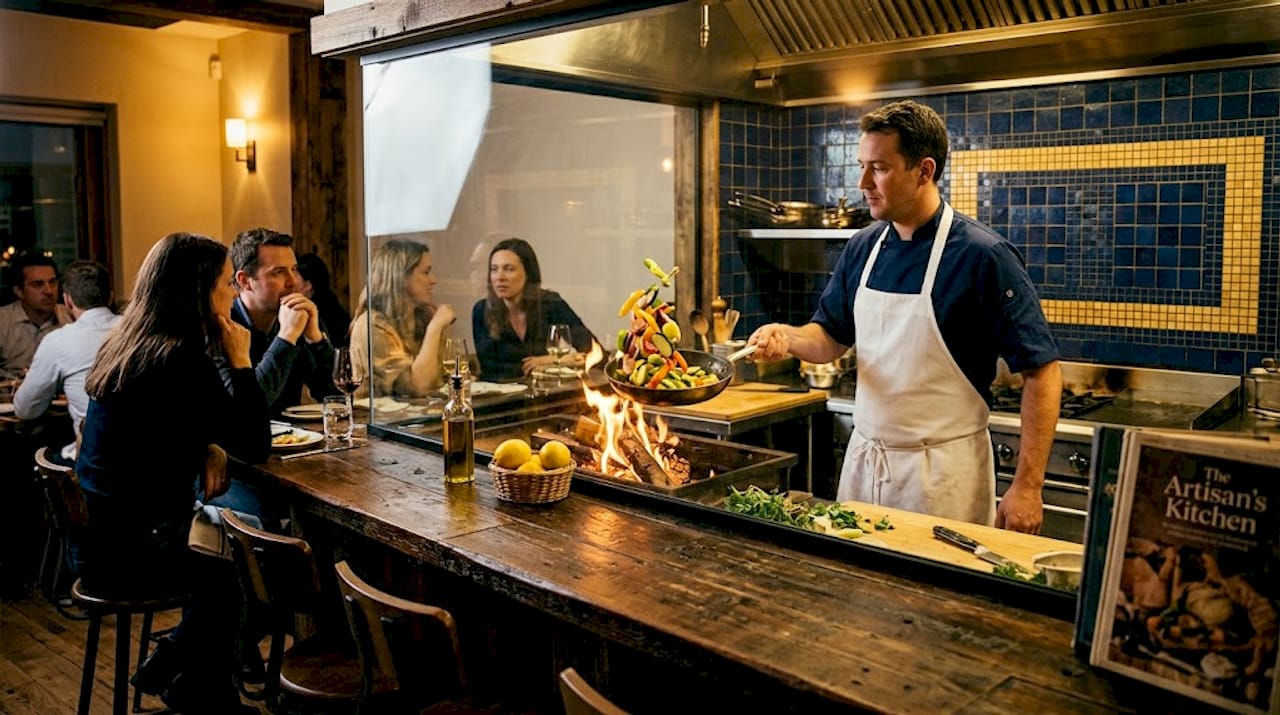
Scent is one of the most underrated tools in Mediterranean restaurant design. Open kitchens and wood-fired ovens produce aromas like wood smoke and garlic that begin setting flavor expectations before you even see a menu. This is not accidental. The scent strategy is part of how guests enter the mindset of the meal.
Music follows similar logic. Soundtracks are kept subtle to accommodate long meals without overwhelming conversation. You might hear light acoustic guitar, soft flamenco, or Mediterranean folk rhythms, played quietly enough that you could forget the music is playing while still feeling its effect on mood.
Pro Tip: When you walk into a Mediterranean restaurant, close your eyes for a moment and identify the scent. If you can smell something being cooked with herbs or wood heat, that is usually a reliable sign of an active, quality kitchen.
The open kitchen effect
Open kitchens create theatrical energy that transforms eating into watching, listening, and smelling all at once. Guests who can see chefs at work tend to feel more engaged with their meal. The kitchen becomes part of the dining room, and the sound of sizzling and plating adds a layer of aliveness to the space that no amount of decor can replicate.
Regional variations in Mediterranean restaurant style
The phrase “Mediterranean restaurant” covers an enormous geographic and cultural range. Atmosphere varies widely by regional culinary focus and restaurant scale. What you experience at a small Spanish tapas bar in Barcelona is fundamentally different from a high-end Aegean concept in New York or a casual seaside taverna on a Greek island.
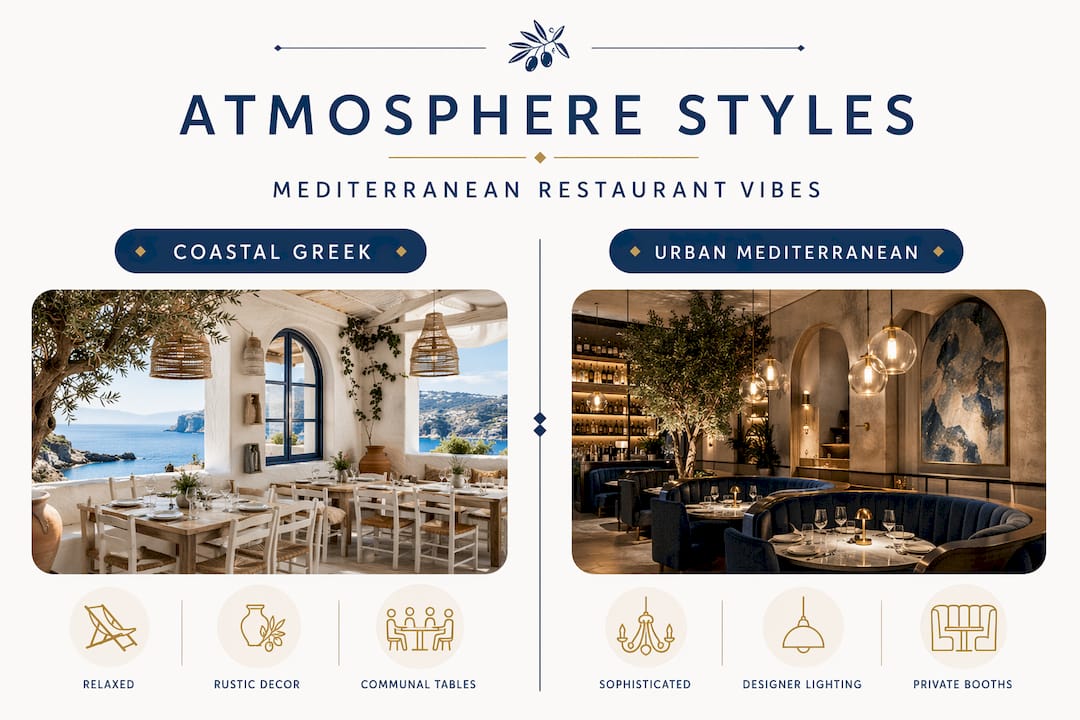
| Style | Typical atmosphere | What to expect |
|---|---|---|
| Greek coastal taverna | Relaxed, rustic, communal | Shared plates, white walls, sea views or references |
| Spanish tapas bar | Lively, informal, social | High energy, standing room, small plates designed for sharing |
| Modern high-end Mediterranean | Curated, multi-zone, design-forward | Segmented spaces for different dining moods |
| Inland southern European | Earthy, slower paced, family-oriented | Longer meals, hearty dishes, warm hospitality rituals |
Selene in SoHo is a strong example of how ambitious Mediterranean concepts take this further. Its 10,000-square-foot space divides into intimate lounges, open terraces, and main dining areas, each designed to reflect a specific aspect of the Aegean experience while catering to different dining moods. That kind of segmented design is the opposite of a one-size-fits-all approach.
For travelers, this means you should define what kind of Mediterranean atmosphere you are seeking before you book. A lively tapas bar and a quiet upscale Greek restaurant are both “Mediterranean,” but they offer completely different dining experiences at Mediterranean eateries.
Cultural practices that shape the social energy
The Mediterranean restaurant vibe is not only about how the room looks. It is shaped deeply by how people are expected to behave inside it. These cultural practices are built into the service rhythm, the menu structure, and the physical layout of the space.
-
Shared plates as social architecture. Family-style meals emphasize sharing and connection, not just nutrition. When dishes arrive at the center of the table rather than in front of each individual, conversation flows differently. You are reaching, offering, tasting from each other’s choices. The meal becomes collaborative.
-
Relaxed pacing as an intention. In most Mediterranean dining traditions, the check is never brought to your table unsolicited. The unspoken agreement is that you are welcome to stay. Mediterranean hospitality shapes the social rhythm of the entire meal, treating lingering as a compliment rather than an inconvenience.
-
Peak times amplify the atmosphere. Weekend lunches are the most lively and authentic times to experience a Mediterranean restaurant at full energy. Kitchens are operating at their best, the room fills with the ambient sound of conversation, and the social energy peaks in a way that a quiet Tuesday dinner rarely matches.
-
Hospitality as active engagement. Service in genuine Mediterranean restaurants tends to feel personal. Staff often offer recommendations with genuine enthusiasm, explain the origins of dishes, or bring a small extra item you did not order. This is cultural. Hospitality is not transactional in Mediterranean tradition. It is expressive.
How to recognize and seek out authentic atmosphere
Knowing what to look for separates a memorable experience from a mediocre themed dinner. These are the details that signal authentic Mediterranean restaurant ambiance versus a restaurant that has borrowed the aesthetic without the substance.
- Check the materials. Genuine venues invest in real stone, ceramics, and wood rather than printed surfaces or plastic replicas. The textures should feel tactile, not decorative.
- Listen to the room. A well-calibrated Mediterranean dining atmosphere has a certain sound level, animated but not chaotic, where you can hear your companions clearly while still sensing the energy of a full room.
- Read the menu structure. Authentic Mediterranean menus lean toward sharing formats, seasonal ingredients, and dishes that require time and skill. A menu full of isolated entrees with no sharing options is a sign the kitchen is not thinking culturally.
- Observe the pacing. Watch how quickly servers move around the room. A genuine Mediterranean experience has a relaxed but attentive rhythm, never rushed, never neglectful.
- Smell the kitchen. As noted earlier, aromas from an open kitchen or wood fire are a strong indicator that real cooking is happening rather than reheated convenience.
Pro Tip: Book a table for a weekend lunch rather than a weekday dinner on your first visit to a Mediterranean restaurant. You will see the space at its most authentic and lively, which gives you a much better read on whether the atmosphere is the real thing.
My take on what most diners miss
I’ve spent a lot of time observing how diners interact with Mediterranean restaurant spaces, and the most consistent thing I’ve noticed is that people underestimate atmosphere as a driver of meal quality. They focus on the food, which is fair, but they miss how much the room shapes the tasting experience itself.
What I’ve learned is that the most memorable Mediterranean meals I’ve encountered happen when the atmosphere design and the kitchen are in sync. A great dish served in a sterile, over-lit room hits differently than the same dish served with warm light, the smell of something wood-fired nearby, and the sound of a full room behind you. The room is the first course.
I’ve also noticed that travelers often make the mistake of avoiding “touristy” Mediterranean restaurants without realizing that some of the best atmospheres in cities like Barcelona exist in precisely those high-traffic zones, because the restaurants there have had to get everything right to survive years of discerning visitors. The Sagrada Familia neighborhood is a good example of this. The weak venues cycle out quickly. The ones that stay have typically mastered both the food and the room.
The other thing worth saying: the relaxed, unhurried atmosphere that feels so appealing in Mediterranean dining is not casual neglect. It is a highly curated design choice that balances light, music, scent, and layout precisely to encourage lingering without distraction. When it works well, you do not notice any of it. You just feel comfortable and in no rush to leave. That invisibility is the craft.
— YellowRock
Experience this atmosphere at Kokcha in Barcelona
If you want to see how all of these elements come together in a single venue, Kokcha delivers exactly the kind of experience this article describes. Located steps from the Sagrada Familia in Barcelona, it brings together warm interior design, an open-air terrace, and a menu built around Mediterranean sharing traditions.
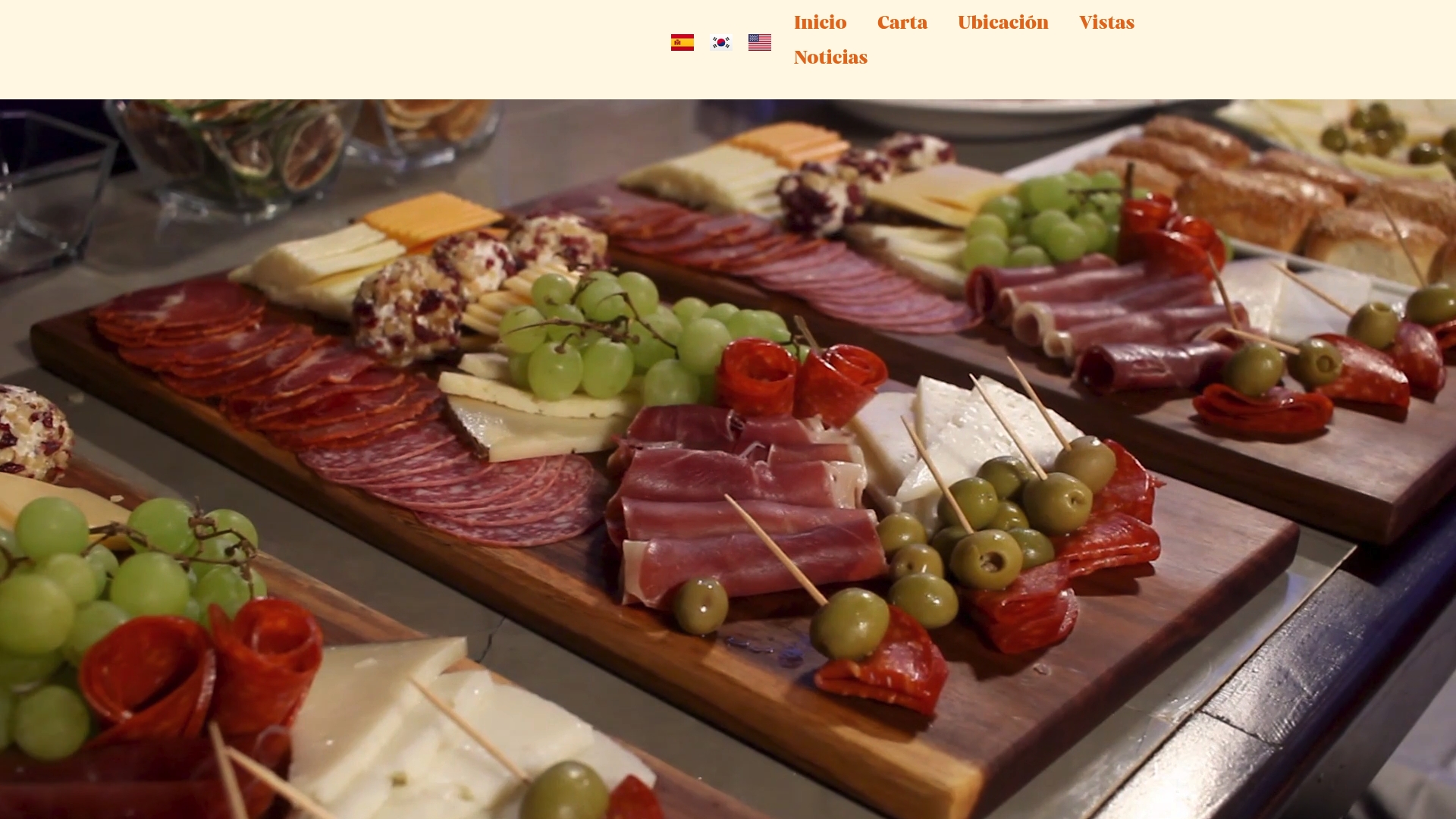
The full menu at Kokcha features tapas, paellas, fresh seafood, and seasonal dishes designed for the table to share, not just the individual. The space itself includes both interior and exterior zones, giving you different atmospheric options depending on whether you want the energy of the dining room or the open-air feel of the terrace with views of the city. For anyone curious about authentic Mediterranean cuisine in Barcelona, this is a practical and genuinely enjoyable place to start. You can also explore what’s shaping Mediterranean dining in 2026 to get a sense of how Kokcha continues to evolve its experience alongside the region’s culinary culture.
FAQ
What makes Mediterranean restaurant atmosphere unique?
Mediterranean restaurant atmosphere is unique because it combines deliberate sensory design with cultural dining traditions. Earthy decor, calibrated lighting, wood-fire scents, and a relaxed service rhythm all work together to create an experience that feels both warm and culturally grounded.
What colors and materials define Mediterranean restaurant decor?
The decor of Mediterranean restaurants typically uses earthy tones like terracotta, warm white, and olive green, combined with natural materials like stone, wood, and hand-thrown ceramics. These choices evoke the natural textures of the Mediterranean coastline and countryside.
When is the best time to experience authentic Mediterranean atmosphere?
Weekend lunches are generally the best time to experience Mediterranean restaurant ambiance at its most lively and authentic. Kitchens are fully engaged, the room fills with social energy, and the overall experience reflects the communal dining culture of the region.
How does shared dining affect the Mediterranean restaurant vibe?
Shared plates placed at the center of the table shift conversation and interaction in a way that individual plating does not. Family-style dining is a core cultural aspect of Mediterranean dining, turning meals into collaborative, social experiences rather than individual ones.
How do you tell a genuine Mediterranean restaurant from a themed one?
Authentic venues invest in real materials, operate with relaxed but attentive service, structure menus around sharing and seasonality, and produce noticeable kitchen aromas. Generic themed restaurants often have the visual references without the service culture or culinary depth that define the real Mediterranean dining experience.