Spend five minutes researching modern Spanish restaurants and you’ll hit the same assumption everywhere: that “modern” means abandoning paella for foam and deconstructed everything. That’s not what’s happening. What is a modern Spanish restaurant, really? It’s a concept built on a specific kind of balance. The food is grounded in Spanish culinary identity, shaped by centuries of regional ingredients and shared-plate culture, but the formats, presentations, and experiences have been rethought for the way people want to eat today. This guide breaks down every dimension of that balance so you know exactly what to expect.
Table of Contents
- Key Takeaways
- What defines a modern Spanish restaurant today
- How innovative formats redefine the experience
- Regional reinterpretation without losing identity
- Sustainability and place-led dining
- My take on what really makes these restaurants work
- Kokcha: where Mediterranean and Spanish dining meet in Barcelona
- FAQ
Key Takeaways
| Point | Details |
|---|---|
| Tradition and innovation coexist | Modern Spanish restaurants update technique and presentation while keeping Spanish culinary identity intact. |
| Tapas are a dining philosophy | Sharing, fluid pacing, and social connection define the tapas model, not just the size of the plate. |
| Experience design matters | The best venues choreograph service flow, space, and hospitality just as carefully as the menu itself. |
| Regional fusion preserves identity | Spanish techniques applied to local ingredients create something new without erasing Spanish flavor architecture. |
| Sustainability is increasingly central | Organic sourcing and social inclusion initiatives now shape menu philosophy at leading Spanish restaurants. |
What defines a modern Spanish restaurant today
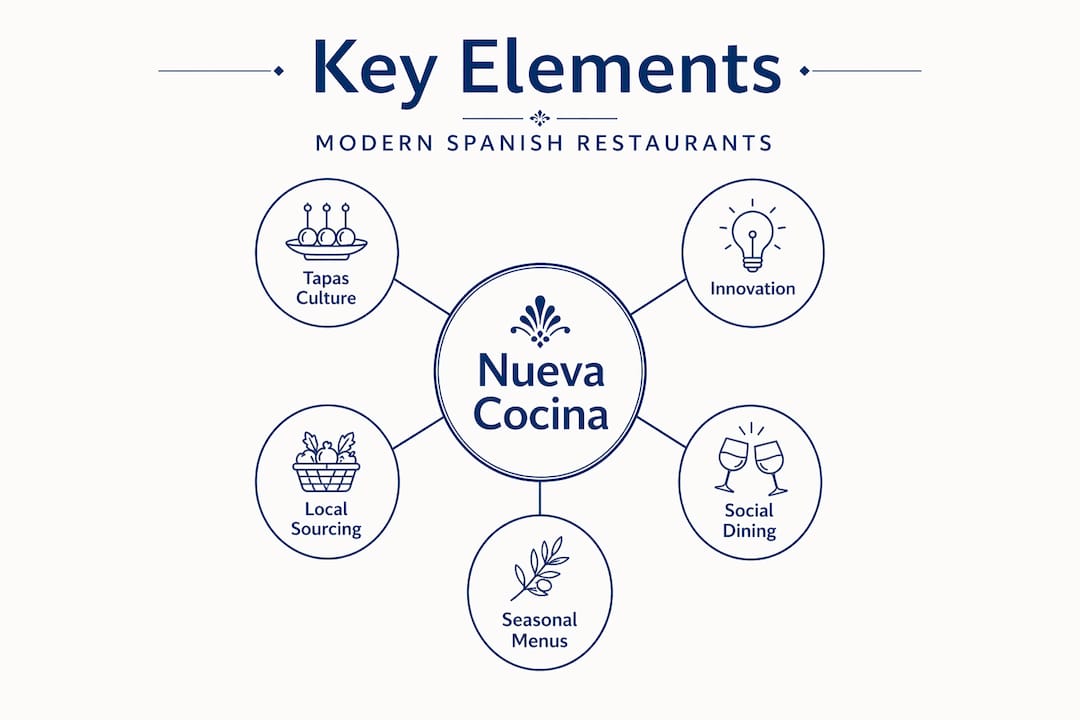
The industry term for what most people casually call a “modern Spanish restaurant” is nueva cocina española, a movement that began gathering serious momentum in the 1990s but has since expanded well beyond avant-garde tasting menus. Today it covers everything from neighborhood tapas bars with thoughtful sourcing to Michelin-starred venues with tightly controlled guest experiences.
What stays constant across all of them is the role of sharing. Tapas are a philosophy of eating centered on communal tasting and fluid pacing, not a category of food. When a restaurant claims to be modern and Spanish, the way it handles this philosophy tells you almost everything about its intentions.
Here are the foundational principles you’ll find in any serious contemporary Spanish dining venue:
- Shared-plate architecture. The menu is built around dishes meant to move around the table, not anchor a single diner.
- Fluid progression. Courses arrive at a rhythm that suits conversation and appetite rather than a fixed clock. This add-as-you-go approach lets guests shape the length and pace of their own meal.
- Classic technique, contemporary presentation. The cooking draws from Spain’s canon of soffrito bases, salt-cod preparations, Iberian curing traditions, and wood-fire roasting. But plating, portion scale, and ingredient combinations are updated.
- Neighborhood integration. The best modern Spanish restaurants are designed for casual weeknight dinners and long celebration meals alike, not just special occasions.
Pro Tip: When evaluating a Spanish restaurant’s commitment to the tapas philosophy, check whether the menu lets you add dishes mid-meal. A truly social, modern format will never lock you into a fixed sequence at the start.
The social culture is not incidental. It’s structural. Restaurants that get this right build a loyal local following because the format encourages repeat visits at different intensities. You come back on a Tuesday for two dishes and wine, and again on Saturday for the full run.
How innovative formats redefine the experience
At the higher end of contemporary Spanish dining, the innovation is less about the food and more about the architecture of the meal itself. A handful of restaurants have pushed this concept so far that the restaurant itself becomes the product.
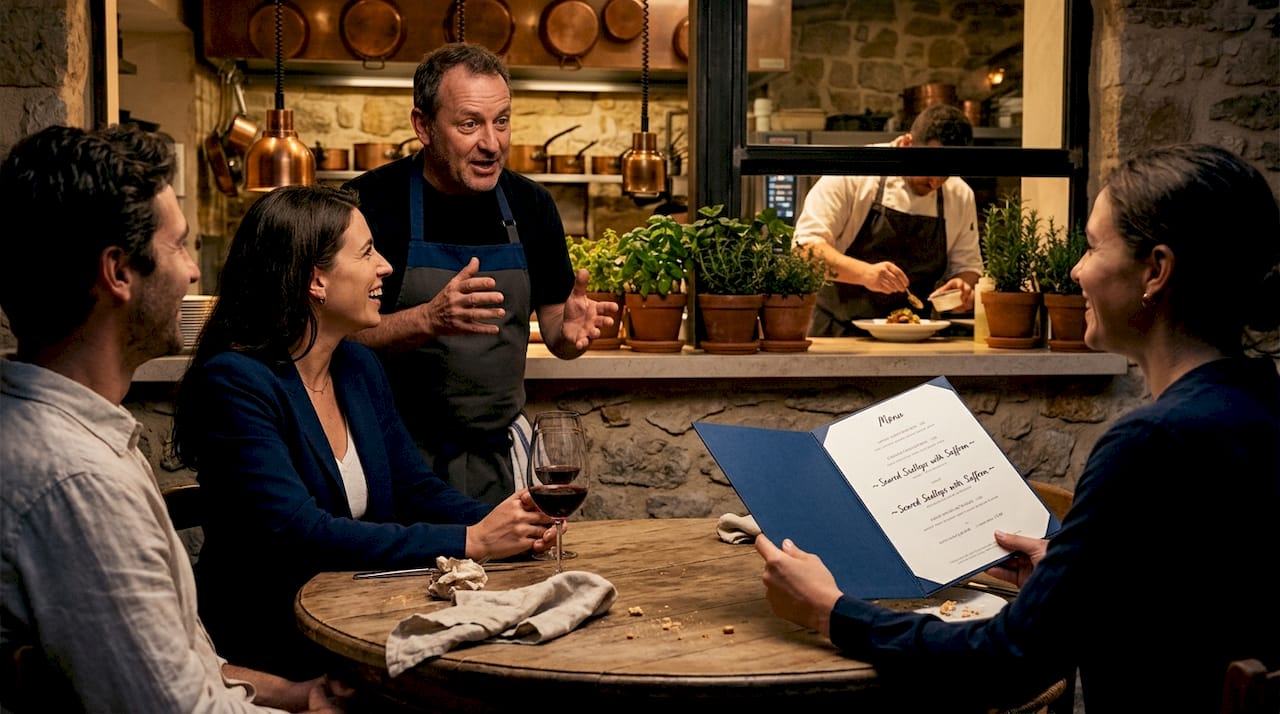
The clearest example is ATELIER Ramón Freixa in Madrid. The venue hosts a maximum of 10 diners per night and offers two tasting menus priced at 250 euros, including a vegan version that functions as an artistic statement in itself. That level of intimacy changes everything. The kitchen can control consistency in a way that’s impossible at scale, and every guest interaction becomes deliberate.
Here’s how the experiential format breaks down at the best modern venues:
- Seating caps. Limiting covers per night lets kitchens operate with precision. Limited seating and open kitchens create a sense of theater and intimacy that broad-menu restaurants simply cannot replicate.
- Evolving menus. Season-driven tasting menus mean the experience changes month to month. Regulars have a reason to return; critics have a moving target to evaluate.
- Multi-room journeys. Restaurants like Coque in Madrid move guests through separate spaces throughout the meal. The service flow and spatial staging refresh classical Spanish rituals for audiences who expect more than great food.
- Hospitality choreography. The sequence of how dishes arrive, how staff interact, and how the room is designed all function as part of a single experience. Spatial design and dining flow are treated as carefully as the recipes themselves.
Pro Tip: If you’re booking a tasting-menu format at a modern Spanish restaurant, ask whether the menu changes seasonally. A static menu at that price point is a sign the “modern” label is mostly marketing.
This shift from “what’s on the plate” to “what is the full experience” is the clearest marker of where contemporary Spanish dining is going. Venues that understand this are not just selling food. They’re selling a carefully curated event, which is why Mediterranean dining in Barcelona is increasingly drawing food tourists who plan their trips around restaurant reservations the way others plan around museums.
Regional reinterpretation without losing identity
One of the most interesting things happening in modern Spanish cuisine globally is what you might call principled fusion. This is not the kind of fusion that throws soy sauce into a paella and calls it innovation. It’s the application of Spanish technique and flavor architecture to ingredients that are native to wherever the restaurant is located.
The clearest case study is Enye by Chele González in Cebu, Philippines. The restaurant’s Cebu Lechon Taco reimagines local lechon with Spanish toppings and construction logic. The result tastes recognizably Spanish in structure and balance, even though the hero ingredient is distinctly Filipino. That’s the distinction that matters.
Here’s what separates principled reinterpretation from fusion that dilutes identity:
- Technique as the anchor. Spanish cooking methods, from pickling to emulsifying to slow roasting, remain intact. What changes is the ingredient that receives that treatment.
- Flavor balance, not flavor replacement. Spanish cuisine has a recognizable ratio of acid, fat, salt, and smoke. Regional adaptation maintains that balance even when the components are locally sourced.
- Intentional sourcing. The best restaurants in this space choose local ingredients because they are exceptional, not because they are cheaper or more convenient.
| Approach | What changes | What stays the same |
|---|---|---|
| Principled reinterpretation | The specific ingredients used | Technique, flavor balance, Spanish culinary logic |
| Dilutive fusion | The spirit and structure of the dish | Only surface-level Spanish elements like naming |
| Pure tradition | Nothing | Everything, including sourcing and presentation |
If you love authentic Spanish small plates but are curious about how those ideas translate into new regional contexts, this principled approach gives you the best of both. You recognize the cooking instincts while discovering something genuinely new.
Sustainability and place-led dining
The concept of terroir, the idea that food should taste of where it comes from, is deeply embedded in Spanish culinary tradition. Modern Spanish restaurants have picked this up and connected it to something larger: a commitment to how ingredients are grown, who grows them, and what that relationship means for the dining experience.
Es Fum in Mallorca is one of the more thorough examples. The restaurant collaborates with an organic garden and a social inclusion foundation to source ingredients. Guests aren’t just eating well-grown food. They’re participating in a supply chain that has a social dimension.
This sustainability shift is reshaping what features of modern Spanish food look like in practice:
- Menus built around what’s available from local organic producers, with dishes rotating accordingly rather than on a fixed schedule.
- Staff trained to explain ingredient origin as part of the dining narrative, not as a marketing add-on.
- Waste-conscious kitchen practices, including whole-animal and whole-vegetable cooking, which connect back to traditional Spanish resourcefulness.
- Social enterprise partnerships that link ingredient sourcing to community development.
Restaurants that take this seriously will tell you exactly where a specific dish’s main ingredient came from and why. That specificity is not coincidental. It’s a sign that the sustainability commitment is structural rather than decorative. For food enthusiasts who want their dining experience to carry meaning beyond the meal, this dimension of modern Spanish cuisine is worth seeking out actively.
My take on what really makes these restaurants work
I’ve spent a lot of time thinking about why some “modern Spanish” venues feel genuinely exciting and others feel like a pastiche. Here’s what I’ve concluded: the ones that work are not trying to modernize Spain. They’re trying to be honest about how people actually want to eat and share food today, and then they’re using Spanish culinary logic as the vehicle for that honesty.
Tapas culture, when it’s done right, is one of the most socially intelligent dining formats I’ve encountered. The social connection it creates is not a side effect of the format. It’s the whole point. When a restaurant treats shared plates as a genuine eating philosophy rather than a presentation gimmick, the experience changes completely. People linger longer. They order more. They come back.
What I’ve also learned is that experience design is underrated in how we talk about trendy Spanish eateries. We focus on the chef, the ingredients, the wine list. But the restaurants that make the biggest impression are the ones where the space, the service rhythm, and the hospitality feel coordinated. Ancestral asador rituals refracted through contemporary staging, as Coque does, is not a gimmick. It’s a reminder that ritual has always been part of how humans eat well together.
My honest view on the future: regional reinterpretation and sustainability are not trends. They’re corrections. Spanish culinary identity is resilient enough to absorb both without losing itself, and the restaurants proving that are the ones worth your time and your money.
— YellowRock
Kokcha: where Mediterranean and Spanish dining meet in Barcelona
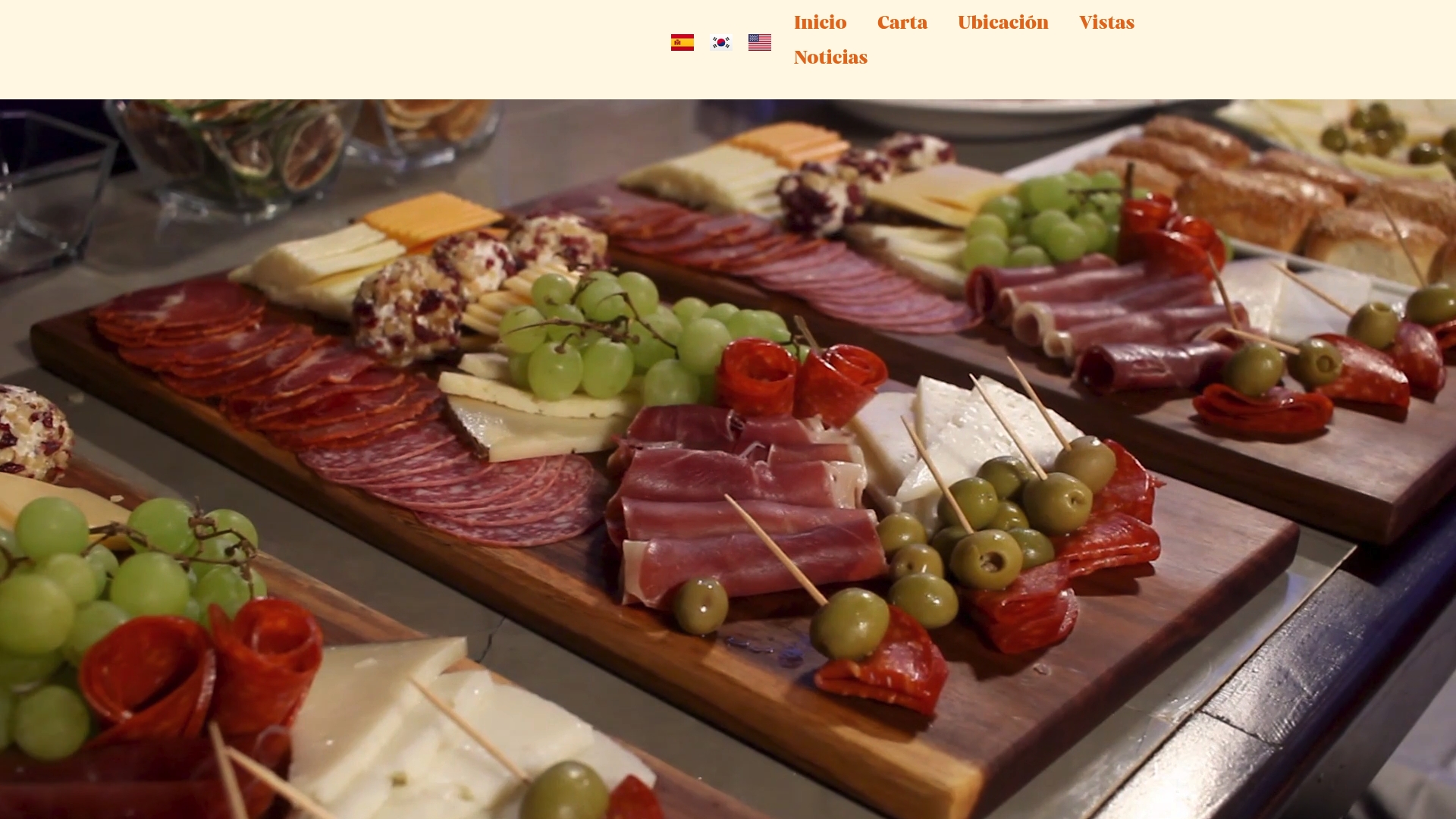
If this exploration of modern Spanish cuisine has you thinking about your next meal, Kokcha in Barcelona puts many of these principles into practice in one of the city’s most vibrant dining corridors, right near the Sagrada Família. The menu draws on the depth of Mediterranean and Spanish culinary tradition while bringing a contemporary sensibility to every dish, from tapas to paella to fresh seafood.
You can explore the key elements of a Mediterranean menu to understand how Kokcha structures its approach to flavor and sharing culture. The restaurant’s chicken paella is a strong starting point if you want a dish that captures the essence of Spanish shared dining done well. And if you’re planning a broader Barcelona gastronomic experience, Kokcha’s guides on enjoying Barcelona’s food scene give you a solid framework before you book.
For a deeper look at how Mediterranean flavors differ from one dish to the next, Kokcha’s resources are worth exploring before you sit down to eat.
FAQ
What is a modern Spanish restaurant in simple terms?
A modern Spanish restaurant maintains Spanish culinary identity, including techniques, ingredient choices, and shared-plate culture, while updating presentation, dining formats, and sourcing practices for contemporary guests. The core remains traditional; the delivery evolves.
How does tapas culture define contemporary Spanish dining?
Tapas function as a philosophy of communal eating with fluid pacing rather than a fixed course structure. Modern Spanish restaurants build entire menu systems around this approach, letting guests add dishes mid-meal and shape their own dining rhythm.
What separates modern Spanish cuisine from generic fusion food?
Modern Spanish cuisine uses Spanish technique as the anchor and applies it to new or local ingredients without losing the characteristic flavor balance of acid, fat, salt, and smoke. Generic fusion typically replaces Spanish structure entirely, leaving only superficial references.
Are tasting menus a feature of modern Spanish restaurants?
Yes, at the fine dining end of the spectrum. Venues like ATELIER Ramón Freixa cap seating at 10 diners and offer season-driven tasting menus, creating a curated event rather than a spontaneous meal. This format is one marker of how modern Spanish fine dining differs from casual tapas culture.
How does sustainability factor into modern Spanish food?
Leading restaurants integrate organic sourcing and social enterprise partnerships directly into their menu philosophy. Dishes rotate based on seasonal availability, and staff are trained to narrate ingredient origins as part of the dining experience, not as an afterthought.