At Kokcha, the ordering rhythm that works every time goes like this: start with 2–3 tapas per person, mixing cold starters with a hot fried bite, then share a main (paella at lunch), and close with dessert. That’s the whole plan. Here’s how to execute it:
- Signal your waiter with a raised hand or “Perdón” and order drinks first.
- Order 2 cold + 1–2 warm tapas per person to start (olives, pa amb tomàquet, croquetas, patatas bravas).
- Wait, taste, then reorder. Staged ordering keeps food hot and lets the kitchen pace correctly.
- Add a shared ración or paella once tapas are cleared, at lunch only.
- Finish with dessert, then ask “La cuenta, por favor.”
Quick portion rule: 2–3 tapas per person is your baseline. When unsure, ask “¿Es ESO una tapa o una ración?” A tapa is a small plate; a ración is a full-size portion meant for sharing.
Key Takeaways
Ordering a Mediterranean meal near Sagrada Familia works best when you follow a staged rhythm: 2–3 tapas per person first, a shared main at lunch, and dessert to close.
| Point | Details |
|---|---|
| Tapas count | Order 2–3 tapas per person; mix one cold, one hot, and one fried bite. |
| Staged ordering | Order in rounds so food arrives hot; reorder after tasting, not all at once. |
| Paella timing | Paella is a lunchtime dish; budget roughly €18–€35 per person with drinks for a casual tapas meal. |
| Key phrases | “Perdón” flags the waiter; “La cuenta, por favor” closes the bill. |
| Kokcha | Steps from Sagrada Familia, with bilingual staff, terrace seating, and paellas for two or more. |
Table of Contents
- What goes into a Mediterranean meal?
- How do you balance flavors across courses?
- Which local ingredients shape dishes near Sagrada Familia?
- What’s the etiquette for ordering in a Spanish restaurant?
- How do you pair drinks with a Mediterranean meal?
- What Kokcha’s staff want you to know before you sit down
- Kokcha: reserve your table near Sagrada Familia
- Sources
What goes into a Mediterranean meal?
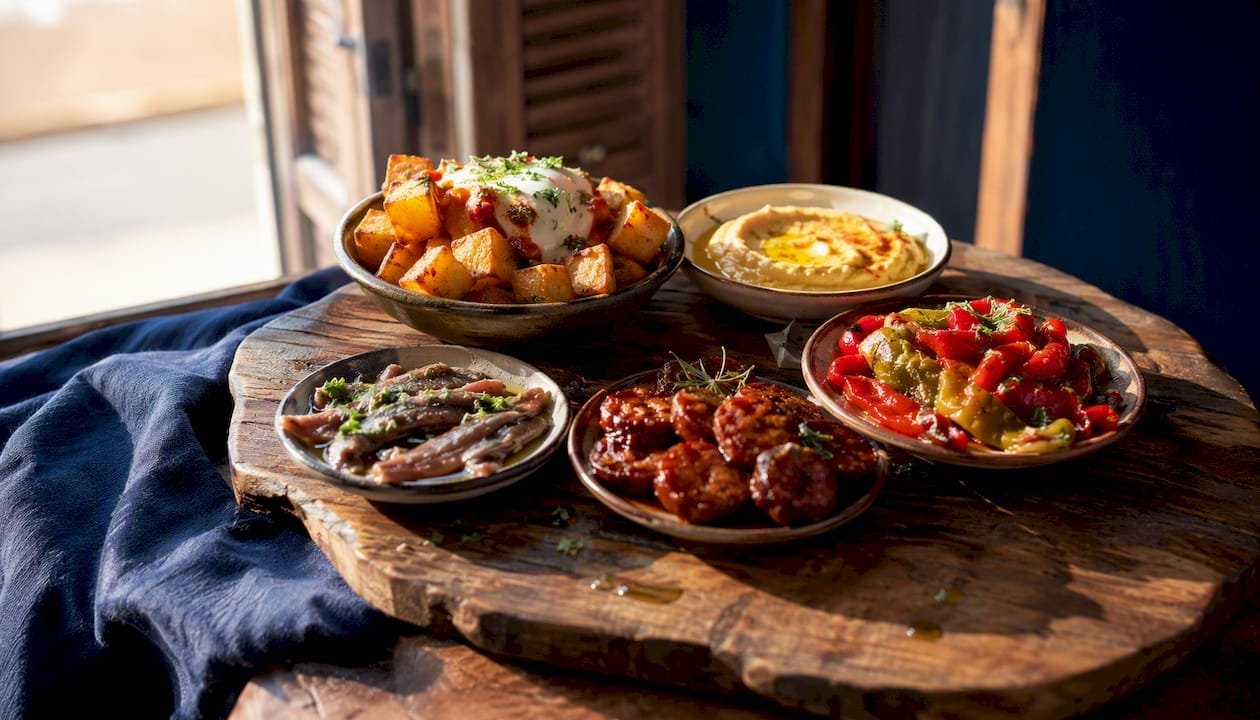
A well-built Mediterranean spread moves through distinct categories. Bread and olives arrive first, often automatically. Cold starters follow: pa amb tomàquet (bread rubbed with tomato), fresh salads, and cured meats or cheeses. Hot bites come next: croquetas, gambas al Apollo, grilled vegetables. Shared mains anchor the meal, typically grilled fish, seafood, or paella. Dessert, usually cream catalana or fresh fruit, closes things out. Knowing these categories helps you navigate the menu without guessing.
How do you balance flavors across courses?
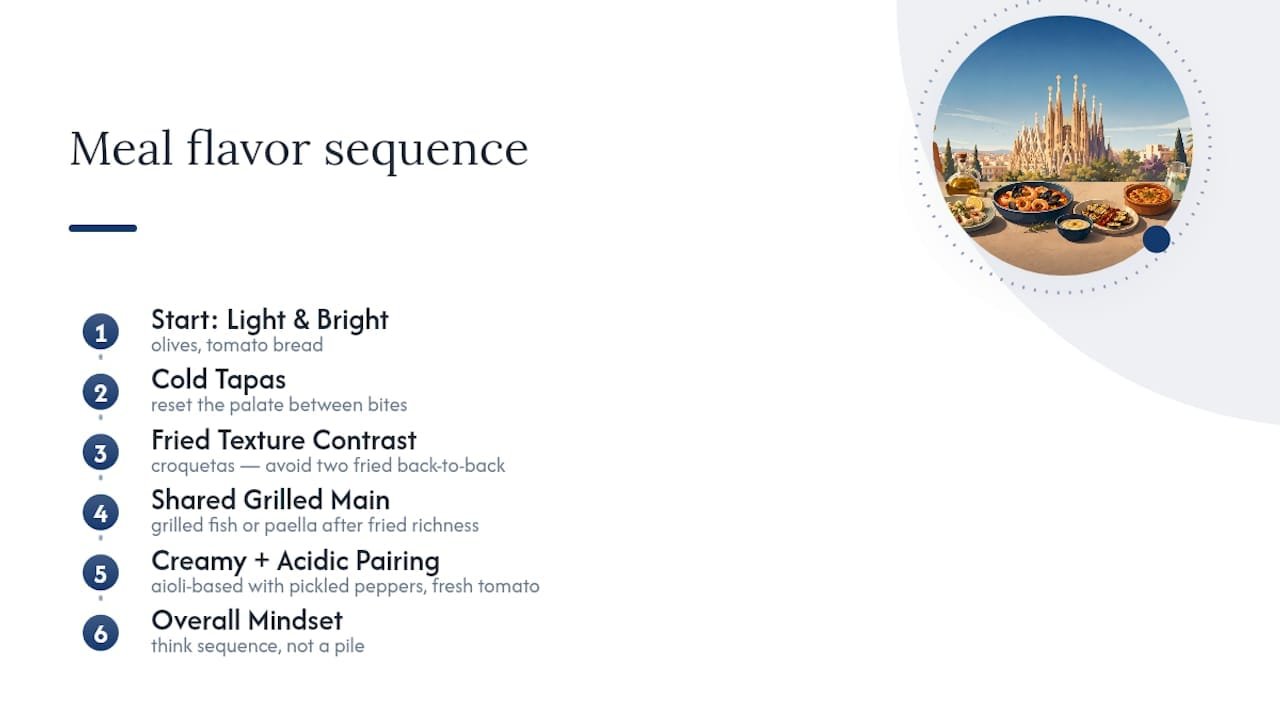
Lead with light and bright, then build toward richer dishes. Cold tapas (olives, tomato bread) reset the palate between bites. Fried items like croquetas add texture contrast. A grilled fish or paella as the shared main lands after the richness of fried bites without overwhelming. Avoid ordering two fried dishes back to back. One creamy tapa (aioli-based) pairs well with one acidic one (pickled peppers, fresh tomato). Thinking about the full culinary experience as a sequence, not a pile, makes the difference.
Which local ingredients shape dishes near Sagrada Familia?
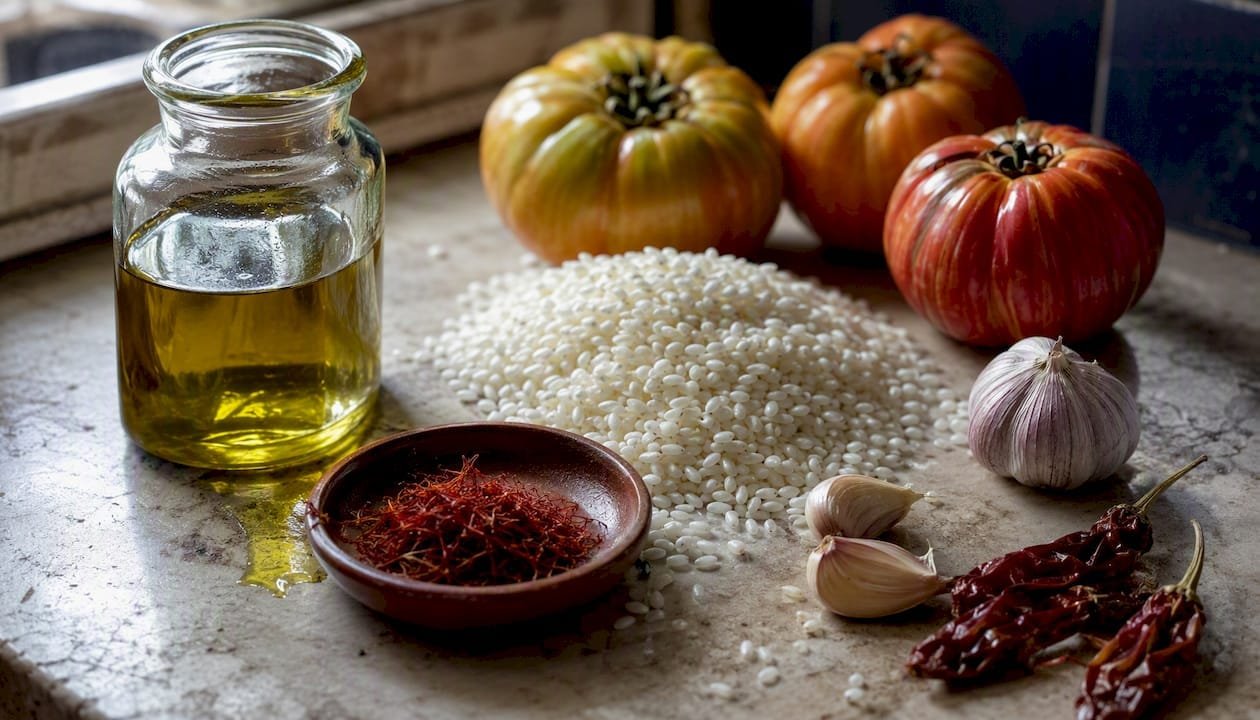
The Eixample neighborhood around Sagrada Familia draws on Catalan pantry staples: extra virgin olive oil, saffron (essential in paella), fresh garlic, tomatoes, pimentón, and seafood from the Mediterranean coast. Saffron and bomba rice define a proper paella. Pimentón gives patatas bravas their heat. Pa amb tomàquet uses only ripe tomatoes, olive oil, and salt on toasted bread. These ingredients are not decorative; they tell you which dishes are made from scratch versus assembled.
What’s the etiquette for ordering in a Spanish restaurant?
Direct, concise requests work best in Barcelona: say what you want plus “por favor.” Waiters don’t hover asking if you’re ready; you flag them with “Perdón.” Order in rounds, not all at once. One tab runs the whole table, paid together at the end. Tipping is appreciated but not mandatory; rounding up or leaving a few euros is standard. Locals eat tapas during two windows: roughly 1:30–3:00 pm and 8:30–10:30 pm, so arriving outside those windows means a quieter room and sometimes a shorter menu.
How do you pair drinks with a Mediterranean meal?
Start with a caña (small draft beer) or vermut (vermouth) while tapas arrive. White wines from Penedès or Albariño from Galicia pair cleanly with seafood tapas and paella. A light red from Priorat works with grilled meats. Cava, Catalonia’s sparkling wine, pairs with almost everything and costs less than Champagne. Sparkling water is the default non-alcoholic option; ask for “agua con gas.”
What Kokcha’s staff want you to know before you sit down
The service rhythm at Kokcha is designed around your pace, not the kitchen’s convenience. Tell your server early whether you want a relaxed two-hour lunch or a quicker dinner before an evening visit to Sagrada Familia. Mention dietary limits at the start; the team adjusts recommendations rather than just removing items. Communicating your preferences directly means you get curated suggestions, not a recitation of the full menu.
Dishes are staged intentionally: cold tapas first, then hot bites, then the main. That sequence keeps everything at the right temperature. If you want paella, order it at lunch and confirm whether a two-person minimum applies. For the terrace, book ahead, especially on weekends. A few phrases go a long way: “Vamos a comparator” (we’re sharing), “Para mí, una caña” (a small beer for me), “La cuenta, por favor” (the bill, please).
Kokcha: reserve your table near Sagrada Familia
Kokcha sits steps from Sagrada Familia and serves the full Mediterranean sequence described above, from seafood tapas to shared paellas on a terrace with views. For a couple, a solid lunch order is two cold tapas, one croqueta round, and a seafood paella to share. For a group of four, add a ración of grilled vegetables and a chicken paella alongside. The team is bilingual; order in English or Spanish, whichever is easier.
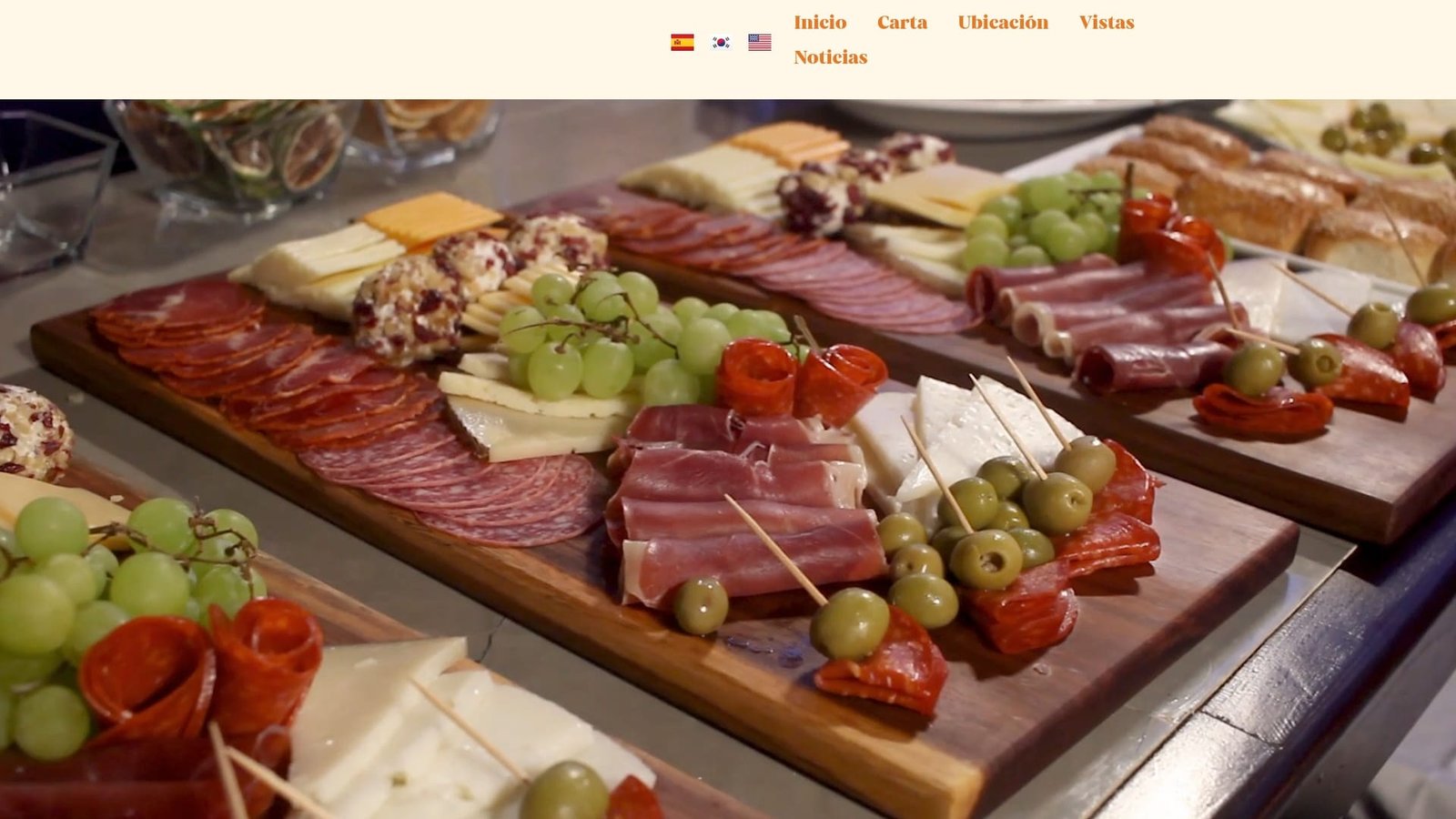
Book lunch for paella or an evening table for tapas and terrace views at Kokcha.
Sources
- How to order food & drinks in Barcelona — SpeakeasyBCN
- Spain tapas tips — Rick Steves’ Blog
- The Tapas Rules Barcelona Locals Refuse to Explain — City Or City
- Barcelona food guide for first-time visitors — Faroway