Choosing paella for events means matching pan size, flavor variety, and service logistics to your exact guest count and venue conditions. Get any one of those three wrong and you risk cold rice, long lines, or guests with no dietary options. The best paella for events is not the most expensive one. It is the one planned with the most precision. This guide covers pan sizing, flavor selection, logistics, budgeting, and execution so you can make every decision with confidence.
How to choose paella for events: pan size and servings
Pan size is the single most technical decision in paella planning. The wrong pan produces uneven cooking, overcooked rice, or portions that run short before the last table is served.
The standard guideline is 70–100g raw rice per guest. That means a party of 30 people needs roughly 3kg of raw rice, which fits a pan in the 90–100cm diameter range. Scaling up from there follows a clear pattern.
| Pan Diameter | Guests Served | Raw Rice Needed |
|---|---|---|
| 55 cm | 15–20 | 1.2–1.5 kg |
| 80 cm | 35–45 | 2.8–3.5 kg |
| 100 cm | 50–60 | 4.0–5.0 kg |
| 120 cm | 70–90 | 5.5–7.0 kg |
| 150 cm | 100–130 | 8.0–10.0 kg |
For groups above 80 guests, a single pan is rarely the right answer. Multiple pan combinations allow you to serve different flavors simultaneously and keep wait times short. A 120cm pan paired with a 55cm pan, for example, handles 80–100 guests without bottlenecks.
Also factor in your guest mix. Children typically eat half a standard adult portion. If your event is 100 guests with 20 children, calculate for roughly 90 adult portions rather than 100.
Pro Tip: Spread rice in a thin, even layer across the full pan diameter. Thick rice beds cook unevenly and lose the prized socarrat crust at the bottom.
What type of paella works best for different guest groups?
Flavor selection is where event planners most often underestimate the complexity. The three core styles are seafood paella, chicken and chorizo paella, and vegetarian paella. Each serves a different segment of your guest list.
Seafood paella is the crowd favorite at weddings and corporate events. It signals quality and occasion. The trade-off is cost and allergen risk. Shellfish is one of the most common food allergens, so you cannot serve it as your only option.
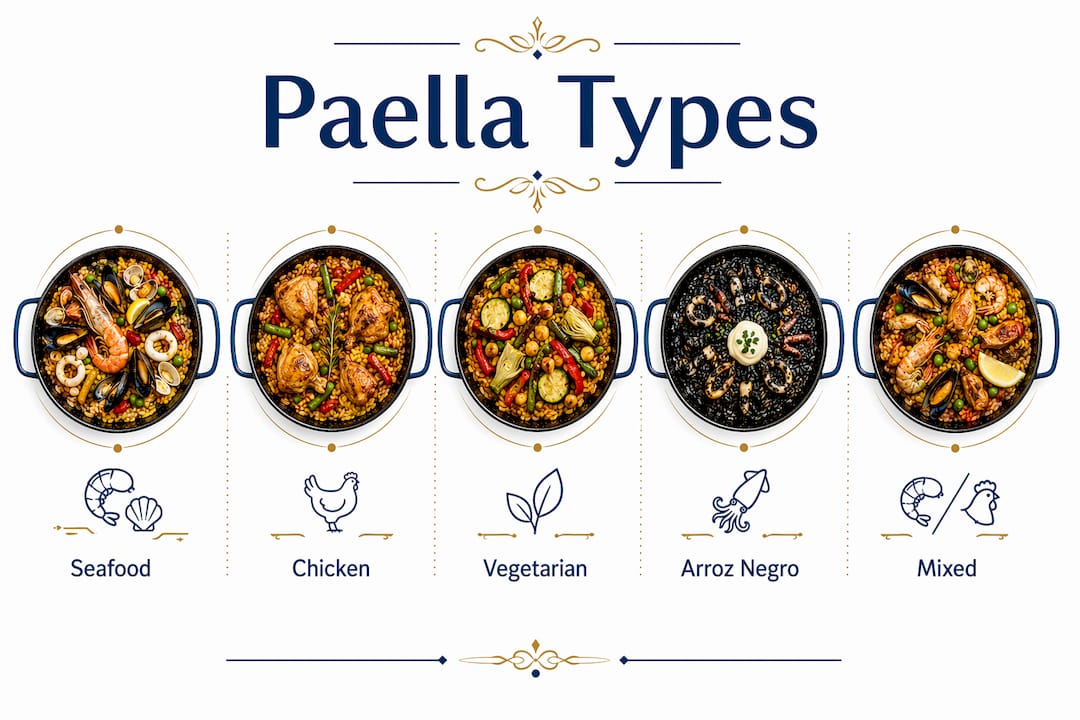
Chicken paella is the most accessible choice. It works across age groups, avoids the top shellfish allergen, and costs less per head than seafood. For family events or mixed-age gatherings, it is often the anchor dish.
Vegetarian paella is no longer a backup option. Vegan and gluten-free versions are now standard requests at corporate events and weddings. Tailoring paella flavors to guest preferences and dietary needs ahead of time prevents last-minute scrambles and improves overall satisfaction.
Common allergens to confirm with your caterer before finalizing the menu:
- Shellfish (shrimp, mussels, clams, lobster)
- Fish (in seafood broths and mixed paellas)
- Gluten (in some commercial stocks and chorizo casings)
- Dairy (in some garnishes or aioli accompaniments)
- Sulfites (in wine used during cooking)
Specialty options like arroz negro (black rice with squid ink and seafood) add visual drama and a distinct flavor profile. They work well as a secondary pan alongside a more familiar option.
Pro Tip: Contact your caterer at least three weeks before the event to request a custom menu. Most caterers can adjust ingredients for allergies or dietary preferences, but only with enough lead time.
What logistical factors affect your paella catering setup?
Logistics determine whether your paella arrives at the table hot and on time. On-site paella cooking requires a 2–4 hour window, which means your caterer needs to arrive well before guests sit down to eat. Build that window into your event timeline from the start.
Venue rules are a frequent surprise. Open flame cooking requires permits in many public spaces and some private venues. Confirm this with your venue manager before booking a caterer, not after.
The table below covers the key logistics to verify before signing any catering contract.
| Logistical Item | What to Confirm |
|---|---|
| Cooking time | Caterer arrives 2–4 hours before service |
| Open flame permit | Venue allows gas burners or open fire |
| Space for equipment | Flat surface, minimum 2m clearance per large pan |
| Plates and utensils | Who provides them: caterer or venue |
| Serving staff | Who plates and serves to guests |
| Cleanup | Who removes pans, waste, and equipment |
| Drink service | Who manages beverages during the meal |
Operational clarity on plates, tables, and serving cadence is as important as the recipe itself. Many event delays trace back to ambiguity over who handles what, not to cooking problems. Get every responsibility in writing.
For large groups, a staged multi-pan approach works best. Start serving from the first pan while the second finishes cooking. This keeps food hot and guest wait times under five minutes.
How do you budget and get accurate quotes for paella catering?
Paella catering pricing scales with two variables: group size and ingredient quality. Price per person ranges from roughly €5–€6 for 300 guests to €15 per person for 50 guests, with premium seafood ingredients like langoustines pushing costs significantly higher than shrimp-based menus. That spread is wide enough to matter in any event budget.
A detailed, itemized quote protects you from surprises. Quotes should include ingredient lists, portion counts, and payment milestones covering the deposit and final payment. Any caterer unwilling to provide that level of detail is a risk.
Questions to ask every caterer before committing:
- What rice variety do you use, and where is it sourced?
- What seafood or protein sources do you use?
- Is the quoted price per head inclusive of service and cleanup?
- What is the deposit amount, and when is the final payment due?
- Do you carry liability insurance for on-site cooking?
- Can you provide references from events of similar size?
Comparing multiple caterers and demanding operational clarity significantly reduces event-day risk. Do not choose on price alone. A caterer who provides a clear breakdown of ingredients and responsibilities is worth more than one who quotes low and leaves gaps.
Ingredient sourcing and rice variety materially affect the final dish. Bomba rice from Valencia absorbs stock differently than generic short-grain rice. That difference shows up in texture and flavor at scale.
How to ensure smooth execution and great guest experience
Execution is where planning either pays off or falls apart. Coordinate your caterer’s arrival time, cooking schedule, and serving start time as a single integrated timeline. Do not treat them as separate tasks.
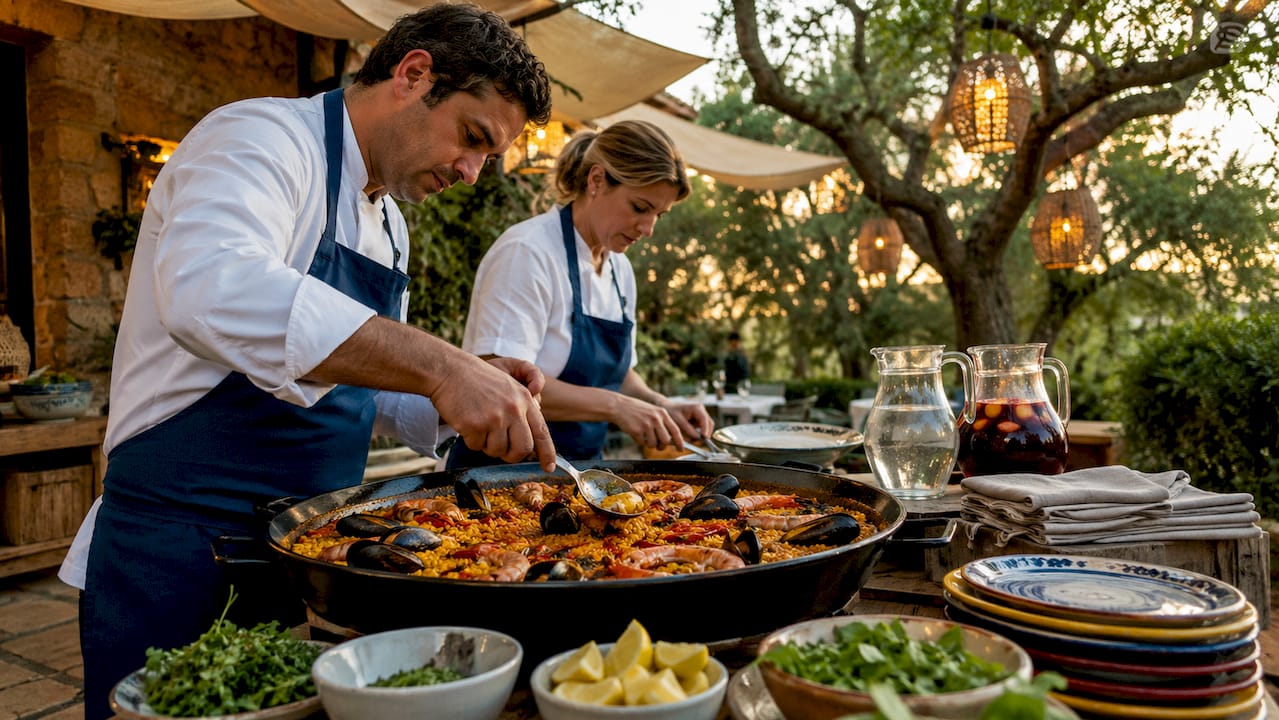
Set up a dedicated serving station away from the main guest flow. This prevents crowding around the pan and gives the caterer room to plate cleanly. For outdoor events, identify a weather contingency plan before the day, not during it.
Drink pairings complete the experience. Sangria, dry Spanish white wine like Albariño, and non-alcoholic options like sparkling water with citrus all complement paella without competing with it. For guidance on special occasion pairings, matching drinks to your paella style is worth the extra planning step.
Communicate all dietary and allergy information to your caterer in writing at least 48 hours before the event. Verbal confirmations get lost.
Finally, ask your caterer about their technique for achieving socarrat, the caramelized rice crust at the bottom of the pan. Avoiding stirring after stock is added and controlling heat carefully are what separate an authentic paella from a mediocre one. Chef Danny Lledó identifies heat control and stock depth as the two decisive factors in final rice quality.
Pro Tip: Stagger your serving by table rather than opening the line to all guests at once. This keeps the queue short, the rice hot, and the experience calm.
Key takeaways
Selecting the right paella for your event requires matching pan size to guest count, offering diverse flavors for dietary needs, and confirming every logistical detail with your caterer in writing before the event.
| Point | Details |
|---|---|
| Pan size drives portions | Use 70–100g raw rice per guest and match pan diameter to your headcount. |
| Offer at least two styles | Always include one allergen-friendly or vegetarian option alongside your main paella. |
| Logistics need written clarity | Confirm cooking time, permits, plates, serving staff, and cleanup responsibilities before signing. |
| Get itemized quotes | Require ingredient lists, portion counts, and payment milestones from every caterer you evaluate. |
| Execution timing is critical | Stagger service by table and build a 2–4 hour cooking window into your event schedule. |
Why paella planning rewards the planner who asks more questions
Most event planners I have seen struggle with paella catering share one common mistake. They treat it like ordering a buffet. They confirm a headcount, pick a flavor, and assume the rest handles itself.
Paella is a live cooking event. The pan is on-site, the fire is burning, and the rice has one shot at the right texture. That reality means the planner’s job does not end at the menu decision. It extends to cooking timelines, venue permits, serving logistics, and allergen communication.
The counter-intuitive truth is that the flavor choice matters less than the operational setup. A perfectly seasoned seafood paella served cold after a 45-minute wait destroys the guest experience. A well-timed chicken paella with clear service flow creates a memory.
I have also seen planners over-index on premium ingredients without asking about rice quality or cooking technique. Langoustines on mediocre Bomba rice cooked by someone who stirs the pan is a worse result than shrimp on properly sourced rice cooked with discipline. Ask your caterer about their paella varieties and technique before you ask about the protein.
The best paella events I have observed share one trait. The planner treated the caterer as a partner, not a vendor. They shared the event timeline, the guest profile, and the dietary list early. The caterer showed up prepared. The rice had socarrat. The guests stayed at the table longer than scheduled.
That outcome is not luck. It is planning.
— YellowRock
How Kokcha makes selecting paella for your event easier
Planning a paella menu for your event is straightforward when you have the right options in front of you. Kokcha, located in Barcelona near the Sagrada Familia, offers a full range of paella styles built around quality Mediterranean ingredients. Whether you need a classic seafood paella, a vegetarian option for dietary accommodations, or a specialty arroz negro for something distinctive, Kokcha’s menu covers every guest profile.
Kokcha’s team understands the operational side of event dining, from ingredient sourcing to service timing. Explore the full Mediterranean dining experience at Kokcha and reach out to discuss your event needs directly.
FAQ
How much paella do i need per person at an event?
Plan for 70–100g of raw rice per guest. A group of 30 people needs roughly 3kg of raw rice, which fits a pan in the 90–100cm range.
What is the best paella style for a large mixed group?
Chicken paella is the most accessible choice for mixed groups because it avoids shellfish allergens and suits most age groups. Pair it with a vegetarian option to cover dietary restrictions.
How far in advance should i book a paella caterer?
Book at least four to six weeks before your event. Custom menus and allergen accommodations require a minimum of three weeks’ lead time from most caterers.
Do i need a permit for on-site paella cooking?
Many public venues and some private spaces require permits for open flame cooking. Confirm this with your venue manager before finalizing your catering contract.
What questions should i ask a paella caterer before hiring them?
Ask about rice variety, protein sourcing, what is included in the per-head price, payment milestones, liability insurance, and references from comparable events.