Six steps make a date night work: brainstorm an idea that fits your mood, ask and lock a time, sort the logistics, confirm the reservation, drop a small anticipation cue beforehand, then actually show up present. Skip step one and you default to routine. Skip step six and none of the planning matters once you’re sitting across from each other.
A few micro-actions make this real. Text “Friday at 7, no phones after 6:30” instead of a vague “let’s do something soon.” Book restaurant tables several days out for a weekend slot. The Gottman Institute frames a weekly, every-7-week, every-7-month rhythm as a workable cadence, though its own research says couples who frequently “turn toward” each other’s small bids see far stronger outcomes than calendar discipline alone produces. A peer-reviewed diary study found that matching the activity to attachment style, not just the frequency, is what moves relationship satisfaction. And when the checklist item is “reserve a table somewhere with atmosphere,” Kokcha’s terrace near the Sagrada Familia is one straightforward way to check that box without doing the legwork yourself.
Key Takeaways
Memorable date nights come down to timed logistics, attachment-aware activity choices, and genuine presence once you’re at the table.
| Point | Details |
|---|---|
| Use the six-step checklist | Brainstorm, ask and schedule, arrange logistics, reserve, build anticipation, be present. |
| Book reservations 3 to 7 days out | Confirm 24 to 48 hours before to avoid losing weekend tables. |
| Match activity to attachment style | Novel activities suit avoidant partners; familiar ones suit anxious partners. |
| Follow up within 24 hours | A short gratitude text plus a rough next-date window keeps momentum going. |
| Let Kokcha handle the setting | Its terrace, shareable tapas, and bilingual service cover the reservation step for couples who want a ready-made romantic dinner. |
Table of Contents
- Before the Date: A Timed Planning Checklist
- During the Date: An Execution Checklist for Real Connection
- After the Date: A Short Follow-Up Checklist
- Tailoring Date Nights by Attachment Style
- How Often to Plan Dates and What to Budget
- Two Ready-to-Use Checklist Templates
- A Simpler Way to Handle the Reservation Step
- Sources
Before the Date: A Timed Planning Checklist
Most date nights fall apart from logistics, not lack of love. Break the planning into three windows and the friction disappears.
One to two weeks out:
- Brainstorm two or three options that mix something new with something familiar. Novelty and comfort pull different weight for different partners, which the tailoring section below covers in detail.
- Text a specific day and time, not an open-ended suggestion. “Are you free Saturday at 7?” gets a yes or no fast.
- Ask about dietary needs or restrictions now, especially if you’re picking a restaurant with a set menu or tasting format.
- Arrange childcare, transport, or parking before you touch the reservation. A great table means nothing if the sitter falls through at 5 p.m.
- Make the reservation and confirm it 24 to 48 hours ahead. Most restaurants hold weekend tables loosely without a same-day confirmation call or app check-in.
Day of:
- Clear your inbox and close open loops at work so your head isn’t half in a spreadsheet.
- Reconfirm the booking and check the cancellation window in case plans shift.
- If the date is at home, set out what you need for ambiance now, not at 6:55.
- Pack a backup: umbrella, phone charger, any medication.
Hour before:
- Leave with buffer time. Rushing in stressed erases half the benefit of the evening.
- Put your phone on do-not-disturb before you walk in.
Pro Tip: Build one small surprise into the plan without spoiling the whole night. Reserve the seat with the better view, or order a starter your partner loves before they arrive, and let them discover it instead of announcing it.
During the Date: An Execution Checklist for Real Connection
Getting to the table on time counts for more than people admit. Being seven minutes late reads as “this wasn’t a priority,” even when it was just traffic.
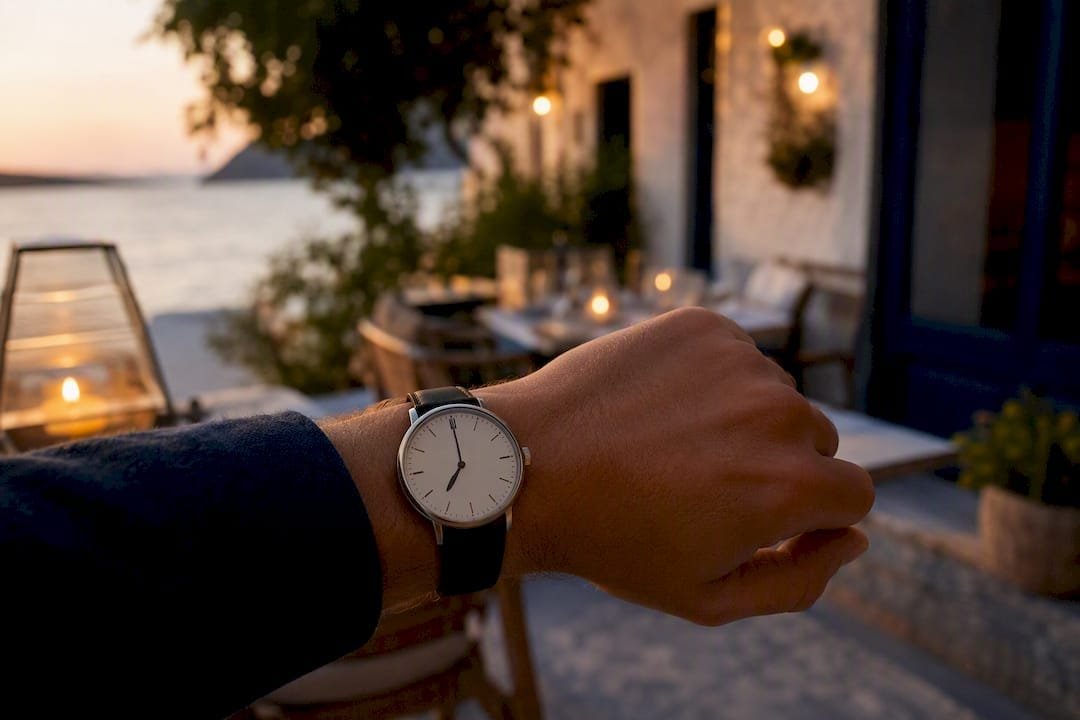
Start with a real greeting, not a distracted glance. Put your phone somewhere you can’t see it light up, not just on silent.
Conversation openers that avoid dead air:
- “What’s one thing from this week you haven’t told me yet?”
- “If we could redo one part of this month, what would it be?”
- “What’s something you’re looking forward to that we haven’t talked about?”
Dos and don’ts for the table:
- Do turn toward small bids. If your partner mentions something offhand, follow up on it instead of letting it drop.
- Don’t bring up bills, in-laws, or scheduling conflicts unless your partner opens that door first.
- Do name one thing you appreciate about them out loud, mid-meal, unprompted.
- If tension creeps in, a simple redirect works better than pushing through it: “Can we table that and come back to it Sunday? I want tonight to just be us.”
Pro Tip: If you snap at each other over something small, a two-line repair beats a long explanation: “That came out sharper than I meant. Can we start that over?”
After the Date: A Short Follow-Up Checklist
Momentum fades fast without a small nudge. Send a short text that night or the next morning: “Tonight was exactly what we needed. Let’s do that again.” Note one highlight you want to bring up later, and jot down any logistics that need fixing, like a sitter who canceled last minute.
- Send a one-line gratitude text within 24 hours.
- Name one specific moment you loved, not just “great night.”
- Propose a rough window for the next date, even loosely: “Let’s aim for sometime next month.”
A template that works nearly every time: “Thank you for tonight, I loved [specific moment]. Same time next month?”
Tailoring Date Nights by Attachment Style
The biggest planning mistake couples make is assuming one type of date works for everyone. A meta-analytic diary study across many couples found that partners with an avoidant attachment style report more satisfaction from novel, exciting activities, while anxious partners report more benefit from familiar, low-pressure experiences. Secure partners tend to do well with either, as long as the interaction stays responsive and unhurried.
That single distinction changes what “memorable” should mean for your specific relationship.
- Avoidant partner: Try something genuinely new, an unfamiliar cuisine or a first-time activity. Frame it low-stakes: “No pressure, just curious what we think of it.”
- Anxious partner: Lean into a favorite, repeat restaurant or a comfort ritual you both already trust. Frame it as reassurance: “I wanted tonight to just feel easy.”
- Secure partner: Either direction works if the night stays unrushed and attentive. Frame it around presence: “I just want a few hours where it’s only us.”
Shared activities only pay off when both people are genuinely into them. A longitudinal study on relationship maintenance found the benefit depends on both partners being dedicated and responsive, not just showing up.
How Often to Plan Dates and What to Budget
The Gottman Institute’s 777 rule suggests a weekly date, an overnight every 7 weeks, and a longer trip every 7 months. It’s a useful frame, not a formula. Gottman’s own research is clear that calendar consistency matters less than how you treat each other in between dates.
Survey data from the National Marriage Project links more frequent date nights to higher relationship quality, better communication, and stronger commitment, largely through the conversations those nights create.
| Budget Tier | Example Activity | Typical Time |
|---|---|---|
| Low | Home-cooked dinner, shared playlist | 1.5 to 2 hours |
| Moderate | Neighborhood restaurant, walk after | 2 to 3 hours |
| Special | Reserved table with a view, tasting menu | 3+ hours or overnight |
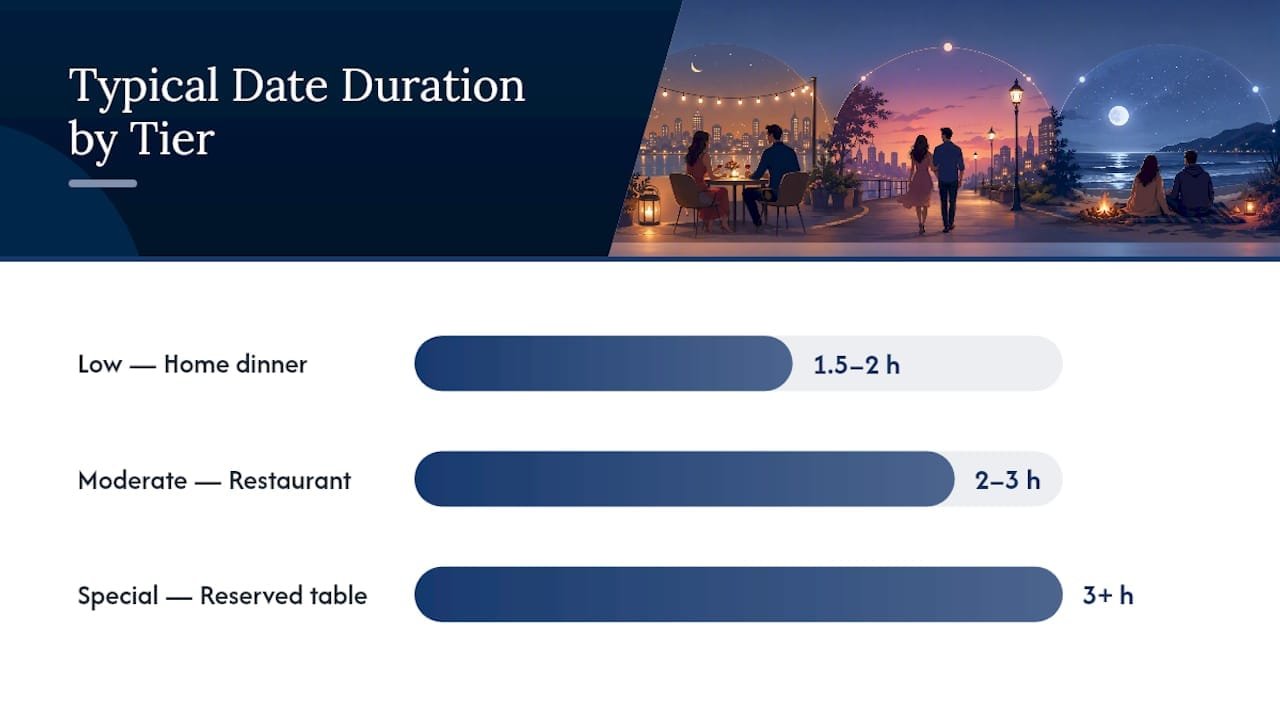
A weeknight date fits neatly into 2 to 3 hours. A weekend “special” tier can stretch into an overnight without much extra planning.
Two Ready-to-Use Checklist Templates
Restaurant date checklist:
- ☐ Confirm the reservation 24 to 48 hours ahead.
- ☐ Ask about dietary restrictions when booking.
- ☐ Check the dress code or seating preference (terrace, booth, view).
- ☐ Plan arrival 10 minutes early.
- ☐ Have a backup restaurant in mind if weather cancels an outdoor table.
At-home date checklist:
- ☐ Dim overhead lights, use candles or warm lamps.
- ☐ Queue a playlist before your partner arrives, not after.
- ☐ Decide takeout versus cooking by mid-afternoon, not 6 p.m.
- ☐ Put phones in another room.
- ☐ Assign cleanup before the date, not during it.
For couples who want an at-home activity with a hands-on element, a painting kit built for two fits the “familiar and low-pressure” category well.
Why Planning Actually Protects Romance
Planning gets a bad reputation, as if spontaneity is the only real romance. It’s backward. A PMC review on planning and follow-through found that pre-arranged plans are far more likely to actually happen, and removing the logistical friction is exactly what creates room for a genuinely surprising moment once you’re there. A reserved table on a good terrace does the planning so the evening can still feel unplanned.
A Simpler Way to Handle the Reservation Step
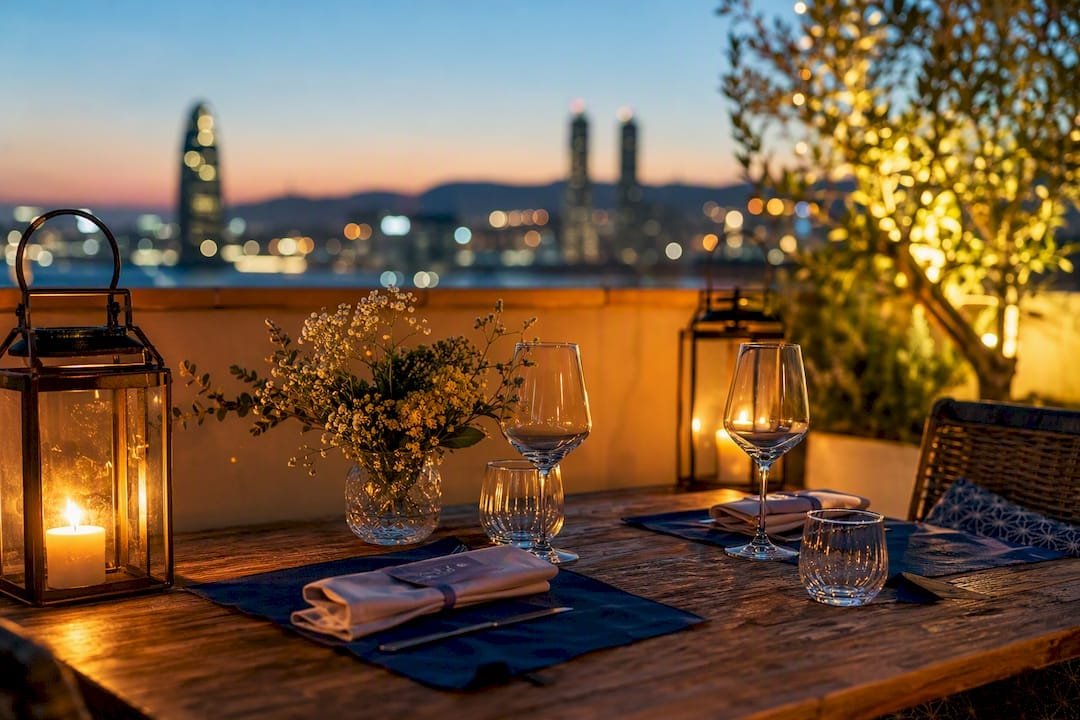
There are other ways to check off “make reservations and confirm bookings,” from cooking at home to hunting down a last-minute table yourself. If you’d rather skip the search, Kokcha handles that step for you: a Mediterranean terrace near the Sagrada Familia, tapas built for sharing, and bilingual service so nobody has to translate the menu mid-date. You still get to cross off the anticipation and presence items on your own; the setting is already sorted. For a shareable centerpiece, the seafood paella works well for two, and the terrace with Sagrada Familia views covers the ambiance checklist item without any lighting or playlist decisions on your part. If you want ideas beyond the menu itself, this guide to romantic dinner ideas pairs well with a Kokcha booking. Check availability and reserve a table directly through Kokcha’s Mediterranean dining page for your next date night.
Sources
- Harasymchuk et al., Planning date nights that promote closeness: The roles of relationship goals and self-expansion. (Journal source DOI)
- “Date nights” take two: The maintenance function of shared relationship activities – GIRME – 2014
- The 777 Rule for Marriage | Gottman Institute
- Planning increases follow-through and can facilitate positive outcomes (PMC review)
- The Date Night Opportunity report — National Marriage Project (2023)