High-acid whites, Provence-style rosés, saline coastal wines, light-to-medium reds, and sparkling wines solve most Mediterranean pairing problems. That’s the short answer. If you’re standing in a wine shop or scanning a restaurant list right now, reach for one of these styles and you’ll land well almost every time.
Here are six quick matches to get you started:
- Green salad with citrus dressing: Sauvignon Blanc or unoaked Verdejo
- Grilled fish: Albariño, Assyrtiko, or Vermentino
- Seafood paella: Albariño or dry Cava
- Roasted lamb with herbs: Tempranillo Crianza or Garnacha
- Hummus and mezze: Pinot Grigio, Assyrtiko, or off-dry Gewürztraminer
- Fried small plates (calamari, croquetas): Txakoli or Fino/Manzanilla Sherry
The rest of this guide explains why those pairings work, using five mechanical levers you can apply to any dish you encounter. Learn the levers and you’ll never need to memorize a list again.
Key Takeaways
The five mechanical levers (acidity, weight, tannin, sweetness, bubbles) explain every reliable Mediterranean pairing and give you the tools to adapt when the menu changes.
| Point | Details |
|---|---|
| Use acidity for fat and oil | High-acid whites like Albariño, Txakoli, and Verdejo cut through olive oil and fried dishes better than any other style. |
| Match tannin to protein | Tempranillo and Sangiovese work with lamb and beef; drop to Garnacha or Mencía for salty or umami-rich dishes. |
| Wine sweeter than dessert | For baklava, chocolate, or fruit tarts, the wine must be at least as sweet as the dish or it tastes thin and acidic. |
| Cava for mixed tables | Dry Cava’s acidity and carbonation make it the most versatile choice for mixed fried plates and varied mezze spreads. |
| Kokcha applies the levers | At Kokcha in Barcelona, staff pair the seafood paella with Albariño and grilled octopus with Fino by the glass. |
Table of Contents
- What’s the Mediterranean wine pairing guide framework?
- Which wines pair with which Mediterranean dishes?
- Why regional matching is the fastest shortcut
- How does serving temperature affect your pairing?
- What’s the rule for pairing wine with Mediterranean desserts?
- How Kokcha’s menu demonstrates the five levers in practice
- What flavor profiles do Mediterranean grape varieties have?
- How do you adjust pairings for vegetarian and vegan Mediterranean meals?
- The rules are the floor, not the ceiling
- Experience these pairings at Kokcha, near the Sagrada Familia
- Sources
What’s the Mediterranean wine pairing guide framework?
Five levers explain why any food-and-wine pairing works: acidity, weight, tannin, sweetness, and bubbles. According to Spanish Terroir’s pairing framework, these levers solve most pairing problems when applied to the dominant property of the dish. Here’s how each one operates at the table.
-
Acidity cuts through fat and oil, the defining feature of Mediterranean cooking. Albariño from Rías Baixas and Txakoli from the Basque Country both carry piercing acidity that slices through olive oil, fried batter, and rich seafood sauces. Verdejo from Rueda does the same with a slightly rounder texture. When a dish is oily or fatty, reach for the highest-acid white you can find.
-
Weight means matching the body of the wine to the richness of the dish. A delicate Pinot Grigio disappears next to a slow-braised lamb shank; a barrel-fermented white Rioja holds its own. Conversely, a full-bodied Reserva Tempranillo overwhelms a plate of grilled sea bass. The Spanish Wine Authority recommends checking alcohol level as a quick proxy for body: wines above 14% ABV tend to read as full-bodied and need a dish that can match them.
-
Tannin is the drying sensation from red grape skins. It works beautifully with protein and fat in red meat, but it clashes with salt and umami. Sangiovese (Chianti) and Tempranillo carry moderate tannin that pairs well with lamb, beef, and tomato-based pasta. For salty starters or umami-rich dishes like aged cheese, drop to low-tannin reds: Garnacha, Mencía, or a light Syrah from the southern Rhône.
-
Sweetness has two jobs: it soothes chili heat, and it must match or exceed the sweetness of a dessert. A touch of residual sugar in a Riesling or Gewürztraminer makes spiced dishes far more comfortable. For desserts, the wine must always be at least as sweet as the food, or it tastes thin and acidic by comparison.
-
Bubbles physically scrub the palate between bites, making sparkling wine the most versatile tool at a mixed Mediterranean table. Cava, made by the traditional method in Catalonia, is the go-to: its fine mousse and high acidity reset the palate after fried food, briny olives, or rich charcuterie.
Pro Tip: Temperature amplifies or mutes these levers. A white served too warm loses its acidity; a red served too cold hardens its tannin. The practical rule: pull whites from the fridge 10 minutes before serving, and reds from a warm room 15–20 minutes before pouring. That window is often called the “20-minute rule,” and it matters more than most people realize.
Decision flow: Identify the dominant property of the dish (fatty, salty, spicy, rich, sweet) → pick the lever that counters or complements it → select a wine style that delivers that lever. Everything else is detail.
Which wines pair with which Mediterranean dishes?
Match the sauce and cooking method first, then the protein. That’s the practical rule restaurant sommeliers apply: a grilled fish with lemon butter needs a different wine than the same fish in a spiced tomato sauce. Use the lever framework first, then default to the regional suggestion when you’re unsure.
| Dish | Primary wine styles | Why it works |
|---|---|---|
| Green salad / citrus dressing | Sauvignon Blanc, Verdejo | High acidity mirrors the dressing; neither overwhelms delicate greens |
| Hummus and mezze | Pinot Grigio, Assyrtiko, Provençal rosé | Aromatic whites and light rosés complement tahini and lemon without clashing with spice |
| Grilled fish | Albariño, Vermentino, Assyrtiko | Coastal salinity in the wine echoes the sea; acidity cuts olive oil |
| Seafood paella | Albariño, dry Cava, Verdejo | Acidity and bubbles cut through saffron-rich rice and shellfish fat |
| Pasta with pesto | Vermentino, Pinot Grigio, unoaked Chardonnay | Herbal notes in the wine align with basil; moderate acidity handles the oil |
| Moussaka | Garnacha, Sangiovese (Chianti), Tempranillo | Medium body and moderate tannin match the lamb and béchamel richness |
| Roasted lamb | Tempranillo Crianza/Reserva, Garnacha, Syrah | Tannin grips the fat; earthy notes in Tempranillo echo herbs |
| Pizza (tomato-based) | Sangiovese (Chianti), Garnacha, Barbera | High acidity in Sangiovese matches tomato acidity; medium body fits the crust |
| Tapas / fried small plates | Fino/Manzanilla Sherry, Txakoli, dry Cava | Saline, high-acid, or sparkling wines scrub fried batter and cut salt |
Substitutions when your first choice isn’t available:
- Albariño → Vermentino or unoaked Chardonnay
- Garnacha → Mencía or a light Côtes du Rhône Syrah
- Fino/Manzanilla → Txakoli or a very dry Cava
- Assyrtiko → Sauvignon Blanc or a mineral Chablis-style Chardonnay
- Tempranillo Crianza → Sangiovese (Chianti Classico) or a Côtes du Rhône rouge
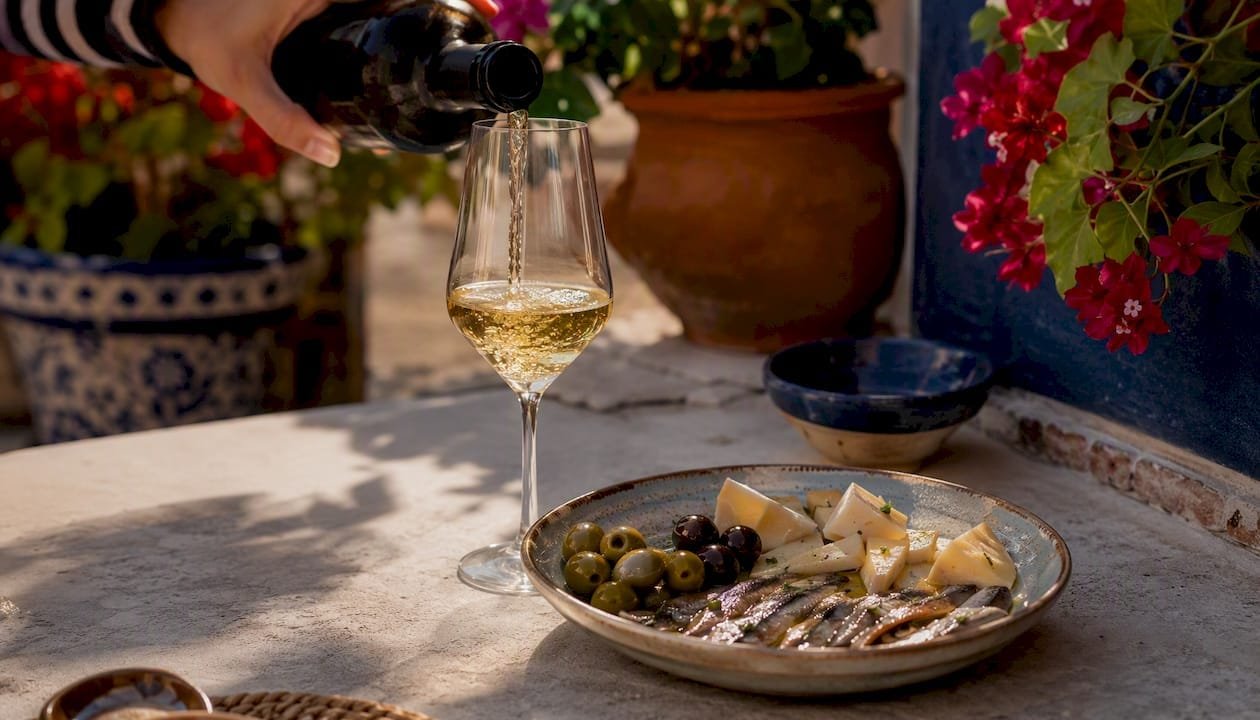
For hummus and mezze specifically, WineFolly’s pairing research points to Pinot Grigio, Assyrtiko, and Provençal rosé as the most reliable choices, with off-dry Gewürztraminer or Riesling stepping in when the mezze includes spicier preparations, like harissa or heavily spiced falafel.
Pro Tip: For salty or umami-rich starters — anchovies, aged manchego, olive tapenade — choose wines with their own saline register. Fino and Manzanilla Sherry are the clearest examples: their flor-driven salinity harmonizes with salt rather than fighting it. High-tannin reds make salty food taste metallic and harsh.
Pro Tip: When a dish is heavily spiced (think harissa lamb or sumac-dressed salads — sumac’s tartaric acid content makes it particularly wine-tricky), lower the alcohol and tannin in your wine choice. An off-dry Riesling or a light Grenache-based rosé handles the heat far better than a 14.5% Cabernet Sauvignon. Research confirms that alcohol and tannin amplify perceived heat in spiced dishes, making the wine taste harsher rather than refreshing.
Why regional matching is the fastest shortcut
When in doubt, drink what grows there. Wines and dishes that developed in the same region share agricultural roots, and that alignment tends to produce reliable pairings without any analysis. Regional matching is the fastest baseline, especially when you’re ordering at a restaurant with an unfamiliar menu.
Here are the most useful regional shortcuts for Mediterranean food and wine pairing:
- Rías Baixas, Galicia (Spain): Albariño with Galician seafood (percebes, grilled turbot, clams in white wine sauce). The wine’s salinity and citrus acidity are almost engineered for Atlantic shellfish. Penedès Cava with grilled prawns or mixed fried seafood works equally well across Catalonia.
- Rioja and Ribera del Duero (Spain): Tempranillo with roast lamb, suckling pig, or slow-braised beef. The regional pairing is so reliable that Spanish wine guides use it as their primary example of the “what grows together” principle.
- Santorini, Greece: Assyrtiko with grilled octopus, sea urchin, or fava bean dip. The volcanic minerality in Assyrtiko is one of the most distinctive wine signatures in the Mediterranean, and it locks perfectly with the iodine notes of Aegean seafood.
- Sardinia and Liguria, Italy: Vermentino with Sardinian seafood pasta, bottarga, or pesto genovese. The grape’s herbal, slightly bitter finish mirrors the coastal herbs in both cuisines. Sangiovese (Chianti Classico) with Tuscan wild boar ragù or bistecca fiorentina is the Italian equivalent of Rioja with lamb.
- Provence, France: Provençal rosé with ratatouille, salade niçoise, or grilled sea bream. The pale, dry style of Provence rosé is built for the region’s olive oil-forward cooking.
- Cyprus: Commandaria, one of the world’s oldest named wines, with bittersweet desserts like loukoumades or carob-based sweets. The wine’s oxidative richness and dried-fruit sweetness handle the intense sugar in Cypriot confections.
When to break the regional rule: If the structural lever clearly points elsewhere, follow the lever. A Catalan dish with heavy chili heat doesn’t need a local Garnacha; it needs an off-dry Riesling. Regional matching is a starting point, not a constraint.
How does serving temperature affect your pairing?
Temperature and timing often decide whether a pairing succeeds more than the bottle choice does. Serve a great Albariño at room temperature and its acidity flattens; serve a Tempranillo straight from the fridge and its tannin turns grippy and harsh. Getting this right takes about 20 minutes of attention, nothing more.
Practical temperature targets:
- Sparkling wines (Cava, Prosecco): 6–8°C, kept on ice throughout the meal
- Rosés (Provence-style): 6–8°C
- Light whites (Albariño, Txakoli, Pinot Grigio, Vermentino): 8–10°C
- Fuller whites (barrel-fermented Rioja Blanco, Verdejo Reserva): 10–12°C
- Light reds (Garnacha, Mencía, young Sangiovese): 12–14°C
- Fuller reds (Tempranillo Crianza/Reserva, Syrah): 14–16°C
| Wine style | Serve at | Common Mediterranean dish match |
|---|---|---|
| Cava / sparkling | 6–8°C | Fried tapas, mixed seafood, croquetas |
| Provence rosé | 6–8°C | Salade niçoise, grilled sea bream, ratatouille |
| Albariño / Txakoli | 8–10°C | Grilled fish, seafood paella, briny starters |
| Verdejo / Vermentino | 10–12°C | Pesto pasta, white fish, vegetable dishes |
| Garnacha / Mencía | 12–14°C | Tapas, charcuterie, light lamb dishes |
| Tempranillo Crianza | 14–16°C | Roast lamb, moussaka, tomato-based meat stews |
The summer pairing guidance from El Español’s sommelier panel reinforces this: young, high-acid whites and versatile rosés are the most practical choices for warm-weather Mediterranean dining, and keeping them properly chilled is what makes them work.
For spicy dishes, temperature interacts with the spice lever: a slightly warmer serving temperature on an off-dry Riesling (around 10°C rather than 8°C) lets its residual sugar show more clearly, softening the heat perception. For salty or umami-rich dishes, choose wines with their own saline character (coastal whites, Fino/Manzanilla) rather than fighting salt with tannin.
What’s the rule for pairing wine with Mediterranean desserts?
The rule is simple: the wine must be at least as sweet as the dessert, or it will taste thin, acidic, and unpleasant by comparison. This is the one pairing principle that has almost no exceptions.
Common Mediterranean sweets and their best matches:
- Baklava (honey, nuts, phyllo): Late-harvest Riesling or Banyuls (a fortified Grenache from southern France). Both have the sugar density to stand beside the honey without fading.
- Fruit tarts and citrus-based desserts: Moscato d’Asti or an off-dry Muscat. Their light effervescence and floral sweetness complement stone fruit and citrus without overwhelming.
- Chocolate-based desserts: Ruby Port or Banyuls. The grape-derived sweetness and slight bitterness in both wines echo the cocoa.
- Cypriot loukoumades or carob sweets: Commandaria. Its oxidative, dried-fruit richness is one of the few wines that can match the intense sugar in traditional Cypriot confections, as Assouline’s Mediterranean pairing notes highlight.
- Light pastries and almond-based sweets: Fino Sherry (for a contrast pairing) or a light Moscato. The saline dryness of Fino against almond pastry is a classic Andalusian combination that works because the salt in the wine amplifies the sweetness of the food.
For Mediterranean dessert pairings in more detail, the key is always checking residual sugar before you pour.
How Kokcha’s menu demonstrates the five levers in practice
Kokcha uses the five levers to guide its by-the-glass suggestions and tasting recommendations, making the pairing logic visible rather than leaving diners to guess. Three menu examples show how the framework plays out in a real Barcelona setting.
-
Seafood paella: The dominant properties are saffron richness, shellfish fat, and a saline base. The acidity lever points directly to Albariño or Verdejo, both of which cut through the rice’s richness and echo the briny shellfish. A dry Cava works equally well when you want bubbles to reset the palate between bites. Ask Kokcha’s staff for the current by-the-glass Albariño or the house Cava when ordering the paella.
-
Grilled octopus tapas: Octopus has a firm, slightly smoky texture with a pronounced sea flavor. The saline lever applies here: Fino/Manzanilla Sherry or Txakoli, both carrying their own mineral salinity, harmonize with the iodine notes rather than clashing. For seafood tapas at this level of intensity, a neutral white would simply disappear.
-
Roasted lamb with herbs: Lamb fat and herb seasoning call for the tannin lever. Tempranillo Crianza or a medium-bodied Garnacha both carry enough structure to grip the fat while their earthy, red-fruit character mirrors the rosemary and thyme. Kokcha’s wine list includes Spanish reds suited to this pairing; the staff can suggest the current vintage and aging tier (Crianza vs. Reserva) based on how the lamb is prepared that day.
Diners can ask for pairing suggestions by the glass at any point during the meal. The role of wine in Mediterranean dining at Kokcha is treated as part of the experience, not an afterthought.
What flavor profiles do Mediterranean grape varieties have?
Knowing what a grape tastes like before you order saves a lot of guesswork. These are the varieties you’ll encounter most often across Spanish, Italian, and Greek wine lists.
Whites:
Albariño (Galicia, Spain) delivers green apple, lemon zest, white peach, and a saline finish.
Txakoli (Basque Country, Spain) is even more austere: bone dry, very high acid, slightly fizzy, with green apple and sea spray. It’s poured from height to aerate it, and it’s almost exclusively a seafood and pintxos wine.
Verdejo (Rueda, Spain) offers fennel, white grapefruit, and a slightly bitter almond finish. More textured than Albariño, it handles richer fish dishes and vegetable-based plates well.
Assyrtiko (Santorini, Greece) is volcanic and mineral, with lemon, green apple, and a chalky, saline finish. Its naturally high acidity survives warm climates without losing freshness, which is why it’s become one of the most respected white grapes in the Mediterranean. For Greek wine pairing advice, Assyrtiko is the starting point.
Vermentino (Sardinia, Liguria) shows white peach, herbal notes, and a slightly bitter finish that mirrors coastal Mediterranean herbs. Medium acidity, medium body.
Pinot Grigio (northeastern Italy) in its lighter style is crisp, neutral, and apple-driven. It’s the most food-flexible white on this list precisely because it doesn’t impose much character of its own.
Sauvignon Blanc (Loire, Marlborough, or Rueda) brings grassy, citrus, and gooseberry notes with high acidity. It’s the best match for herb-heavy dishes and citrus-dressed salads.
Riesling (Germany, Alsace) ranges from bone dry to lusciously sweet. Its defining trait is high acidity paired with floral, petrol, and stone fruit notes. Off-dry Riesling is the go-to for spiced dishes.
Gewürztraminer (Alsace, Alto Adige) is aromatic and slightly oily, with lychee, rose petal, and ginger. Low acidity but high aromatic intensity makes it the best match for heavily spiced mezze.
Reds:
Tempranillo (Rioja, Ribera del Duero) is Spain’s flagship red: cherry, leather, tobacco, and vanilla from oak aging. Medium-to-high tannin, good acidity, and a long finish. Crianza and Reserva tiers add structure for richer meat dishes.
Garnacha/Grenache (Aragón, Priorat, southern Rhône) is fruit-forward, low in tannin, and high in alcohol. Red cherry, raspberry, and white pepper. Its low tannin makes it more versatile with salty or umami-rich dishes than Tempranillo.
Syrah (Rhône, Priorat) in its Mediterranean expression is dark-fruited, peppery, and medium-to-full bodied. It handles lamb and grilled meats well, especially when there’s char or smoke involved.
Sangiovese (Tuscany, as Chianti) brings sour cherry, tomato leaf, and firm acidity. Its natural affinity for tomato-based sauces is one of the most reliable pairings in Italian wine.
Fino/Manzanilla Sherry (Jerez, Sanlúcar de Barrameda) is technically a fortified white, but it functions as a dry, saline, almost savory wine. Almonds, sea air, and a bone-dry finish make it the definitive pairing for fried food and briny starters.
Rosé (Provence-style) is pale, dry, and built on Grenache, Cinsault, and Mourvèdre. Strawberry, citrus peel, and a mineral finish. Its versatility at a mixed Mediterranean table is unmatched among still wines.
Cava (Catalonia) is made by the traditional method from Macabeo, Xarel·lo, and Parellada. Crisp, toasty, and fine-bubbled. The most useful sparkling wine for Mediterranean food because its acidity and carbonation handle almost any dish on the table.
How do you adjust pairings for vegetarian and vegan Mediterranean meals?
Vegetarian and vegan Mediterranean dishes are often the easiest to pair because they lean on vegetables, legumes, olive oil, and herbs rather than the fat and protein that complicate red wine choices. The levers still apply, but the weight and tannin levers become less critical.
For vegetable-forward dishes (roasted peppers, grilled eggplant, stuffed zucchini), high-acid whites and dry rosés are the default. Vermentino and Verdejo both carry enough herbal character to mirror Mediterranean vegetables without overwhelming them. A Provence rosé handles the full range of a vegetable mezze table without requiring any dish-by-dish analysis.
Legume-based dishes (hummus, falafel, lentil soup) have more protein density and often more spice. Pinot Grigio and Assyrtiko work for milder preparations; off-dry Gewürztraminer or Riesling step in when the spice level rises. For mezze-style spreads, the variety of flavors on the table makes a single versatile wine more practical than trying to match each dish individually. Dry Cava or a light Garnacha rosé covers the whole spread.
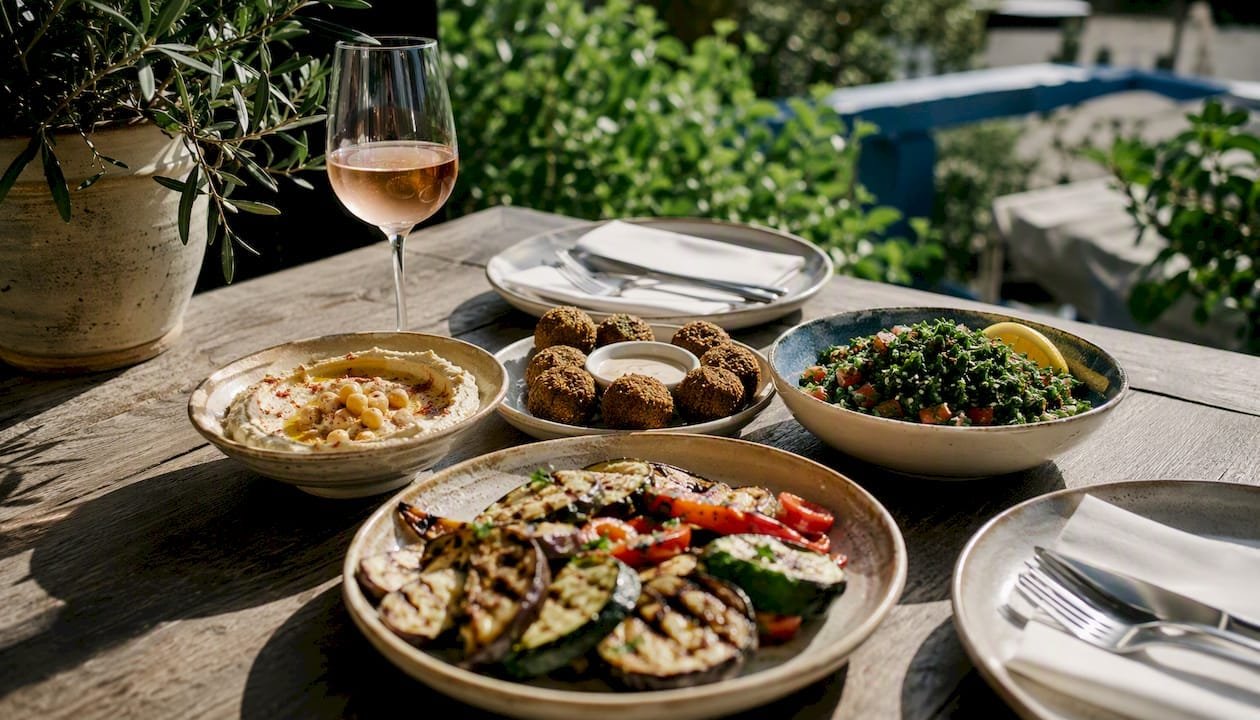
Pasta and grain dishes (pesto pasta, tabbouleh, couscous) pair well with medium-acid whites. Pesto’s basil and pine nut richness needs a wine with enough body to match it: Vermentino or a lightly oaked Chardonnay. Tabbouleh’s lemon and herb brightness calls for Sauvignon Blanc or Verdejo.
For vegan diners specifically, the main adjustment is avoiding wines fined with animal products (egg whites, casein, isinglass). Many Spanish and Italian producers now use bentonite clay for fining and label their wines as vegan-friendly. Asking the sommelier or checking the producer’s website takes 30 seconds and removes the uncertainty entirely.
For vegetable paella, the saffron and vegetable stock base calls for the same acidity lever as seafood paella: Albariño, Verdejo, or dry Cava all work, with the added benefit that their lower tannin doesn’t clash with the delicate vegetable flavors.
The rules are the floor, not the ceiling
Learning the five levers and the regional defaults is the right starting point. But the most interesting pairings usually come from applying the levers in unexpected directions.
A Fino Sherry with almond-based pastry is technically a contrast pairing: the wine’s bone-dry salinity amplifies the sweetness of the food rather than matching it. It works because the salt lever overrides the sweetness lever in a way that creates tension rather than harmony. That tension is what makes the pairing memorable. Once you understand why it works, you can replicate the logic with other saline wines and sweet-savory dishes.
The broader point: regional defaults are training wheels, as master sommeliers at Decanter have noted. They get you to a reliable pairing quickly. The levers let you go further, inventing combinations that don’t exist in any guide. A Txakoli with a lightly spiced fish taco, a Garnacha with a mushroom-heavy vegetable stew, a late-harvest Riesling with a blue cheese and fig plate. None of those are textbook pairings. All of them work when you trace the logic back to the levers.
The goal isn’t to memorize this guide. It’s to internalize the five levers well enough that you can look at a dish, identify its dominant property, and make a confident choice in under a minute.
Experience these pairings at Kokcha, near the Sagrada Familia
Kokcha’s Mediterranean dining experience in Barcelona puts these pairings into practice in a setting that’s genuinely worth the visit. The restaurant sits steps from the Sagrada Familia, with a terrace that frames one of the most recognizable skylines in Europe.
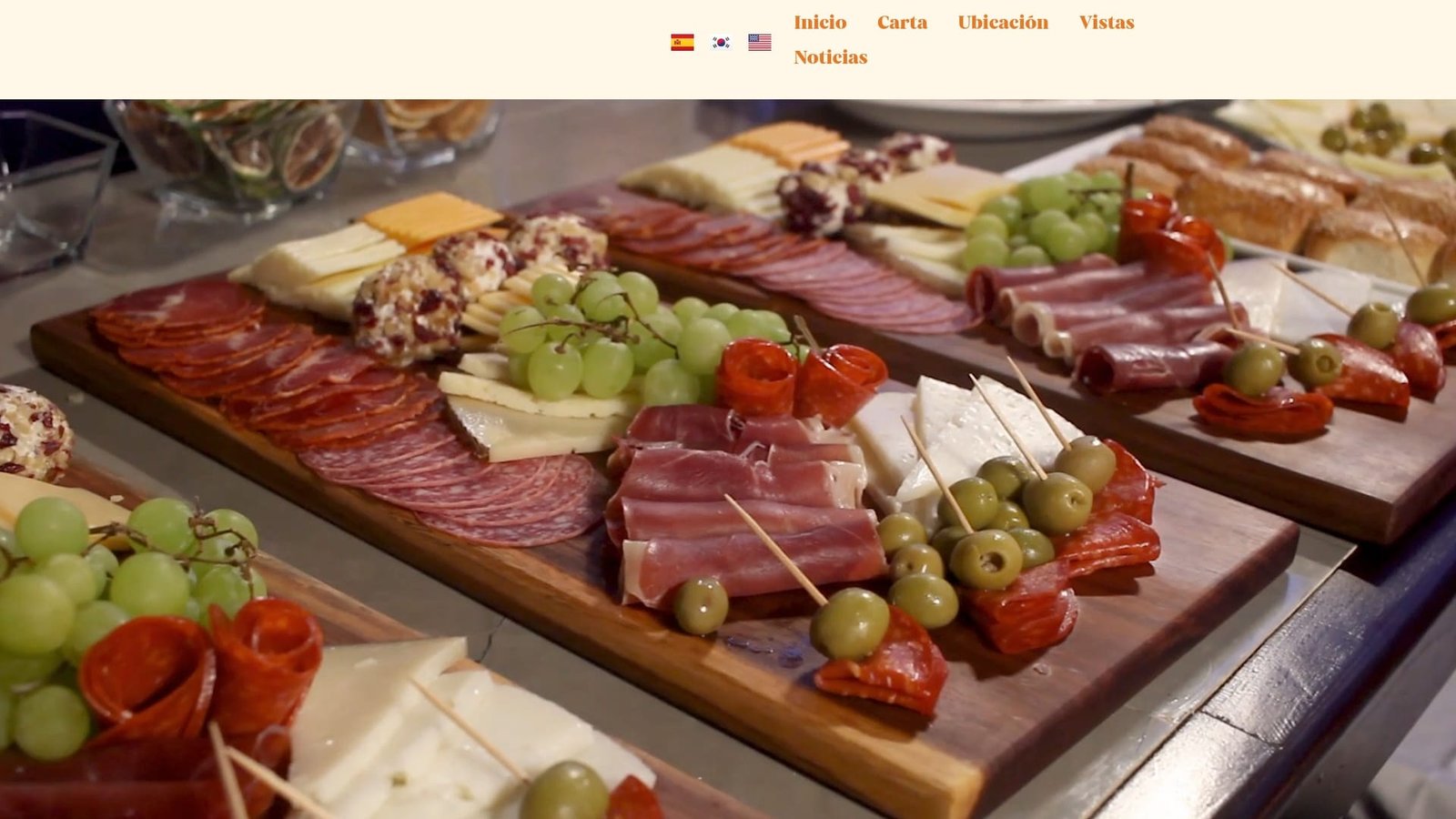
The by-the-glass list is built around the lever framework: you’ll find Albariño alongside the seafood paella, saline options for the tapas section, and structured Spanish reds for the roasted meats. Staff speak both Spanish and English and are happy to walk you through pairing options for whatever you’re ordering. If you want to try the full pairing experience, ask for the seafood paella with a glass of Albariño or the grilled octopus tapas with a Fino pour. Reserve your table at Kokcha and tell them you’re coming for the pairings.
Sources
The following resources offer deeper coverage of the pairing principles and regional examples covered in this guide:
- Spanish wine food pairing: the working logic · Spanish Terroir
- PMC article (sensory interactions) — NCBI
- Wine and Hummus: 9 Delicious Wine and Middle Eastern pairings — WineFolly
- Spanish Wine and Food Pairing Guide: Matching Wines to Regions – Spanish Wine Authority
For practical local reading, Kokcha’s guide to selecting Mediterranean wine for any meal covers the same principles with Barcelona-specific examples and menu context.