Wine and tapas pairing is the art of matching flavor intensity, acidity, tannins, and aroma between glass and plate so each enhances the other. Get it right, and a simple plate of boquerones or jamón ibérico becomes a full sensory experience. Get it wrong, and even a great wine can taste flat or bitter against the wrong dish. This guide covers the core principles of how to pair wine with tapas, walks through the best wine choices for every major tapas category, and gives you practical strategies for mixed spreads and uncertain moments at the table.
What are the key principles for pairing wine with tapas?
Pairing wine with food is not an exact science. The goal is mutual enhancement: neither the wine nor the tapas should overpower the other. Think of it as a dialogue between plate and glass, where both sides speak at the same volume.
Five pillars drive every successful match:
- Intensity matching. A delicate white fish tapa needs a light, crisp wine. A rich, fatty chorizo needs something with more body and structure.
- Acidity. High-acid wines like Albariño cut through oily or fried tapas and refresh the palate between bites.
- Tannins. Tannins in red wine soften against protein and fat. Pair tannic reds with meaty tapas, never with delicate fish or acidic dressings.
- Sweetness. Off-dry or sweet wines counter spicy or acidic dishes. Moscatel alongside patatas bravas is a classic example of this balance.
- Aroma congruence. Shared aromatic compounds between wine and food amplify enjoyment. Linalool, a terpene found in fresh herbs, also appears in Riesling. That molecular overlap is why herb-forward tapas and aromatic whites feel so natural together.
Serving temperature matters more than most people realize. Whites and rosés perform best at 8–12 °C. Serving a white wine too warm flattens its acidity and kills its freshness, which is the exact quality you need to balance a rich tapa.
Pro Tip: If you are unsure about a pairing, start with the wine. Taste it alone, then take a bite of the tapa and taste the wine again. If the wine tastes better after the food, you have a match.
The most common pairing error is choosing wine by color alone. Red with meat and white with fish is a starting point, not a rule. The texture, fat content, and seasoning of a tapa matter far more than whether the protein is red or white.
Which wines pair best with popular tapas categories?
The best wine for tapas depends entirely on the dish. Classic Spanish tapas span a wide range of flavors and textures, so the wine suggestions below are organized by category.
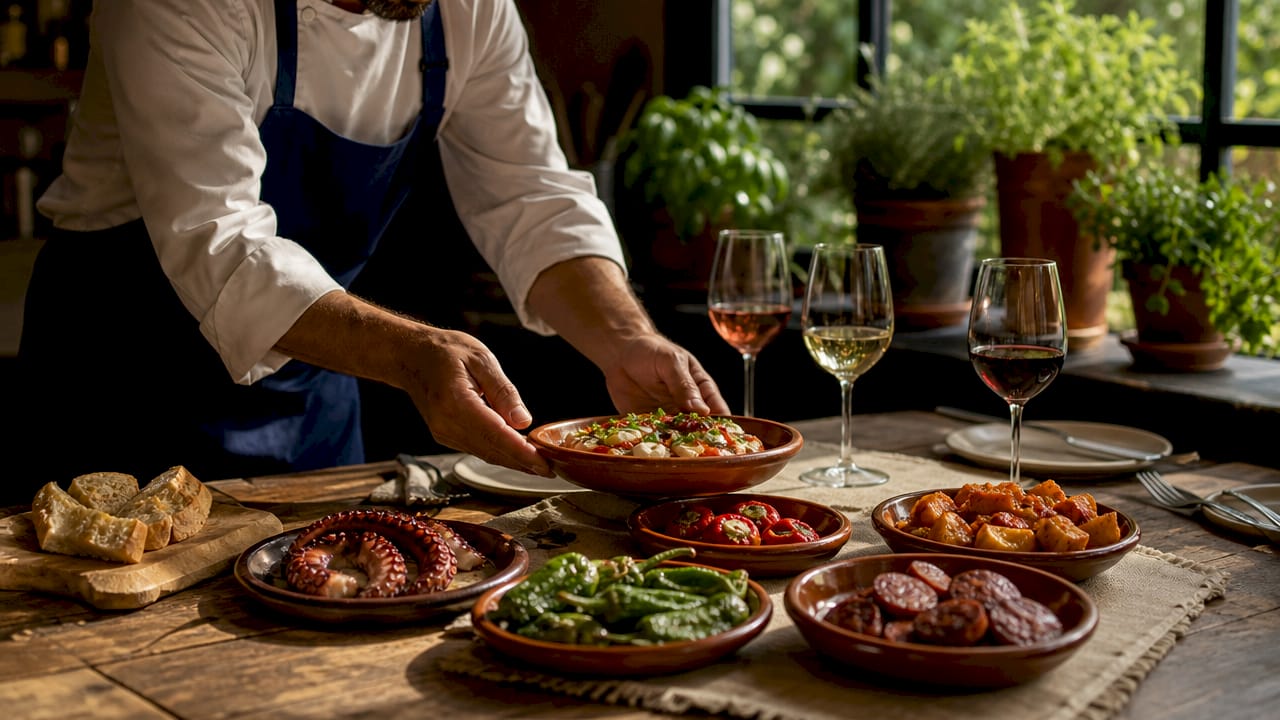
Seafood and shellfish tapas
Crisp, high-acid whites are the standard choice here. Albariño from Galicia brings citrus and saline notes that mirror the ocean character of gambas al ajillo or steamed clams. Txakoli, a slightly sparkling Basque white, works equally well with boquerones. Verdejo from Rueda adds a herbal edge that complements grilled octopus. Seafood tapas and high-acid whites share a natural affinity because the wine’s acidity matches the brightness of the dish without competing with it.
Fried and creamy tapas
Cava Brut Nature is the definitive match for croquetas, calamares, or any battered or fried tapa. The bubbles physically cleanse fat from the palate, and the wine’s dry finish resets your taste buds for the next bite. This is not just tradition. The palate-cleansing effect of sparkling wine is a measurable sensory reset that makes fried food taste lighter.
Rich, fatty meats and cured ham
Mencía from Bierzo is the go-to red for chorizo, morcilla, or a board of jamón ibérico. It carries enough tannin to cut through fat but stays light enough not to overwhelm the dish. Jamón ibérico also pairs beautifully with Fino de Jerez, a dry sherry whose nutty, oxidative notes mirror the cured, savory character of the ham.
Spicy tapas
Off-dry wines cool the heat of spicy dishes. Moscatel works well with patatas bravas because its residual sweetness counters the spice without adding alcohol heat. Avoid high-alcohol reds with spicy tapas. Alcohol amplifies the sensation of heat on the palate, turning a pleasant tingle into an uncomfortable burn.
Vegetable and salad tapas
This category requires the most care. The dressing matters more than the vegetable. Vinaigrette-dressed salads clash with tannic reds, which turn metallic against acidic dressings. A dry rosé or a light, unoaked white is the safest choice. Taste the dish before committing to a wine, especially if the seasoning is strong.
| Tapas category | Ideal wine style | Example wines |
|---|---|---|
| Seafood and shellfish | Crisp, high-acid white | Albariño, Txakoli, Verdejo |
| Fried and creamy | Dry sparkling | Cava Brut Nature |
| Rich meats and cured ham | Light to medium red or dry sherry | Mencía, Fino de Jerez |
| Spicy tapas | Off-dry or lightly sweet white | Moscatel |
| Vegetable and salad | Dry rosé or unoaked white | Garnacha rosé, Godello |
| Mixed tapas spread | Versatile sparkling or rosé | Cava Brut Nature, dry rosé |
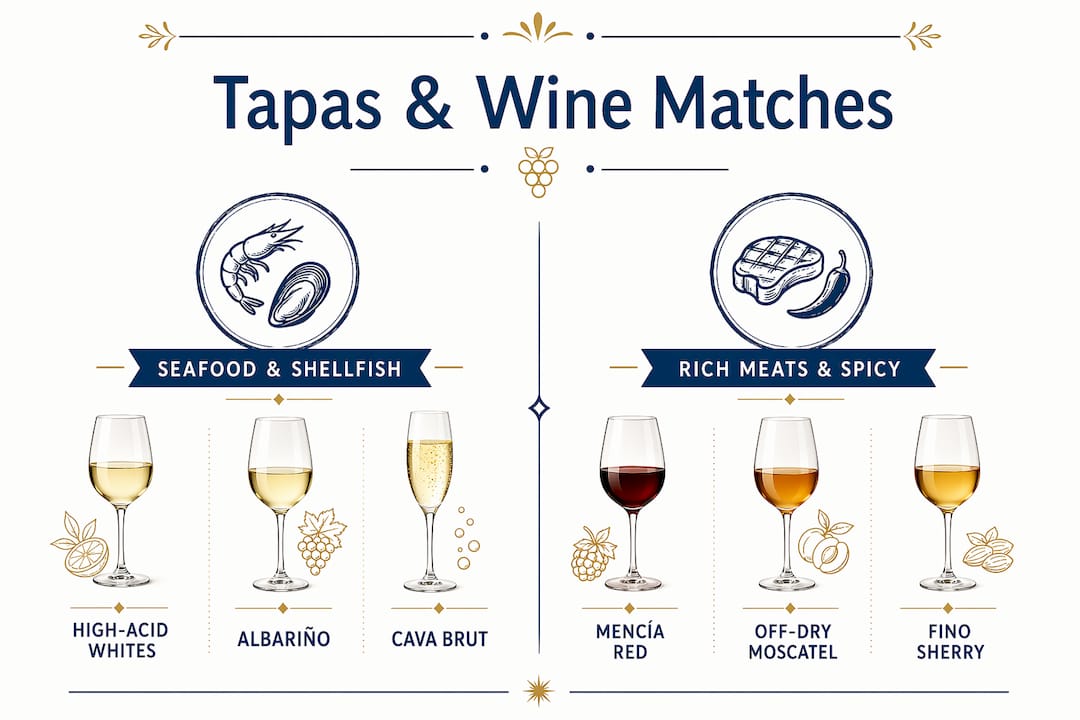
Pro Tip: Lower-alcohol wines (under 12% ABV) are rising stars in tapas pairing. They offer aromatic intensity and freshness without the weight that makes a long tapas meal feel heavy.
How does serving temperature affect wine and tapas pairing?
Temperature is the most underestimated variable in any tapas and wine pairing guide. A wine served at the wrong temperature tastes like a different wine entirely. Young reds served at 12–14 °C retain their fruit character and freshness. Serve the same wine at room temperature in a warm Barcelona dining room, and the bitterness rises while the fruit disappears.
Practical temperature targets for tapas settings:
- Whites and rosés: 8–12 °C. Pull them from the fridge 10 minutes before serving so they are cold but not icy.
- Light reds (Mencía, young Garnacha): 12–14 °C. A brief 20-minute chill in the fridge before serving makes a real difference.
- Sparkling wines: 6–8 °C. Serve them well chilled so the bubbles stay tight and the palate-cleansing effect stays active.
- Dry sherry (Fino, Manzanilla): 7–9 °C. Most people serve sherry too warm, which dulls its crispness.
Glassware also shapes the experience. A tulip-shaped glass concentrates aromas for whites and sparkling wines. A wider-bowled glass lets red wines breathe. Pour sizes matter too. Smaller pours, around 90–100 ml, let you match each wine to each tapa without committing to a full glass before the next dish arrives.
At home, an ice bucket with water and ice (not ice alone) chills a bottle to serving temperature in about 15 minutes. This is faster and more even than a freezer.
What strategies work when pairing wine with a mixed tapas spread?
A mixed tapas spread is the most common real-world scenario, and it is where rigid pairing rules break down fastest. The answer is to choose one versatile wine rather than trying to match every dish individually.
- Start with Cava Brut Nature or a dry rosé. Both wines have enough acidity to cut through fat, enough freshness to complement seafood, and enough neutrality to avoid clashing with spice. Sparkling Brut Nature and dry rosé are the most reliable all-rounders for heterogeneous tapas spreads.
- Choose moderate body and good acidity. Avoid very tannic reds or very sweet whites when the spread includes multiple flavor profiles. Both extremes create conflicts with at least one dish on the table.
- Taste before you commit. Take a bite of the most dominant tapa on the table, then sip the wine. If the wine tastes flat or harsh, it is not the right match. If it tastes brighter, you are set.
- Sequence your wines if you have more than one. Start with sparkling or white, move to rosé, and finish with red if the spread includes heavier meat dishes. This mirrors the natural progression from lighter to richer flavors.
- Experiment without fear. The goal of pairing is pleasure, not correctness. A wine you enjoy with a dish you love is always the right choice, regardless of what any rule says.
Pro Tip: When ordering tapas at a restaurant, ask the server which dish on the table has the strongest flavor. Build your wine choice around that dish. Everything milder will work alongside it.
You can also order tapas strategically to make wine pairing easier. Grouping dishes by flavor intensity, starting with lighter seafood and finishing with richer meats, lets a single bottle of white or rosé carry you through most of the meal.
Key Takeaways
The most effective approach to pairing wine with tapas is to match flavor intensity first, then use acidity, tannins, and aroma to fine-tune the combination.
| Point | Details |
|---|---|
| Match intensity first | Light tapas need light wines; rich, fatty dishes need structured reds or dry sherry. |
| Acidity is your best tool | High-acid whites like Albariño and sparkling Cava cut through fat and refresh the palate. |
| Temperature changes everything | Serve young reds at 12–14 °C and whites at 8–12 °C to preserve their pairing qualities. |
| Use rosé or Cava for mixed spreads | Dry rosé and Cava Brut Nature work across nearly every tapas category without conflict. |
| Taste before you decide | Sip the wine after a bite of food. If the wine tastes better, the pairing works. |
What I have learned from years at the tapas table
The single biggest mistake I see wine lovers make with tapas is overthinking the pairing before they have even tasted the food. They read the menu, pick a wine on paper, and then spend the meal second-guessing themselves instead of enjoying it.
My honest advice: trust your palate more than any chart. The neurological reward you get from a great pairing is real and immediate. You will feel it before you can explain it. When a wine and a dish click, the wine tastes more alive and the food tastes more complete. That feeling is the signal, not the label on the bottle.
I also think the Spanish tradition of drinking Fino de Jerez with jamón ibérico is one of the most underrated pairings in the world. Most wine lovers outside Spain have never tried it. The nutty, saline quality of a good Fino mirrors the cured, umami depth of the ham in a way that no red wine can match. If you have only ever had jamón with red wine, you are missing the best version of that dish.
The other thing I would push back on is the idea that you need Spanish wines to pair with Spanish tapas. Lower-alcohol, aromatic whites from outside Spain, like an Alsatian Pinot Gris or a German Spätlese, can be genuinely surprising matches with spicy or herb-forward tapas. The molecular overlap in aroma compounds matters more than the wine’s country of origin.
Start with the classics, learn why they work, and then break the rules with intention. That is where the real fun begins.
— YellowRock
Kokcha: where Mediterranean tapas and wine come together
Kokcha is a Mediterranean restaurant in Barcelona, steps from the Sagrada Familia, with a tapas menu built for exactly this kind of pairing exploration. The kitchen covers the full range of Spanish small plates, from seafood and cured meats to vegetable dishes and rich, slow-cooked specialties, giving you a natural canvas to apply everything covered here.
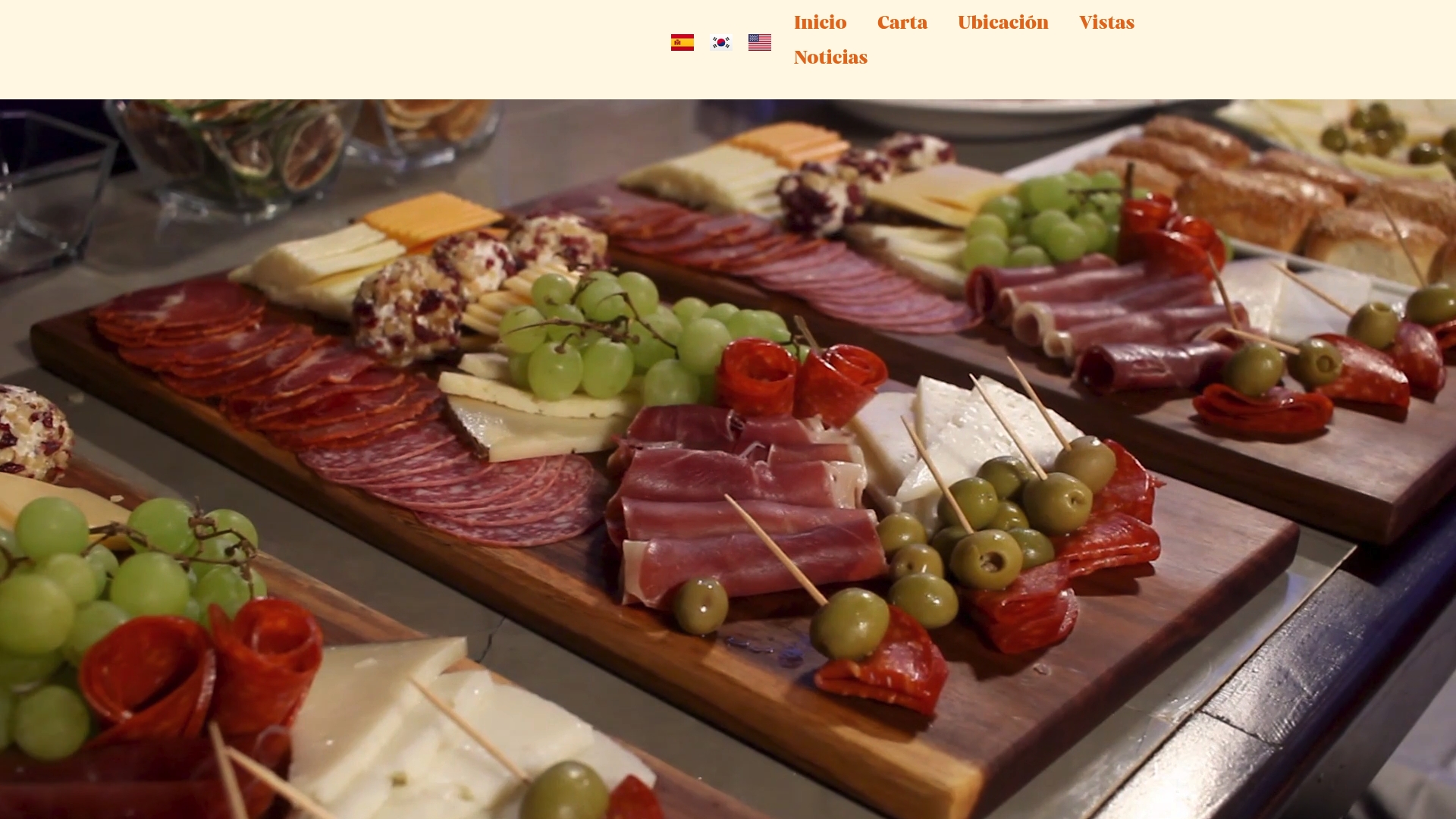
The wine list at Kokcha is selected to complement the Mediterranean menu, with options that span the key styles covered in this guide: crisp whites, dry sparkling, and structured reds. If you want to experience Mediterranean dining trends alongside a curated wine selection in a setting that takes both food and drink seriously, Kokcha is worth a visit. You can explore the full menu and book a table at kokcha.es.
FAQ
What is the best wine for tapas overall?
Cava Brut Nature and dry rosé are the most versatile choices for a mixed tapas spread. Both wines have enough acidity to complement a wide range of flavors without clashing with any single dish.
Which wine pairs with jamón ibérico?
Fino de Jerez is the classic match for jamón ibérico. Its nutty, saline character mirrors the cured, umami depth of the ham better than most red wines.
How do I choose wine with tapas if I am not a wine expert?
Start with a high-acid white or a dry sparkling wine. Both styles work across most tapas categories, and their acidity keeps the palate fresh between bites.
Does serving temperature really matter for tapas pairings?
Yes. Young red wines served warmer than 14 °C lose their fruit character and taste more bitter, which creates conflict with food. Whites served too warm lose the acidity that makes them effective with rich or fried tapas.
Can I use non-Spanish wines with Spanish tapas?
Absolutely. Lower-alcohol, aromatic whites from regions like Alsace or Germany pair well with herb-forward or spicy tapas because shared aroma compounds, not geographic origin, drive the best matches.