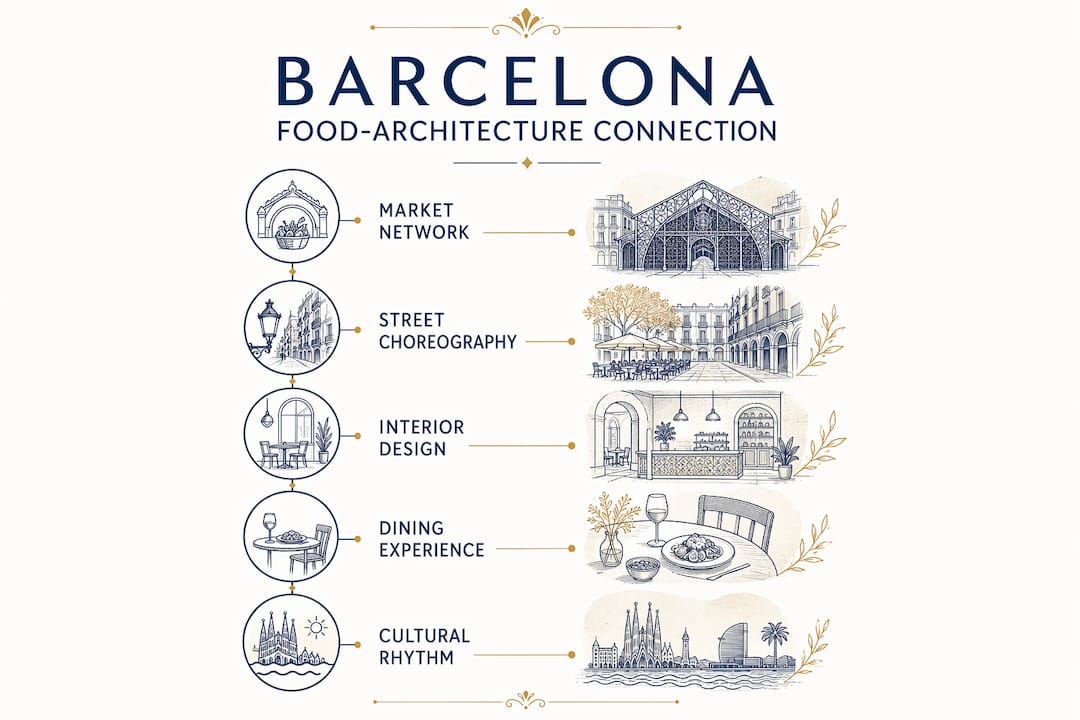
Barcelona’s food and architecture connect because the city was deliberately built so that markets, streets, and dining rooms work together as a single sensory system. Researchers at UPC’s Escola Tècnica Superior d’Arquitectura de Barcelona describe food as a “grammar” of the city: wherever markets cluster, pedestrian flows, plazas, and ground-floor restaurants form around them, making neighborhoods legible through eating. Architect and researcher Cristina Salanova Zamora frames this as multisensorial synthesis, the idea that Barcelona’s built environment aspires to weave taste and smell together with sight, sound, and touch into one coherent experience.
Three mechanisms make this concrete. First, the market-hall network was planned so most residents had a market within roughly one kilometer, creating a polycentric food grid that still shapes where restaurants source and what they serve. Second, streets, terraces, and plazas choreograph movement toward food: the urban sequence runs from fields and storage through markets and finally into dining rooms, so the plate is the last stop in a long chain of spaces. Third, interior architecture closes the loop: ventilation, materials, and table placement carry aromas and street sounds inward, and choosing your seat changes how the city narrates your meal. Edge terrace seating frames views and street sounds; a communal table reproduces market sociability.
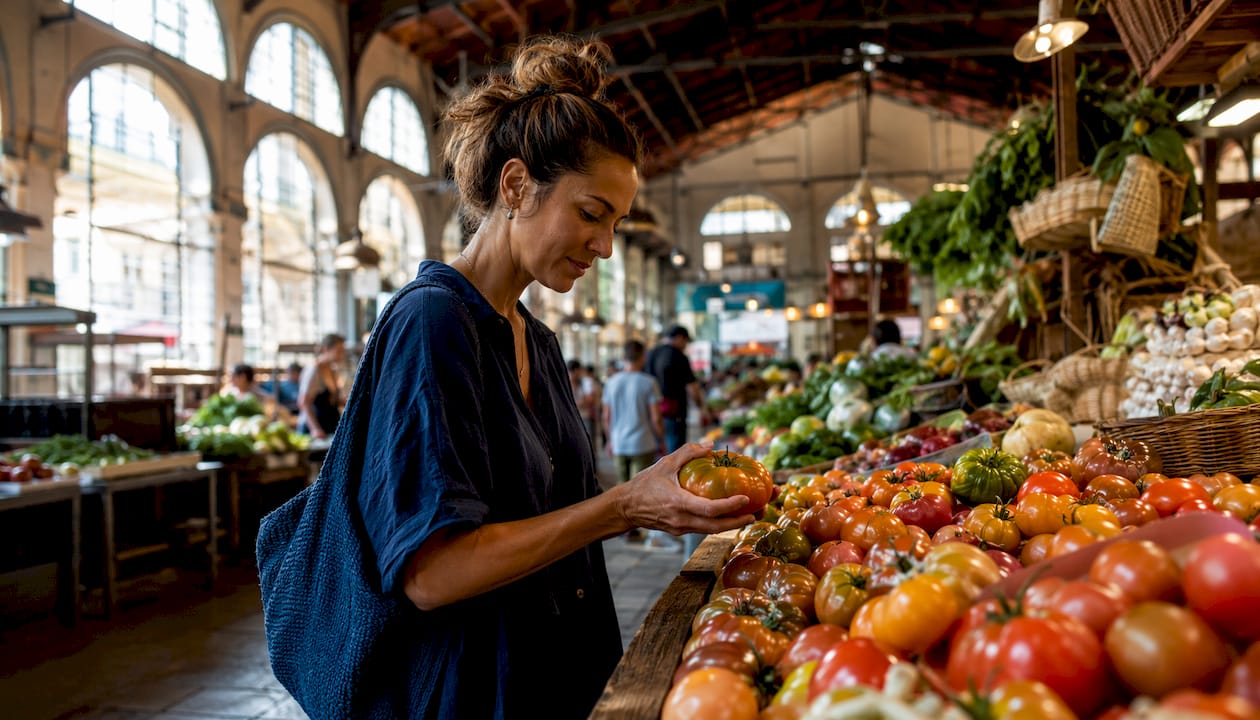
Near the Sagrada Família, municipal market policy sustained Barcelona’s market halls while many European cities abandoned theirs, which is why local restaurants in the area still emphasize market-fresh ingredients. Some historic buildings in the city were intentionally designed with commercial ground floors so that dining happens inside architecturally significant spaces, making the act of eating a literal consumption of the building itself.
What to look for as a visitor near Sagrada Família:
- A menu that changes with the season and references local market produce
- Terrace orientation with sightlines toward the street or a landmark
- Natural materials (wood, stone, tile) and open ventilation rather than sealed air conditioning
- Evidence of local suppliers on the menu or chalkboard
- Lunch service timed to align with market hours (roughly 1:00 PM–4:00 PM)
YellowRock contributors note that the strongest food-architecture experiences near Sagrada Família happen when all five cues above are present at once, not just one or two.
Table of Contents
Kokcha puts the food-architecture connection on your plate
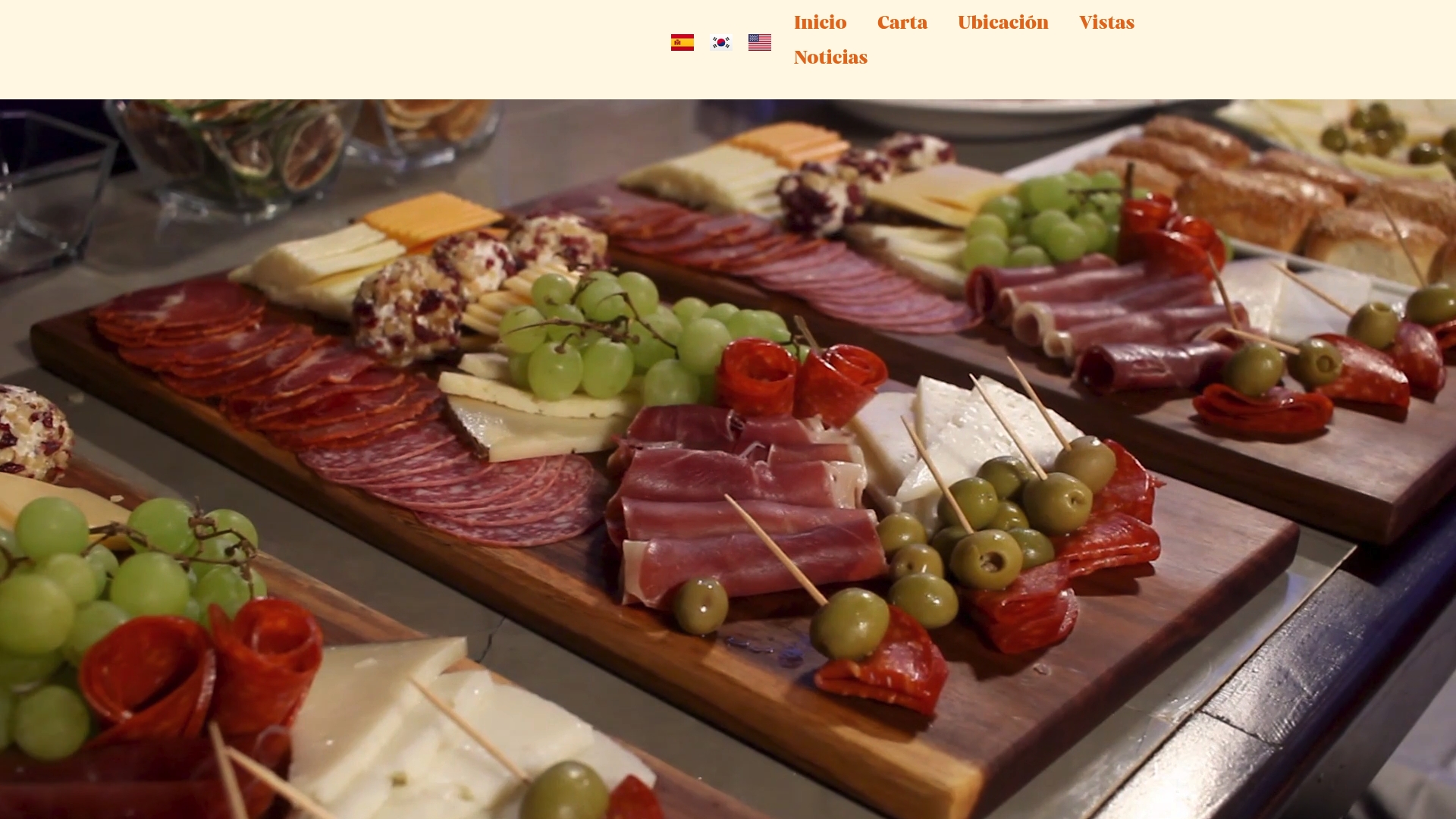
Kokcha is a Mediterranean restaurant a short walk from the Sagrada Família, and it checks every box on the list above. The terrace offers open-air seating with city views, the menu rotates around market-driven produce, seafood, and grilled meats, and the interior palette of deep navy and warm gold creates exactly the kind of material contrast that carries ambient light and street energy into the dining room. You can explore the full Mediterranean dining experience before you arrive.
For the clearest connection between what you see and what you taste, book a terrace table for late lunch (around 2:00 PM) and order the seafood paella or the vegetable paella, both of which trace directly back to Barcelona’s market supply chain. Groups and celebrations have dedicated space, and the team is bilingual. Reserve through kokcha.es to secure a terrace spot, especially on weekends.
Pro Tip: Arrive between 1:30 PM and 2:00 PM to catch the post-market lunch rhythm the city runs on. That timing is when the food is freshest and the terrace is at its best light.
Key Takeaways
Barcelona’s food and architecture connect through a planned market network, street choreography, and interior design that together create a multisensorial dining experience, most accessible near landmarks like the Sagrada Família.
| Point | Details |
|---|---|
| Markets shape neighborhoods | Barcelona’s polycentric market network placed a market within roughly one kilometer of most residents, anchoring restaurant sourcing and street activity. |
| Multisensorial synthesis | UPC researcher Cristina Salanova Zamora identifies how architecture integrates taste and smell with sight, sound, and touch in Barcelona’s dining spaces. |
| Seat choice changes the meal | Edge terrace seating frames views and street sounds; communal tables reproduce the social energy of a market hall. |
| Five-cue checklist | Look for seasonal menus, terrace sightlines, natural materials, local suppliers, and market-hour lunch timing to confirm the connection. |
| Kokcha near Sagrada Família | Kokcha’s terrace, market-driven paellas, and warm interior materials offer a practical place to experience the food-architecture link firsthand. |