Typical Barcelona lunch hours commonly span the early to mid-afternoon period, with a busiest window in the early part of that range — that is when locals fill restaurants and the city’s kitchens are running at full pace. Show up at noon expecting a full meal and you will mostly find closed kitchens or a bocadillo at best. The schedule is not arbitrary: it follows a workday rhythm where a long midday break is built into the day, and lunch is treated as the main social event, not a quick refuel. The Barcelona City Council frames this as part of a broader city rhythm where meals are unhurried and conversation is part of the deal. Knowing this one fact changes how you plan your entire day.
Key things to keep in mind before you read further:
- Full kitchen service rarely starts before 1:30 p.m.
- Peak seating is 2:00–3:00 p.m.; arrive before or after to avoid waits
- The menú del día (fixed-price lunch) is the best-value option, mostly available Monday through Friday
- Kokcha, a Mediterranean restaurant steps from the Sagrada Família, follows this same local schedule and is a practical reference point throughout this guide
Table of Contents
- What are typical Barcelona lunch hours?
- What does a Barcelona lunch actually look like?
- Practical tips so you don’t get caught with a closed kitchen
- What to order when you sit down for lunch
- How weekday and weekend lunch schedules differ
- How a local Barcelona kitchen actually runs lunch service
- Key Takeaways
- The real reason Barcelona lunch feels different
- Lunch near Sagrada Família: why Kokcha fits the schedule
- Useful sources for planning your Barcelona lunch
What are typical Barcelona lunch hours?
The day in Barcelona has a clear rhythm, and lunch sits right at the center of it. Here is how the full timetable breaks down:
| Meal | Local Name | Typical Time | What to Expect |
|---|---|---|---|
| Breakfast | Desayuno | 7:00–9:00 a.m. | Light: coffee, toast with tomato, pastry |
| Mid-morning snack | Almuerzo | — | Sandwich, tortilla slice, croissant |
| Vermut hour | La Hora del Vermut | 12:00–2:00 p.m. | Vermouth, small bites, social ritual (weekends) |
| Lunch | La Comida | 1:30–3:00 p.m. (peak window: 2:00–3:00 p.m.) | Main meal of the day; restaurants are busiest during this time |
| Afternoon snack | Merienda | 5:00–7:00 p.m. | Coffee, pastry, light snack |
| Dinner | La Cena | from 9:00 p.m. | Full dinner service; restaurants fill after 9:00 p.m. |
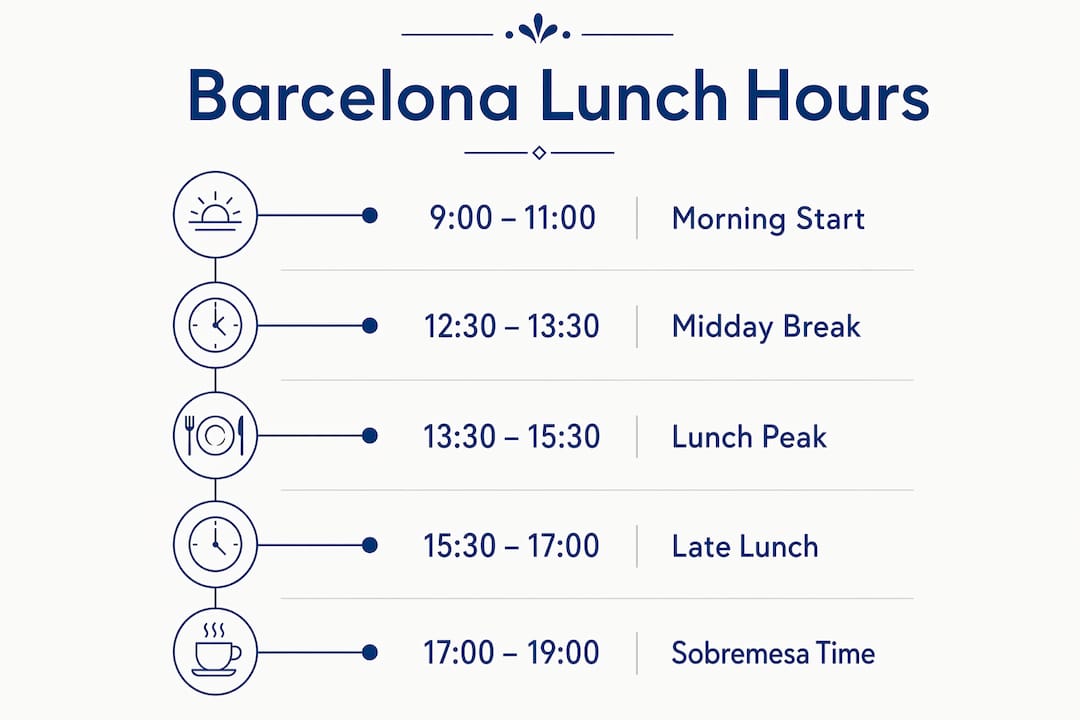
A few things stand out here. Breakfast is genuinely light, which is why the mid-morning almuerzo exists at all. By the time 1:30 p.m. arrives, most people are ready for a proper meal. And dinner at 9:00 p.m. is not a quirk — it is the standard, which is why adapting to local timing makes such a noticeable difference in what you get to eat and where.
What does a Barcelona lunch actually look like?
Lunch here is a structured, three-course affair, not a sandwich at your desk. The menú del día is the clearest expression of that: a fixed-price weekday lunch that typically includes a starter, a main course, dessert or coffee, and a drink. It is genuinely good value and gives you a real sense of what the kitchen does well.
The pace is deliberate. Expect a starter to arrive, then a gap before the main, then another pause before dessert. That is not slow service — it is the intended rhythm. After the meal comes sobremesa, the cultural habit of lingering at the table to talk, drink coffee, and let the meal settle. Tables stay occupied longer here than in most cities, and staff will not rush you out.
A typical lunch table occupies its spot for up to two hours when sobremesa is factored in. Plan accordingly if you have a museum or tour booked afterward.
Pro Tip: Arrive between 1:30 p.m. and 1:45 p.m. for the best selection on the menú del día. By 2:30 p.m., some daily specials run out. Arriving after 3:00 p.m. often means the kitchen is winding down and the set menu is no longer available.
Practical tips so you don’t get caught with a closed kitchen
The single most common visitor mistake is trying to eat a full lunch at noon. Kitchens are typically closed or offering only coffee and simple snacks until around 1:00–1:30 p.m. If you are genuinely hungry before then, here are your real options:
- Tapas bars: Many serve all day and are your best bet before 1:30 p.m. A plate of patatas bravas or pan con tomate will hold you over. Tapas culture operates outside the strict lunch window.
- Markets: La Boqueria and Mercat de Santa Caterina have stalls serving food from mid-morning onward.
- Cafés and bakeries: Good for a coffee and a pastry or a simple sandwich until lunch service opens.
- Vermut bars (weekends): On Saturdays and Sundays, the vermut ritual from noon onward fills the gap nicely with drinks and small bites.
For reservations: popular spots near tourist sites fill up fast between 2:00 p.m. and 3:00 p.m. Book at least a day ahead for weekend lunches near major landmarks. Weekday lunches at local neighborhood restaurants are usually walk-in friendly before 2:00 p.m.
Two quick phrases worth knowing when you arrive at a restaurant and are unsure about timing:
- “¿Están sirviendo el menú del día?” — “Are you serving the set lunch menu?”
- “¿A qué hora abre la cocina?” — “What time does the kitchen open?”
What to order when you sit down for lunch
Barcelona lunch menus lean heavily on fresh, seasonal ingredients. At the starter stage, expect options like mixed salads, croquetas, gazpacho in warmer months, grilled vegetables, or a simple ensaladilla rusa. Mains at lunch tend toward grilled fish, paella portions, grilled meats, pasta, or the daily catch. The paella varieties you see on lunch menus are often smaller portions than the full dinner versions — sized for one rather than a table.
For drinks, water (still or sparkling) and a glass of local wine or a beer are the standard lunch companions. Vermut before the meal is common on weekends. Coffee — an espresso or a cortado — comes after dessert, not with it.
Sharing dishes works well at tapas-style lunches but less so with a structured menú del día, where each diner gets their own courses. If you want to share a main, ask the server: “¿Se puede compartir?”
Pro Tip: Ask the server what the daily specials are before you look at the printed menu. The kitchen’s freshest ingredients go into the specials first, and they often represent the best value and quality of the day.
How weekday and weekend lunch schedules differ
The weekday lunch pattern is tightly tied to the office schedule. Most workers take a break between 2:00 p.m. and 3:30 p.m., which is exactly why restaurants fill up in that window. The menú del día is almost exclusively a Monday-through-Friday offering — it exists to serve the working lunch crowd efficiently.
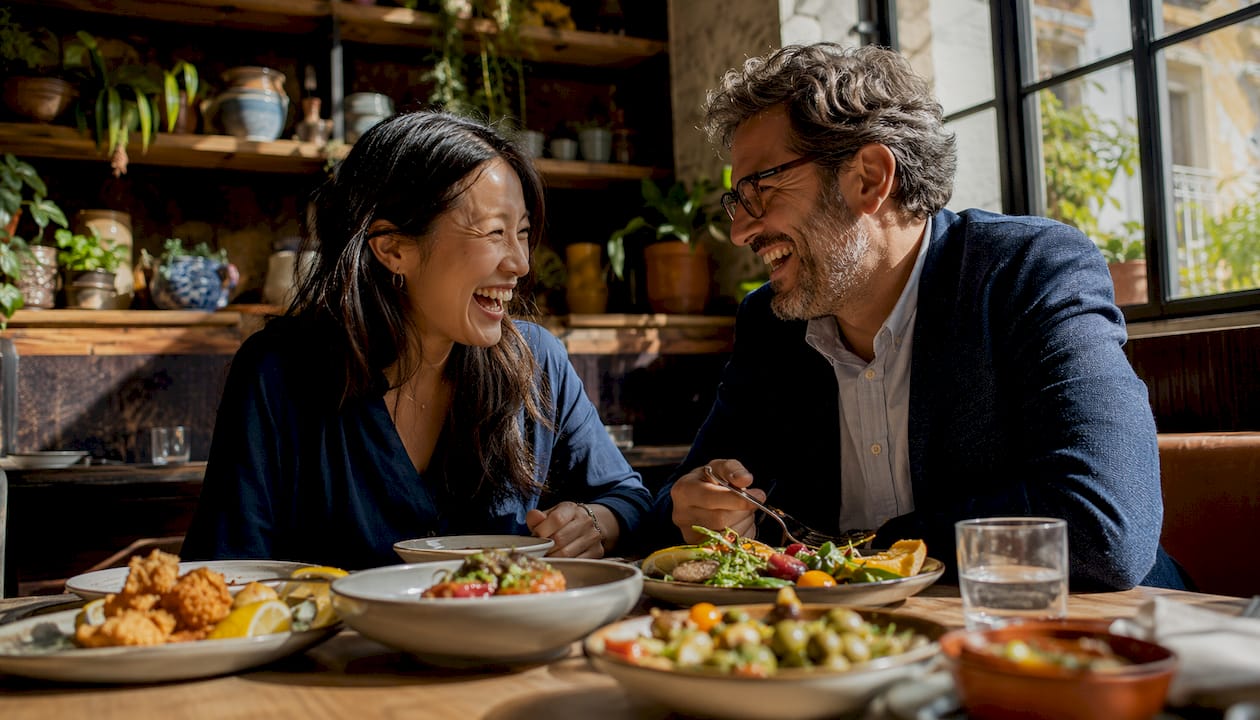
Weekends shift things noticeably. Saturday and Sunday lunches tend to start a little later and run longer, sometimes stretching to 4:00 p.m. or beyond. Families go out together, the pace slows further, and the social element is even more pronounced. The menú del día disappears on weekends at most places, replaced by the full à la carte menu.
Tourist-heavy neighborhoods operate on a slightly different logic. Near the Sagrada Família, Las Ramblas, or the Gothic Quarter, some restaurants open earlier and serve more continuously to capture visitors on non-local schedules. That convenience often comes at a cost: higher prices, less local character, and menus calibrated for tourists rather than regulars. A few blocks into Gràcia or El Born, you get the real local rhythm — later, better, and worth the short walk.
How a local Barcelona kitchen actually runs lunch service
Understanding the kitchen side of things helps set realistic expectations. A restaurant preparing for lunch service typically has staff arriving by 12:30 p.m. to prep mise en place, with the first tables seated around 1:30 p.m. The kitchen runs at full capacity from 2:00 p.m. to 3:00 p.m., then begins winding down. By 3:30–4:00 p.m., most kitchens close until dinner prep begins.
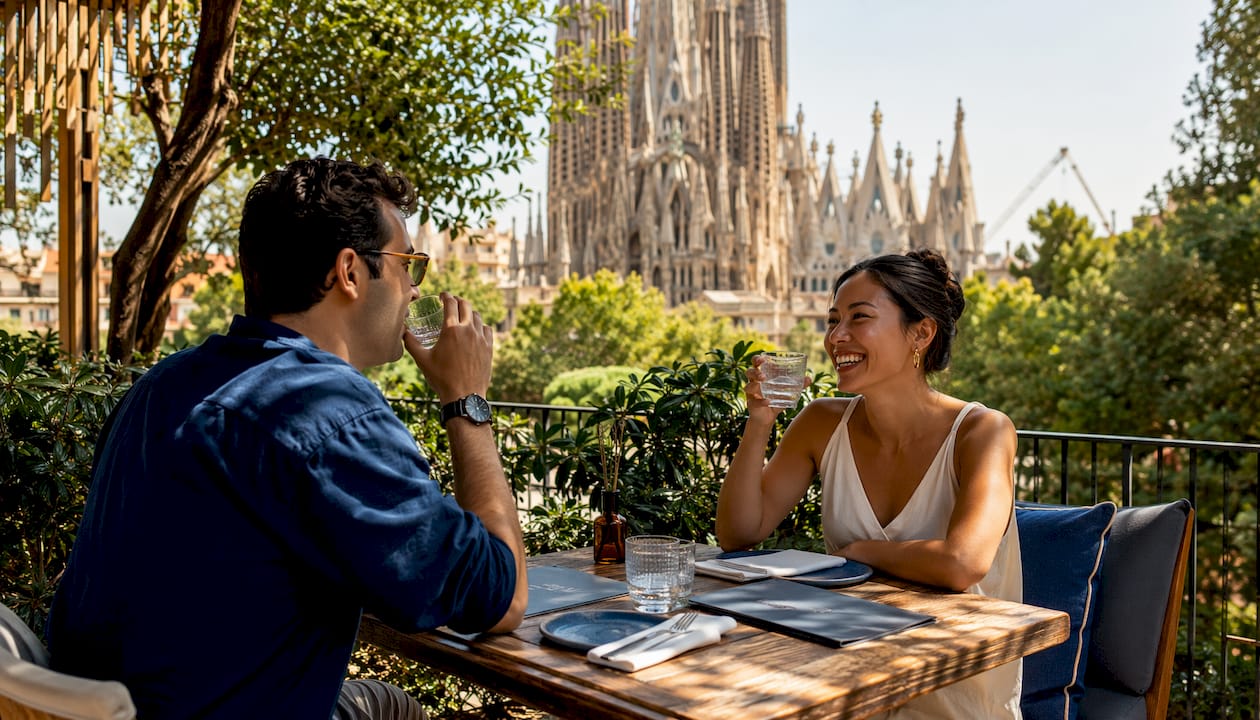
Kokcha, located steps from the Sagrada Família, follows this same local schedule. The restaurant offers a full Mediterranean menu covering tapas, paellas, grilled meats, seafood, and salads — the kind of spread that works well for a midday meal whether you want something light or a full three-course lunch. The terrace seating with city views makes the midday meal particularly good on clear days.
For a restaurant this close to one of Barcelona’s most visited landmarks, timing your arrival matters:
- Arrive at 1:30–1:45 p.m. to get a table before the 2:00 p.m. rush
- Reserve ahead for weekends — walk-ins near major tourist sites get harder after 1:45 p.m.
- Weekday lunches are more relaxed and easier to walk into before 2:00 p.m.
Pro Tip: When booking near a major landmark, call or reserve online the day before for weekend midday tables. A 1:30 p.m. reservation gives you first pick of the menu and a quieter start before the peak crowd arrives.
Key Takeaways
Barcelona lunch runs 1:30–3:30 p.m., peaks between 2:00–3:00 p.m., and follows a social rhythm built around unhurried meals, the menú del día, and sobremesa — arrive before 2:00 p.m. for the best experience.
| Point | Details |
|---|---|
| Core lunch window | Restaurants serve full lunches from 1:30 p.m. to 3:30 p.m.; avoid arriving at noon. |
| Peak hours | 2:00–3:00 p.m. is when restaurants fill with locals; reserve ahead for this window. |
| Menú del día | Fixed-price weekday lunch (starter, main, dessert/coffee, drink) — best value and best selection before 2:30 p.m. |
| Off-hours alternatives | Tapas bars, markets, and cafés serve food outside the core lunch window if you need an early meal. |
| Kokcha near Sagrada Família | A local Mediterranean option with terrace seating; book a 1:30 p.m. table to beat the midday peak. |
The real reason Barcelona lunch feels different
Most visitors frame the late lunch as an inconvenience. Locals frame it as the point. The Barcelona City Council describes late mealtimes as part of a city rhythm where meals are social rituals tied to longer working days and an emphasis on unhurried interaction. That is not tourism copy — it is how the city actually functions.
Sobremesa is the clearest expression of this. Staying at the table after the food is gone, talking over coffee, letting the afternoon pass — that is not wasted time in Barcelona. It is the meal continuing by other means. Visitors who try to impose a home-country schedule often end up eating worse food at worse times and feeling like the city is working against them. It is not. The schedule just requires a small shift in expectations.
If you have a 3:00 p.m. museum booking, eat at 1:30 p.m. and keep it moving. If you have a free afternoon, sit down at 2:00 p.m. and let the meal take as long as it takes. Both approaches work. The mistake is trying to eat at noon and then rushing through dinner at 7:00 p.m. — you will miss the best of both.
Lunch near Sagrada Família: why Kokcha fits the schedule
If you are spending the morning at the Sagrada Família and want a proper sit-down lunch without crossing the city, Kokcha is the practical choice. The Mediterranean menu covers the full range of a Barcelona lunch — tapas to share, paella, grilled meats, fresh seafood, and salads — with bilingual staff who can walk you through the daily specials in English or Spanish. The terrace is a genuine draw on good days.
For midday tables, book a 1:30 p.m. slot to get ahead of the 2:00–3:00 p.m. peak. Weekend lunches near the Sagrada Família fill fast, so reserving the day before is the smarter move. You can check availability and reserve your table directly on Kokcha’s site.
Useful sources for planning your Barcelona lunch
- Barcelona City Council — Hours and Customs: The authoritative local source on meal times, cultural habits, and sobremesa. Use this to verify current scheduling norms.
- Eater Barcelona — Mealtimes in Barcelona: A practical breakdown of all six daily meals with timing and what to order at each.
- Barcelona Panorama — Lunch Time Barcelona: Covers menú del día structure, timing, and value in detail.
- Kokcha — Mediterranean Restaurant near Sagrada Família: Reservations, full menu, and practical details for lunch near the Sagrada Família.