A Mediterranean terrace view is defined as an outdoor living space that functions as a direct extension of the home, designed to frame scenic vistas of sea, city, or landscape while responding to the region’s climate and architectural traditions. This concept sits at the intersection of design philosophy and lifestyle. Coastal Mediterranean regions enjoy up to 300 days of sunshine per year, which makes the terrace not a seasonal bonus but a year-round room. Understanding what is a Mediterranean terrace view means understanding how architecture, light, and culture combine into a single outdoor experience. For visitors planning a trip to Barcelona, recognizing these features transforms a casual glance into genuine appreciation.
What architectural and climatic features define a Mediterranean terrace view?
A Mediterranean terrace view is shaped by two forces working together: the physical design of the building and the climate it sits within. Neither works without the other. The result is a space that feels both deliberate and natural at the same time.
The architectural signature starts with materials. Warm, neutral palettes of sand, soft yellow stucco, and terracotta appear on walls, floors, and railings. Stone and wrought iron complete the material vocabulary. These choices are not decorative accidents. Terracotta absorbs heat during the day and releases it slowly at night, keeping the terrace comfortable after sunset.
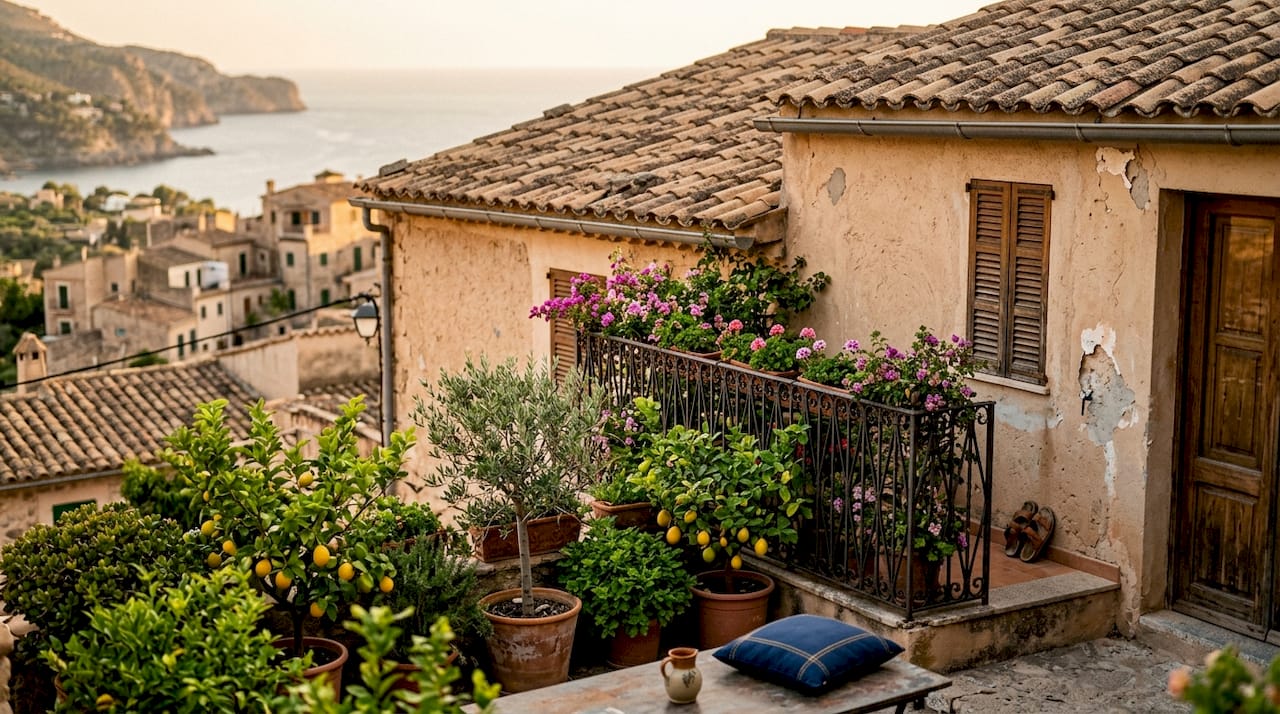
Layout plays an equally important role. U- or L-shaped home configurations wrap around a central courtyard or terrace, creating natural shade on at least one side at any hour of the day. This geometry also promotes cross-ventilation, pulling cooler air through the space without mechanical assistance. The terrace becomes the organizing center of the home, not an afterthought attached to its edge.
Climate responsiveness defines the Mediterranean outdoor space in ways that northern European or American deck design simply does not require. Shading structures like pergolas and slatted screens manage direct sun without closing off the view. Slatted screens positioned perpendicular to prevailing winds reduce heat buildup while preserving sightlines. That balance between comfort and visibility is the defining technical challenge of Mediterranean terrace design.
Key architectural features to look for:
- Flat or gently sloped roof terraces that maximize usable outdoor floor space
- Terracotta tile or stone paving that stays cool underfoot in shade
- Wrought-iron railings that frame views without visually blocking them
- Pergolas or vine-covered overhead structures that filter light rather than eliminate it
- Thick masonry walls that insulate against afternoon heat
Pro Tip: When visiting a Mediterranean building, look at the railing height and material. Low wrought-iron railings signal a deliberate design choice to preserve the view at seated eye level, which is the position you occupy for most of a meal or a conversation.
How does a terrace view differ from a balcony, and why does size matter?
The distinction between a terrace and a balcony is architectural, not just semantic. A balcony is a cantilevered platform that projects from an exterior wall, typically supported by brackets or beams. A terrace is a larger, flat platform that sits at ground level, on a rooftop, or above a lower floor of the building. The size difference is significant. A balcony accommodates two people standing. A terrace accommodates a dining table, lounge chairs, potted olive trees, and a conversation area simultaneously.
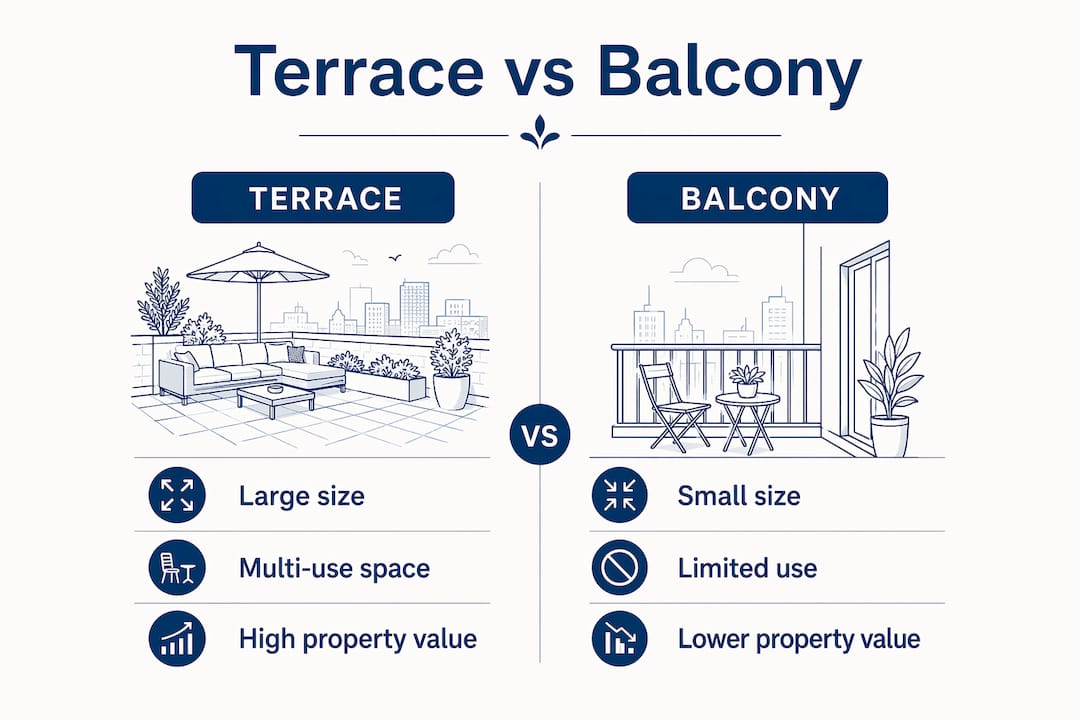
Terraces command higher property value premiums than balconies in real estate markets. That premium reflects genuine utility. A terrace functions as an additional room. A balcony functions as a viewing platform. In Mediterranean architecture, the terrace is where meals happen, where guests gather, and where the household spends most of its waking hours during warm months.
| Feature | Terrace | Balcony |
|---|---|---|
| Size | Large, multi-use platform | Small, typically fits 1–2 people |
| Structural type | Ground-level, rooftop, or podium | Cantilevered from exterior wall |
| Primary function | Outdoor living and dining room | Viewing or brief outdoor access |
| Furniture capacity | Full dining and lounge setup | One or two chairs maximum |
| Property value impact | Higher premium | Moderate premium |
| Social role | Central gathering space | Individual or couple use |
The social function of a terrace is what separates it from a balcony in the Mediterranean context. Terraces dissolve the boundary between interior and exterior, making the home a contiguous living space rather than a box with a viewing ledge attached. That philosophy drives every design decision, from door width to floor material to the placement of the dining table.
What design ideas make a Mediterranean terrace view special?
The sensory experience of a Mediterranean terrace view goes far beyond the scenery itself. The best examples layer multiple design elements to create an atmosphere that engages sight, touch, smell, and temperature simultaneously.
Greenery is the first layer. Contemporary Mediterranean terrace design uses dense vegetation structurally, not decoratively. Climbing jasmine on a trellis creates a scented privacy screen. Potted lemon trees anchor corners and reinforce the regional identity. Lavender along the perimeter softens the edge between the built surface and the view beyond. This approach to biophilic design transforms an urban rooftop into something that feels genuinely connected to the landscape.
Material authenticity is the second layer. The Refined Mediterranean aesthetic moves away from the blue-and-white coastal cliché toward reclaimed wood, linen textiles, and limewash wall finishes. These materials age well and develop character under sun exposure. They also feel honest. A limewash surface looks like it belongs to the building rather than being applied to it.
Lighting is the third layer, and the most commonly mishandled. Effective terrace lighting requires three distinct layers working together:
- Ambient lighting for overall visibility across the space
- Task lighting focused on dining or cooking areas
- Accent lighting to highlight architectural textures, plant forms, or railings
Single-source lighting, such as one overhead fixture, flattens the space and eliminates the depth that makes a terrace feel alive after dark. A well-lit Mediterranean terrace at 9:00 PM feels as inviting as it does at noon.
The view itself functions as living art. Warm whites, terracotta, and natural textures connect the terrace visually to the surrounding environment, so the boundary between the designed space and the natural view becomes intentionally blurred. Framing matters. A well-placed pergola beam or a row of tall grasses can direct the eye toward the most compelling part of the panorama, whether that is a cathedral spire, a stretch of coastline, or a hillside of orange rooftops.
Pro Tip: Never place tall planters or bulky furniture directly in the primary sightline. Arrange seating so that the natural neck angle when seated points toward the best part of the view. Furniture that blocks the view defeats the entire purpose of the terrace.
How can visitors to Barcelona best appreciate Mediterranean terrace views?
Barcelona is one of the most concentrated cities in the world for experiencing authentic Mediterranean outdoor spaces. The Eixample district, the Gothic Quarter, and the neighborhoods surrounding the Sagrada Família all contain buildings that demonstrate the full range of Mediterranean terrace design, from modest residential examples to elaborate restaurant terraces. Knowing what to look for makes the experience far richer.
-
Notice the materials first. Authentic Mediterranean terraces use stone, terracotta, and wrought iron. If a terrace is built entirely from synthetic composite decking and aluminum furniture, it is a terrace in name only. The material palette tells you immediately whether the design is rooted in regional tradition.
-
Observe how the interior connects to the exterior. In genuine Mediterranean architecture, the transition from inside to outside is almost invisible. Wide glass doors or open archways replace the narrow sliding door typical of northern European apartments. The floor material often continues from inside to outside without interruption.
-
Look at the view framing. A well-designed terrace does not simply expose you to a panorama. It frames a specific portion of it. Pergola beams, railing heights, and planted screens all direct your attention. Notice whether the design guides your eye or simply leaves you to find the view yourself.
-
Visit during the evening. The Mediterranean terrace comes fully alive after 7:00 PM. The light is golden, the temperature drops to comfortable, and the social activity peaks. Barcelona’s outdoor dining culture is most visible during this window. Restaurants with genuine terrace views fill up quickly, so reservations matter.
-
Pay attention to ventilation. On a hot afternoon, a well-designed terrace stays noticeably cooler than the surrounding street. Slatted screens, overhead shade structures, and strategic planting all contribute. If a terrace feels like a furnace, the design has prioritized appearance over function, which is a common misstep in tourist-facing venues.
-
Eat on the terrace when possible. The role of terrace dining in Mediterranean food culture is not incidental. The meal, the view, the light, and the air temperature are designed to work together. Eating indoors in a restaurant that has a genuine terrace means missing the complete experience the space was built to deliver.
Key Takeaways
A Mediterranean terrace view is a climate-responsive, architecturally integrated outdoor space that frames natural or urban scenery through deliberate use of materials, layout, greenery, and layered lighting.
| Point | Details |
|---|---|
| Climate drives design | Up to 300 days of sunshine shape every material and layout choice on a Mediterranean terrace. |
| Terraces outperform balconies | Terraces command higher property premiums because they function as full outdoor rooms, not viewing ledges. |
| Materials signal authenticity | Terracotta, stone, reclaimed wood, and limewash distinguish genuine Mediterranean terraces from imitations. |
| Lighting requires three layers | Ambient, task, and accent lighting together create the atmosphere that single-source lighting cannot achieve. |
| Barcelona is a living classroom | The Eixample and Sagrada Família neighborhoods offer concentrated examples of authentic Mediterranean terrace design. |
Why terraces are the most underrated feature of Mediterranean architecture
Most visitors to Barcelona photograph the Sagrada Família, the Park Güell mosaics, and the Gothic Quarter facades. Very few stop to analyze the terraces they walk past or eat on. That is a missed opportunity, because the terrace is where Mediterranean architecture makes its most honest argument.
The terrace is not a luxury addition. It is a climate-adaptive living strategy that predates air conditioning by centuries. Every design choice, from the thick masonry wall to the slatted pergola to the low wrought-iron railing, solves a real problem created by the sun, the heat, and the social habits of the people who live there. When you understand that, a terrace stops looking like a nice place to have a drink and starts looking like a sophisticated piece of engineering.
The trend toward denser greenery and biophilic integration is the most interesting current development in Mediterranean terrace design. Urban terraces in Barcelona are increasingly becoming vertical gardens, with structural vegetation replacing hard railings and bare walls. This is not nostalgia. It is a response to urban heat island effects and a genuine desire to reconnect city living with the natural environment that Mediterranean architecture has always referenced.
The biggest mistake I see visitors make is treating the terrace view as a backdrop rather than the main event. The view is not decoration. It is the reason the terrace exists. Sit facing it. Let your eyes adjust. Give it five minutes of genuine attention before you pick up your phone. The Mediterranean terrace was designed for exactly that kind of slow, deliberate looking.
— YellowRock
A terrace view worth sitting down for at Kokcha
Barcelona has no shortage of outdoor spaces, but finding one that combines an authentic Mediterranean terrace with food worth the trip is a different matter. Kokcha is a Mediterranean restaurant located steps from the Sagrada Família, and its terrace delivers the kind of scenic views from terraces that define the experience described throughout this article.

The menu runs from tapas and paellas to grilled seafood and fresh salads, all served in an outdoor environment that takes the terrace seriously as a design element, not just a seating overflow. If you want to understand what a Mediterranean terrace view actually feels like rather than just looks like in photographs, Kokcha offers a direct answer. Check the 2026 Mediterranean dining trends shaping the menu this season, and book a table on the terrace before the evening rush fills it.
FAQ
What is a Mediterranean terrace view?
A Mediterranean terrace view is an outdoor living space integrated into the home’s architecture, designed to frame scenic vistas of sea, city, or landscape while using natural materials, ventilation, and shading to respond to the regional climate.
How is a terrace different from a balcony?
A terrace is a larger, flat platform that functions as a full outdoor room for dining and socializing, while a balcony is a smaller cantilevered structure primarily used for viewing. Terraces also command higher property value premiums than balconies.
What plants work best on a Mediterranean terrace?
Jasmine, lavender, lemon trees, and olive trees are the most common choices. These plants thrive in full sun, tolerate dry conditions, and reinforce the regional identity of the space through scent and form.
What makes a terrace view authentically Mediterranean?
Authentic Mediterranean terrace views combine terracotta or stone paving, wrought-iron railings, warm neutral color palettes, and a layout that connects interior and exterior spaces without interruption. Tactile materials like reclaimed wood and limewash finishes signal genuine regional character over generic coastal styling.
Where can visitors experience a Mediterranean terrace view in Barcelona?
The Eixample district and the area around the Sagrada Família offer concentrated examples of authentic Mediterranean terrace architecture. Restaurants like Kokcha provide a direct way to experience terrace dining with genuine Mediterranean views in that neighborhood.