Restaurant ambiance is defined as the combination of physical and sensory elements that shape how guests feel the moment they walk through your door. A 2024 industry report confirms that atmosphere directly correlates with repeat business and revenue growth, making it one of the most measurable levers you control. The industry standard for improving dining environments is the 5-lever framework: Space, Light, Sound, Service, and Sensory Comfort. Each lever works independently, but the real gains come when they work together. These restaurant ambiance tips give you a practical, operations-focused path to building that cohesion.
1. What is the 5-lever framework for restaurant ambiance?
The 5-lever framework is the recognized operational standard for creating restaurant atmosphere as of 2026. It treats ambiance not as decoration, but as a system with five distinct, manageable components. Understanding each lever separately lets you diagnose problems and make targeted improvements.
The five levers are:
- Space: Layout, seating types, traffic flow, and zoning between arrival, dining, and quiet areas
- Light: Layered ambient, task, and accent lighting adjusted by time of day
- Sound: Music selection, volume control, and acoustic hygiene through soft surfaces
- Service: Staff rhythm, greeting tone, clearing pace, and unobtrusive movement
- Sensory Comfort: Temperature, air quality, scent, cleanliness, and chair comfort
Each lever affects the others. Bright lighting undermines soft music. Noisy acoustics cancel out calm service. The framework works because it forces you to treat ambiance as a whole system, not a checklist of isolated fixes.
Pro Tip: Run a 10-minute silent audit during a quiet service period. Sit at three different tables and assess each lever independently. You will find at least one that is out of sync with the others.
2. How can lighting improve your restaurant atmosphere?
Lighting is the golden rule of restaurant design. Over-lit spaces feel clinical. Warm pools of light at each table create privacy and make food look more appetizing. The good news is that meaningful lighting changes rarely require major renovations.
The most effective approach uses three layers:
- Ambient lighting sets the overall brightness level for the room
- Task lighting targets specific work areas like the host stand and service stations
- Accent lighting highlights architectural features, artwork, or the bar
Warm bulb tones in the 2700K–3000K range create intimacy and flattery for both guests and food. Replacing harsh white bulbs with warmer alternatives is one of the fastest mood shifts you can make without touching your floor plan. Candles and neon accent pieces add visual texture at low cost.
Daylight is a variable you cannot ignore. Adjustable window treatments and tiered lighting programs keep your mood consistent from a bright lunch service through a warm late evening. A three-tier dimming program, set to Bright Lunch, Medium Early Evening, and Warm Late Evening, handles this automatically.
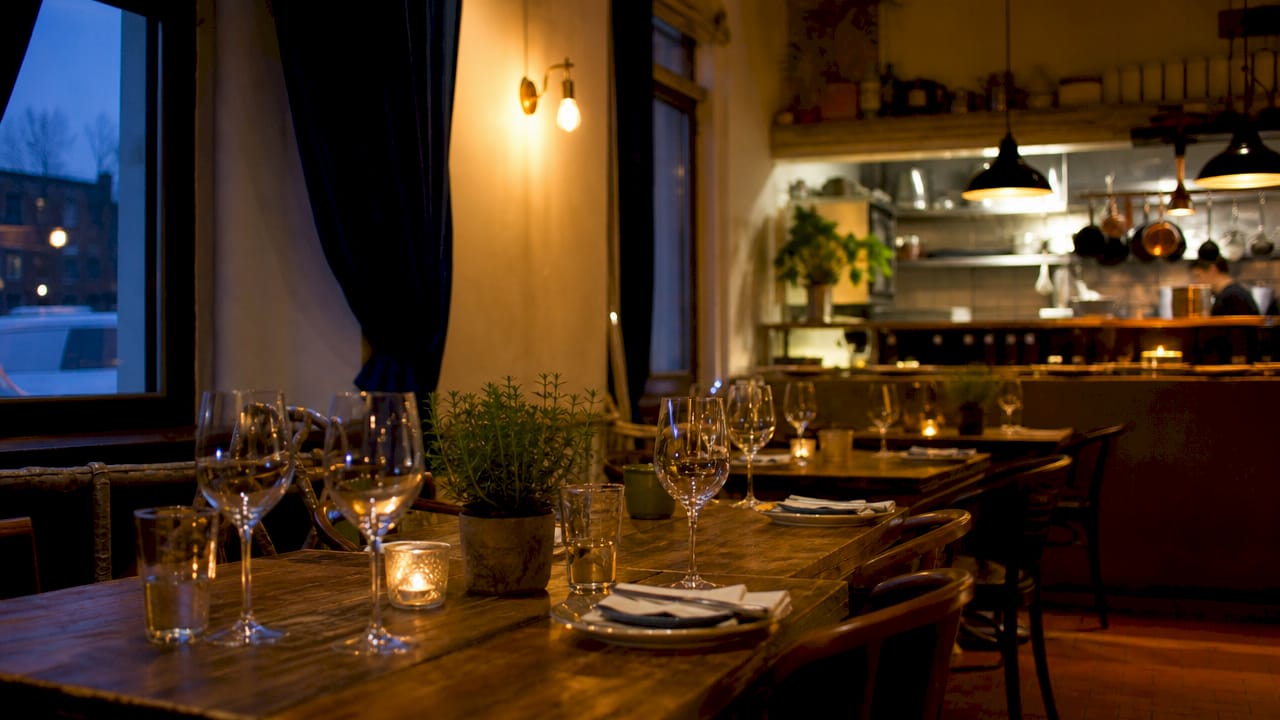
Pro Tip: Pre-program your dimmer system with three saved scenes. Your staff will never have to guess the right setting, and your ambiance will stay consistent even on busy nights.
3. What practical strategies improve sound and acoustics?
Acoustic hygiene is the first step in sound management, and most restaurant owners skip it entirely. Adding music to a noisy room does not fix the problem. It adds to it. You must reduce uncontrolled noise before you tune your playlist.
Practical acoustic improvements include:
- Fabric wall panels or upholstered banquettes that absorb reflected sound
- Area rugs under dining tables to reduce hard-floor reverberation
- Tablecloths, curtains, and soft ceiling treatments that break up sound waves
- Rubber feet on chairs and tables to eliminate scraping noise
Once the room is acoustically managed, music selection becomes meaningful. The rule is conversation first. Guests should be able to talk without raising their voices. A tempo of 60–80 beats per minute works well for dinner service. Faster tempos increase table turnover but reduce perceived comfort, so match your music to your revenue goal for each service period.
Balancing sound between lively and quiet zones matters too. A bar area can carry more energy. A corner dining zone should stay quieter. Use your spatial layout to create natural sound gradients rather than fighting them.
4. How does space design affect the dining environment?
Space design is the foundation that all other ambiance elements rest on. A poorly laid out room creates bottlenecks, awkward sightlines, and frustrated guests before a single plate arrives. Guests assess comfort within the first 60 seconds of arrival, which means your entrance zone is your most important design decision.
Effective space design follows a clear sequence:
- Design the arrival zone first. Remove bottlenecks at the host stand. Give guests a clear, unobstructed path from the door to their table.
- Zone intentionally. Use planters, low partitions, or furniture arrangement to define greeting, dining, and quiet areas without building walls.
- Choose furniture for function. Ergonomic chairs with back support increase linger time. Sturdy, wobble-free tables signal quality before the food arrives.
- Plan staff flow separately from guest flow. Service paths should not cross dining paths. When staff and guests share the same corridors, the room feels chaotic.
- Leave breathing room. Tables packed too tightly reduce perceived privacy and increase noise transfer between parties.
Service delivery is the invisible layer of space design. Smooth staff movement and quiet clearing function as an invisible soundtrack. Guests do not notice good service rhythm, but they feel its absence immediately. Train your team to clear plates without clatter, refill water without interrupting conversation, and move through the room at a pace that matches the energy of the service period.
Pro Tip: Walk your room as a guest would, from the front door to the furthest table. Count how many times you have to step aside or change direction. Every detour is a friction point worth fixing.
5. What sensory comfort elements complete a memorable dining experience?
Sensory comfort covers the elements guests feel but rarely articulate. Temperature, scent, and cleanliness significantly influence how long guests stay and whether they return. These details cost little to manage but carry outsized weight in overall perception.
Key sensory comfort factors include:
- Temperature: Keep the dining room between 68°F and 72°F. Guests who are too cold or too warm leave earlier and tip less.
- Air quality: Good ventilation removes kitchen odors from the dining room. Stale air signals neglect even in a beautifully decorated space.
- Scent: Subtle, pleasant aromas from fresh bread, herbs, or mild diffusers reinforce your cuisine identity. Avoid synthetic fragrances that compete with food.
- Cleanliness signals: Spotless menus, clean table bases, and polished glassware communicate care before a single word is spoken.
- Seating comfort: Chairs with adequate seat depth and back support keep guests comfortable through a full meal. Uncomfortable seating shortens visits and reduces spend per head.
The interaction between these factors is cumulative. A room that smells clean, feels the right temperature, and offers comfortable seating creates a baseline of trust. Guests relax faster, order more, and leave better reviews. Customer retention strategies consistently identify sensory comfort as a primary driver of repeat visits, not just food quality.
6. How to build a practical restaurant ambiance checklist
A restaurant ambiance checklist converts the 5-lever framework into a daily operational habit. Without a checklist, ambiance improvements are one-time fixes that degrade over time. With one, they become part of your opening and closing routine.
Your checklist should cover these categories:
- Lighting check: Confirm the correct dimmer scene is active for the service period. Replace any burned-out bulbs before service begins.
- Sound check: Test music volume at three table locations. Adjust if conversation requires raised voices.
- Temperature check: Verify HVAC settings before doors open. Adjust for expected guest count, since a full room runs warmer.
- Cleanliness check: Inspect menus, table bases, glassware, and restrooms. These are the first things guests touch.
- Scent check: Walk the dining room from the entrance. Identify any kitchen odors that have migrated into the dining space.
- Flow check: Confirm no furniture has shifted to block service paths or create bottlenecks near the host stand.
Run this checklist 30 minutes before each service. Assign ownership to a specific team member so it does not get skipped on busy nights. The atmosphere of Mediterranean restaurants like Kokcha demonstrates how consistent daily attention to these details creates a reputation that outlasts any single renovation.
7. How music selection shapes the dining mood
Music selection for dining is one of the most studied and most mismanaged elements of restaurant atmosphere. The wrong playlist can undermine every other ambiance investment you have made. The right one reinforces your brand identity without guests consciously noticing it.
Three principles govern effective music selection:
Match tempo to service goal. Slower tempos encourage guests to linger and spend more per visit. Faster tempos increase table turnover. Choose based on your revenue model for each service period, not personal preference.
Match genre to brand identity. A Mediterranean restaurant with a terrace and sea-inspired decor benefits from acoustic or world music with warm, unhurried energy. The same restaurant playing aggressive electronic music creates cognitive dissonance that guests feel but cannot name.
Manage volume by zone. The bar area tolerates higher volume. Dining tables need conversation-first levels. A restaurant brand awareness strategy that includes consistent music identity builds emotional memory in returning guests. They associate the sound with the experience, and the experience with your name.
Volume creep is a real operational problem. Staff adjust music upward as the room fills and noise rises. Set a maximum decibel limit for each zone and enforce it during service.
Key Takeaways
The most effective approach to restaurant ambiance is treating Space, Light, Sound, Service, and Sensory Comfort as a single integrated system, not five separate projects.
| Point | Details |
|---|---|
| Use the 5-lever framework | Manage Space, Light, Sound, Service, and Sensory Comfort together for cohesive results. |
| Prioritize acoustic hygiene first | Reduce uncontrolled noise with soft surfaces before adding or adjusting music. |
| Layer lighting by time of day | Use a three-tier dimming program to maintain consistent mood from lunch through late evening. |
| Design the arrival zone carefully | Guests form comfort judgments within 60 seconds, so remove bottlenecks at the entrance first. |
| Run a daily ambiance checklist | Assign pre-service ownership of lighting, sound, temperature, and cleanliness checks to prevent drift. |
What most restaurant owners get wrong about ambiance
The most common mistake I see is treating ambiance as a one-time renovation project. Owners invest in new furniture or a lighting overhaul, then assume the work is done. Ambiance is not a state. It is a practice.
The second mistake is prioritizing visible decor over invisible systems. A beautifully styled room with poor acoustics, erratic service rhythm, and a temperature that runs five degrees too cold will underperform a plainer room where every sensory detail is managed consistently. Guests cannot always articulate why they feel uncomfortable. They just do not come back.
The third mistake is sensory clutter. Adding too many competing elements, a strong diffuser scent, loud music, busy wallpaper, and dramatic lighting all at once, overwhelms guests rather than delighting them. The best ambiance is the kind guests do not consciously notice. They just feel good, stay longer, and tell their friends. That outcome comes from subtlety and consistency, not from maximizing every lever simultaneously.
— YellowRock
Kokcha: where ambiance meets Mediterranean cuisine in Barcelona
Kokcha is a Mediterranean restaurant in Barcelona, steps from the Sagrada Familia, where the principles in this article are built into every service. The interior and terrace are designed around the 5-lever framework, with warm lighting, managed acoustics, intentional zoning, and a menu that anchors the sensory experience.

If you want to see how these dining environment tips translate into a real, operating restaurant, Kokcha’s Mediterranean dining experience in Barcelona is worth studying firsthand. The terrace, the cuisine, and the service rhythm work together as a single system. Explore the full menu and reserve your table to experience it directly.
FAQ
What is restaurant ambiance?
Restaurant ambiance is the combination of physical and sensory elements, including lighting, sound, layout, service rhythm, and temperature, that shape how guests feel during their visit.
What are the most important restaurant ambiance tips for owners?
The most impactful tips are managing acoustic hygiene before adding music, layering lighting by time of day, and designing a bottleneck-free arrival zone, since guests form comfort judgments within the first 60 seconds.
How does lighting affect restaurant atmosphere?
Warm lighting in the 2700K–3000K range creates intimacy and makes food more appealing. Over-lit spaces feel clinical, while warm table-level pools improve both guest comfort and perceived food quality.
How often should you review your ambiance checklist?
Run a full ambiance checklist 30 minutes before every service. Assign it to a specific team member so lighting, sound, temperature, and cleanliness are verified consistently, not just on slow nights.
Does music selection really impact dining revenue?
Yes. Slower music tempos encourage guests to linger and increase spend per visit. Faster tempos raise table turnover. Matching your playlist tempo to your revenue goal for each service period is a direct operational lever.