A Spanish food tradition is a communal, socially embedded practice that transforms eating into a shared cultural ritual rather than a simple act of nourishment. These customs, known formally as Spanish culinary customs, include tapas culture, the post-meal conversation ritual called sobremesa, and a meal schedule that prioritizes the midday table above all else. Understanding them changes how you eat, travel, and connect with people across Spain. Spanish cuisine history stretches back through Roman, Moorish, and New World influences, and every tradition carries that layered past.
What is a Spanish food tradition, and why does it matter?
A Spanish food tradition is defined by three core pillars: communal eating, respect for time at the table, and the social meaning attached to every shared dish. These are not casual habits. They are structured customs that shape daily life, family bonds, and even workplace schedules across the country.
Tapas originated as small plates served to cover drinks, and the term was formally added to the Royal Spanish Academy dictionary in the 1930s. That institutional recognition signals how deeply embedded this custom became in Spanish identity. Sobremesa, the post-meal conversation ritual, can last 1–3 hours after eating and is treated as a natural extension of the meal itself. These two customs alone reveal that Spanish culinary traditions are not about speed or efficiency. They are about presence.
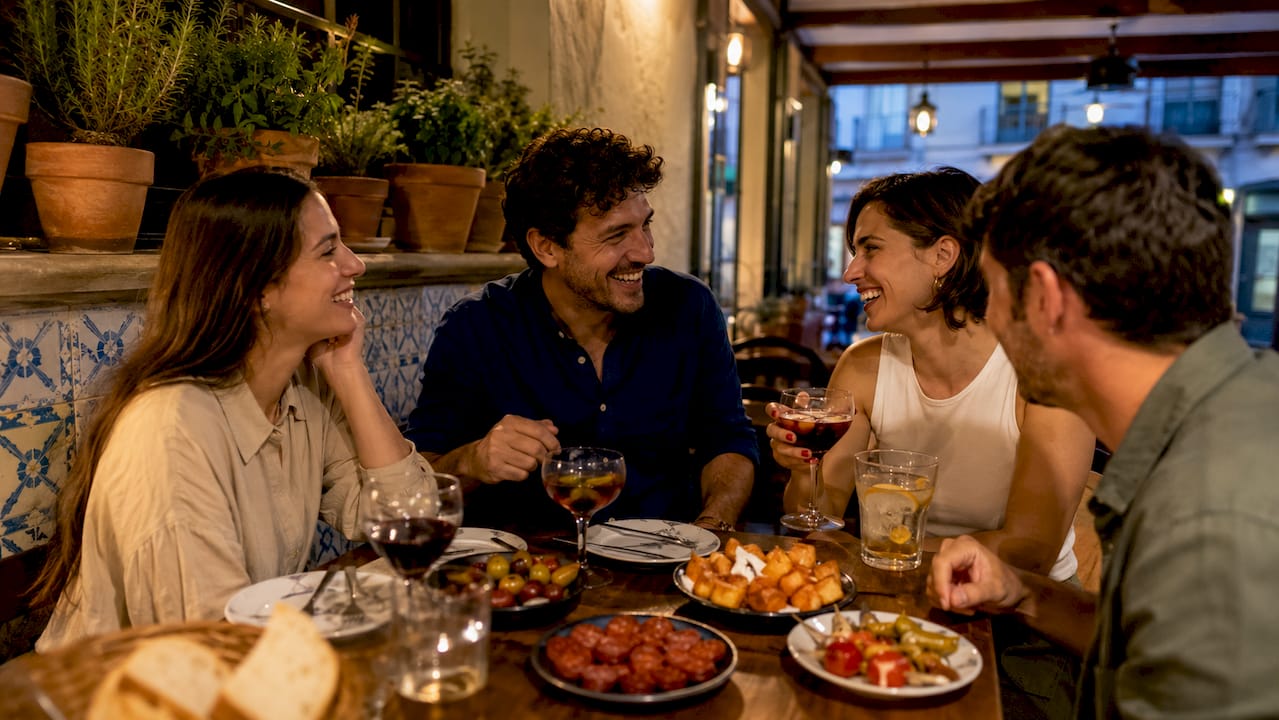
The social and seasonal values behind these traditions are equally significant. Seasonality and pacing are treated as forms of respect, both for the cook and for the people sharing the table. Rushing a meal is considered disrespectful to the host. That single norm explains why Spanish dining culture feels so different from the fast-casual model that dominates much of the world.
How tapas illustrate the social essence of Spanish dining
Tapas are the most visible expression of Spanish culinary customs, but most visitors misread them entirely. The common mistake is treating tapas as a quick snack before a real meal. In practice, tapas are a social event involving standing at a bar, ordering drink by drink, observing what others are eating, and moving between bars over the course of an evening.
Chef José Andrés, one of the most recognized Spanish-American culinary voices, describes tapas as a way of life rather than a food category. You do not sit down, order everything at once, and leave. You arrive, order a drink, ask what looks good, eat one or two plates, and then decide whether to stay or move on. The rhythm is the point.
Regional differences add another layer of complexity. In San Sebastián, pintxos (small bites on bread) are laid out on bar counters and priced per piece. In Granada, tapas are often served free with every drink ordered. In Barcelona, you typically order from a menu. These are not minor variations. They reflect distinct regional identities within a shared national tradition.
Popular tapas varieties you will encounter across Spain include:
- Patatas bravas: fried potatoes with spicy or aioli sauce
- Gambas al ajillo: shrimp cooked in garlic and olive oil
- Croquetas: creamy, breaded bites filled with ham or bacalao (salt cod)
- Pan con tomate: bread rubbed with ripe tomato and olive oil
- Tortilla española: thick egg and potato omelet, served in wedges
- Jamón ibérico: cured Iberian ham, sliced thin and eaten at room temperature
- Boquerones: white anchovies marinated in vinegar and olive oil
Pro Tip: Order one tapa at a time rather than the whole menu at once. Watch what the locals around you are eating and point if you need to. Moving to a second or third bar is expected and encouraged. That movement is the social architecture of the tradition.
For a deeper look at how to read a tapas menu and order with confidence, the tapas food lover’s guide at Kokcha covers the full range of styles and etiquette.
What is the Spanish meal schedule, and what is sobremesa?
The traditional Spanish meal schedule centers lunch as the main meal of the day, served between 2 PM and 4 PM, with dinner starting no earlier than 9 PM. Lunch breaks in most Spanish workplaces run 1.5–2 hours, which makes this schedule structurally possible rather than aspirational.
| Meal | Typical time | Duration | Cultural role |
|---|---|---|---|
| Breakfast | 8–9 AM | 15–30 min | Light, often coffee and pastry |
| Mid-morning snack | 11 AM | 15 min | Optional, common in workplaces |
| Lunch | 2–4 PM | 60–90 min | Main meal of the day |
| Merienda (afternoon snack) | 6–7 PM | 15–30 min | Light snack, especially for children |
| Dinner | 9–11 PM | 60–90 min | Lighter than lunch, social |
The meal itself typically takes 60–90 minutes. What follows is sobremesa. Sobremesa is the post-meal tradition of lingering at the table for coffee, digestifs, and conversation, lasting 1–3 hours after eating. The word translates literally as “over the table,” and that physical image captures the practice perfectly. Nobody leaves. Nobody checks their phone to signal they are ready to go. The conversation is the continuation of the meal.
This contrasts sharply with dining cultures in the United States, Germany, or the United Kingdom, where finishing food signals the end of the social event. In Spain, finishing food signals the beginning of the most important part. Restaurants do not bring the bill until you explicitly request it. Doing otherwise would be considered rude, an interruption of the sobremesa that the table is clearly still enjoying.
Pro Tip: When dining in Spain, never ask for the check the moment you finish eating. Order a coffee, accept the digestif if offered, and let the conversation breathe. Asking for the bill too quickly signals discomfort with the tradition, and your hosts will notice.
What dishes are traditional in Spain?
Traditional Spanish dishes are not just food. They are social markers tied to specific occasions, regions, and times of day. Paella is the clearest example. Authentic paella is a Sunday midday ritual, not a dinner dish. Tourist venues may serve it at dinner, but locals consider that unconventional. Ordering paella at 9 PM at a restaurant in Valencia is a reliable signal that you are not from there.
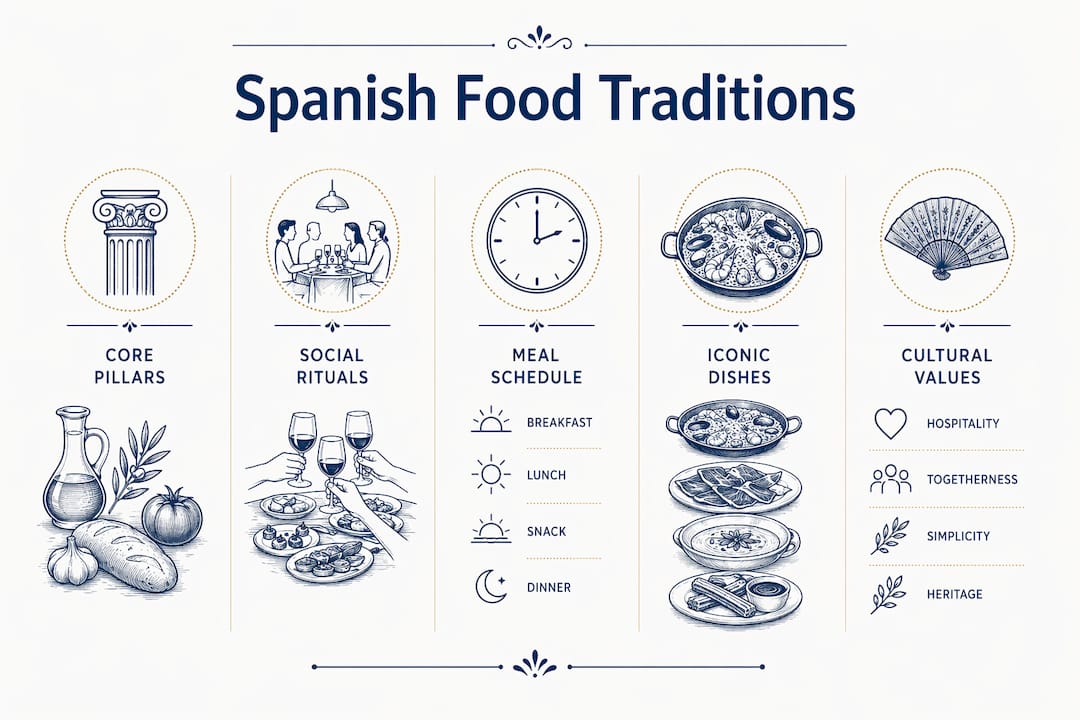
The table below maps iconic dishes to their region of origin and the occasions where they appear most naturally.
| Dish | Region | Occasion |
|---|---|---|
| Paella valenciana | Valencia | Sunday family lunch |
| Tortilla española | Nationwide | Tapas bars, home cooking, any time |
| Jamón ibérico | Extremadura, Andalusia | Celebrations, aperitivo, gifting |
| Cocido madrileño | Madrid | Winter family lunch |
| Pulpo a la gallega | Galicia | Festivals, market days |
| Gazpacho | Andalusia | Summer lunch, starter |
| Pintxos | Basque Country | Evening bar culture |
The Mediterranean diet underpins most of these dishes. Olive oil, fresh vegetables, legumes, seafood, and seasonal produce are the structural ingredients. This is not a marketing label. It is a practical reflection of what grows in Spain and how Spanish cooks have used those ingredients for centuries.
Jamón ibérico deserves special mention because it functions as both a food and a cultural symbol. In Spain, a whole leg of jamón at a celebration is the equivalent of a centerpiece. It signals generosity, quality, and occasion. Slicing it correctly is a skill. Eating it correctly, at room temperature, in thin slices, is a form of respect for the product.
How Spanish culinary customs reflect deeper social values
Spanish food traditions carry social values that go well beyond the plate. The most important of these is the idea that food is a medium for connection, not just sustenance. Every custom, from the pace of tapas ordering to the length of sobremesa, reinforces the priority of human relationships over efficiency.
Seasonality is treated as a moral principle in Spanish cooking. Using out-of-season ingredients is not just a culinary mistake. It signals a lack of respect for the food itself. Markets like La Boqueria in Barcelona or the Mercado de San Miguel in Madrid are built around this principle. Vendors sell what is in season, and cooks plan menus accordingly.
Hospitality norms are equally specific. A Spanish host does not rush you through a meal. Offering more food after you have said you are full is standard. Refusing repeatedly before accepting is the expected social script. Visitors who decline too quickly or eat too fast can unintentionally signal discomfort or disrespect.
“In Spain, the table is not where you eat and leave. It is where you arrive and stay. The food is the reason you sit down. The people are the reason you stay.” This captures the core logic of Spanish culinary culture better than any recipe.
Common misinterpretations by visitors include arriving at a restaurant at 7 PM expecting dinner service (most kitchens do not open until 8:30 or 9 PM), treating tapas as an appetizer course before a main meal, and interpreting a slow bill as poor service. Learning to navigate Spanish restaurant menus with cultural awareness changes the entire experience.
Key takeaways
Spanish food traditions are defined by communal eating, structured meal timing, and the social rituals of tapas and sobremesa that prioritize human connection over speed.
| Point | Details |
|---|---|
| Tapas are a social event | Order drink by drink, move between bars, and treat the process as the experience itself. |
| Sobremesa is non-negotiable | Plan 1–3 hours after eating for conversation; never rush the bill in a Spanish restaurant. |
| Meal timing is structural | Lunch runs 2–4 PM and dinner starts at 9 PM; arriving early signals you are a tourist. |
| Paella is a Sunday ritual | Order paella at midday on a Sunday for an authentic experience; dinner paella is for tourists. |
| Seasonality signals respect | Spanish cooks treat seasonal ingredients as a cultural value, not just a culinary preference. |
What I have learned from eating the Spanish way
I spent three weeks eating my way through Madrid, San Sebastián, and Barcelona, and the single most disorienting adjustment was time. My instinct was to eat lunch at noon and dinner at seven. Both of those instincts were wrong by two hours in every direction. Once I surrendered to the Spanish schedule, something shifted. The long lunches stopped feeling indulgent and started feeling logical. You eat well at 2 PM, rest briefly, work through the afternoon, and arrive at dinner genuinely hungry and socially ready.
The tapas revelation came in San Sebastián, where I watched a group of locals spend four hours moving through six bars, eating two or three pintxos at each stop. They were not eating a lot. They were doing something else entirely. The food was the excuse. The movement, the conversation, and the bar-to-bar rhythm were the actual event.
What surprises most culinary enthusiasts is how disciplined these traditions actually are. Sobremesa is not chaotic lingering. It has a structure: coffee comes first, then perhaps a digestif, then the conversation deepens. The bill appears only when someone signals for it. That structure creates safety. Everyone knows the rules, so everyone can relax.
My honest advice: do not try to experience Spanish food traditions efficiently. The moment you optimize for speed, you have missed the point entirely. Show up hungry, stay curious, and let the meal take as long as it takes.
— YellowRock
Experience authentic Spanish dining at Kokcha in Barcelona
If you want to experience these traditions firsthand, Kokcha in Barcelona puts you at the center of Mediterranean and Spanish culinary culture, just steps from the Sagrada Familia. The menu covers seafood paella, tapas, fresh seasonal dishes, and Mediterranean specialties served at the pace the tradition demands. The terrace offers views that make sobremesa feel exactly as it should: unhurried and worth staying for.
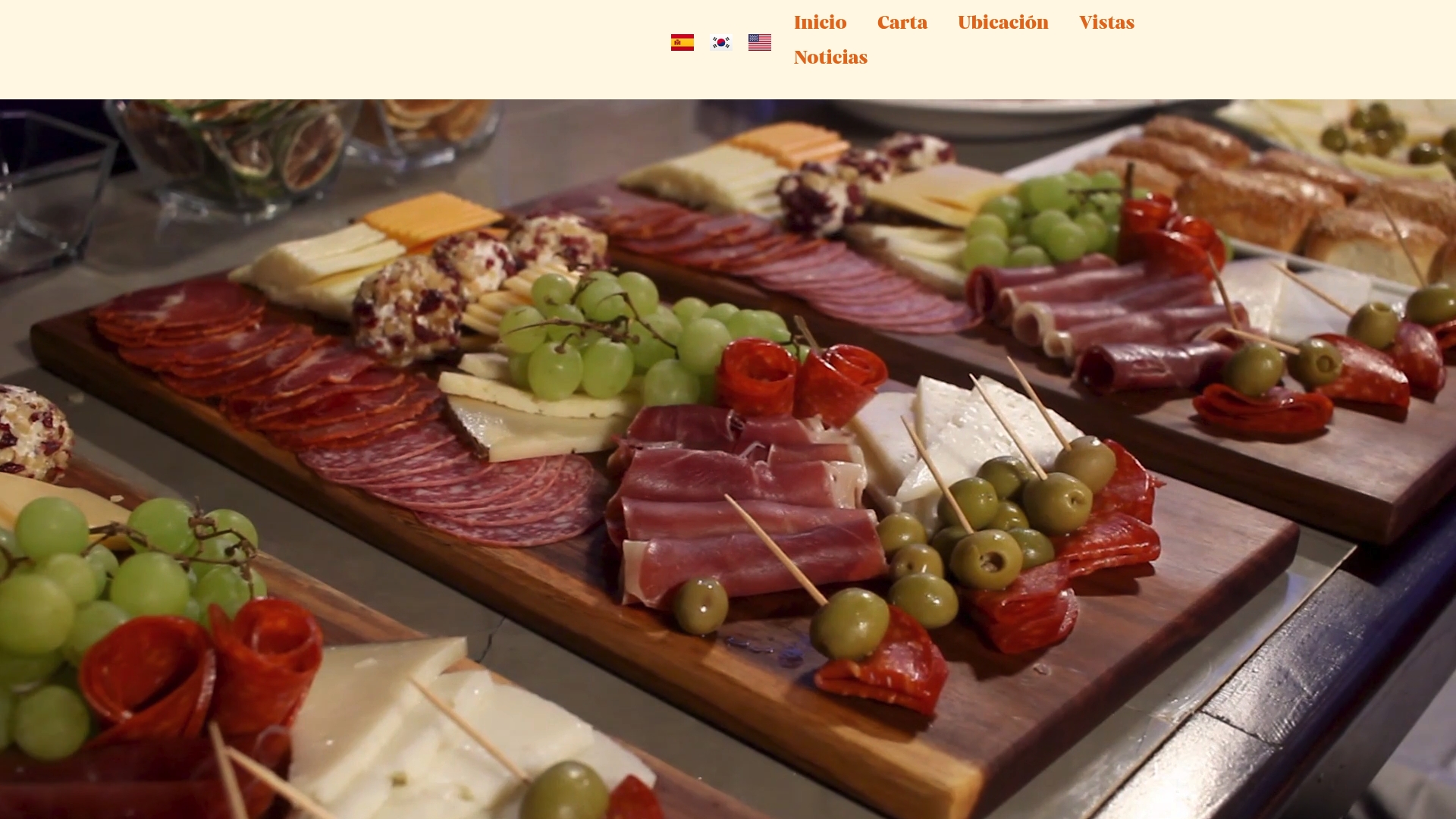
Kokcha is built for culinary enthusiasts and travelers who want more than a meal. Whether you are discovering Spanish food customs for the first time or returning to deepen your understanding, the kitchen and the table are ready. Explore 2026 Mediterranean dining trends and make your reservation directly through the site.
FAQ
What is a Spanish food tradition in simple terms?
A Spanish food tradition is a communal dining custom that prioritizes social connection over speed. Core examples include tapas culture, the sobremesa post-meal conversation, and a meal schedule centered on a long midday lunch.
What time do Spanish people eat dinner?
Dinner in Spain starts no earlier than 9 PM, with most restaurants not opening their kitchens until 8:30 PM. This late schedule is a structural feature of Spanish daily life, not a regional quirk.
What is sobremesa and how long does it last?
Sobremesa is the post-meal tradition of lingering at the table for coffee, digestifs, and conversation. It typically lasts 1–3 hours after eating and is considered a natural and expected part of any shared meal in Spain.
Is paella a traditional everyday dish in Spain?
Paella is traditionally a Sunday midday ritual, not an everyday meal. Locals in Valencia and across Spain reserve it for family Sunday lunches; restaurants serving paella at dinner are generally catering to tourists.
How do tapas differ across Spanish regions?
Tapas vary significantly by region. In Granada, they are served free with drinks. In San Sebastián, pintxos are displayed on bar counters and priced per piece. In Barcelona, you order from a menu. Each style reflects distinct regional identity within a shared national tradition.