Paella is defined as a Spanish rice dish built on layered flavors, precise technique, and the prized caramelized crust called socarrat. This step by step paella recipe gives you a complete roadmap from raw ingredients to a finished pan that rivals anything served in Valencia or Barcelona. You will learn how to build a rich sofrito, brown proteins for depth, and manage heat to form that crackling base. The right tools matter just as much as the right ingredients. A proper paella pan, Bomba or Calasparra rice, and quality saffron threads are non-negotiable starting points. A home paella for 4–6 people takes 60–75 minutes total, including 15 minutes of prep. That is a manageable commitment for a dish that consistently impresses.
What ingredients and tools does a step by step paella recipe require?
The right ingredient list separates a flat, forgettable rice dish from an authentic paella. Start with these core components for a 4–6 person serving.
Ingredient list:
- 2 cups Bomba or Calasparra rice
- 5–6 cups hot chicken or seafood stock
- 1/2 teaspoon saffron threads
- 1/4 cup extra-virgin olive oil
- 1 large onion, finely diced
- 4 garlic cloves, minced
- 2 ripe tomatoes, grated
- 1 teaspoon smoked paprika
- 8 oz chicken thighs or shrimp (or both)
- Salt and black pepper to taste
- Fresh lemon wedges and parsley for serving
Why rice variety is not optional
Bomba and Calasparra rice absorb up to 3 times their weight in liquid while keeping each grain separate and firm. Long-grain rice like basmati or jasmine cannot do this. It turns mushy under the same conditions. Short-grain Spanish varieties are engineered by centuries of cultivation to hold structure under high heat and extended cooking. Substituting them is the single fastest way to ruin the dish.
Essential tools
A wide, shallow paella pan is the most critical piece of equipment. The large surface area promotes even evaporation and creates the thin rice layer required for proper socarrat formation. A 15-inch pan works well for 4 servings. You also need a wooden spatula for the sofrito phase, a ladle for stock, and a reliable heat source that covers the full pan base. A gas burner or outdoor grill works best. Electric coil burners create uneven heat that causes hot spots.
Pro Tip: Toast saffron threads in a dry pan for 30 seconds, then crush them lightly between your fingers before dissolving in warm stock. This releases the full color and aroma that saffron provides and makes a visible difference in the final dish.
| Rice Type | Liquid Absorption | Grain Behavior | Availability |
|---|---|---|---|
| Bomba | Up to 3x weight | Stays firm and separate | Specialty stores, online |
| Calasparra | Up to 3x weight | Slightly softer than Bomba | Specialty stores, online |
| Arborio | 2x weight | Creamy, releases starch | Most grocery stores |
| Long-grain white | 1.5–2x weight | Soft, breaks apart | All grocery stores |
For quality olive oil guidance, a step-by-step olive oil tasting from Terra Centuria explains how to identify the freshness and flavor intensity that makes a real difference in Mediterranean cooking.
How do you cook paella step by step: sofrito to socarrat?
This is where technique separates good paella from great paella. Follow each step in sequence. Skipping or rushing any phase compounds into a worse result at the end.
Step 1: build the sofrito
Heat olive oil in your paella pan over medium heat. Add diced onion and cook for 5 minutes until soft and translucent. Add garlic and cook for 1 more minute. Add grated tomato and smoked paprika. Cook the sofrito slowly for 8–12 minutes until it thickens and turns deep red, with all the tomato water fully evaporated. This concentrated base is the flavor foundation of the entire dish. Rushing it produces a watery, thin result.
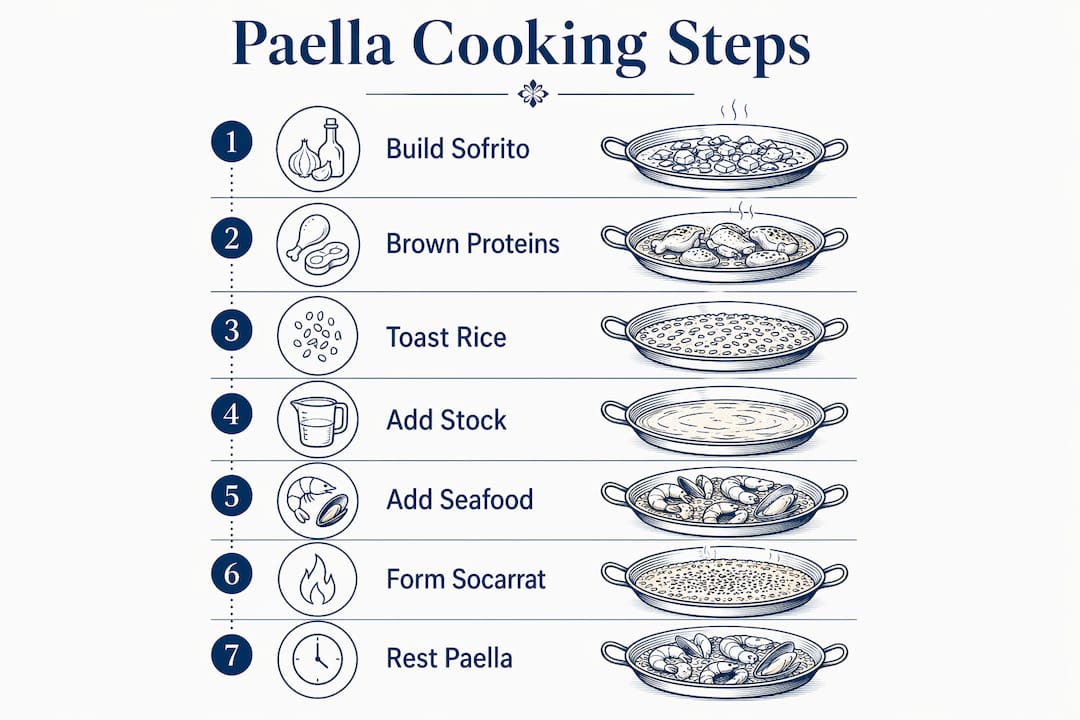
Step 2: brown your proteins
Push the sofrito to the edges of the pan. Add chicken thighs or shrimp to the center. Brown them over medium-high heat for 3–4 minutes per side. You are not cooking them through at this stage. You are building a Maillard crust that adds savory depth to the stock as it cooks. Remove delicate seafood like shrimp and set aside. It goes back in during the final 5 minutes.
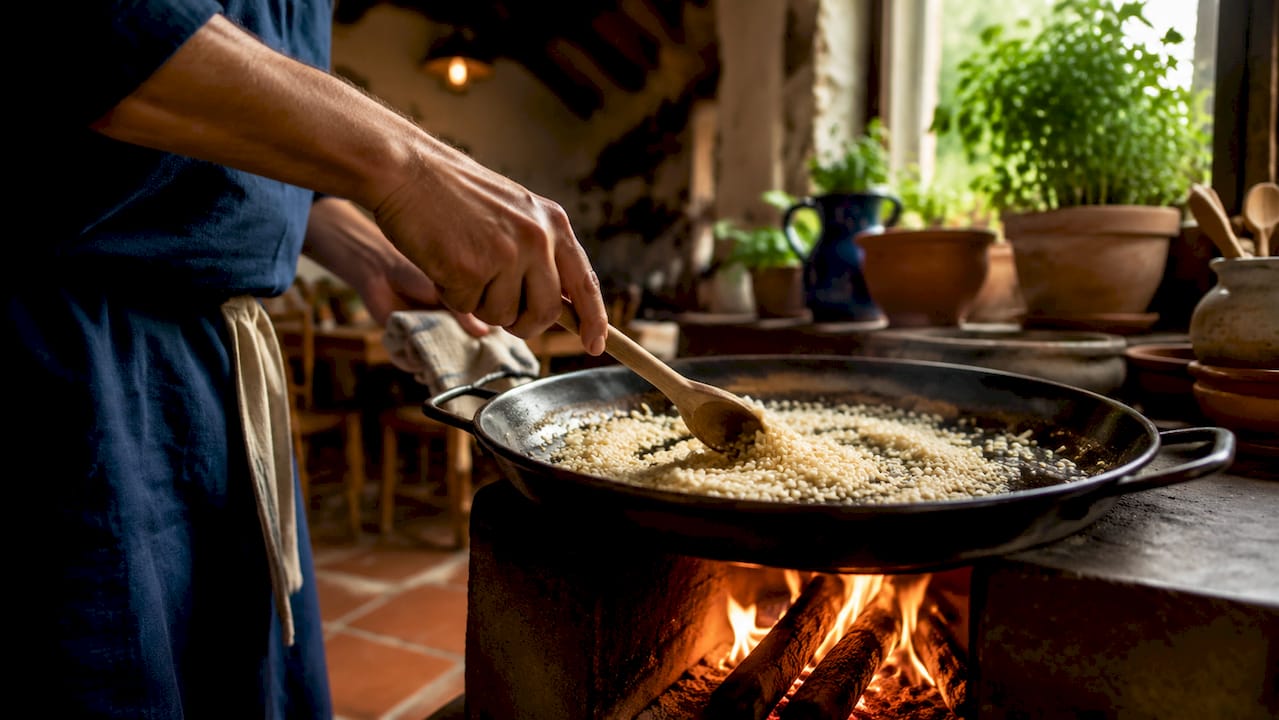
Step 3: toast the rice
Add the dry rice directly to the pan with the sofrito and proteins. Stir it for 1–2 minutes to coat every grain with oil and flavors. This brief toasting step seals the outer layer of each grain slightly, which helps it absorb stock without turning mushy. It also adds a faint nutty note to the finished dish.
Step 4: add stock and saffron
Pour in all the hot stock at once. Add your pre-dissolved saffron. Stir everything once to distribute the rice evenly across the pan. Then stop. Do not stir again. Stirring after adding broth releases starch from the rice and creates a creamy, risotto-like texture instead of the distinct, separate grains paella requires. The only movement allowed from this point is rotating the pan to manage heat distribution.
Pro Tip: Spread the rice into an even layer no thicker than 0.5 inches before the stock goes in. A thin rice layer is the single most important physical condition for proper evaporation and socarrat formation.
Step 5: return seafood and finishing ingredients
After about 15 minutes of cooking, when most of the stock has absorbed, add shrimp, mussels, or clams on top of the rice. Press them gently into the surface. They will steam and cook through in the final 5–7 minutes without becoming rubbery. This timing is why you set them aside earlier.
Step 6: form the socarrat
Once the stock is fully absorbed, increase heat to medium-high for the final 2–3 minutes. Listen carefully. The socarrat forms best when you hear a steady crackling sound and smell a toasted, nutty aroma rising from the pan. Do not rely on a timer alone. Your nose and ears are better instruments here. The crust should be golden brown, not black. Pull the pan off heat the moment the aroma shifts from toasted to sharp.
Step 7: rest before serving
Cover the finished pan with a clean kitchen towel or foil. Rest the paella for 5–10 minutes before serving. This resting phase allows residual steam to finish the top layer of rice and lets the flavors settle into each other. Cutting this step short produces uneven texture across the pan.
What are the most common paella mistakes to avoid?
Most failed paellas share the same handful of errors. Knowing them in advance saves you from learning the hard way.
- Stirring after adding stock. This is the most common error home cooks make. Stirring releases starch and produces a creamy texture instead of distinct grains. Once the stock is in, the pan stays still.
- Using a pan that is too small or too deep. A deep pan traps steam and prevents evaporation. The rice steams instead of frying at the base, which kills any chance of socarrat. Use a wide, shallow pan and split into batches if needed.
- Adding cold stock. Cold stock drops the pan temperature sharply and disrupts the cooking rhythm. Always add hot stock so the rice continues cooking at a consistent temperature.
- Overcrowding the pan. Too many proteins or vegetables push the rice layer too thick. Thick rice does not evaporate evenly and produces soggy patches.
- Pulling the pan too early. Undercooked rice is grainy and chalky. If the stock absorbs before the rice is tender, add a small splash of hot stock and cook for 2–3 more minutes with the pan covered.
Pro Tip: If you smell burning before you hear crackling, the socarrat has gone too far. Slide a spatula under the rice at the edge. If it lifts cleanly and looks dark brown, you are fine. If it crumbles black, reduce heat immediately and serve from the top layer.
How can you customize paella without losing authenticity?
The cooking technique stays constant across all paella styles. What changes is the protein and the supporting vegetables.
Traditional options include chicken and rabbit for a Valencian-style dish, or mixed shellfish for a classic seafood version. A seafood paella built on shrimp, mussels, and squid is the most widely recognized style outside Spain. Chicken paella is the most forgiving for beginners because the protein tolerates a wider cooking window. For a fully plant-based version, a vegetarian paella built on artichokes, green beans, bell peppers, and smoked paprika follows the same sofrito and socarrat steps without any compromise in technique.
When Bomba or Calasparra rice is unavailable, Arborio works as a substitute but requires slightly less stock and shorter cooking time. Avoid long-grain rice entirely.
| Style | Key Proteins | Key Vegetables | Stock Base |
|---|---|---|---|
| Valencian | Chicken, rabbit | Green beans, artichokes | Chicken |
| Seafood | Shrimp, mussels, squid | Roasted peppers | Seafood |
| Vegetarian | None | Artichokes, peppers, peas | Vegetable |
| Mixed | Chicken, shrimp | Bell peppers, tomatoes | Chicken or seafood |
For a broader look at regional styles and ingredient choices, Kokcha’s guide to paella varieties in Barcelona covers the full spectrum from traditional to contemporary.
Key takeaways
Authentic paella requires the right rice, a disciplined no-stir technique, and patience at every phase from sofrito to socarrat.
| Point | Details |
|---|---|
| Use short-grain Spanish rice | Bomba or Calasparra absorbs up to 3 times its weight and holds grain structure under heat. |
| Never stir after adding stock | Stirring releases starch and destroys the distinct grain texture paella requires. |
| Build socarrat with sound and smell | Listen for crackling and smell for toasted aroma rather than relying on a timer alone. |
| Rest the pan before serving | Cover and rest for 5–10 minutes to let flavors settle and the top layer finish cooking. |
| Match pan size to serving size | A wide, shallow pan with a thin rice layer is the physical requirement for proper evaporation. |
What cooking paella repeatedly taught me about patience
The first time I made paella, I stirred it. Of course I did. Every cooking instinct says to stir a rice dish. The result was a sticky, starchy mess that tasted fine but looked nothing like the real thing. The second time, I kept my hands off the pan and watched something different happen entirely.
What changed my results permanently was not a better recipe. It was understanding why each step exists. The sofrito is not just flavor. It is a moisture barrier that controls how the rice absorbs stock. The no-stir rule is not tradition for tradition’s sake. It is physics. The socarrat is not a bonus. It is the technical proof that your heat management worked.
Pan size matters more than most guides admit. I cooked the same recipe in a 12-inch pan and a 15-inch pan on the same day. The 15-inch version had a full, even crust. The 12-inch version had a thick, uneven rice layer that never fully evaporated. The rice was edible but the base was soft. That single experiment was worth more than any written tip.
The learning curve is real, but it compresses fast. By the third or fourth attempt, the crackling sound becomes familiar. You start to trust your nose over the clock. That shift from following instructions to reading the pan is when paella stops being a recipe and starts being a skill.
— YellowRock
Experience authentic paella at Kokcha in barcelona
If you want to taste what this technique produces at its best before you try it at home, Kokcha brings it to the table steps from the Sagrada Familia. Kokcha specializes in Mediterranean cuisine with a full paella menu that covers seafood, meat, chicken, and vegetable preparations, all built on the same traditional methods described in this guide.
Whether you are planning a meal near one of Barcelona’s most iconic landmarks or looking for a Mediterranean dining experience that goes beyond the standard tourist circuit, Kokcha delivers the real thing. The seafood paella is the standout on the menu, made with fresh shellfish and the same socarrat technique you just learned. Book a table or explore the full menu at kokcha.es.
FAQ
What rice is best for an authentic paella recipe?
Bomba or Calasparra rice is the correct choice. Both varieties absorb up to 3 times their weight in liquid while maintaining firm, separate grains throughout cooking.
Why should you never stir paella after adding the broth?
Stirring releases starch from the rice, which creates a creamy texture instead of the distinct grains paella requires. The only permitted movement is rotating the pan to manage heat distribution.
How do you know when the socarrat is ready?
Listen for a steady crackling sound and smell for a toasted, nutty aroma rising from the pan. The socarrat forms best with a thin rice layer under 0.5 inches and high heat for the final 2–3 minutes.
How long does a home paella take to cook?
A paella serving 4–6 people takes 60–75 minutes total, including 15 minutes of preparation and 45–60 minutes of active cooking time.
Can you make paella without a traditional paella pan?
A wide, shallow skillet works as a substitute, but the surface area must be large enough to keep the rice layer under 0.5 inches thick. A deep pot or small pan will prevent proper evaporation and ruin the socarrat.