A romantic restaurant is defined by three core qualities: sensory intimacy, personal attention, and physical privacy. Candlelight and red roses are shorthand, but the research tells a more specific story. An analysis of 50,000 dining reviews found that 12,000 mentions of “romantic” clustered around low lighting, warm color tones, soft music, attentive staff, and adequate table spacing. Understanding what makes a restaurant romantic means looking past surface-level decor and into the sensory and social conditions that let two people genuinely connect. This guide breaks down each element with evidence, so you can choose and enjoy the best romantic dining experiences with confidence.
What makes a restaurant romantic at its core?
Romantic atmosphere, the industry term hospitality designers use, is the deliberate combination of environmental and service factors that create emotional intimacy between guests. It is not a single feature. It is a system. Lighting, acoustics, table placement, service pacing, and menu design all work together. When one element fails, the whole experience suffers. A visually stunning room with loud acoustics, for example, fails to create intimacy because couples cannot hold a private conversation.
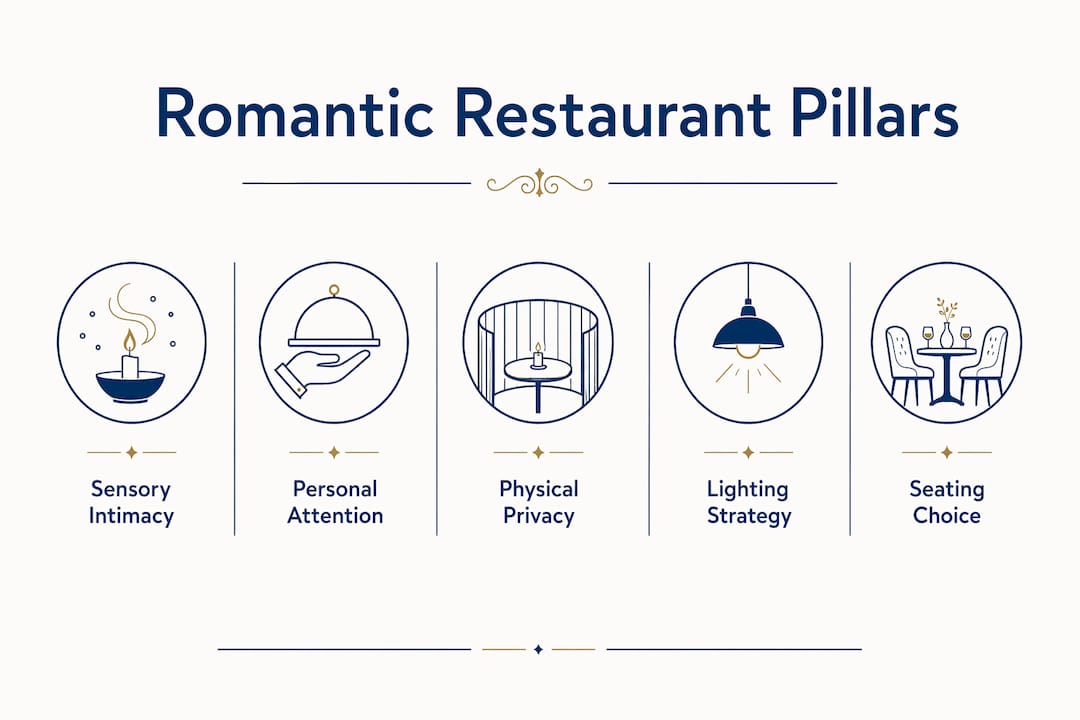
The three pillars that define a romantic restaurant are sensory intimacy, personal attention, and physical privacy. Sensory intimacy covers everything you see, hear, and feel in the room. Personal attention describes how staff read and respond to your presence. Physical privacy determines whether you feel alone together or surrounded by strangers. Every feature of romantic restaurant decor and service maps back to one of these three pillars.
How does sensory intimacy shape a romantic atmosphere?
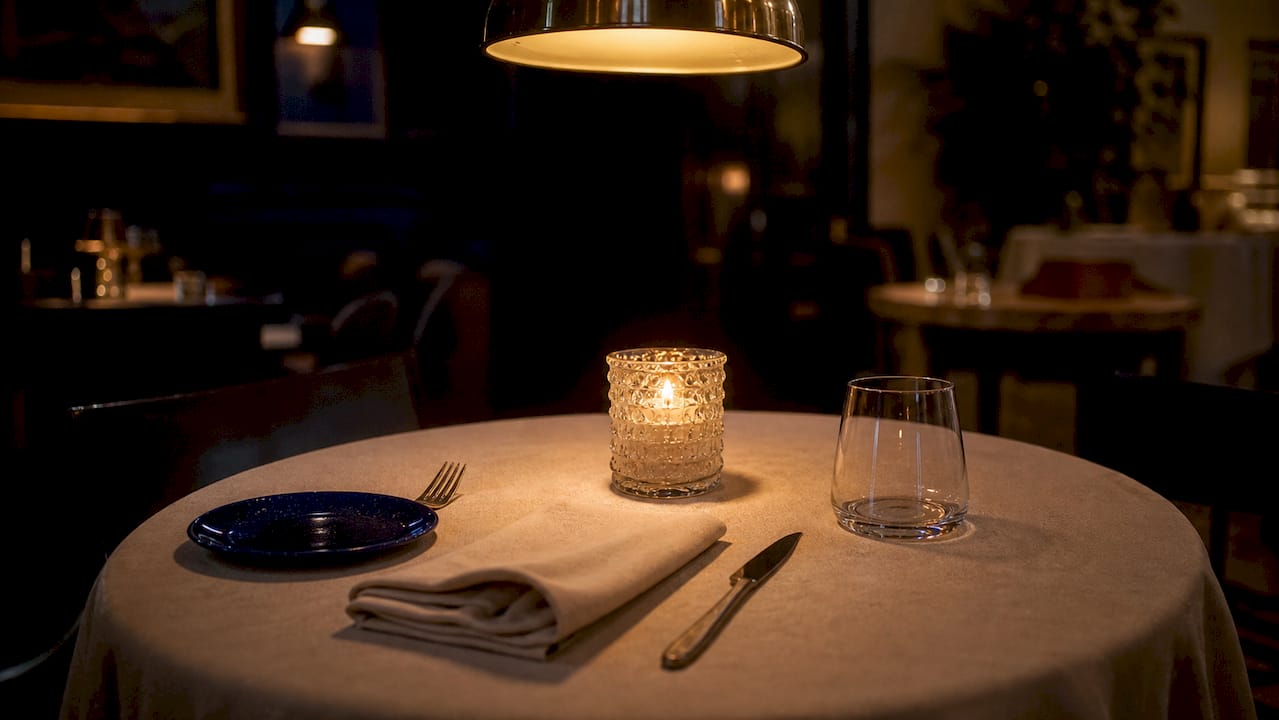
Lighting is the single most powerful tool in creating an atmosphere for a romantic meal. Warm color temperatures in the 2200K–2700K range produce a soft, golden glow that flatters skin tones and signals comfort. Harsh white light above 4000K does the opposite. It reads as clinical and kills the mood before the first course arrives.
The most effective romantic restaurants use a layered lighting strategy. Small pendant lights centered over each table create what designers call “islands of light.” This effect visually isolates couples from the rest of the room, making the table feel like a private world. Rechargeable table lamps that cast soft, warm light upward onto guests’ faces add another layer. That upward glow is flattering in a way overhead lighting never is.
Timing matters too. Top-tier romantic venues dim ambient lighting by roughly 20% as the evening progresses, shifting the mood from dinner to something closer to late-night intimacy. You may not consciously notice it, but you feel it.
Pro Tip: When scouting a restaurant for a date, visit or check photos taken after 8 p.m. Evening lighting tells you far more about the romantic atmosphere than daytime shots.
Music and acoustics complete the sensory picture. Soft background music at a volume that allows easy conversation is the target. The specific genre matters less than the volume and tempo. Slow, low-volume tracks reduce stress and slow the pace of eating, both of which support connection. Venues that focus on visual beauty but neglect acoustics consistently underperform on romantic ratings, no matter how beautiful the decor.
Key sensory features to look for in a romantic restaurant:
- Warm, low-color-temperature lighting (2200K–2700K)
- Table lamps or pendant lights creating individual pools of light
- Soft background music at conversation-friendly volume
- Warm color tones on walls and furnishings (deep reds, burgundy, warm neutrals)
- Absence of televisions, bright signage, or high-contrast visual distractions
What role does personal attention play in romantic dining?
Service quality is the invisible architecture of a romantic dinner. The best romantic dining experiences share one service trait: staff who are present without being intrusive. This is called anticipatory service, and it means a server refills your water before you reach for the bottle and clears a plate only when both guests have finished, without hovering.
High-end romantic service reads the table’s body language and paces the meal around the couple’s conversation, not the kitchen’s schedule. That distinction matters enormously. A rushed tasting menu that arrives course after course regardless of your conversation pace turns dinner into a performance you watch rather than an experience you share.
The hallmark of exceptional romantic service is reading guests’ conversation flow and not rushing courses based purely on kitchen timing. Restaurants that train staff to observe this create a feeling of genuine care. That feeling is what couples remember and describe in reviews as “romantic.”
Pro Tip: When making a reservation, mention the occasion. A good restaurant will note it and adjust service accordingly, from a preferred table to a small complimentary gesture that costs little but means a lot.
Practical service qualities that elevate romantic dining:
- Courses paced to the couple’s conversation, not a fixed clock
- Discreet check-ins rather than repeated table visits
- Staff who acknowledge the occasion without making it theatrical
- No pressure to order quickly or turn the table
- Small gestures: a handwritten note, a complimentary amuse-bouche, or a preferred seating arrangement
How does physical privacy define a romantic restaurant setting?
Privacy is the most underrated feature of romantic restaurant decor and layout. 41% of romantic mentions in large-scale review analysis include comments about feeling private or having intimate seating. Couples want to feel alone together, even in a full restaurant.
Table spacing is the most direct expression of privacy. When tables are close enough that you can hear neighboring conversations, the romantic atmosphere collapses. Corner booths, banquettes with high backs, and separated patio areas all create physical and acoustic separation. These are not luxury features. They are functional requirements for a genuinely romantic setting.
Communal tables rank lowest in romantic dining reviews despite often appearing in well-reviewed food destinations. The food quality does not compensate for the absence of privacy. This is a useful reminder that features of romantic restaurants are about the couple’s experience, not the restaurant’s aesthetic identity.
| Seating Type | Privacy Level | Romance Rating |
|---|---|---|
| Corner booth or banquette | High | Excellent |
| Separated patio or terrace | High | Excellent |
| Standard table with spacing | Medium | Good |
| Open floor plan, close tables | Low | Fair |
| Communal table | Very low | Poor |
The role of terrace dining in romantic settings is worth noting. A well-designed outdoor terrace with separated seating areas combines fresh air, natural ambiance, and visual interest while maintaining the privacy couples need. Views of a landmark or skyline add a memorable sensory layer that indoor seating rarely matches.
What cuisines and formats work best for romantic dinners?
Italian cuisine appears in romantic dining reviews three times more often than its overall market share would predict. That overrepresentation is not accidental. Italian food is built around sharing. Pasta, antipasti, and secondi are designed to be passed and tasted together, which creates physical closeness and shared experience at the table.
French bistro dining offers a similar dynamic with a different register. The intimacy of a small room, unhurried service, and a menu built around rich, slow food creates the conditions for long, relaxed evenings. Neither Italian nor French cuisine is inherently romantic. What they share is a format that encourages lingering, sharing, and conversation.
Some of the best-rated romantic restaurants are mid-range venues that excel at sensory intimacy, not necessarily white-tablecloth, prix-fixe establishments. This is one of the most useful findings for couples planning romantic dinners. A $375-per-person prix-fixe experience like Victoria & Albert’s, which requires formal attire and advance reservations, delivers a structured luxury experience. But a well-executed mid-range restaurant with the right lighting, spacing, and service can be equally or more romantic at a fraction of the cost.
Dining format advice by occasion:
- First date: Choose a mid-range venue with shareable dishes and a relaxed pace. Avoid complex tasting menus that create social pressure and limit conversation.
- Anniversary or milestone: A structured fine dining experience like Victoria & Albert’s rewards the occasion with ceremony and detail.
- Spontaneous romantic dinner: Prioritize atmosphere and privacy over cuisine category. A Mediterranean terrace with good lighting beats a formal room with poor acoustics.
- Long-term couples: Revisit a restaurant with personal history, or choose one with a shareable menu that encourages trying new things together.
How to choose and enjoy a romantic restaurant
Choosing the right venue is a skill. These steps will help you get it right every time.
- Check the lighting before you book. Search for evening photos on the restaurant’s social media or Google listing. Warm, dim lighting in photos is a reliable indicator of romantic atmosphere.
- Read reviews for privacy mentions. Search the word “private” or “intimate” in Google or Yelp reviews. A pattern of these words signals the restaurant understands what couples need.
- Ask about seating when you reserve. Request a corner table, booth, or terrace spot. Most restaurants will accommodate this with advance notice.
- Match the venue to the occasion. A first date calls for a relaxed, mid-range setting. A milestone anniversary justifies a structured, high-end experience. Mismatching the two creates unnecessary pressure.
- Arrive with time to settle. Rushing to a table from a taxi creates stress that takes 20 minutes to unwind. Arrive a few minutes early, order a drink at the bar, and let the atmosphere work on you before you sit down.
- Enhance the experience yourself. Bring a small gesture, flowers or a handwritten note. Order a shareable dish. Put your phone face-down. These actions reinforce the romantic atmosphere the restaurant has built.
For couples planning unforgettable dinners in Barcelona, the city’s Mediterranean dining culture offers a natural advantage. Outdoor terraces, warm lighting, and a cuisine built around sharing align perfectly with the conditions that make romantic dining work.
Key takeaways
A romantic restaurant succeeds when sensory intimacy, personal attention, and physical privacy work together as a system, not as isolated features.
| Point | Details |
|---|---|
| Lighting is the foundation | Warm 2200K–2700K lighting with table lamps creates flattering, intimate atmosphere. |
| Privacy drives romance ratings | 41% of romantic reviews cite private or intimate seating as a key factor. |
| Service pacing matters most | Staff who pace meals around conversation, not kitchen timing, define top romantic venues. |
| Cuisine format supports connection | Shareable dishes like Italian and Mediterranean food encourage physical closeness and lingering. |
| Mid-range venues can outperform fine dining | Sensory intimacy beats price point when it comes to romantic atmosphere. |
What i’ve learned about romantic restaurants after years of reviewing them
The biggest mistake couples make is equating price with romance. I have eaten at white-tablecloth establishments where the lighting was too bright, the tables too close, and the service too rushed to feel anything other than efficient. I have also sat on a terrace in Barcelona with warm light, a shared plate of seafood, and a view that made the evening feel genuinely private and special. The second experience cost a third of the first.
What I look for now is confidence in the room. A restaurant that knows what it is doing does not need to announce it. The lighting is right without a chandelier. The service is warm without being theatrical. The table feels like yours for the evening, not a seat to be turned over. That confidence, as de Silveren Spiegel describes it, is what separates genuine comfort from performative grandeur.
The detail most people miss is acoustics. A restaurant can have perfect lighting and beautiful decor, and still fail as a romantic venue if you have to raise your voice to be heard. Before you book anywhere, check whether reviewers mention noise. That single factor will tell you more about the romantic potential of a venue than any photo.
My honest recommendation: find a restaurant where the Mediterranean atmosphere is built into the design, not bolted on. Warm tones, natural materials, outdoor seating, and a menu built for sharing are not trends. They are the structural conditions for a genuinely romantic evening.
— YellowRock
Plan a romantic dinner at Kokcha in barcelona
Kokcha brings together the exact conditions that make romantic dining work: warm Mediterranean lighting, a terrace with views of the Sagrada Familia, and a menu built around shareable dishes from tapas to seafood and paella.
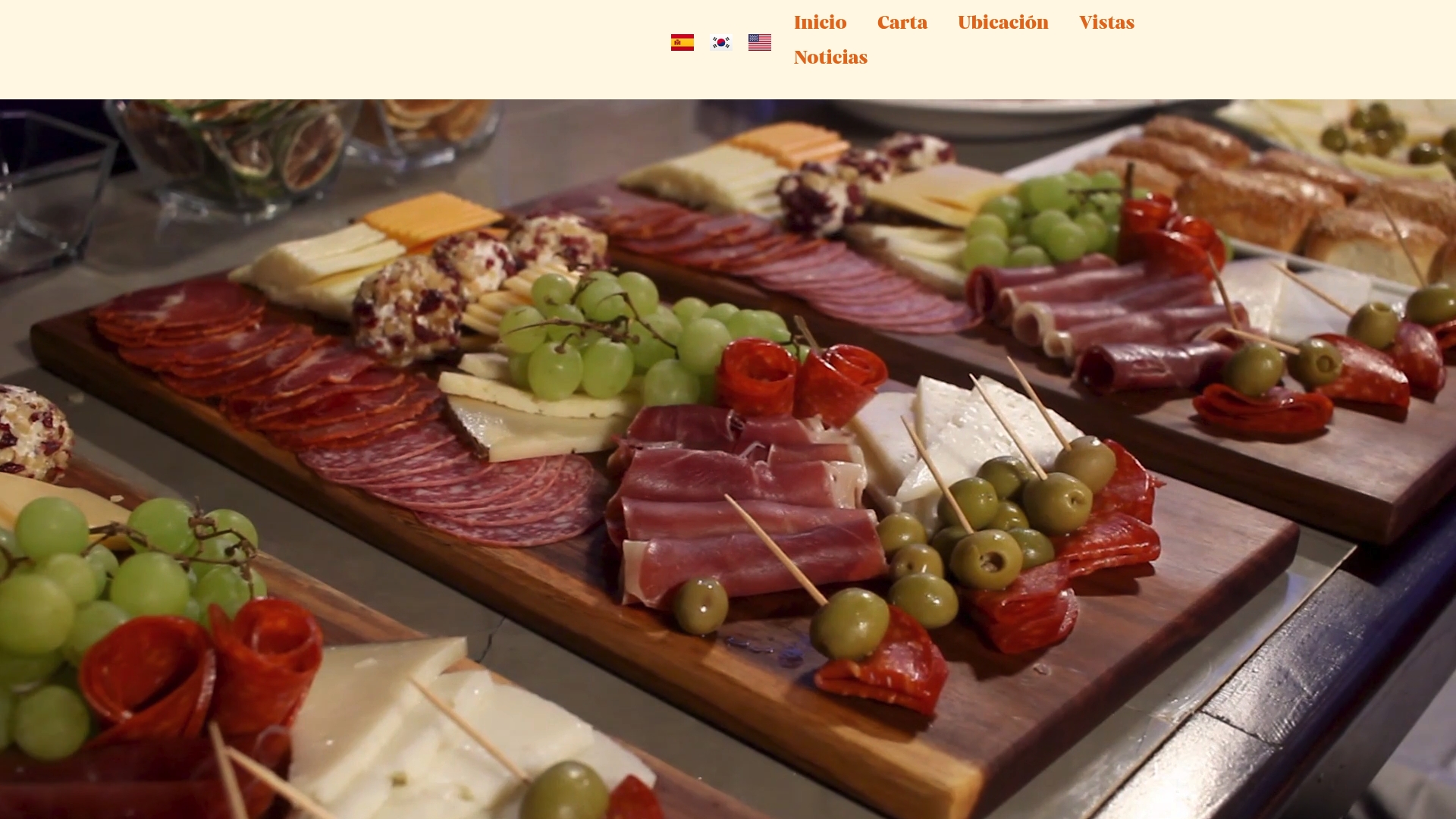
The Mediterranean dining experience at Kokcha is designed for couples who want atmosphere, privacy, and food worth talking about. The terrace seating creates natural separation between tables, and the menu encourages the kind of sharing that brings people closer. Whether you are planning a first date or a milestone anniversary, Kokcha’s setting near the Sagrada Familia delivers the sensory intimacy and personal attention that romantic dining requires. Explore the latest Mediterranean gastronomy trends and start planning your evening.
FAQ
What makes a restaurant romantic according to reviews?
Large-scale review analysis identifies low warm lighting, soft music, attentive but discreet service, and private seating as the top factors. These sensory and spatial conditions consistently appear in romantic dining mentions across thousands of reviews.
Does price determine how romantic a restaurant is?
Price does not determine romance. Some of the highest-rated romantic venues are mid-range restaurants that excel at sensory intimacy, lighting, spacing, and service, rather than expensive prix-fixe establishments.
What type of seating is most romantic in a restaurant?
Corner booths, high-back banquettes, and separated terrace areas rate highest for romance. Communal tables rank lowest, regardless of food quality, because they eliminate the privacy couples need.
What cuisine is best for a romantic dinner?
Italian cuisine appears in romantic dining reviews three times more often than its market share predicts. Mediterranean and French bistro formats also perform well because their shareable, unhurried menus encourage connection and lingering.
How should i choose a romantic restaurant for a first date?
Avoid complex tasting menus and overly formal settings on a first date. Choose a mid-range venue with warm lighting, private seating, and a shareable menu that keeps the focus on conversation rather than dining structure.