If you’ve browsed a Spanish menu and felt briefly lost staring at a section labeled mariscos, you’re not alone. The term trips up even experienced travelers because Spanish seafood vocabulary draws a sharp line that English doesn’t. What is Spanish mariscos, exactly, and why does it occupy such a celebrated place in Mediterranean cooking? The answer stretches well beyond a simple translation. Mariscos are a cultural institution, a dietary cornerstone, and, when done right, one of the most rewarding eating experiences the Mediterranean world has to offer.
Table of Contents
- Key takeaways
- What is Spanish mariscos, really?
- How mariscos appear in classic Spanish dishes
- Mariscos and the Mediterranean diet
- How to enjoy mariscos authentically as a traveler
- My perspective on what mariscos really mean
- Taste mariscos in Barcelona
- FAQ
Key takeaways
| Point | Details |
|---|---|
| Mariscos vs. pescado | Mariscos refers to shellfish and marine invertebrates, while pescado refers to finned fish. |
| Culinary, not biological | The classification is based on edibility and culinary use, not strict zoological taxonomy. |
| Central to Spanish cooking | Mariscos appear in iconic dishes like paella de marisco and zarzuela de mariscos. |
| Mediterranean diet staple | Mariscos provide high-quality protein, omega-3s, and minerals linked to heart health. |
| Traveler-friendly knowledge | Knowing common menu terms helps you order confidently and eat more authentically in Spain. |
What is Spanish mariscos, really?
The cleanest definition comes straight from Spanish gastronomy: mariscos are edible marine invertebrates, primarily crustaceans and mollusks, and they are categorically distinct from pescado, which refers to finned fish. That distinction matters at the table because Spanish menus, fish markets, and restaurant conversations all treat the two as entirely separate worlds.
The word itself follows simple Spanish grammar. Both “marisco” and “mariscos” are correct, with the singular referring to the category and the plural referring to multiple specimens or a collective spread of shellfish. You’ll see both on menus, in conversation, and in recipe titles.
What makes the classification genuinely interesting is that it’s culinary, not biological. A marine creature earns its place in the mariscos category based on whether it’s edible and worth eating, not because it fits a particular scientific phylum. That practical framing opens the door to a surprisingly wide cast of characters.
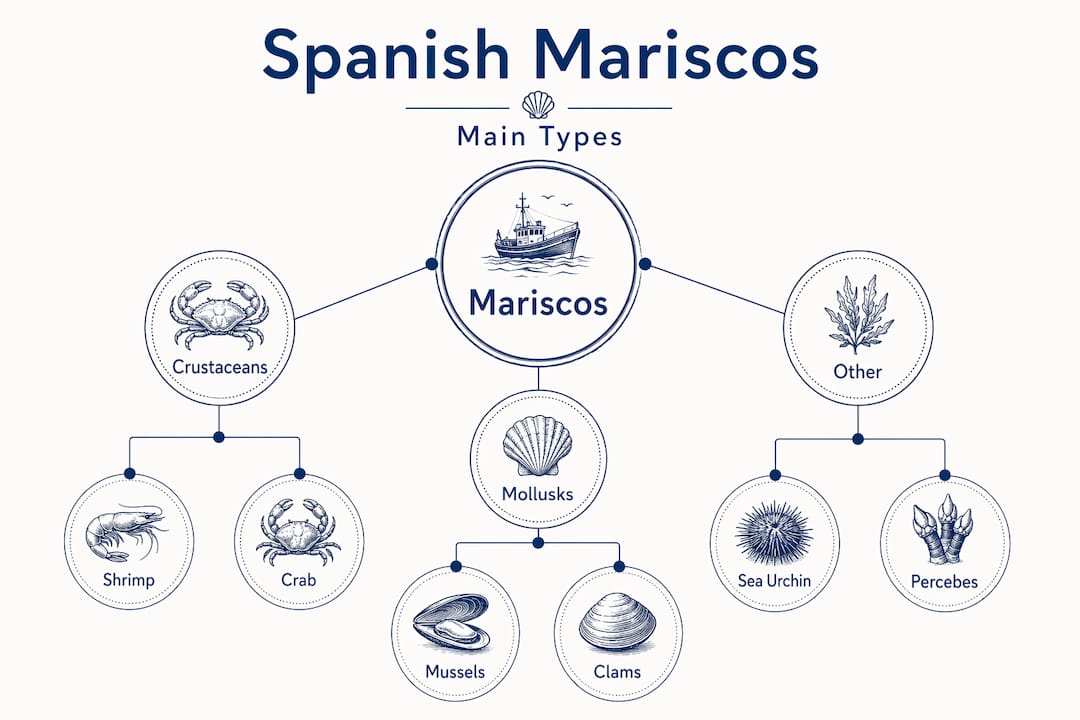
The main types of mariscos
Here’s how the major families break down:
| Category | Examples | Typical preparation |
|---|---|---|
| Crustaceans | Gambas, langostinos, cigalas, centolla, buey de mar | Grilled, boiled, baked |
| Bivalve mollusks | Almejas, mejillones, berberechos, vieiras | Steamed, in sauces, raw |
| Cephalopod mollusks | Pulpo, calamar, sepia | Grilled, fried, stewed |
| Echinoderms | Erizo de mar (sea urchin) | Raw, on toast, in pasta |
| Cnidarians | Ortiguillas (sea anemones) | Battered and fried |
The last two categories surprise most visitors. Sea urchins and sea anemones are genuine delicacies in Spanish coastal gastronomy, particularly in Andalusia and along the Catalan coast. They expand the concept of mariscos far beyond what most people picture when they hear “shellfish.”
Pro Tip: If a marisco spoils, it loses its gastronomic status entirely. Freshness is not just a preference in Spanish seafood culture. It is the defining criterion for whether something belongs on your plate.
How mariscos appear in classic Spanish dishes
Mariscos don’t exist as solo performers in Spanish cuisine. They are woven into the structure of the country’s most beloved dishes, and understanding that context makes eating in Spain considerably more rewarding.
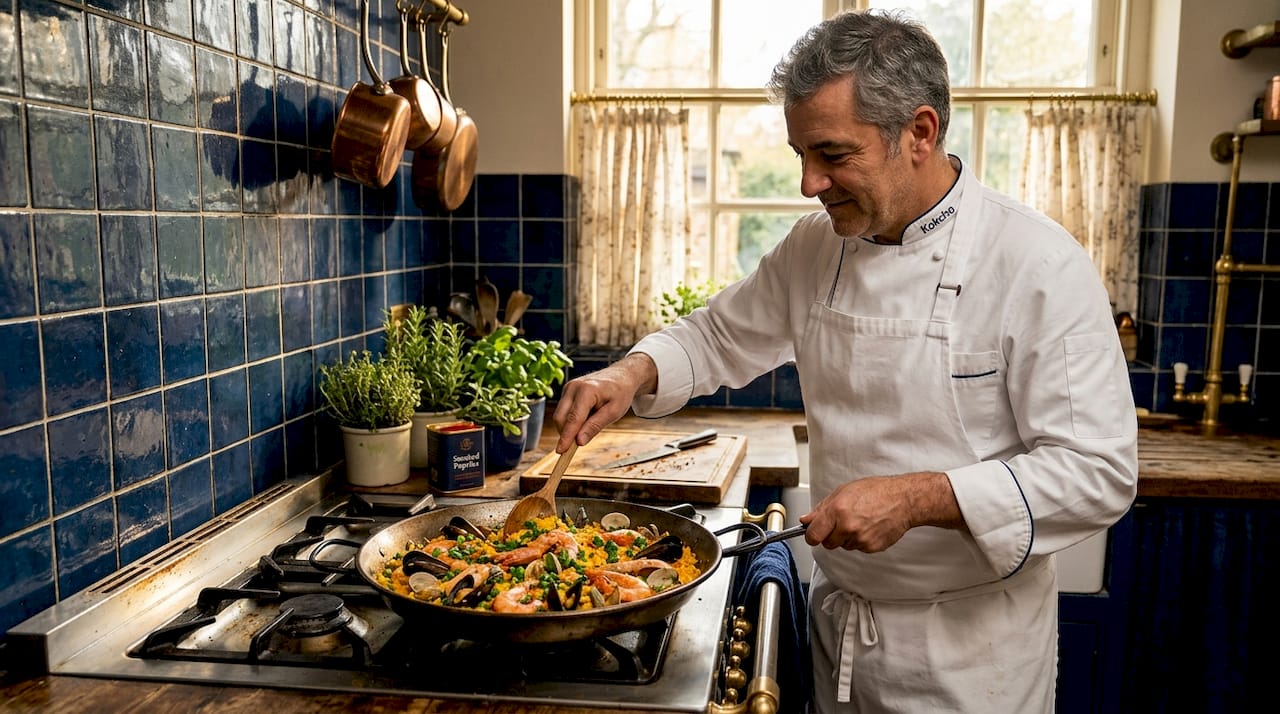
Paella de marisco and zarzuela de mariscos stand as the two most iconic mariscos-centered preparations. Paella de marisco layers shrimp, mussels, clams, and often squid into saffron-scented rice, cooked in a wide flat pan until the bottom develops socarrat, the prized caramelized crust that signals a well-made paella. Zarzuela is a richer, wilder beast: a saffron and tomato-based stew packed with mixed shellfish, sometimes including whole cigalas and chunks of monkfish, simmered until the broth absorbs every ounce of flavor from the shells.
Beyond those signature dishes, Spanish seafood culture also expresses itself through:
- Mariscos platters (mariscadas): Large shared spreads served at celebrations and long Sunday lunches, typically featuring boiled centolla (spider crab), percebes (barnacles), cigalas, and gambas
- Tapas formats: Gambas, carabineros, and cigalas appear constantly as tapas staples, often simply grilled with olive oil, garlic, and sea salt
- Fideuà: A noodle-based cousin of paella popular in Valencia and Catalonia, frequently made with a mariscos base
- Arroz caldoso: A soupy, broth-heavy rice dish that showcases mariscos in a looser, more liquid form than traditional paella
Regional identity plays a real role here. Galicia, in northwestern Spain, treats its centolla and percebes as sacred products tied to local pride and seasonal ceremony. Catalonia favors romesco-style sauces and more complex stews. Andalusia leans toward fried preparations and raw sea urchins eaten directly from the shell at the beach. Every coastal region has its own mariscos vocabulary.
Spain produces some of the finest shellfish in Europe, and the quality reflects geography. The cold, nutrient-rich waters of the Atlantic coast yield extraordinarily flavorful crustaceans, while the calmer Mediterranean waters produce excellent bivalves.
Mariscos and the Mediterranean diet
Mariscos occupy a specific and well-documented role within the Mediterranean diet, which UNESCO officially recognizes as an intangible cultural heritage of humanity. The designation isn’t just symbolic. It reflects a way of eating built around fresh, local, seasonal ingredients, with seafood and shellfish providing much of the protein.
From a nutritional standpoint, mariscos deliver in several directions at once. They are high in complete protein, low in saturated fat, and rich in omega-3 fatty acids. Shellfish are also among the best dietary sources of zinc, iodine, selenium, and iron. Mussels, in particular, pack more iron per gram than red meat. Shrimp and prawns provide lean protein with minimal calories.
“Sustainable Mediterranean seafood consumption, including mariscos, represents a model for healthy and environmentally conscious eating.” Marisma Biomed
The sustainability angle matters more now than ever. Local, seasonal mariscos consumption is central to how the Mediterranean diet maintains its environmental integrity. Buying barnacles caught that morning from a Galician fisher, or ordering mussels farmed in a local estuary, keeps the supply chain short and the ecological footprint small. Spanish coastal communities have practiced this model for centuries without calling it sustainability. It was simply how you ate.
Forward-thinking chefs across Spain are now incorporating less familiar marine ingredients, including sea urchin roe and seaweed, into their cooking as both a nod to tradition and a response to environmental responsibility. What counts as a marisco keeps expanding as culinary culture evolves.
How to enjoy mariscos authentically as a traveler
Knowing what mariscos are is one thing. Ordering them confidently in a Spanish restaurant, or at a Barcelona market stall, is another. A few practical anchors help enormously.
-
Learn the key menu terms. Gambas are shrimp. Langostinos are larger prawns. Cigalas are Norway lobsters, sometimes called Dublin Bay prawns. Mejillones are mussels. Almejas are clams. Vieiras are scallops. These six words alone cover the majority of what you’ll encounter on a Spanish seafood menu.
-
Ask about the catch date. Any reputable mariscos restaurant will tell you when its shellfish arrived. If the staff can’t answer that question, treat it as a signal to order carefully. Understanding fresh, seasonal offerings separates a memorable mariscos meal from a forgettable one.
-
Order simply when in doubt. A plate of gambas al ajillo (shrimp with garlic and olive oil) or grilled cigalas with sea salt will almost always outshine an elaborate preparation when the product is genuinely fresh. Spanish seafood cooking trusts the ingredient.
-
Pair strategically. Mariscos and Mediterranean dining pairings are worth thinking about. Albariño from Galicia is the classic wine match for Atlantic shellfish. Cava works beautifully with fried mariscos. For a more modern option, a dry, botanical gin and tonic has become a popular pairing across Spanish coastal restaurants.
-
Embrace the informal formats. Some of the best mariscos experiences in Spain happen standing at a bar, eating a plate of boiled shrimp with cold beer, not sitting in a fine dining room. Tapas culture was built for exactly this kind of spontaneous, generous eating. Reading a tapas guide before your trip helps you decode the menu and set realistic expectations.
Pro Tip: In Barcelona especially, look for restaurants close to the market or waterfront that change their mariscos offerings by the day. A handwritten daily menu is almost always a better sign than a laminated one with photographs.
My perspective on what mariscos really mean
I’ve spent years studying and writing about Mediterranean food culture, and what strikes me most about mariscos is how poorly the concept translates when you strip it down to a dictionary definition. Calling mariscos “shellfish” is like calling flamenco “Spanish dancing.” Technically accurate, practically useless.
What I’ve learned is that mariscos carry an emotional weight that runs alongside the culinary one. When a Galician family gathers around a table covered in percebes and centolla, or when a group of friends share a mariscada on a Barcelona terrace, the mariscos are not just food. They are the occasion itself.
I’ve also noticed that the travelers who have the most memorable seafood experiences in Spain are not the ones who research the most expensive restaurants. They’re the ones who accept unfamiliarity with curiosity. Ordering ortiguillas because you’ve never seen a sea anemone on a menu, or trying erizo de mar for the first time spread on toast, is the kind of eating that actually sticks with you.
My honest take on sustainability here is this: Spanish coastal food culture already contains the solution that modern food systems are trying to rediscover. Seasonal, local, species-diverse eating is not a trend in Spain. It is centuries of accumulated common sense. Mariscos, eaten the way they were meant to be eaten, are already the answer.
— Kokcha
Taste mariscos in Barcelona
Barcelona sits at the intersection of Mediterranean tradition and contemporary culinary ambition, which makes it one of the best cities in the world to experience mariscos done right. Kokcha, located steps from the Sagrada Família, brings that tradition to life with a menu built around genuine Mediterranean ingredients and seasonal shellfish. The paella de marisco here is a showcase of exactly what Spanish seafood cooking does best: fresh, local mariscos, properly cooked rice, and the kind of depth that only comes from using real shellfish stock. If you want to understand what mariscos taste like beyond the definition, this is where to start. You can also explore the key elements of a Mediterranean menu to arrive at the table with a broader sense of what you’re eating and why it matters.
FAQ
What does mariscos mean in Spanish?
Mariscos refers to edible marine invertebrates in Spanish gastronomy, primarily crustaceans and mollusks. The term is distinct from pescado, which means finned fish.
What is the difference between marisco and pescado?
Marisco covers shellfish and mollusks, such as shrimp, clams, and crab, while pescado refers specifically to fish with fins and bones, like sea bass or cod.
What are common types of Spanish mariscos?
Common mariscos include gambas (shrimp), mejillones (mussels), almejas (clams), cigalas (Norway lobster), centolla (spider crab), and vieiras (scallops), along with more unusual options like sea urchin and sea anemone.
What is seafood paella and does it use mariscos?
Seafood paella, or paella de marisco, is a classic Spanish rice dish made with a mixture of shellfish and sometimes squid cooked in saffron-seasoned broth. It is one of the most prominent mariscos dishes in Spanish cuisine.
Are mariscos healthy to eat?
Yes. Mariscos are high in lean protein, omega-3 fatty acids, and minerals like zinc and selenium. They form a core part of the UNESCO-recognized Mediterranean diet, which is associated with reduced cardiovascular risk.