Most people who encounter tapas for the first time assume they are just appetizers, a smaller version of a main course you order while waiting for the real food. That assumption misses nearly everything. Classic tapas represent one of the most distinctive and deeply social eating traditions on the planet. They are a philosophy, a ritual, and a window into how Spanish culture works. This guide covers what classic tapas truly are, where they come from, which dishes define the tradition, and how to experience them the way locals do.
Table of Contents
- Key takeaways
- What is classic tapas: history and cultural roots
- The most iconic traditional tapas dishes
- How to experience tapas authentically in Spain
- How tapas shaped modern dining worldwide
- My honest take on what tapas really teach you
- Experience authentic tapas at Kokcha in Barcelona
- FAQ
Key takeaways
| Point | Details |
|---|---|
| Tapas are not appetizers | Classic tapas are a complete social dining ritual, not a preliminary course before a main meal. |
| The word means “lid” | The term tapa comes from the Spanish word for cover, with origins rooted in practical bar culture. |
| Regional variety runs deep | From free tapas in Granada to skewered pintxos in the Basque Country, every region has its own style. |
| Social customs define the experience | Moving between multiple bars, sharing plates, and standing at the bar are all part of authentic tapeo. |
| Tapas have gone global | Chefs worldwide have adapted the format, but the original Spanish tradition remains the gold standard. |
What is classic tapas: history and cultural roots
The word tapa literally means “lid” in Spanish. The most widely repeated story is that bartenders in Andalusia would place a small slice of bread or cured meat over a glass of wine or sherry to keep out flies and dust. Over time, the food on top became as important as the drink beneath it. The origin stories vary widely, with anecdotes connecting the tradition to Alfonso X of Castile and even a much later tale involving King Juan Carlos I ordering ham and cheese placed on his glass. None of these stories come with solid documentary evidence, but that matters less than what they collectively express: Spanish hospitality, practicality, and the idea that a drink is always better with something to eat alongside it.
The Real Academia Española defined tapa in 1939, describing it as a small portion of food served with a drink. That definition started as an Andalusian regional term and gradually spread as the tradition itself moved north and west across the country. What began as a simple bar custom became a national institution.
The deeper significance of tapas is not the food itself but the social model it creates. Rafael Ansón, president of the Real Academia de Gastronomía, has described the tapas model of eating as one that balances solid food with liquid and emphasizes the shared, social act of eating over individual consumption. You are not sitting down to a plate you own. You are standing at a bar, reaching across to try what the person next to you ordered, talking, and moving on when the mood strikes.
“Tapas are a Trojan horse for understanding Spanish culture. Once you accept the invitation to share, you begin to understand everything.” — Chef José Andrés, as quoted in his guide to eating like a Spaniard
- Tapas originated as practical bar customs in southern Spain
- The tradition reflects Spanish values of hospitality, informality, and communal pleasure
- Regional myths about royal origins, while unverified, capture the spirit of the custom accurately
- The 1939 dictionary definition marks tapas’ formal recognition in Spanish culture
The most iconic traditional tapas dishes
Knowing which dishes count as classic tapas transforms your experience at a Spanish bar. The canon is wide, but certain dishes appear everywhere and define the category.
Patatas bravas are fried potato cubes served with a spicy tomato sauce, or sometimes a garlic aioli, depending on the region. They are arguably the most ordered tapa in all of Spain. Tortilla española is a thick potato omelette, served warm or at room temperature, sliced into wedges. It looks deceptively simple and tastes like nothing else. Gambas al ajillo are shrimp cooked in olive oil with garlic and chili, served sizzling in a small clay pot. Jamón ibérico, the cured leg of Iberian pigs, is sliced paper thin and served on its own or draped over bread. Croquetas are breaded and fried rolls with a creamy filling, most commonly jamón or bacalao (salt cod). Calamares fritos, rings of battered and fried squid, appear on nearly every tapas bar menu in coastal cities.
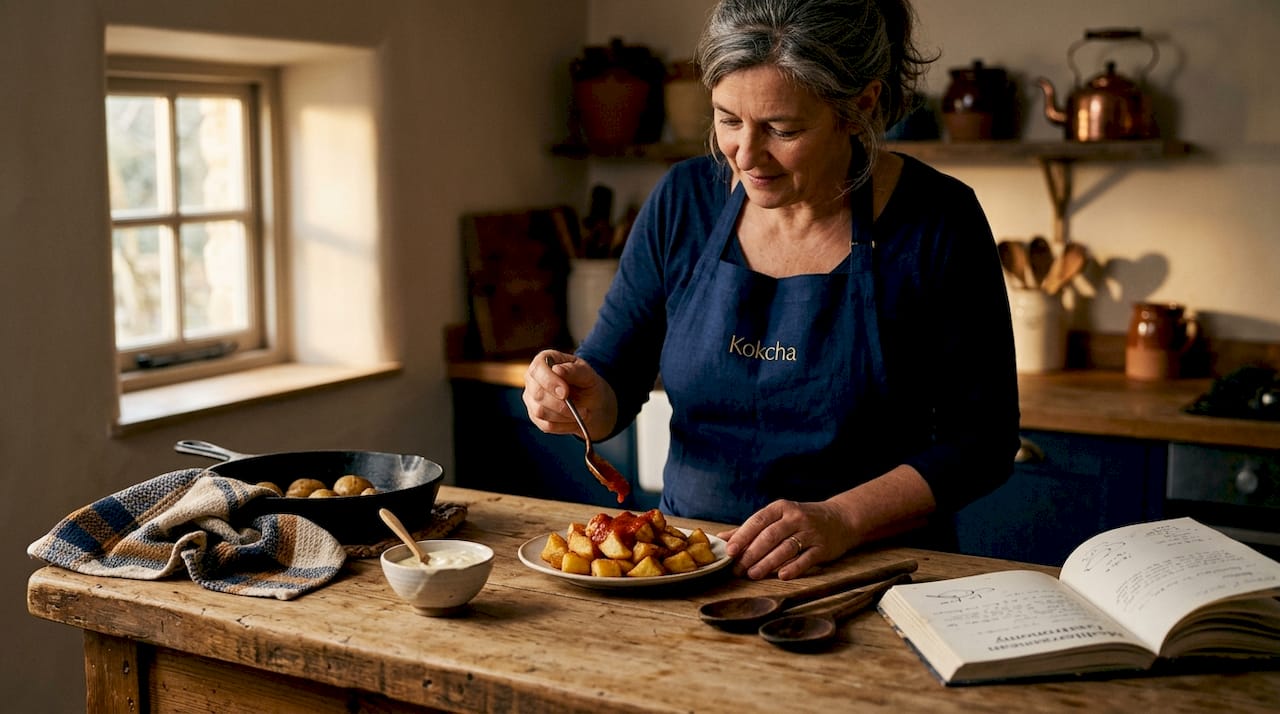
These widely recognized traditional tapas are the ones you will encounter from Seville to Barcelona. They balance contrasting textures (crispy outside, soft inside) and bold flavors without relying on complicated technique. That accessibility is part of their genius.
| Tapa | Key ingredients | Region most associated |
|---|---|---|
| Patatas bravas | Potatoes, tomato or aioli sauce | Madrid, Barcelona |
| Tortilla española | Eggs, potato, olive oil | Nationwide |
| Gambas al ajillo | Shrimp, garlic, olive oil, chili | Andalusia, Madrid |
| Jamón ibérico | Iberian cured ham | Extremadura, nationwide |
| Croquetas | Béchamel, jamón or bacalao | Nationwide |
| Pintxos | Bread, various toppings, skewer | Basque Country |
Regional variation matters enormously. In the Basque Country, tapas are called pintxos (or pinchos). They are served skewered on bread, displayed in rows along the bar counter. You pick what you want, and at the end of your visit, the bartender counts your toothpicks to calculate the bill. It is one of the most charming billing systems in food culture. Montaditos are small open sandwiches topped with anything from anchovies to roasted peppers, while cold cuts and cheeses served on small boards round out the cold tapas category.
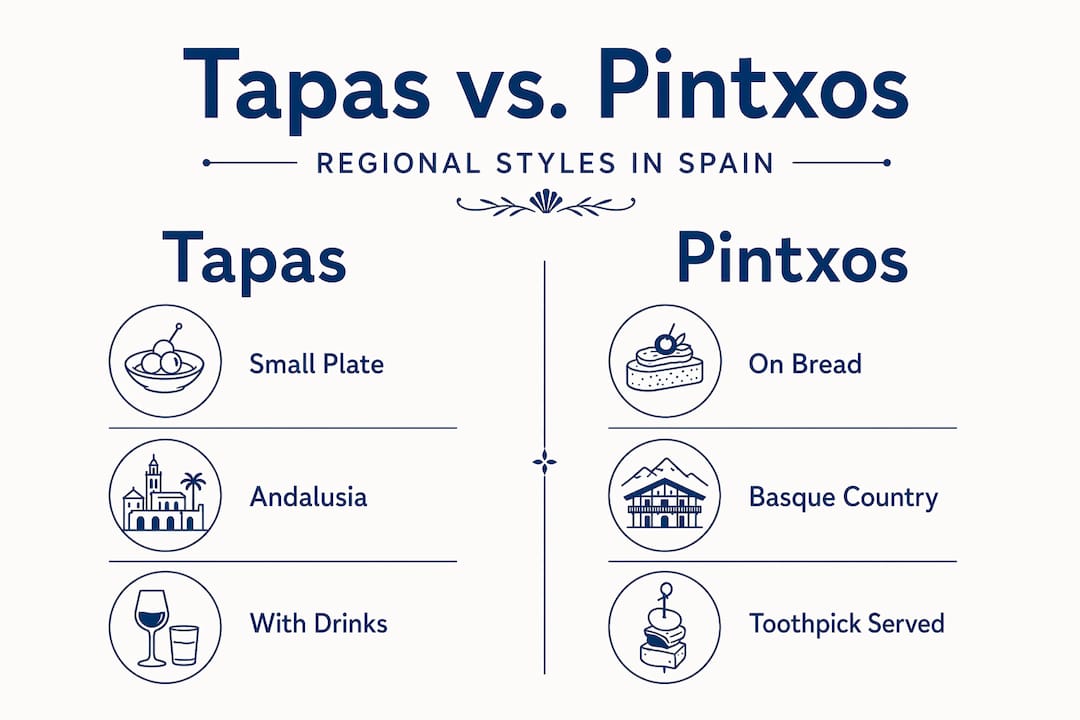
Pro Tip: When browsing a traditional tapas bar, look for dishes that have been sitting at room temperature rather than under heat lamps. Tortilla española and jamón ibérico are best this way. If it is warm, it should arrive visibly hot from the kitchen.
You can explore the full world of Spanish small plates to understand how these dishes fit into the broader Mediterranean table.
How to experience tapas authentically in Spain
The practice of going out for tapas has its own name: ir de tapeo, which translates loosely as “going tapas hopping.” It is not about finding one great bar and staying all night. It is about movement, variety, and the pleasure of discovery. A 2024 study found that over 50% of tapas-goers eat between three and five tapas per visit and move through three to four different bars in a single outing.
Here is how a genuine tapeo evening typically unfolds:
- Start at a neighborhood bar around 7 or 8 p.m., before the Spanish dinner hour arrives. Order a glass of house wine or a cold beer and point to two or three tapas you want to try.
- Stand at the bar if you can. Standing is cheaper and faster and is widely considered the more authentic local experience in cities like Seville, Madrid, and Zaragoza.
- After two or three rounds of tapas, move to the next bar. Each stop should specialize in something different.
- Pay as you go. Do not expect a complicated bill. In many places a quick word to the bartender and a rough count of what you had is all that happens.
- End somewhere that does a strong final bite, perhaps a bar known for its anchoas (anchovies) or a place with good cheese.
Regional customs around payment vary considerably. In Granada, a free tapa accompanies every drink ordered, typically a small beer costing around two euros. In Madrid and Barcelona, you order and pay for tapas separately. This difference surprises many travelers and is worth knowing before you sit down.
Pro Tip: A bar where the floor is covered with olive pits, crumpled napkins, and toothpicks is not a poorly maintained place. It signals extremely high turnover and local popularity. The messier the floor, the better the tapas, as a general rule.
Drink pairings matter too. Dry sherry (fino or manzanilla) is the traditional companion to jamón and seafood tapas. A cold lager works with almost everything fried. For a fuller table, a glass of young red Rioja pairs well with meat-heavy selections. You can read more about ordering tapas like a local to prepare for your next visit to Barcelona.
How tapas shaped modern dining worldwide
Tapas did not stay in Spain. Over the past three decades, the small plates format has become one of the dominant models in restaurant design and menu development around the world. The reasons are practical and cultural at the same time.
- Small plates let chefs show more creativity per visit, offering guests six or eight distinct flavor experiences instead of one.
- The sharing format reduces the pressure of ordering and makes meals feel more social and relaxed.
- Tapas evolved into miniature haute cuisine in recent decades while preserving the informal and spontaneous spirit of the original tradition.
- Chef José Andrés, who brought the tapas format to American dining, helped establish it as something far beyond Spanish bar food.
- Mediterranean and Asian cuisines each contributed their own versions of small, shared plates, which merged with the tapas model in modern restaurant menus across Europe and North America.
The tension between tradition and innovation runs through every generation of tapas chefs. Some purists argue that adding truffle foam to a croqueta is a betrayal of the form. Others see it as a continuation of a living tradition that has always adapted to what is available and what the moment calls for. Both sides are right in their own way. What does not change is the underlying social contract: small portions, shared freely, with good drinks and good company alongside them.
My honest take on what tapas really teach you
I’ve sat down at tourist-facing tapas restaurants in cities across Europe, and I’ve stood at unmarked local bars in Seville and San Sebastián where the menu was written on a chalkboard in a dialect I could barely follow. The difference is not just quality. It is the feeling of being included in something.
What I’ve learned from years of following this tradition is that the food is secondary to the rhythm. Travelers who approach tapeo the way they would a restaurant dinner, sitting down, reading a menu carefully, ordering a complete spread, miss the whole point. The magic comes from picking one thing, tasting it, talking about it, and deciding whether to stay or move on. That spontaneity is not an accident of the format. It is the format.
The uncomfortable truth for travelers is that tapas culture as a social mirror of Spanish life only reveals itself when you slow down enough to participate rather than consume. The best tapas experience I’ve had was not the most expensive one. It was a bar in Granada at 9 p.m. with two euros, a glass of local wine, and a plate of fried aubergine I did not expect to love. I’ve never stopped thinking about it.
My advice: go somewhere unfamiliar, point at something you cannot pronounce, and trust the bar.
— Kokcha
Experience authentic tapas at Kokcha in Barcelona
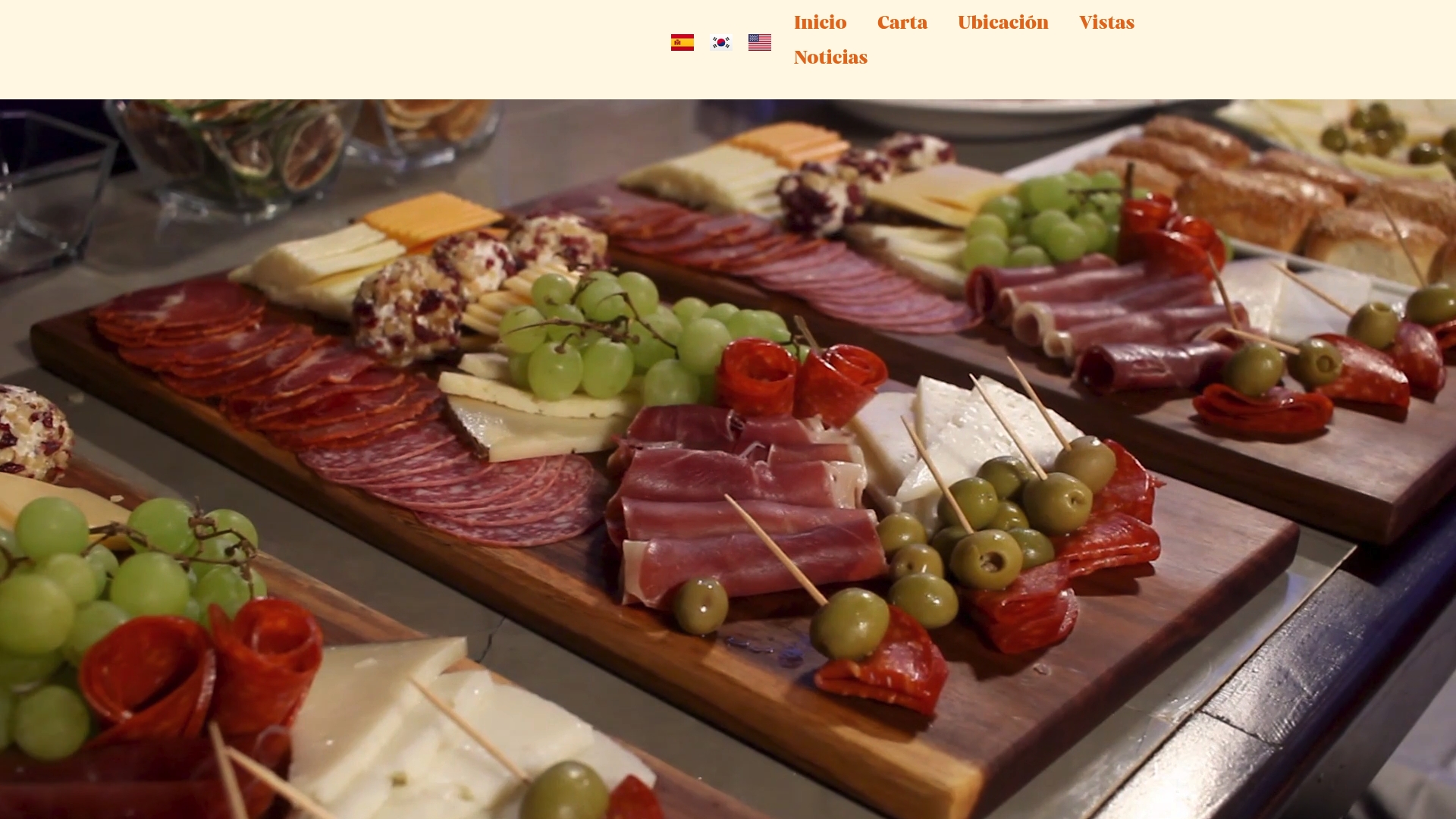
If you are visiting Barcelona and want to understand what classic tapas taste like when they are done with real care and fresh Mediterranean ingredients, Kokcha is worth your time. Located steps from the Sagrada Família, Kokcha serves a menu built around authentic Spanish and Mediterranean flavors, including traditional tapas prepared with the quality of ingredients the tradition demands. The atmosphere is warm, the terrace is ideal for long unhurried meals, and the full menu at Kokcha covers everything from jamón and seafood tapas to paella and Mediterranean sharing plates. Whether you are a first-time visitor to Barcelona or a regular, Kokcha offers the kind of table where tapas make complete sense. Check out the Mediterranean dining experience available at Kokcha and reserve your spot before you arrive.
FAQ
What does “classic tapas” actually mean?
Classic tapas are small portions of food served alongside drinks in Spanish bar culture, defined formally by the Real Academia Española in 1939. They are not appetizers but a complete social dining tradition rooted in Spanish hospitality.
What are the most famous classic tapas dishes?
The most recognized traditional tapas include patatas bravas, tortilla española, gambas al ajillo, jamón ibérico, croquetas, and calamares fritos. Regional variations like Basque pintxos add their own distinctive style to the broader category.
Are tapas always free in Spain?
No. In Granada, a free tapa typically accompanies each drink ordered, but in cities like Madrid and Barcelona, tapas are ordered and paid for separately. The custom varies significantly by region.
How many tapas should you order per person?
Most local tapas-goers eat between three and five tapas per bar visit and stop at three to four different bars during an evening out. Ordering two or three dishes per stop and sharing them is the standard approach.
What drinks pair best with tapas?
Dry sherry such as fino or manzanilla is the classic pairing for seafood and cured ham tapas. Cold lager works well with fried dishes, and a young red Rioja complements meat-based selections nicely.