Paella is one of Spain’s most recognized dishes, yet most people outside Valencia have never tasted the real thing. What is paella, exactly? At its core, it’s a rice dish cooked in a wide, shallow pan over direct heat until the rice absorbs every drop of a deeply flavored broth. But that single-sentence answer barely scratches the surface. Paella spans centuries of culinary tradition, three distinct classic versions, and a set of techniques that separate a good pan from an unforgettable one. Whether you’re planning to cook it at home or hunting down the best version in Barcelona, this guide covers everything you need to know.
Table of Contents
- Key takeaways
- What is paella and where did it come from
- The three main types of paella
- The ingredients and techniques that make it authentic
- How to prepare and enjoy paella at home
- My honest take on paella and why it matters
- Experience authentic paella in Barcelona
- FAQ
Key takeaways
| Point | Details |
|---|---|
| Paella is not one dish | Three main traditional types exist: Valenciana (meat), Marisco (seafood), and Mixta (combined). |
| Origins matter | Paella traces back to 18th-century Valencian farming communities, not coastal seafood culture. |
| Rice variety is critical | Short-grain varieties like Bomba and Calasparra absorb flavor without turning mushy. |
| Socarrat defines authenticity | The crispy caramelized rice crust at the pan’s bottom is the benchmark of a well-made paella. |
| Sofrito and stock are the soul | Building flavor through sofrito and quality broth is what separates authentic paella from plain rice. |
What is paella and where did it come from
Paella originated in 18th-century Valencia, born not in grand kitchens but in the rice fields and farmlands surrounding the Albufera lagoon. Laborers cooked it outdoors over open wood fires, using whatever was available: rabbit, chicken, snails, and the green beans and tomatoes growing nearby. It was practical food, built on scarcity and improvisation. What made it remarkable was not the ingredients but the technique.
The word “paella” itself comes from the Old French paelle and the Latin patella, both referring to a pan. So technically, the word names the vessel first and the dish second. That pan, with its wide diameter and shallow depth, is what gives paella its character. The large surface area forces the rice to cook in a thin, even layer, which is how you achieve maximum flavor absorption and the legendary crust known as socarrat.
“Paella is not just a meal. It is a ceremony, a gathering, and a point of pride for every Valencian family.” — traditional culinary saying from the Valencia region.
Over the 19th and 20th centuries, paella spread far beyond Valencia’s borders. It became a symbol of Spanish identity abroad, even as Valencians watched their recipe get modified, simplified, and sometimes barely recognized. Paella is traditionally cooked communally, often over orange tree branches that impart a faint, sweet smoke. Eating directly from the shared pan is still the tradition in many Valencian households, turning every meal into a social event.
The three main types of paella
Most of the confusion around paella comes down to one misunderstanding: people assume it’s a single recipe. It is not. There are three traditional versions, each with its own rules and loyal following.
Paella Valenciana
This is the original. Traditional Paella Valenciana includes rice, olive oil, rabbit, chicken, snails, tomatoes, and beans, specifically flat green beans (bajoqueta) and white beans (garrofó). Saffron gives the rice its golden color. Nothing else. Valencian purists are famously strict about this list, and for good reason. The combination creates a specific depth of flavor you won’t replicate with substitutions. No seafood. No chorizo. No peas.
Paella de Marisco
This is what most tourists picture when they think of Spanish paella. The seafood version skips the beans and green vegetables entirely, focusing on shrimp, mussels, clams, squid, and sometimes langoustines. Explaining seafood paella to someone who only knows the Valenciana version is like describing a different dish, because it essentially is one. The broth is built from seafood stock, and the cooking process is slightly faster since shellfish cooks quickly. At Kokcha, the seafood paella is one of the most-ordered dishes, especially by visitors who want a taste of the Mediterranean coast.
Paella Mixta
This is the most common version served outside Spain. It combines meat (usually chicken) with seafood, sometimes adding vegetables and sausage. Purists call it a compromise. Practical cooks call it delicious. It’s the version that spread globally and introduced millions of people to the paella concept, even if it diverges from tradition.
Here’s a quick comparison to keep the three types straight:
| Type | Protein | Vegetables | Stock base |
|---|---|---|---|
| Paella Valenciana | Rabbit, chicken, snails | Green beans, white beans | Chicken/vegetable broth |
| Paella de Marisco | Shrimp, mussels, clams, squid | None | Seafood stock |
| Paella Mixta | Chicken, seafood, sometimes sausage | Mixed vegetables | Mixed or chicken broth |
Beyond these three, regional variations exist across Spain. There is arroz negro, made with squid ink. There is vegetable paella, popular with plant-based diners. And there are dozens of local interpretations that reflect the seasons and the market. The key is understanding that there are three primary types that serve as the foundation for everything else.
The ingredients and techniques that make it authentic
The difference between a passable paella and a genuinely memorable one comes down to a handful of specific choices.
Rice: the non-negotiable
Preferred rice varieties for paella are Bomba, Valencia, and Calasparra, all short-grain types that absorb liquid slowly and hold their structure without turning into mush. Bomba is the gold standard. It absorbs roughly three times its volume in liquid, which means more flavor gets packed into every grain. Long-grain rice like basmati will not work. The texture is wrong, and the cooking behavior is completely different.
Saffron and sofrito
Saffron is the spice that colors the rice gold and contributes a faint, earthy aroma. A small pinch steeped in warm water for ten minutes is enough for a large pan. Turmeric is sometimes used as a color substitute, but the flavor is different and anyone who has eaten real paella will notice.
The sofrito, a slow-cooked paste of tomatoes, garlic, and sometimes onion, is where the dish’s foundation gets built. Building flavor hinges on quality sofrito and flavorful stock. Rushing the sofrito short-circuits the entire recipe. Give it time. Let the tomatoes caramelize and concentrate.
The pan and the socarrat
Any wide, shallow pan works for paella, as long as the surface area is large enough to keep the rice in a thin layer. A 15-inch skillet or a cast iron pan of similar diameter will produce excellent results at home. The traditional carbon steel paella pan is inexpensive and works beautifully once seasoned.
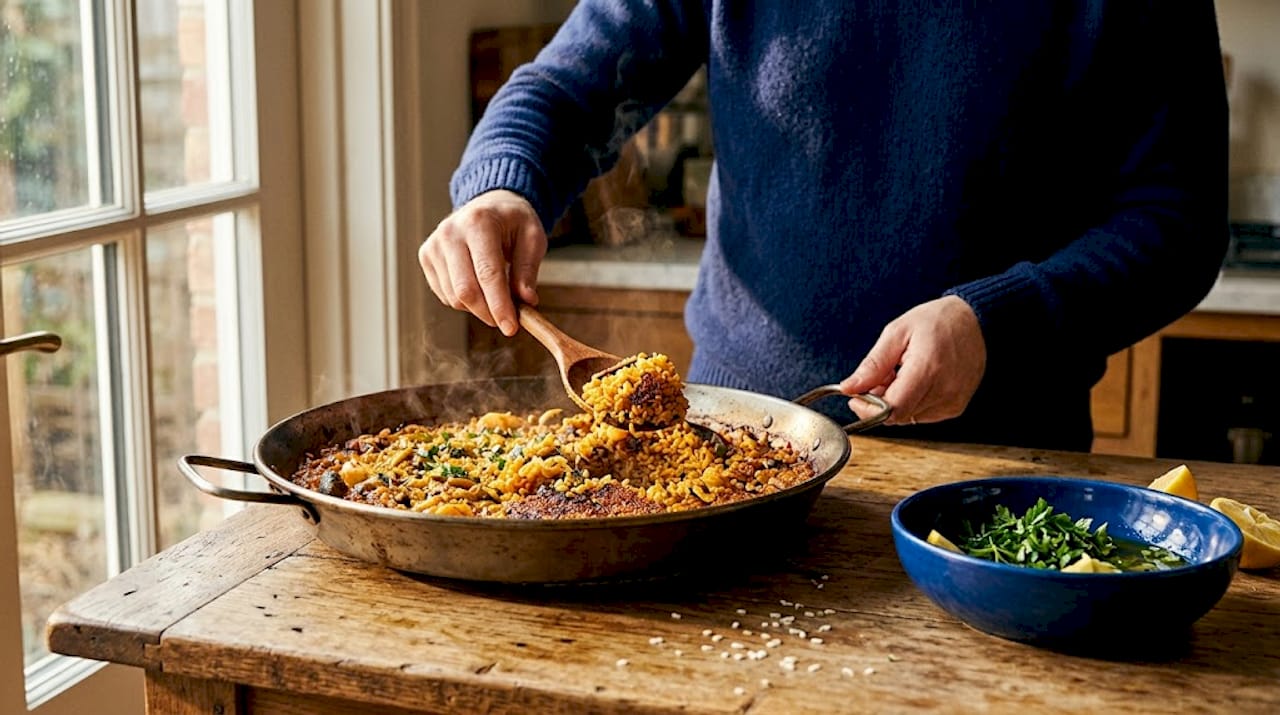
The socarrat is the crispy, caramelized rice crust that forms at the bottom of the pan in the final minutes. Achieving socarrat requires no stirring after adding the broth, followed by a short burst of high heat at the end. You’ll hear a faint crackling sound when it’s forming. That sound means you’re doing it right.
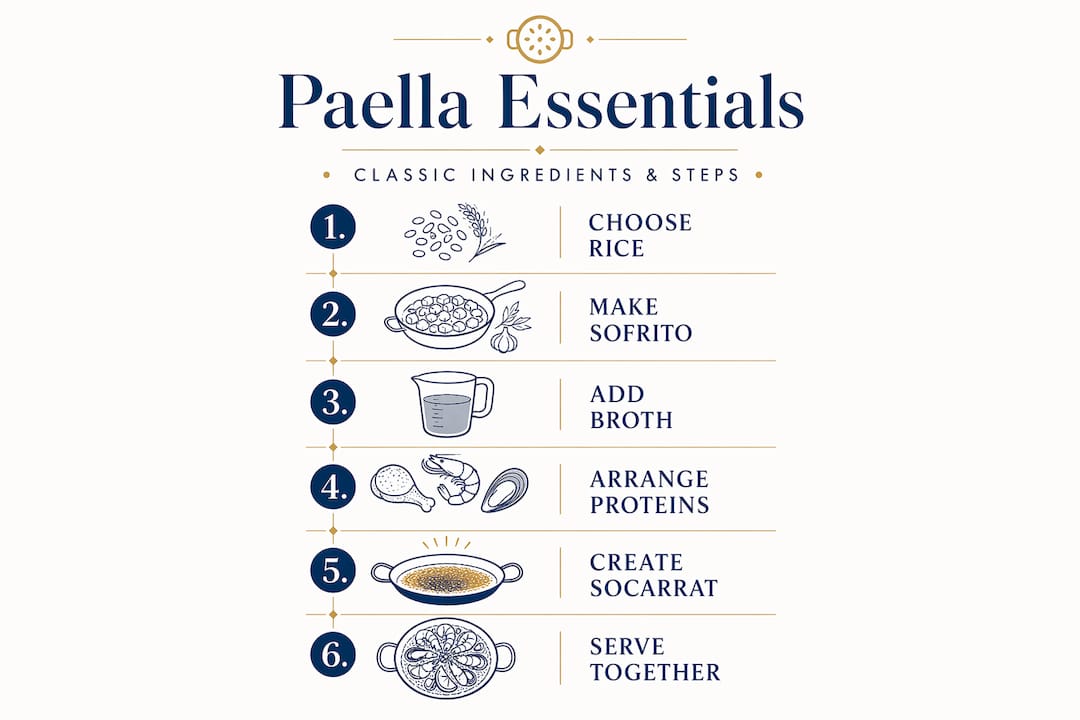
Here is a step-by-step overview of the cooking order:
- Heat olive oil in the pan and brown the meat or protein.
- Build the sofrito with tomatoes and garlic directly in the same pan.
- Add the rice and toast it briefly in the sofrito for one to two minutes.
- Pour in warm, flavorful stock and saffron water. Do not stir after this point.
- Add proteins and vegetables according to their cooking times.
- Cook on medium heat until most of the liquid is absorbed, roughly 18 to 20 minutes.
- Raise the heat for the last two minutes to form the socarrat.
- Rest off the heat for five minutes before serving.
Pro Tip: Toast a pinch of saffron threads in a dry pan for 30 seconds before steeping in warm water. The toasting deepens the aroma and intensifies the golden color in your rice.
How to prepare and enjoy paella at home
Paella has a reputation for being difficult, and that reputation is mostly undeserved. The dish is forgiving when you focus on rice-to-liquid ratios and cooking order. The ratio to remember is roughly 1 cup of Bomba rice to 3 cups of stock. With standard short-grain rice, drop that to a 1:2 ratio.
A few practical points to keep in mind:
- Work in a single layer. If the rice piles up, it steams instead of absorbs.
- Never cover the pan with a lid during the final cooking stage. Traditional paella is cooked uncovered.
- Retailers now offer kits with Bomba rice and saffron that make the ingredient-sourcing step much easier for first-timers.
- Adjust the heat as needed. If the liquid is evaporating too fast, lower the flame. Too slow, and your rice will be waterlogged.
- Let the finished paella rest for at least five minutes. The rice continues to absorb flavor and firms up.
For serving, the Spanish tradition is to place the pan at the center of the table and eat directly from it. This is not just a quirk of custom. It’s how the dish was designed to be experienced. The communal element is part of what makes paella feel significant rather than just satisfying.
Pairing works well with a dry white wine like Albariño or Verdejo for seafood versions. Meat-based Valenciana pairs nicely with a light red from the Monastrell grape. For non-alcoholic options, sparkling water with lemon keeps the palate clean between bites.
Pro Tip: If you are cooking for a crowd and worried about timing, prep your sofrito up to a day ahead and refrigerate it. The flavor actually improves overnight, and it takes the pressure off day-of cooking.
For those interested in exploring beyond the classic trio, vegetable paella has gained serious traction and proves the format works beautifully with artichokes, peppers, and mushrooms.
My honest take on paella and why it matters
I’ve spent years watching paella get misrepresented, both in kitchens and on menus. People add chorizo and call it traditional. They stir the rice like risotto. They cover the pan. And then they wonder why the dish doesn’t taste right.
What I’ve come to believe is that paella is less about following a rigid recipe and more about understanding why each step exists. The wide pan isn’t decorative. The no-stirring rule isn’t arbitrary. The sofrito isn’t optional. Once you understand the logic behind those choices, you stop making substitutions out of convenience and start making deliberate decisions.
In my experience, the home cooks who get the best results are not the ones who follow instructions most precisely. They’re the ones who slow down and pay attention. They taste the sofrito. They listen for the socarrat. They treat the dish as a process, not a checklist.
Paella is also one of those rare dishes that genuinely earns its communal reputation. Something about building it together, or waiting around a pan that smells like saffron and smoke, creates a kind of anticipation that most dinners don’t. That quality isn’t incidental. It’s baked into how the dish was originally made and why it survived centuries of change.
For anyone visiting Spain or curious about what a well-executed paella actually tastes like, I’d strongly encourage starting with a restaurant that takes the dish seriously before attempting to cook it yourself. You need a reference point.
— Kokcha
Experience authentic paella in Barcelona
If reading this has made you hungry, that’s the point. Kokcha, located in Barcelona just steps from the Sagrada Familia, serves paella the way it was meant to be eaten. With multiple traditional and contemporary options on the menu, from a classic chicken paella to a rich meat-based paella, every dish is built on the same principles this article covers: quality rice, proper sofrito, and enough patience to let the socarrat form.
Kokcha’s terrace and indoor dining room create the kind of relaxed Mediterranean setting where paella makes the most sense. Whether you’re a traveler ticking paella off your Barcelona list or a local who wants a version worth returning to, the menu is worth exploring. Reservations are available directly on the website.
FAQ
What is paella made of?
Paella is made with short-grain rice, olive oil, saffron, sofrito, and a protein that varies by type. The traditional Valenciana version uses rabbit, chicken, and beans, while the seafood version uses shrimp, mussels, and clams.
What defines authentic paella?
Authentic paella is defined by its Valencian origins, specific short-grain rice varieties like Bomba, a well-developed sofrito, flavorful stock, and the socarrat, the crispy caramelized crust formed at the bottom of the pan.
How many types of paella are there?
There are three primary types: Paella Valenciana (meat-based), Paella de Marisco (seafood-only), and Paella Mixta (combined meat and seafood). Regional variations and modern versions extend well beyond these three.
Can you make paella without a paella pan?
Yes. Any wide, shallow pan with enough surface area to hold the rice in a thin layer will work. A large skillet or cast iron pan of 14 to 15 inches in diameter produces excellent results for home cooks.
What is the role of paella in Spanish cuisine?
Paella represents far more than a regional dish. It serves as a cultural symbol of communal eating, regional pride, and Spanish gastronomy, and it remains one of the most internationally recognized expressions of Spanish food culture.