Seven names cover almost every steak, chop, or roast you’ll ever cook: blue/extra rare (under 46°C), rare (50 to 55°C), medium rare (55 to 60°C), medium (60 to 63°C), medium well (63 to 68°C), and well done (70°C and above). Those bands apply to whole cuts of beef, pork, and lamb. Ground meat and poultry are the exception: both need to reach a hard minimum internal temperature for safety, not a range you can dial to taste. Pull everything with an instant-read thermometer, not by pressing the meat with a finger, and remember it keeps cooking for a minute or two after it leaves the heat.
- Blue / extra rare: under 46°C, barely warmed
- Rare: 50 to 55°C, red and cool center
- Medium rare: 55 to 60°C, warm red center
- Medium: 60 to 63°C, pink throughout
- Medium well: 63 to 68°C, faint pink
- Well done: 70°C or above, no pink
- Ground meat and poultry: cook to safety minimums, not to taste
Key Takeaways
Meat doneness comes down to three measurable pillars: internal temperature, color, and texture, with ground meat and poultry always requiring higher safety minimums than whole cuts.
| Point | Details |
|---|---|
| Six core puntos | Blue, rare, medium rare, medium, medium well, and well done span under 46°C to 70°C and above. |
| Ground meat and poultry differ | Burgers need 71.1°C and poultry needs 73.9°C, with no rare option available. |
| Carryover adds heat | Pull meat 3 to 5°C below target since it keeps cooking during the rest. |
| Thermometer beats guesswork | Probe the thickest part, away from bone, and take multiple readings on large cuts. |
| Marinades distort visual cues | Acid and sugar can make meat look done before it reaches a safe temperature. |
Table of Contents
- What Are the Different Puntos de la Carne?
- What Internal Temperature Is Safe for Meat?
- How Do You Check Meat Doneness With a Thermometer?
- Grill, Pan, or Oven: Which Technique Hits Your Target?
- Does the Type of Meat Change the Doneness Rules?
- How Does Marinade Change Cooking Time and Doneness?
- What Mistakes Ruin an Otherwise Good Steak?
- Sources
What Are the Different Puntos de la Carne?
The Spanish term punto de la carne refers to the doneness level of a cut, judged by three things at once: internal temperature, color, and texture. Culinary references agree on this three-pillar definition, and treating doneness as something you measure rather than guess is what separates a consistent kitchen from a lucky one.
Here’s where naming gets confusing. Some guides use a five-point scale (rare, medium rare, medium, medium well, well done), while others use seven, adding azul (blue, barely seared) at the bottom and sometimes splitting well done into two tiers. They’re not contradicting each other. The seven-point version just zooms in on the extremes that most home cooks skip past anyway.
- Azul / blue: Seared only on the outside, cool and raw inside, under 46°C. Very soft, almost raw texture. Rare in home kitchens but common in Argentine and French steakhouse culture.
- Rare / poco hecho: 50 to 55°C. Deep red center, seared crust, springy but yielding texture. Juices run bright red when cut.
- Medium rare / vuelta y vuelta or al punto: 55 to 60°C. Warm red center fading to pink at the edges. This is the band most steak recipes and Spanish menus mean when they say “al punto.”
- Medium / medio: 60 to 63°C. Pink center, firmer bite, juices turn pinkish gray. The most common request for pork chops and lamb.
- Medium well / tres cuartos: 63 to 68°C. Just a blush of pink at the very center. Noticeably firmer, less juice pooling on the plate.
- Well done / muy hecho: 70°C and above. Gray brown throughout, firm to the touch, minimal juice. What most burgers and poultry land on by necessity, not preference.
| Punto | Temperature range | Texture cue |
|---|---|---|
| Azul / blue | Under 46°C | Soft, almost raw |
| Rare | 50 to 55°C | Springy, red juices |
| Medium rare | 55 to 60°C | Warm, gives slightly |
| Medium | 60 to 63°C | Firm, pink center |
| Medium well | 63 to 68°C | Firm, faint pink |
| Well done | 70°C+ | Dense, dry to the bite |
What Internal Temperature Is Safe for Meat?
Food safety agencies don’t leave whole-muscle cuts and ground meat on the same rulebook, because the risk isn’t identical. Spain’s food safety agency, AESAN, allows 63°C with a 3-minute rest for beef and pork cuts as a safe combination, and also recognizes shorter exposure at higher heat, around 70°C for one second, as an equivalent treatment. The USDA’s FSIS table lands on nearly the same numbers for whole muscle: 63°C (145°F) with a 3-minute rest for beef, veal, and lamb.
Ground meat and poultry don’t get that same flexibility.
- Whole-muscle beef, veal, lamb: 63°C internal, plus a 3-minute rest
- Ground meats (burgers, meatballs): 71.1°C (160°F), no rest exception
- Poultry, whole or ground: 73.9°C (165°F)
The gap exists because grinding meat breaks up muscle fibers and mixes surface bacteria through the entire mass. A whole steak might carry contamination only on its exterior, which searing handles. A burger patty can carry it all the way through.
Time and temperature work together, not temperature alone. AESAN’s own guidance treats a brief blast at higher heat as equivalent to a longer hold at a lower one, which is why industrial cooking lines can use flash treatments that a home stovetop can’t easily replicate.
That nuance matters most for large roasts, where the center takes far longer to reach target heat than a thin steak ever will.
How Do You Check Meat Doneness With a Thermometer?
Push the probe into the thickest part of the cut, angled in from the side so the tip sits at the center, and keep it clear of bone or fat pockets since both throw off the reading. Take two or three readings in different spots on anything larger than a steak. A roast that reads 63°C near the surface can still be 15 degrees cooler at its core.
- Insert horizontally into the thickest section, away from bone
- Check multiple spots on roasts and thick cuts
- Pull the meat 3 to 5°C below your final target
- Rest before slicing to let carryover finish the job
- Calibrate your thermometer in ice water (should read 0°C) and boiling water (100°C at sea level)
Carryover cooking is the part most home cooks skip. Meat pulled off the heat keeps climbing another 3 to 5°C while it rests, so a steak pulled at 55°C often settles around 58 to 60°C, medium rare instead of rare. This one habit fixes more overcooked dinners than any other single change.
Pro Tip: Buy an instant-read digital thermometer over a dial model. Digital versions read in seconds, and that speed matters when you’re checking a steak every 30 seconds near the finish line.
Grill, Pan, or Oven: Which Technique Hits Your Target?
Thin cuts under 2cm want high, fast heat: a hard sear on both sides, then straight to the plate with a short rest. Thick steaks behave differently, and treating a 5cm cut like a thin one is the fastest way to end up gray at the edges and cold in the middle.
- Thin steaks and chops: Sear 2 to 3 minutes per side over high heat, rest 3 minutes.
- Thick steaks (over 4cm): Reverse sear. Low oven around 100 to 120°C until the center sits a few degrees under target, then a hot 60 to 90 second sear per side for crust. This method produces a far more even gradient from edge to center than sear-first cooking on a thick cut.
- Roasts: Oven at 160 to 180°C, roughly 20 minutes per 500g, checked by thermometer rather than clock.
- Multiple pieces at once: Stagger them on the grill or in the pan since thickness variation means different finish times, and pull each one individually rather than as a batch.
Pro Tip: If you’re cooking a mixed platter, like a chargrilled picanha alongside a mixed grill selection, cook the thickest cuts first so everything reaches the table warm and rested at the same time.
Does the Type of Meat Change the Doneness Rules?
Not every meat gets to play by the same rulebook, and that’s not a matter of taste. It’s structure and risk.
- Beef and lamb: Whole cuts can safely go from blue to well done, since intact muscle fiber limits contamination to the surface.
- Pork: Modern farming has made trichinosis nearly nonexistent in commercial pork, so a pink, medium pork chop at 60 to 63°C is considered safe practice, not a gamble.
- Poultry: Always cooked through to 73.9°C, whole or ground, with no rare option. The tissue structure and higher contamination risk rule it out entirely.
- Ground meat and burgers: Always to 71.1°C, regardless of what meat it’s made from, since the grinding process is what raises the risk, not the animal.
- Tough cuts with heavy connective tissue (brisket, shank, oxtail): These need low and slow cooking for hours, breaking down collagen into gelatin, and a doneness scale built for steak doesn’t apply here at all.
A beef burger and a chargrilled chicken breast get treated the same way on temperature, even though one comes from cattle and the other from poultry. Structure decides the rule, not species.
Chef-level practice from Kokcha: how this restaurant measures and serves meat
Every ticket that hits our kitchen carries a punto target, and thermometers confirm it before the plate leaves the line. A cut ordered “al punto” gets checked, rested per its cut profile, and verified again if it’s a higher-risk order. That’s not extra caution for show. It’s how you serve the same steak the same way, every single night.
How Does Marinade Change Cooking Time and Doneness?
Marinades change more than flavor. Acidic ones, built on citrus, vinegar, or wine, start breaking down surface proteins on contact, which softens texture but also means the meat can look “cooked” (pale, opaque) at the edges before it’s actually hot enough inside. That’s a common trap: a ceviche-style acid marinade turns fish or thin beef visually opaque well before it reaches a safe internal temperature, so color alone stops being a reliable cue once acid has been at work.
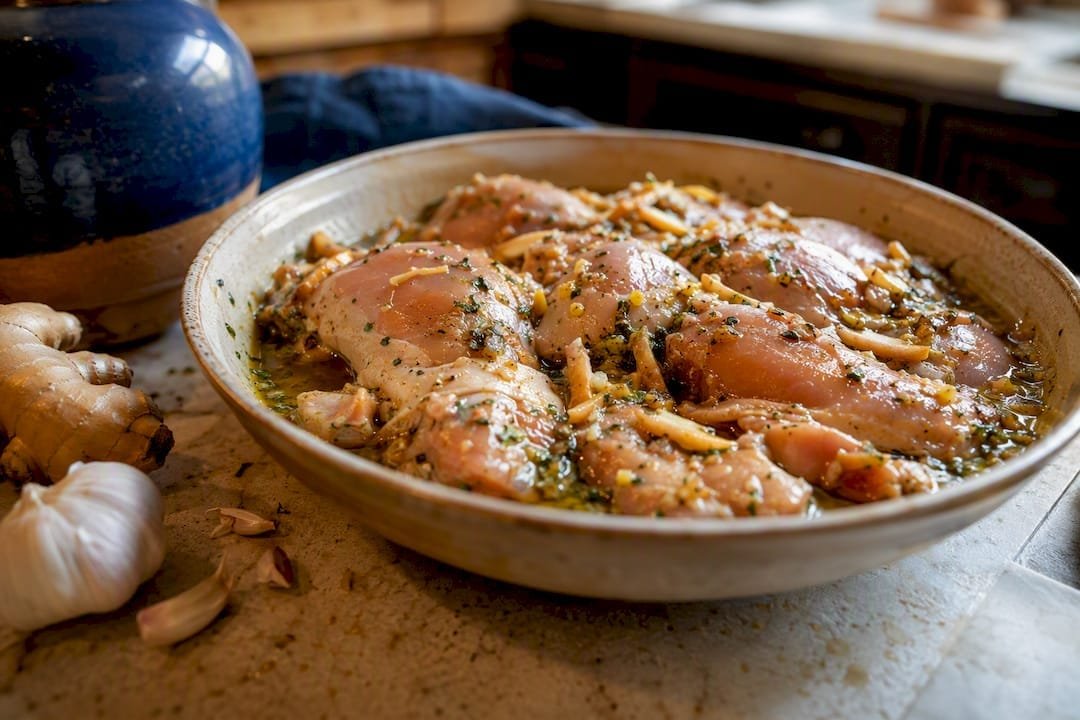
Salt matters just as much as acid, and it works on a different timeline. A dry brine or salted rest of 30 minutes to overnight draws out moisture, then reabsorbs it, seasoning the meat deeper and helping it hold onto juice through cooking. Salted meat browns faster too, since surface moisture evaporates sooner, which means you need to watch color more closely to avoid mistaking a fast, dark crust for a doneness level you haven’t actually reached.
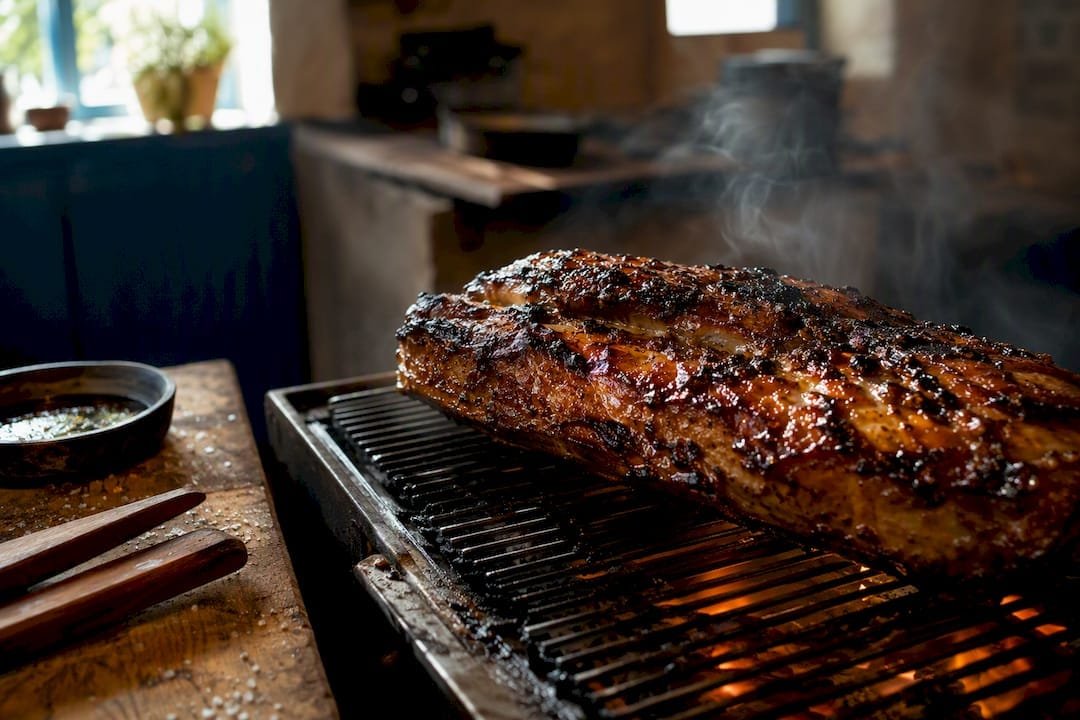
Sugar-heavy marinades, common in Asian-style glazes, caramelize and char quickly. That drops your margin for error on the grill since the outside can burn before the inside catches up, especially on thicker cuts. The fix is the same one professional kitchens use: cook marinated meat over slightly lower, more controlled heat than you would an unseasoned cut, and lean on your thermometer rather than the crust color, since marinades are actively lying to your eyes about what’s happening underneath.
What Mistakes Ruin an Otherwise Good Steak?
The most common one is cutting into the meat to check color. Every slice before resting lets juice escape, and it still doesn’t tell you the actual internal temperature; it tells you the temperature at that one cut surface, which cools faster than the core. Use a thermometer, not a knife.
The second mistake is judging doneness by total cooking time instead of temperature. A steak’s finish time depends on starting temperature, thickness, pan heat, and even how much fat it’s carrying, so “6 minutes per side” from a recipe card is a rough guide at best, never a guarantee.
Third: skipping the rest. Cutting straight off the heat means juices haven’t redistributed and carryover cooking hasn’t finished, so the piece you serve isn’t actually the doneness you thought you achieved.
Fourth: measuring near the surface or against bone. A thermometer tip resting against a bone reads the bone’s temperature, not the meat’s, and readings taken too close to the crust run several degrees hotter than the true center. Push deeper, toward the thickest part, and take more than one reading on anything bigger than a chop.
Fifth: trusting color alone, especially with marinated or seasoned meat. As covered above, acid and sugar both distort visual cues. Temperature is the only measurement that doesn’t lie.
A note on taste, technique, and safety
Everyone has a favorite punto, and that’s exactly how it should be. What we care about at Kokcha is that your steak arrives exactly as ordered, every time. Come taste the difference technique makes.
— YellowRock
Ready to taste the difference between guessing and measuring? Kokcha’s kitchen near the Sagrada Familia checks every order against these same temperature standards, whether it’s a chargrilled cut from the grill or a plate meant to share. If seafood is more your mood that night, the seafood paella gets the same precision treatment on timing and heat. Book a table and let the thermometer do the guessing for you.
Sources
- USDA/FSIS — Internal temperature table
- My Minerva — Punto de la carne guide
- CalcoI — meat cooking time calculator and reference