No, paella isn’t only seafood, and no, chorizo doesn’t belong in it. Yellow paella doesn’t need food dye, and stirring while it cooks ruins it, not improves it. What actually defines paella is technical, not decorative: rice cooked in a single layer in a wide, shallow pan, absorbing broth in one stage, finished with a crisped bottom layer called socarrat. Everything else, from ingredients to garnish, is regional variation or outright invention.
- Myth: Paella is seafood only. Truth: the original Paella Valenciana uses chicken, rabbit, and beans. Seafood paella is a coastal adaptation.
- Myth: Paella is Spain’s official national dish. Truth: it’s Valencia’s regional dish that became internationally famous through tourism.
- Myth: Chorizo belongs in paella. Truth: purists reject it; smoked paprika from chorizo overwhelms the saffron.
- Myth: The yellow color comes from food coloring. Truth: it’s saffron, or sometimes a cheaper substitute mimicking it.
- Myth: You should stir paella while it cooks. Truth: stirring releases starch and prevents socarrat from forming.
Spain’s own cultural heritage registry and outlets like Directo al Paladar back these corrections with documented technique and regional history, not opinion.
Key Takeaways
Paella is defined by pan shape, single-stage rice absorption, and deliberate socarrat, not by seafood, chorizo, or food coloring.
| Point | Details |
|---|---|
| Paella is not seafood-only | The original Valencian recipe uses chicken, rabbit, and beans; seafood is a coastal adaptation. |
| Chorizo is a modern add-in | Purists reject it because smoked paprika overwhelms saffron’s flavor. |
| Yellow color comes from saffron | Traditional paella uses saffron, not food coloring, for its golden hue. |
| Never stir after adding rice | Stirring releases starch and prevents the socarrat from forming properly. |
| The pan and technique define paella | A wide, shallow pan and single-layer rice cooking matter more than any ingredient list. |
| Kokcha serves multiple authentic styles | Kokcha offers seafood, chicken, and vegetable paellas near the Sagrada Familia, cooked with Bomba rice and proper socarrat technique. |
Table of Contents
- Where Did Paella Really Come From?
- Myth by Myth: What’s Actually True
- The Technical Truths: Pan, Rice, and Socarrat
- Why Paella Is More Than Just Dinner in Valencia
- How to Spot a Bad Paella (and Fix Your Own)
- What We See on the Line at Kokcha
- Myth-Busting That Actually Holds Up
- Taste the Difference for Yourself
- Sources
Where Did Paella Really Come From?
Paella started as farmworkers’ food, not restaurant fare. In the marshy rice fields around the Albufera lagoon near Valencia, laborers cooked lunch over open fires using whatever was on hand: rice from the paddies, snails, beans, and rabbit or chicken from the land. Seafood didn’t factor in because the Albufera is a freshwater lagoon, not a fishing ground.
The name itself tells the origin story. “Paella” comes from the Valencian word for the pan, which traces back to the Latin patella, meaning a shallow dish or plate. The dish borrowed its name from its cookware, a naming pattern common in Spanish cuisine, and that pan shape (wide, flat, with handles on both sides) is still the single clearest technical marker separating true paella from any other rice dish, according to Directo al Paladar’s breakdown of the myth. The pan maximizes surface area, which lets the rice cook in a thin, even layer rather than a deep pile, and that’s what makes single-stage broth absorption possible.
For centuries, this stayed a home and field dish with no fixed recipe, closer to a technique than a formula. That changed in the 20th century. As paella moved from farm kitchens into restaurants and eventually onto the world stage, cooking contests and culinary associations in the Valencia region began codifying what counted as “authentic” Paella Valenciana. Competitions set expectations around ingredient lists (chicken, rabbit, garrofón beans, green beans, tomato, saffron, olive oil, and short-grain rice), which is where today’s “canonical” recipe really comes from. It’s a modern standardization layered on top of a much older, looser tradition.
A few things worth knowing about that timeline:
- Rice cultivation in the region dates back centuries, tied to the wetlands around Valencia and the Albufera.
- The dish’s name shift from “the pan” to “the food in the pan” likely happened gradually, not at a fixed date.
- Formal recipe standardization is a relatively recent development compared to the dish’s rural roots, which explains why regional variants still coexist with the “official” version.
Understanding this history matters because most modern arguments about what “counts” as paella are really arguments between the farmhouse tradition and the codified contest version, both of which are legitimately Valencian.
Myth by Myth: What’s Actually True
1. The seafood-only myth
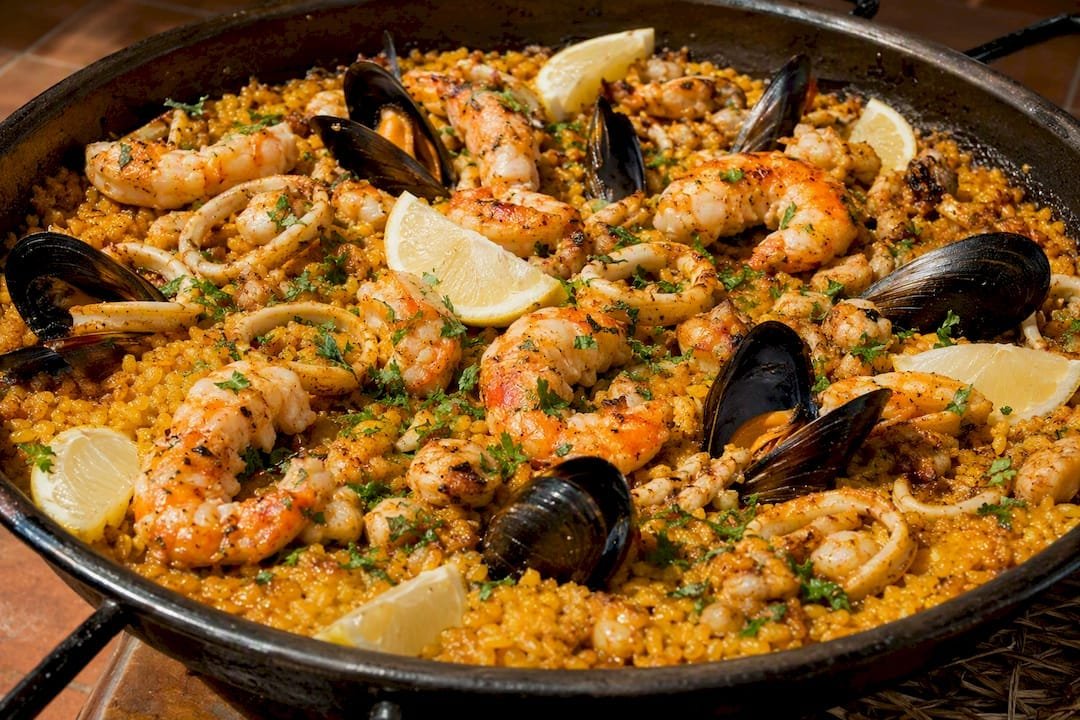
Walk into most paella restaurants outside Spain and you’ll find shrimp, mussels, and squid piled on top of yellow rice. That’s not wrong, exactly. It’s just not the original. Coastal towns near Valencia developed their own seafood versions generations ago, and international tourism accelerated that image worldwide. As El País documents, modern tourism and international restaurant menus popularized seafood and mixed paellas far beyond Valencia, which is a major reason so many people assume seafood is mandatory. It’s an adaptation, not the source.
2. The national dish myth
Paella gets called “Spain’s national dish” constantly, largely because it’s the Spanish food most non-Spaniards can name. But it’s a Valencian regional specialty first. Other regions of Spain have their own signature rice and stew dishes that get zero international recognition. The “national dish” label is a marketing shorthand, not a culinary fact.
3. The chorizo myth
Chorizo shows up in a lot of paella recipes published outside Spain, and Valencian cooks generally find this baffling. Smoked paprika, the dominant flavor in chorizo, clashes with saffron’s more delicate, earthy sweetness. It’s a modern, tourist-driven substitution, likely born from chorizo’s easy availability compared to rabbit or garrofón beans in non-Spanish grocery stores.
4. The yellow-dye myth
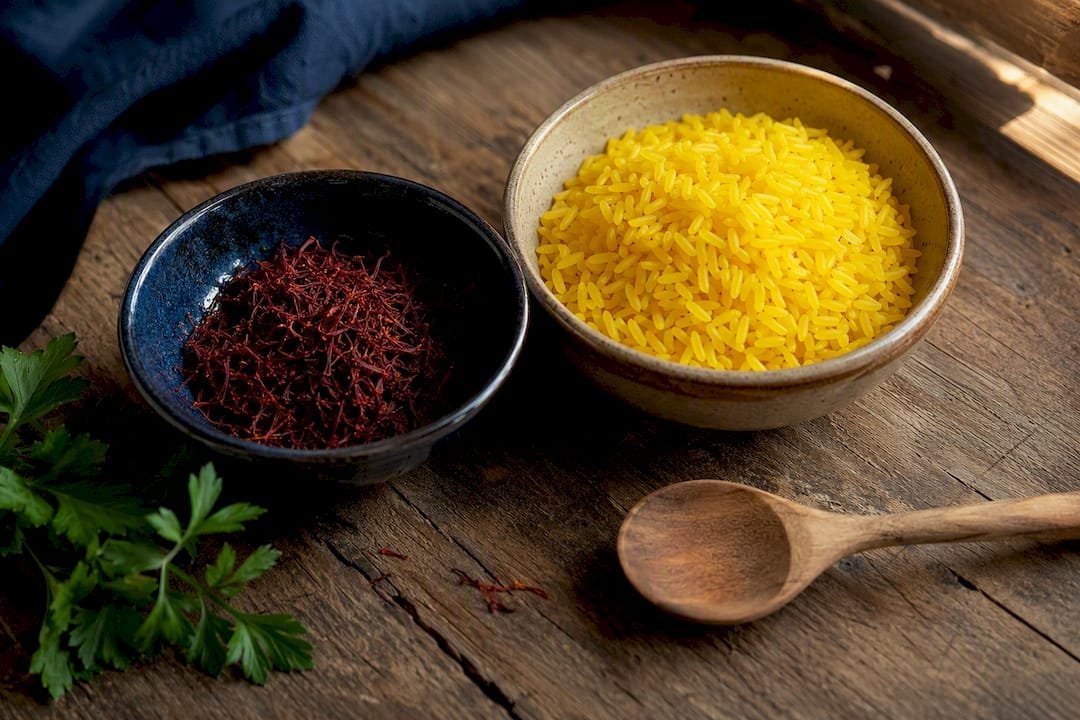
Saffron threads, not artificial coloring, give traditional paella its golden hue, along with a distinctive flavor that food coloring can’t replicate. Cheaper commercial paella recipes sometimes substitute turmeric or synthetic coloring to fake the look without the cost. You can usually tell the difference: real saffron produces a more muted amber than the almost fluorescent yellow of dyed rice.
5. The stirring myth
This one trips up a lot of home cooks who assume rice needs constant attention, the way you’d treat risotto. Traditional technique says the opposite: once the rice goes into the pan, you leave it alone. Stirring releases starch and risks turning the dish into an empastado, a gluey, risotto-like texture that Valencian cooks consider a failure, not a stylistic choice, based on documented technique from Directo al Paladar. The rice needs to sit in an even, undisturbed layer for the broth to absorb properly and for socarrat to form underneath.
6. The one-true-recipe myth
Plenty of dishes labeled “paella” outside Valencia are more accurately what Spaniards call arroz con cosas, rice with things, a broader category that doesn’t follow paella’s specific technique or ingredient logic, per Cantábrico’s explainer on paella’s definition. Regional variants exist even within Spain (mountain versions with rabbit and snails, coastal versions with seafood), but calling any rice dish cooked in a skillet “paella” stretches the term past what it technically means.
Pro Tip: If a paella recipe calls for constant stirring or a deep pot instead of a wide, shallow pan, it’s not really paella, no matter what the ingredient list says.
The Technical Truths: Pan, Rice, and Socarrat
The pan isn’t a stylistic choice. Its width and shallow depth let liquid evaporate quickly and rice cook in a thin, even layer rather than steaming in a deep pile. That single-layer cooking is what makes the socarrat, paella’s signature crisped bottom layer, possible in the first place.
Rice variety matters more than most home cooks realize. Bomba and Calasparra rice are the standard choices because they absorb roughly three times their volume in liquid without turning mushy, giving cooks more room for error on timing and liquid ratio than generic short-grain rice allows.
Socarrat itself is often misunderstood. It’s the thin, toasted layer of rice that forms against the hot pan bottom after the liquid has fully absorbed, and it’s intentional, not a mistake. Achieving it requires a deliberate finishing step: once the broth is gone, the pan gets a few extra minutes over low, even heat to toast that bottom layer without burning it, a technique documented in detail by Directo al Paladar. Beginners frequently smell that toasting and panic, assuming they’ve burned the dish, then stir it or pull it too early. That’s the single most common technical mistake in home paella.
A few other practical notes:
- Wood fire imparts a smokier flavor than gas, but gas gives far more consistent, controllable heat, which matters more for beginners.
- Broth quality matters as much as rice quality. A weak or bland broth can’t be fixed later.
- Ingredients get added in a specific sequence, meats first, then vegetables, then rice and broth, because each stage builds flavor into the base.
- Restaurants sometimes overcrowd the pan with too much rice for its surface area, which prevents even absorption and kills any chance of socarrat.
The Cantábrico guide notes that these technical details, not the ingredient list, are what separate genuine paella from any other rice dish dressed up with the same name.
Why Paella Is More Than Just Dinner in Valencia
Paella functions as a communal ritual in Valencia, not just a meal. It’s traditionally cooked outdoors over wood fire, often by men in family gatherings, and shared directly from the pan rather than plated individually. That’s part of why Spain’s own cultural heritage authority formally recognizes it as an element of regional cultural heritage.
- Paella takes center stage at Valencian festivals like Las Fallas, where community paella contests are a major draw.
- Cooking it together, rather than for one person, is part of its social function.
- Regional pride explains why Valencian traditionalists push back hard against ingredient changes.
That pushback isn’t just culinary stubbornness. According to El País’s reporting on paella’s rise to fame, the strict ingredient debates function as a defense of regional identity as much as a culinary argument. When someone insists chorizo has no place in paella, they’re often defending something closer to heritage than flavor preference.
How to Spot a Bad Paella (and Fix Your Own)
- Watch for ingredient overload. A paella loaded with a dozen mismatched proteins and vegetables is usually compensating for weak rice, not celebrating abundance.
- Be suspicious of heavy smoked paprika or chorizo grease. That flavor profile usually signals a tourist menu, not a traditional kitchen.
- Check what’s under the garnish. Thick allioli, excessive lemon wedges, or parsley piled high can be a way to mask bland or overcooked rice underneath.
- If you’re cooking at home and the rice turns out too wet, spread it thinner in the pan and finish uncovered over slightly higher heat for a few minutes rather than adding more liquid.
- If the rice is undercooked when the broth runs out, turn off the heat, cover it, and let it rest five to ten minutes off the burner. Residual steam usually finishes the job.
Pro Tip: A squeeze of lemon on the side is traditional and fine. Lemon drowning the entire pan usually means the kitchen is trying to distract you from underseasoned rice.
What We See on the Line at Kokcha
At Kokcha, near the Sagrada Familia, we serve seafood, meat, chicken, and vegetable paellas side by side. Most tourists assume seafood by default and are surprised chicken and rabbit versions are just as traditional, often more so.
Guests routinely ask which paella is “the real one.” The honest answer: several are, just not the one with chorizo.
Myth-Busting That Actually Holds Up
The strongest case against paella misconceptions doesn’t come from internet folklore. It comes from pairing documented Valencian technique with the cultural record, which is exactly what sources like El País and Directo al Paladar provide.
Where conventional advice falls short is in treating “authenticity” as a single fixed recipe. It isn’t. Valencia itself has room for chicken-and-rabbit paella, coastal seafood versions, and modern vegetable adaptations, provided the technique, the pan, the rice, the socarrat, the restraint from stirring, stays intact. That’s the actual boundary, not a checklist of approved proteins.
If you take one thing from all this, prioritize technique over ingredient purity tests. A seafood paella made with Bomba rice, properly rested, finished for socarrat, is more “authentic” in the ways that matter than a chicken-and-rabbit version cooked in a deep pot and stirred like risotto. Judge the pan and the crust before you judge what’s on top of the rice.
— YellowRock
Taste the Difference for Yourself
Reading about socarrat is one thing; watching a server set down a pan with that toasted, slightly crackling bottom layer is another. Kokcha sits minutes from the Sagrada Familia and puts real Valencian technique on the table, not the tourist-menu version with chorizo and food coloring.
Our kitchen prepares seafood paella, chicken paella, and vegetable paella using Bomba rice and the same slow-finish technique that produces genuine socarrat, so you can compare the myths against the real thing on one visit. If you’re planning a trip to Barcelona or already live nearby, book a table and ask your server which pan has the best crust that night. It’s the simplest way to taste the difference between authentic technique and the version built for tourists.
Sources
- La verdadera historia de por qué la paella se ha convertido en el plato más famoso de España — EL PAÍS
- Mitos y leyendas de la paella valenciana — Directo al Paladar
- La paella valenciana, el arte de unir y compartir – PATRIMONIO CULTURAL INMATERIAL DE ESPAÑA
- What Is Paella? A Spanish Definition | Cantábrico