Yes, but you’ll need to know where to look. Most traditional restaurants in Barcelona enforce a two-person minimum for paella, largely for practical kitchen reasons, so solo diners often get turned away or steered toward pre-made rice dishes. Kokcha, near the Sagrada Familia, is one of the few kitchens that cooks single-portion paellitas to order. Expect a wait that reflects cooking paella fresh and a slightly higher per-person price than you’d pay splitting a large pan, but that’s the trade-off for the real thing.
TL;DR:
- Most restaurants enforce a two-person minimum for paella due to technical and economic reasons, making solo diners often unable to order it unless specified as a small portion.
- Restaurants like Kokcha cook single-portion paellas in individual pans, allowing solo diners to enjoy fresh, made-to-order dishes with a wait of about 20 to 30 minutes.
- A limited menu focus on 3-4 paella varieties and clear communication about prep time are signs of quality kitchens capable of preparing single servings properly.
- Booking in advance and specifically requesting a paellita or confirming it is cooked to order significantly increases the chance of getting fresh, single-serving paella.
- Ordering during midday, earlier in lunch, or on Thursdays improves the likelihood of receiving a freshly made paella rather than reheated or pre-made rice.
Table of Contents
- Where to Find Single-Serving Paella in Barcelona
- Why Many Restaurants Require a Minimum of Two for Paella
- How to Tell a Single-Serving Paella Was Cooked to Order
- When to Order Paella for the Best Chance of Getting One
- How to Order or Reserve Paella as a Solo Diner
- Kokcha’s Take on Serving Paella One Plate at a Time
- Book a Single-Serving Paella Near the Sagrada Familia
- Sources
Where to Find Single-Serving Paella in Barcelona
Solo diners in Barcelona have more options than the “minimum two” signs suggest, once you know what to ask for and where to ask. Kokcha built its menu around exactly this gap: three single-portion paella options, cooked in individual paelleras rather than portioned out of one large pan meant for a table.
The vegetable paella works for diners who want the classic saffron rice and socarrat crust without meat or shellfish. The seafood paella leans into prawns, mussels, and monkfish, the version most visitors picture when they think of paella. The seafood ink rice is the boldest of the three, made black with squid ink and carrying a deeper, brinier flavor than the standard yellow rice. Reservations run bilingually in Spanish and English, and the terrace seating gives solo travelers a comfortable spot to eat facing the basilica rather than tucked at a bar counter.
If Kokcha or a similar spot isn’t an option that day, Barcelona has three fallback formats worth knowing:
- Paellita — a genuinely scaled-down version of the full dish, cooked in its own small pan rather than spooned from a communal one.
- Arroz ración — a single serving of rice cooked with saffron and stock, often on menus as a lighter alternative when a full paellera isn’t practical for one diner.
- Menú del día rice dishes — weekday lunch specials that sometimes include a rice course close to paella in style, though rarely with the same crust or presentation.
Coverage of Barcelona kitchens that handle small-format paella well, including Cruix’s Valencian-style approach, points to a common thread: tight menus, careful rice-to-stock ratios, and a willingness to charge a fair premium rather than cut corners on volume.
Before you sit down, run three quick checks. Look at the menu for a stated prep time or indication that the paella is cooked to order. Count how many paella varieties are on offer. A restaurant juggling eight or nine rice dishes is far less likely to be cooking each one fresh than a place offering three. And when in doubt, just ask your server directly whether the paella is made to order.
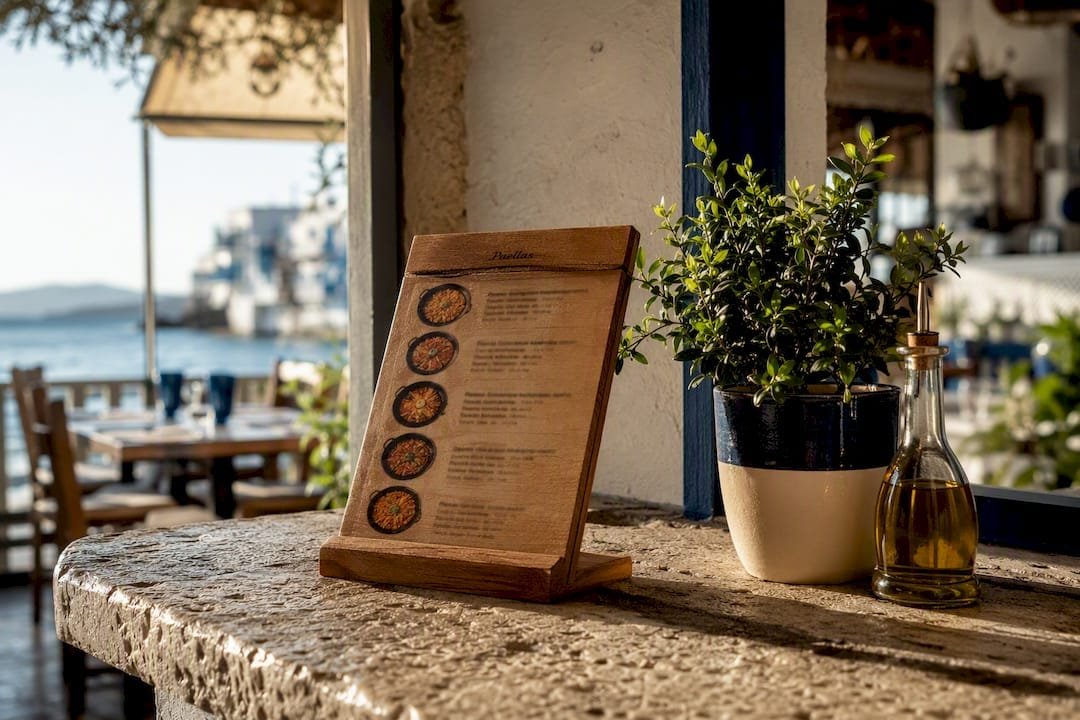
Pro Tip: Call ahead and specifically say “paella para una persona, ¿cuánto tarda?” (paella for one person, how long does it take?). A kitchen that hesitates or quotes an unusually fast time is telling you something about how it’s actually made.
Why Many Restaurants Require a Minimum of Two for Paella
The two-person rule isn’t a snobbish house policy. It’s math. A paellera needs a certain surface area to spread rice thin enough for even heat contact, and shrinking that pan down to a single serving throws off the liquid-to-rice ratio that produces socarrat, the caramelized crust on the bottom that separates real paella from wet rice with saffron in it. Get the ratio wrong at a small scale and the rice either dries out before it cooks through or turns gluey before a crust ever forms.
There’s also a straightforward economic reason. Cooking a paella for one occupies a burner and a cook’s attention for roughly the same stretch of time as cooking one for four, which makes a single portion a poor use of kitchen capacity during a busy lunch service. Multiply that across a dining room on a Saturday afternoon and you can see why so many kitchens simply say no rather than tie up a burner for one plate.
Restaurant reporting on this exact issue frames the minimum-two rule less as a cultural custom than a quality safeguard: offering paella for one is logistically possible, but it tends to degrade the technique that makes paella worth ordering in the first place, and the rule exists to protect that consistency rather than to punish solo diners.
So how do you tell whether a “minimum two” sign is protecting quality or just protecting the bottom line? Watch what the kitchen offers instead. A restaurant that points you toward a paellita or an arroz ración is solving the problem, not dodging it. A restaurant that just shrugs and sends you to the pasta menu is treating the rule as a shortcut, not a standard.
How to Tell a Single-Serving Paella Was Cooked to Order
Spotting the real thing on a plate takes about ten seconds once you know what to look for.
- Check the menu first. A stated wait, usually 20 to 30 minutes, is one of the clearest indicators that your paella is going into a pan after you order it, not coming out of a warming tray. That prep-time notice is a genuine trust signal, because pre-cooked or frozen bases can be plated almost instantly.
- Count the varieties. A menu with three or four paellas, rather than eight, tends to signal a kitchen focusing its resources on doing fewer dishes well, and often means it can extend that same care to a single portion.
- Look at the rice itself. Grains should sit loose and separate, not clumped or glossy with excess liquid. A visible crust along the bottom edge is the socarrat, and its absence on a dish billed as traditional is worth noticing.
- Smell before you taste. Saffron and stock should carry a warm, slightly earthy aroma. A flat or overly fishy smell on a seafood version often points to reheating rather than fresh cooking.
- Check the color. Natural saffron gives rice a warm gold, not a uniform, artificial-looking bright yellow, which is sometimes a sign of coloring rather than the real spice.
Speed and price are the two biggest red flags to watch. Paella arriving in just a few minutes, or priced noticeably below what a fresh single portion should cost, is a common signal of reheated or pre-made rice being sold under the paella name. In Barcelona, a properly cooked single-serving paella at a sit-down restaurant typically costs a fair price reflecting fresh preparation; anything dramatically cheaper deserves a second look at what’s actually in the pan.
When to Order Paella for the Best Chance of Getting One
Timing matters more than most visitors realize. Paella is traditionally a lunchtime dish in Spain, rarely served for dinner, and in some bars it carries an informal Thursday custom tied to old market and household routines. That pattern shapes when kitchens are actually staffed and stocked to cook paella fresh, rather than just reheating what’s left from the day before.
For solo diners, that translates into a few practical windows:
- Midday, roughly 1:00 to 3:00 PM, when kitchens are running full lunch service and paella is already on the burner rotation.
- Earlier in the lunch service rather than the tail end, when cooks have more flexibility to start a fresh pan for one person.
- Thursdays, where the local custom means some kitchens plan their paella prep around that day specifically.
Dinner service is the riskiest time to ask for a single portion. Many kitchens either don’t offer paella at night at all or are working from a pan started hours earlier, which undercuts the whole point of ordering it fresh.
How to Order or Reserve Paella as a Solo Diner
Getting a single, freshly made paella usually comes down to how you ask, not just where you go.
- Book ahead when possible. Call or use an online form and say clearly that you’re a party of one looking for paella, then ask directly how long it takes to prepare. This gives the kitchen a chance to plan a burner for you instead of scrambling when you arrive.
- Ask specifically for a paellita. Using that word signals you know it’s a smaller, individually cooked pan rather than a scaled-down scoop from a large one meant for a table.
- Confirm it’s cooked to order. A simple “¿se cocina al momento?” (is it cooked fresh right now?) gets you a direct answer, and hesitation from staff tells you something on its own.
- Have a fallback ready. If the kitchen can’t manage a full paella for one, ask about the arroz del día or an arroz ración instead. Both give you saffron rice cooked properly without demanding the full paellera setup.
- Accept the wait. Twenty to thirty minutes is normal for a fresh single portion, and rushing the kitchen usually gets you a worse plate, not a faster good one.
For a broader rundown of Barcelona booking etiquette beyond paella specifically, this guide on reserving restaurants in Barcelona covers timing, deposits, and how far ahead you typically need to book during peak tourist season.
Pro Tip: If a restaurant tells you paella for one simply isn’t possible, ask if they’d cook a paellita as a special request rather than walking away. Some kitchens will accommodate it even when it’s not printed on the menu, especially outside peak service hours.
Kokcha’s Take on Serving Paella One Plate at a Time
Most restaurants treat the single-diner paella problem as an inconvenience to manage around. Kokcha treats it as a menu decision. Building three distinct paellas, vegetable, seafood, and seafood ink rice, into individually sized portions means the kitchen isn’t retrofitting a family recipe down to one plate on the fly. It’s cooking that plate as its own dish from the start.
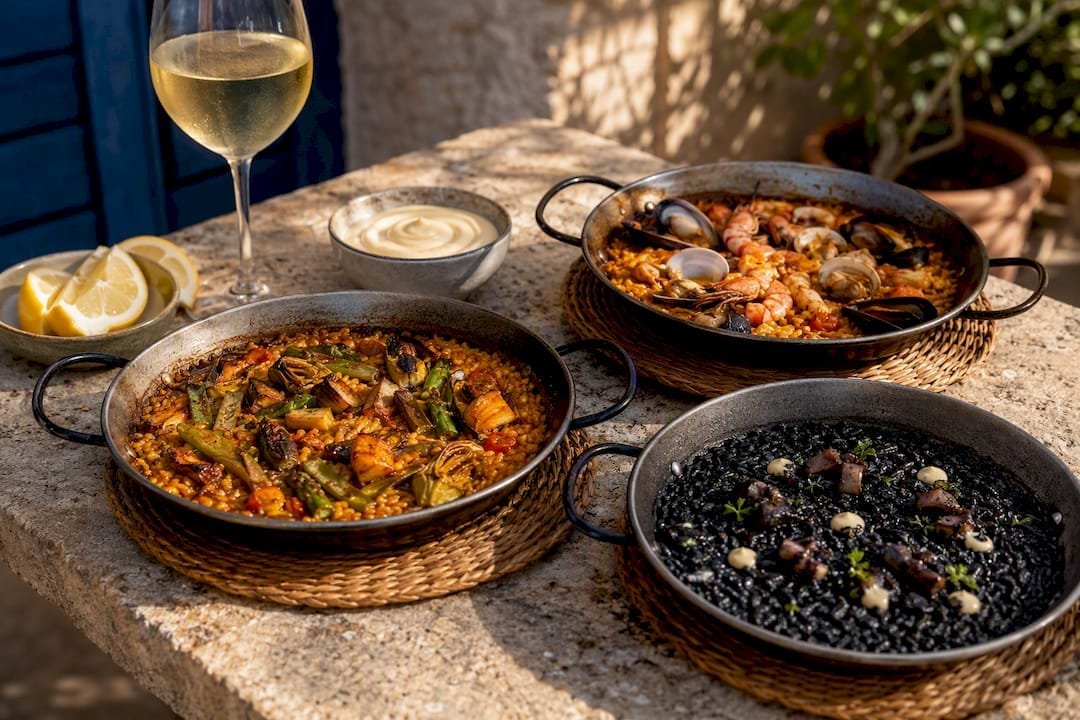
That distinction shows up in small, practical ways: menu descriptions that name the portion clearly, bilingual reservation handling for the many solo travelers passing through en route to the Sagrada Familia a few blocks away, and terrace seating that doesn’t make a party of one feel like an afterthought at a table built for four. Kokcha’s own guide to paella varieties in Barcelona goes further into the differences between styles, which is worth a read before you decide which of the three to order.
None of this erases the wait. A single paellita still needs its 20 to 30 minutes on the burner, the same physics that makes the two-person minimum a real constraint everywhere else. The difference is that Kokcha built its kitchen flow around that wait instead of around avoiding it.
— YellowRock
Book a Single-Serving Paella Near the Sagrada Familia
Kokcha is a straightforward alternative to hunting across Barcelona for a kitchen willing to cook paella for one. Instead of calling around and hoping a restaurant will bend its two-person rule, you book a table and order exactly what’s already on the menu for solo diners.
The vegetable paella is the lightest of the three and a solid starting point if you haven’t tried Kokcha before. The seafood paella suits diners chasing the classic prawn-and-mussel version, while the seafood ink rice is the pick for anyone who wants something less common than standard yellow rice. All three come cooked to order in individual paelleras, so plan for the same 20 to 30 minute wait you’d expect anywhere serious about the dish, and expect terrace seating with a view toward the basilica while you wait.
Reservations run in both Spanish and English through Kokcha’s booking page, where you can check available times and request a table for one directly.
Sources
- The ‘minimum of two’ paella rule: why restaurants make it only for pairs and what that means
- Si un restaurante ofrece paella para una sola persona, hay quien se lo piensa dos veces antes de pedirla
- Paella para uno en el restaurante: el derecho que no existe
- Why paella is eaten for lunch and not dinner in Spain (and mainly on Thursdays)