The chef is the architect of a guest’s meal, designing the menu, pacing the flavors, coordinating presentation and service, and shaping the emotional arc of the whole evening. The role of chef in culinary experience goes far past the stove.
- Menu narrative and pacing: courses are sequenced like chapters, not just plated food.
- Sensory presentation and theater: plating, motion, and open-kitchen cues signal intent.
- Sourcing and coordination: seasonal ingredients and timed service tie the story together.
2026 industry insights describe this shift as the chef moving from cook to experience architect, a claim backed by a 216-participant study on nonverbal cues. Kokcha, a Mediterranean restaurant in Barcelona, builds its whole service around this idea.
Key Takeaways
The chef’s influence on a meal comes from designing menu narrative, sequencing flavors, coordinating presentation, and aligning kitchen timing with front-of-house service.
| Point | Details |
|---|---|
| Menu as script | Chefs sequence courses by flavor intensity and theme, not by convenience or habit. |
| Humanic clues dominate | Staff behavior affects guest satisfaction more than décor or lighting alone. |
| Plating signals intent | Height, color, and consistency across tables reveal a chef’s deliberate standards. |
| Ask before booking | Confirm tasting menu pacing and share dietary needs early for the best result. |
| Kokcha applies this locally | Kokcha’s Barcelona menu pairs seasonal Mediterranean sourcing with terrace views and bilingual service to tell one coherent story. |
Table of Contents
- What Is the Role of Chef in Culinary Experience?
- How Do Chefs Turn a Menu Into a Story?
- Why Does Flavor Sequencing Matter Across a Meal?
- How Does Plating Reflect the Chef’s Intent?
- How Do Ingredient Sourcing and Seasonality Shape the Menu?
- How Do Kitchen, Service, and Room Design Work Together?
- What Should Diners Look For at the Table?
- What Research Says About the Chef’s Impact on Perception
- How Kokcha Brings This to Life
- Where Does a Chef’s Menu Idea Actually Come From?
- How Do Chefs Protect Food Safety and Quality?
- How Does a Chef Lead a Kitchen Brigade?
- How Do Chefs Shape Ambiance and Storytelling?
- How Does Chef-Diner Interaction Affect Satisfaction?
- Why the Chef’s Fingerprint Is Worth Noticing
- Experience Chef-Led Dining at Kokcha
- Frequently Asked Questions
- Sources
What Is the Role of Chef in Culinary Experience?
A chef’s job during service is to control four things at once: the story the menu tells, the order flavors arrive in, what the plate signals visually, and how the kitchen’s timing lines up with the dining room. None of these functions in isolation. A tasting menu with brilliant individual dishes still falls flat if the pacing between courses drags, or if the server can’t explain the reasoning behind the progression of flavors.
Executive chefs increasingly describe this as designing a “multisensory journey” matched to the guest’s actual purpose, whether that’s a first date, a business dinner, or a family celebration, according to research from What Is a Culinary Experience? A Sensory Guide – Wild Foodz by Hotel Entree Brugge. That distinction changes what “good” even means on a given night. A rushed lunch crowd wants efficiency. An anniversary dinner wants a slower build. A chef who understands the difference is doing something closer to directing than cooking.
How Do Chefs Turn a Menu Into a Story?
A menu is a script. It manages what you expect, how hungry you feel by course three, and when the meal peaks. Chefs sequence dishes with a logic: light before rich, raw before cooked, familiar before surprising. 2026 industry insights frame this as integrating flavor structure, ingredient seasonality, kitchen workflow, and service rhythm into one coherent arc, not a random list of specialties.
Tasting menus and à la carte menus tell that story differently:
- Tasting menus: the chef controls pacing entirely, building surprise and rhythm across 6 to 12 small courses, typically over two to three hours.
- À la carte: diners control pacing and choice, sacrificing narrative control for flexibility and usually a shorter visit.
Pro Tip: Pick a tasting menu when you want to be led through an evening with no decisions to make. Pick à la carte when you know exactly what you’re craving or you’re on a tighter schedule.
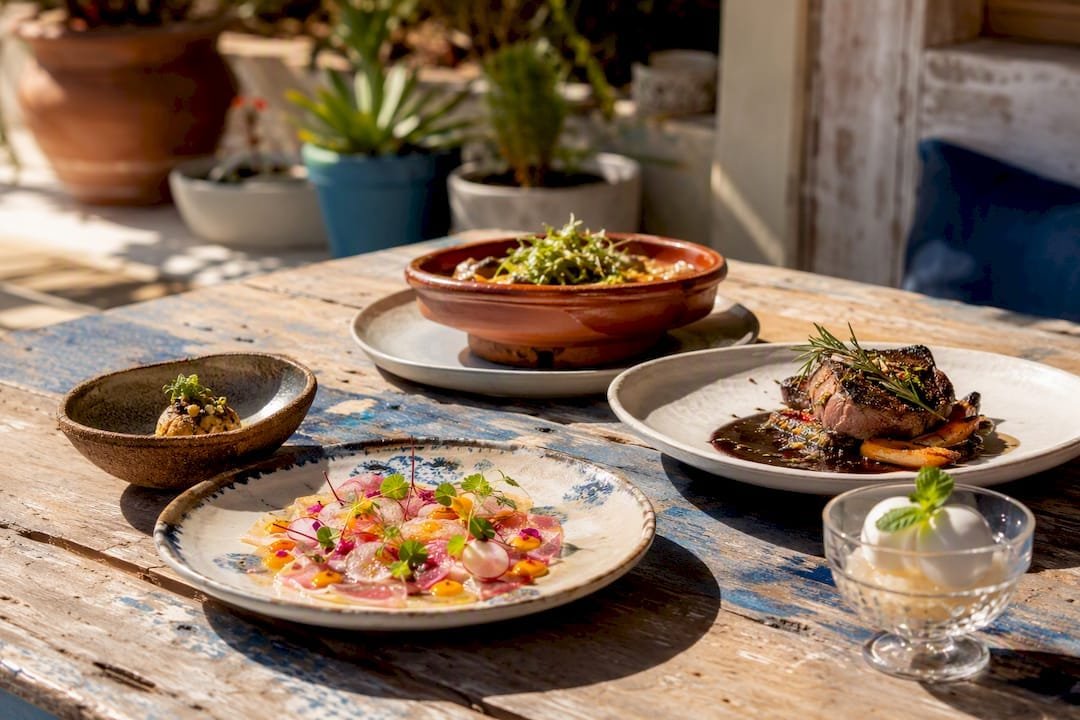
A typical tasting sequence might run: amuse bouche, a cold starter built on acid and brightness, a warm starter with more body, a main course carrying the meal’s richest flavors, then a palate-reset dessert that echoes an earlier ingredient. Award-winning chefs interviewed by the South China Morning Post describe building menus this way around seasonal cycles and supplier availability, not around whatever sounds impressive on paper.
Why Does Flavor Sequencing Matter Across a Meal?
Flavor sequencing is the practice of arranging contrast and repetition so your palate never plateaus. Serve three rich, fatty courses in a row and the fourth one, no matter how well executed, will taste muted. Chefs prevent this fatigue by alternating intensity and by using contrast deliberately.
Two examples show how this works in practice:
- Effective contrast: a bright, acidic ceviche served right before a heavier braised dish resets your palate and makes the richness land harder.
- Effective repetition: a motif ingredient, say a citrus or a fermented element, reappears across two or three courses in different forms, giving the meal a throughline instead of feeling like disconnected plates.
Beverage pairing and palate-reset elements like sorbet or a small intermezzo course serve the same function. Industry commentary on menu engineering notes that chefs reuse ingredients as motifs specifically to balance novelty against familiarity, so guests feel surprised without ever feeling lost.
How Does Plating Reflect the Chef’s Intent?
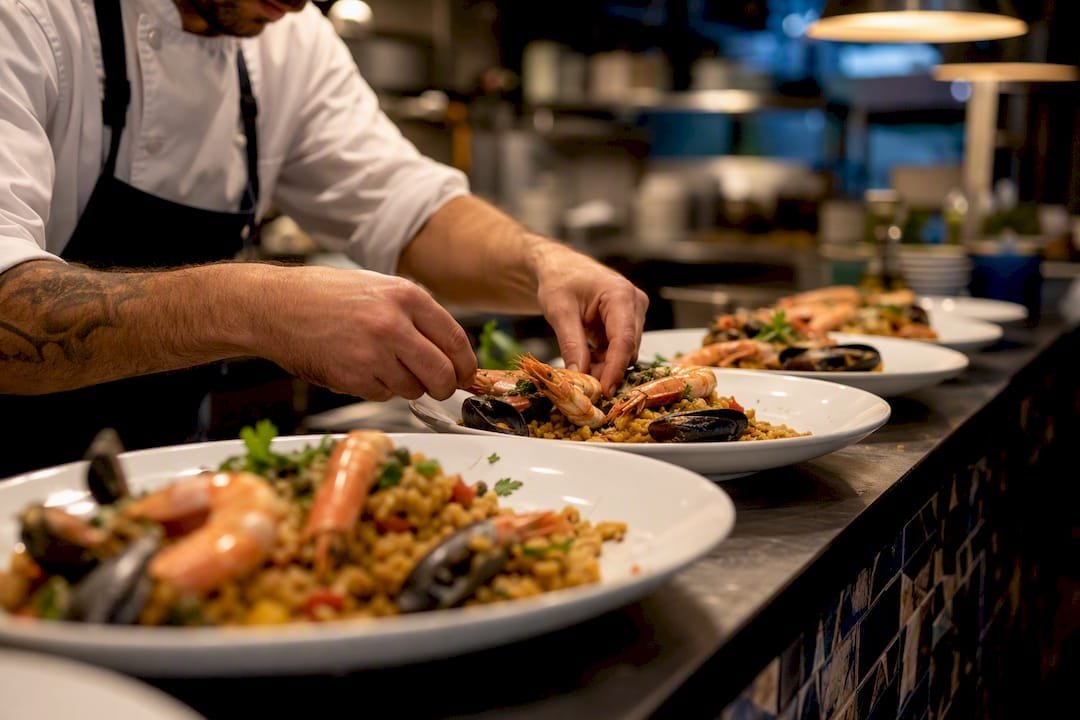
Plating is a visual argument for how a dish should taste before you take the first bite. Height suggests lightness. Dense, low plating suggests richness. Color contrast draws your eye to the ingredient the chef wants you to notice first. None of it is accidental in a kitchen that’s paying attention.
In restaurants with open kitchens, you can watch this intent play out directly:
- Deliberate, unhurried plating rhythm rather than rushed assembly.
- Consistent garnish placement across identical dishes, showing a standard rather than improvisation.
- Brief eye contact or a nod toward the pass when a dish goes out, signaling final approval.
- A calm, steady tempo even during a full service, not visible panic.
Research on chefs’ nonverbal communication in open-kitchen settings, based on a 216-participant survey, found that kinesics and proxemics, meaning body movement and spatial behavior, significantly shape how customers judge service quality. It’s not just about the food. It’s about watching someone in control of it.
Pro Tip: If you’re seated near an open kitchen, watch the chef’s hands more than their face. Steady, repeated plating motions across different tables tell you the kitchen has a system, not just talent.
How Do Ingredient Sourcing and Seasonality Shape the Menu?
Chefs build relationships with fishmongers, farmers, and butchers because quality, cost, and storytelling all depend on it. A chef who knows their supplier’s weekly catch can build a dish around what’s genuinely best that day, rather than forcing a fixed menu item regardless of quality.
That daily communication shows up as menu swaps: a “market fish” line item, a seasonal vegetable feature, a special that only appears for a few weeks. It’s a signal, not an accident.
Look for these cues to spot chef-driven sourcing:
- Provenance notes naming a specific farm, region, or fishing method.
- “Today’s catch” or “market special” language instead of fixed descriptions.
- Small-batch or named-producer callouts on the menu itself.
How Do Kitchen, Service, and Room Design Work Together?
Service quality research distinguishes between functional clues (does the food arrive correctly), mechanic clues (lighting, décor, layout), and humanic clues (how staff behave and communicate). Humanic clues consistently dominate the others in shaping how guests rate the overall experience, according to research published in the Journal of Hospitality & Tourism Research.
That means a beautifully designed room can’t rescue a meal if the server can’t answer a basic question about a dish. Coordination looks like this in a well-run kitchen:
- Timed course sends that match the kitchen’s pace to the table’s conversation, not the other way around.
- Servers who can narrate why a dish is built the way it is, not just what’s in it.
- Lighting and music that shift subtly as the meal moves from starters to dessert.
- A shared tempo between kitchen and floor so no course arrives too fast or lags too long.
The most common failure is misalignment between front-of-house and kitchen messaging. If a server describes a dish differently than the chef intended, the menu narrative collapses right there at the table. Guests notice the inconsistency even when they can’t name why the meal suddenly feels less considered.
What Should Diners Look For at the Table?
You don’t need culinary training to spot a chef-shaped meal. A few concrete signals tell you whether someone is actually directing the experience or just filling plates.
Checklist before and during the meal:
- Menu language that explains technique or origin, not just ingredients.
- Staff who can answer “why is this dish built this way” without hesitating.
- Course rhythm that feels paced, not rushed or randomly delayed.
- Plating that looks consistent across different tables and repeat visits.
A short script works well when booking:
- Ask whether the tasting menu changes with the season.
- Ask how long the tasting menu typically runs, so you can plan the evening.
- Mention dietary needs at booking, not at the table, so the kitchen can adjust the sequence rather than substitute at the last minute.
If you want a fully curated evening, book the tasting menu and ask about pacing up front. If you’d rather stay flexible, à la carte still benefits from asking staff which dishes the kitchen is proudest of that week.
What Research Says About the Chef’s Impact on Perception
The evidence for chef-led design isn’t just anecdotal. Three findings stand out.
- 2026 industry insights confirm menus function as narrative scripts, integrating flavor structure and service rhythm rather than existing as static lists.
- Humanic clues, meaning staff behavior, outweigh mechanic clues like décor when guests form an overall impression.
- A guest chef’s image can transfer to a hosting restaurant, and perceived fit between chef and venue strengthens that effect on the restaurant’s reputation.
Together, these findings back a simple point: the 216-participant survey on nonverbal cues shows guests are reading the chef’s behavior, not just tasting their food.
How Kokcha Brings This to Life
At Kokcha, near Barcelona’s Sagrada Familia, the kitchen builds its menu around Mediterranean staples, tapas, paella, seafood, and seasonal vegetables, sequenced so a meal moves from lighter shared plates toward heartier mains. The terrace and its city views aren’t decoration bolted on afterward; they’re part of the same design logic that shapes the food itself, coordinated so the room and the menu tell one story.
YellowRock, the content voice behind much of Kokcha’s storytelling, has documented how the kitchen adjusts seasonal offerings and communicates them through staff and menu language rather than leaving guests to guess. For a fuller look at how ambiance and menu design work together at Kokcha, the restaurant’s own writing on restaurant ambiance walks through the same principles covered here, applied to its own dining room.
Where Does a Chef’s Menu Idea Actually Come From?
Most chefs don’t start with a finished dish. They start with a constraint: what’s in season, what a supplier just called about, or a technique they want to revisit. From there, the idea gets tested, adjusted, and often changed entirely before it reaches a menu.
Interviews with award-winning chefs describe a structured process tied to seasonal cycles and supplier timing rather than pure inspiration. A chef might taste an exceptional batch of tomatoes in July and build an entire summer course around them, knowing the dish disappears once the season ends.
Feedback during service plays a real role too. Some chefs treat a dish as unfinished until guests actually experience it, watching plates come back, listening to server reports, and adjusting seasoning or portion the next night. This is why a dish you loved in March might taste subtly different in April: it’s still being refined.
Inspiration also comes from constraint-driven creativity. A chef working with a small kitchen or limited storage often develops sharper, more focused dishes than one with unlimited resources, because every ingredient has to earn its place on the plate. The best menus tend to come from chefs who treat limitations as a design tool rather than an obstacle to work around.
How Do Chefs Protect Food Safety and Quality?
Behind every plate is a chef enforcing standards most diners never see directly. Temperature control, ingredient rotation, allergen tracking, and cleaning protocols all fall under the chef’s direct responsibility, even in kitchens with dedicated safety staff.
This matters because quality and safety are the same discipline in practice. A chef who insists on strict first-in-first-out ingredient rotation isn’t just avoiding spoilage; they’re protecting the flavor consistency that makes a signature dish taste the same on your third visit as it did on your first. Qualitative research on kitchen leadership describes this as a form of real-time oversight and foresight, where the chef’s presence during service catches problems before they reach the table.
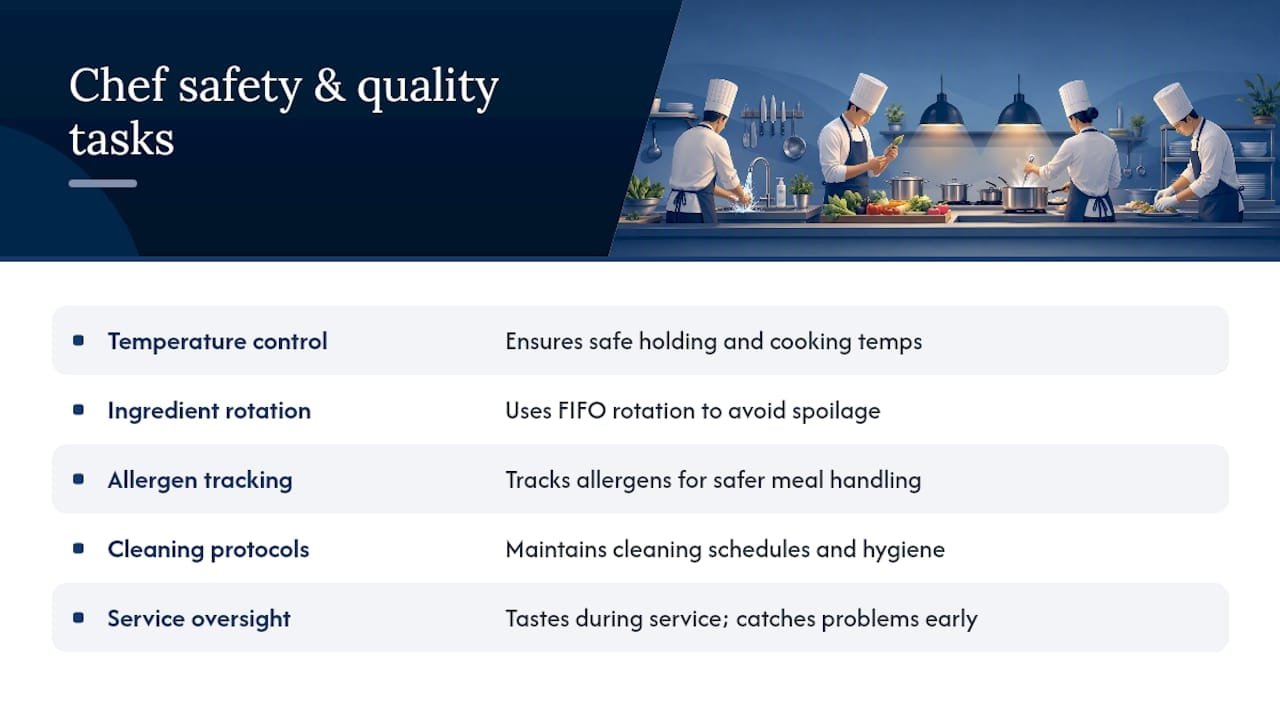
Allergen communication is where this responsibility becomes most visible to guests. A chef who has built genuine sourcing relationships usually knows exactly what’s in a dish and how it was prepared, which is why kitchens with strong chef oversight tend to handle dietary requests more confidently than ones relying purely on printed allergen charts. If you have a serious allergy, mentioning it at booking rather than at the table gives the kitchen time to adjust preparation, not just swap a garnish.
Quality control also means a chef tasting dishes throughout service, not just at menu development. That habit is why some kitchens catch a slightly off batch of seafood before it ever reaches a plate, while others don’t.
How Does a Chef Lead a Kitchen Brigade?
The classic kitchen brigade system assigns specific stations, sauces, grill, pastry, garde manger, each with a lead who reports to the executive chef. But modern kitchen leadership research suggests the best chefs lead through presence and demonstration more than pure hierarchy.
Practices described as “show and guide” involve the chef physically demonstrating a technique at the pass rather than simply issuing instructions, according to research on head chef leadership practices. This matters for consistency: a chef who steps in during a busy Friday service to personally plate a dish that’s going out wrong is reinforcing a standard in real time, not just correcting an error after the fact.
Vertical leadership in kitchens tends to work best when paired with genuine mastery of the material. A chef who has personally broken down a whole fish or built a stock from scratch commands a different kind of respect from a line cook than one who only manages from a distance. That respect translates directly into how consistently the brigade executes the chef’s vision when the chef isn’t standing at every station.
This leadership style also explains why kitchen turnover and training quality show up in food quality faster than almost any other restaurant metric. A brigade that understands the chef’s intent, not just the recipe, adapts better when an ingredient runs short or a rush hits unexpectedly.
How Do Chefs Shape Ambiance and Storytelling?
A chef’s influence on ambiance goes beyond the plate. Menu language, course pacing, and even the choice to run an open kitchen all send signals about the story a restaurant wants to tell.
Michelin-recognized chefs increasingly argue that coherence between food, service, and environment, not any single flashy element, is what makes a meal memorable, based on interviews compiled by Brandtrack. A chef who wants an intimate, unhurried atmosphere will design a menu with fewer, richer courses and coordinate with the room on dim lighting and slower service pacing. A chef aiming for energetic, social dining does the opposite: shareable plates, brighter lighting, quicker turns.
This storytelling extends to menu design itself. Layout, descriptive language, and how dishes are grouped on the page all guide what guests order and how they interpret the meal before a single plate arrives, according to research on menu design psychology. A menu built around regional provenance tells a different story than one organized purely by protein type, even if the underlying dishes are similar.
The chef sets this direction, but it only holds together if the entire team, from host to server to sommelier, reflects the same narrative consistently across a full service.
How Does Chef-Diner Interaction Affect Satisfaction?
Direct interaction between chef and guest, whether it’s a chef stepping out to greet a table or simply visible presence at an open kitchen pass, measurably shapes how guests rate their experience.
Nonverbal communication research based on a 216-participant survey found that a chef’s body language and spatial behavior during service significantly affect perceived service quality, even when guests never speak to the chef directly. Confident, unhurried movement reads as competence. Visible tension or chaos reads the opposite way, regardless of how the food actually tastes.
Communication failures carry real risk. A common operational pitfall identified in hospitality research is failing to align the full team with the chef’s vision, which can turn what should feel like an immersive meal into a purely transactional one. If a server can’t explain a dish the way the chef intended, or the pacing feels arbitrary rather than deliberate, guests sense that disconnect even without naming it.
This is why some restaurants build in a moment of direct chef contact, a walk through the dining room, a note on the menu in the chef’s own words, or simply consistent visibility at an open kitchen. It’s not a gimmick. It’s a way of closing the gap between the chef’s intent and the guest’s actual experience at the table.
Why the Chef’s Fingerprint Is Worth Noticing
Diners often credit a great meal to “good food” without noticing the design decisions behind it. Once you start watching for pacing, plating rhythm, and how confidently a server explains a dish, you’ll never eat the same way again.
That’s really the point of paying attention to a chef’s choices: it turns a good meal into one you remember and want to return to.
Experience Chef-Led Dining at Kokcha
Kokcha’s kitchen builds every plate around the same principles covered in this guide: seasonal sourcing, deliberate flavor sequencing, and a terrace setting near the Sagrada Familia designed to match the food’s Mediterranean identity. You’ll find tapas, seafood, grilled meats, and signature paellas served in a bilingual dining room where staff can walk you through the story behind each dish, not just its ingredients.
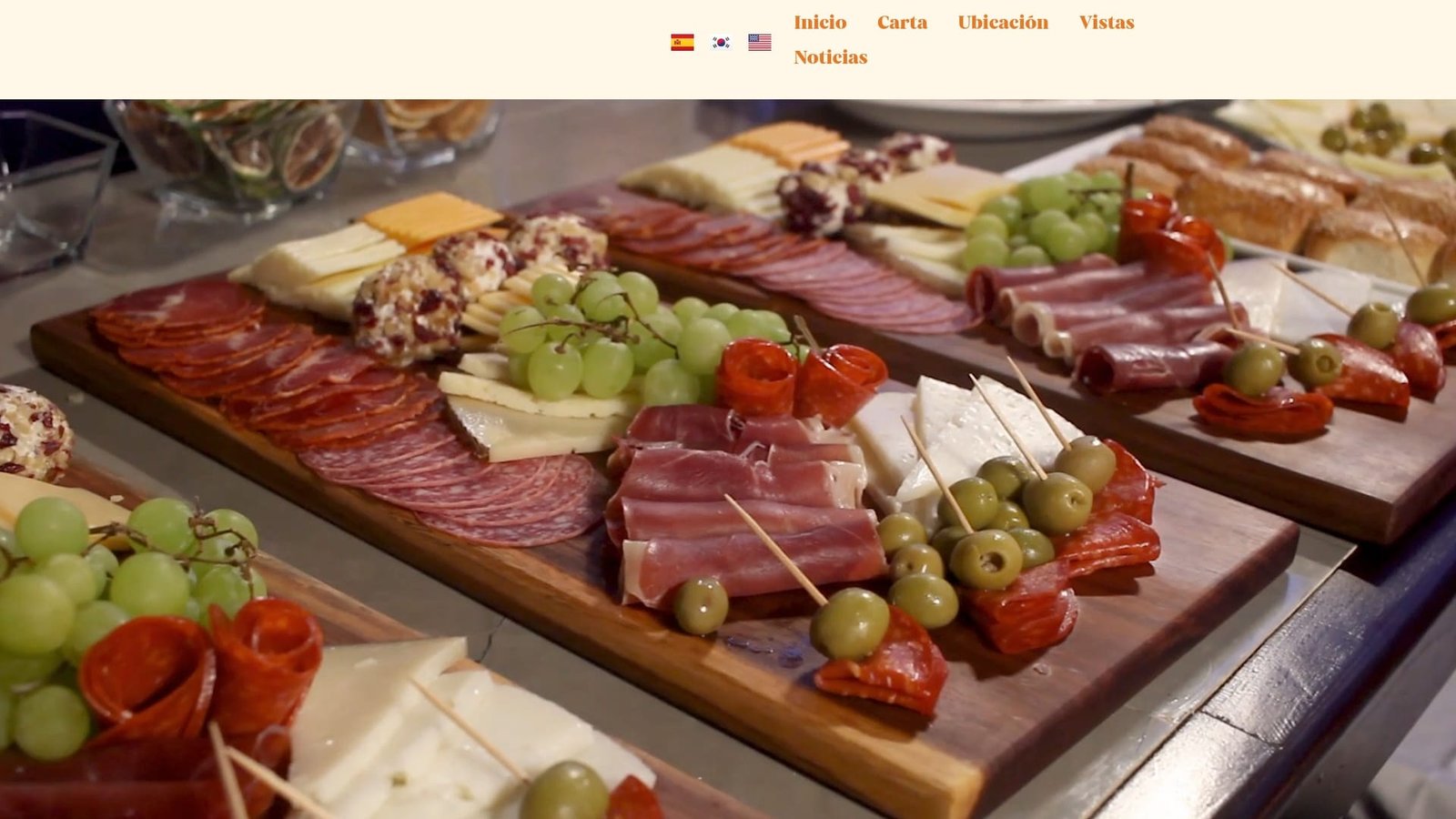
If you want the fullest version of that experience, the seafood paella showcases the kitchen’s provenance-driven sourcing directly on the plate, while the meat paella works well for a group wanting a shared, chef-anchored centerpiece. Booking ahead lets the kitchen accommodate dietary needs properly rather than improvising at the table, and requesting terrace seating gives you the view alongside the menu narrative. Reserve your table now and mention any allergies or timing preferences when you book, so the kitchen can plan your course pacing in advance.
Frequently Asked Questions
What is the role of chef in culinary experience beyond cooking?
The chef designs the menu’s structure, sequences flavors across courses, sets presentation standards, and coordinates timing with service so the whole meal feels intentional rather than random.
How does a chef influence flavor across an entire meal, not just one dish?
Chefs alternate rich and light flavors and reuse motif ingredients across courses to prevent palate fatigue while keeping the meal coherent from start to finish.
Can you tell if a chef is genuinely shaping a meal or just plating standard dishes?
Look for menu language explaining technique or origin, staff who can articulate a dish’s intent, and plating that stays consistent across different tables and visits.
Why do tasting menus take longer than à la carte dining?
Tasting menus involve more courses paced deliberately by the chef, typically running two to three hours, while à la carte lets diners set their own pace with fewer, larger courses.
Does a chef’s visible presence during service actually affect the meal?
Research on nonverbal communication in open kitchens found that a chef’s body language and movement significantly shape how guests perceive overall service quality.
Sources
- How menu engineering becomes a narrative script — Madrid Fusión (2026)
- The combined effects of the physical environment and employee behavior on customer perception of restaurant service quality (Journal article, 2007)
- Study on chefs’ nonverbal communication in hotel open kitchen restaurants (2018)
- Guest chef image transfer to luxury restaurants (research paper)