Seafood sits at the absolute center of Spanish gastronomy, not as a supporting ingredient but as a defining force that has shaped the country’s culinary identity for centuries. Spain ranks second in the EU for per capita fish and seafood consumption, behind only Portugal, with an annual average of 41.92 kg per person as of 2024.
Here is what makes seafood so central to Spanish cooking:
- Geography drives everything. Spain has coastline on the Atlantic, the Mediterranean, and the Bay of Biscay, giving each region access to distinct species and fishing traditions.
- Core ingredients span the whole country. Gambas (prawns), bacalao (salted cod), sepia (cuttlefish), and calamar (squid) appear across Spanish kitchens from Galicia to Andalusia.
- Iconic dishes anchor the tradition. Paella de marisco, fideuà, pescaito frito, and mariscada are not just recipes. They are cultural events.
- Preparation varies wildly by region. The same gamba might be grilled simply in Catalonia, fried in Andalusia, or folded into a Valencian rice dish.
- Seafood carries social meaning. Festivals, family gatherings, and religious calendars in Spain have long revolved around specific fish and shellfish.
How seafood shaped Spanish culinary history
The story of seafood in Spanish cooking is not a straight line from coast to kitchen. It is a layered history of survival, trade, religion, and power.
-
Ancient coastal settlements. Spain’s Mediterranean and Atlantic shores supported fishing communities long before the Roman Empire arrived. Archaeological evidence from Iberian coastal sites shows shellfish consumption dating back thousands of years, with fish serving as a primary protein source for people who had little access to inland game.
-
Roman trade networks and garum. Roman merchants introduced garum, a fermented fish sauce, to the Iberian Peninsula. This condiment became so embedded in the region’s cooking that it prefigured the umami-forward flavors still present in Spanish seafood broths and sauces today. Roman commercial routes made fish a traded commodity, not just a local catch.
-
Bacalao and the Catholic calendar. The preservation of cod through salting transformed Spanish eating habits in ways that outlasted the original necessity. Catholic dietary laws prohibiting meat on Fridays and during Lent created enormous demand for preserved fish. Bacalao became the answer: shelf-stable, transportable, and versatile enough to anchor dozens of distinct regional recipes.
-
Maritime power and social status. During Spain’s colonial era, seafood at elite tables represented opulence and maritime dominance. Premium shellfish, in particular, signaled wealth and access. That association between fine seafood and prestige has never fully disappeared, which is why clams, crab, and percebes (barnacles) still command high prices and ceremonial status today.
-
The fishing industry’s regional roots. Galicia and the Basque Country built entire economies around fishing. These regions developed not just culinary traditions but processing industries, boat-building trades, and coastal cultures where the rhythm of life followed the tides. That heritage is still visible in the food.
-
Salted cod as culinary art. What began as a preservation technique evolved into one of Spain’s most technically demanding cooking traditions. Rehydrating bacalao properly, a process requiring precise timing and cold-water soaking over 24–48 hours, produces a velvety, silky texture that defines dishes like Bacalao a la Vizcaína. The technique is now considered a mark of culinary skill, not just a practical step.
-
From survival food to celebrated cuisine. The transition happened gradually, driven by urbanization, tourism, and the rise of restaurant culture in the 20th century. Dishes once eaten out of necessity became objects of national pride. Paella de marisco, originally a coastal working-class meal, is now one of the most recognized Spanish dishes worldwide.
What seafood do Spaniards actually cook with?
The variety is genuinely striking. Spanish seafood cooking draws from a deep pool of species, and each one tends to have a regional home where it is treated with particular seriousness.
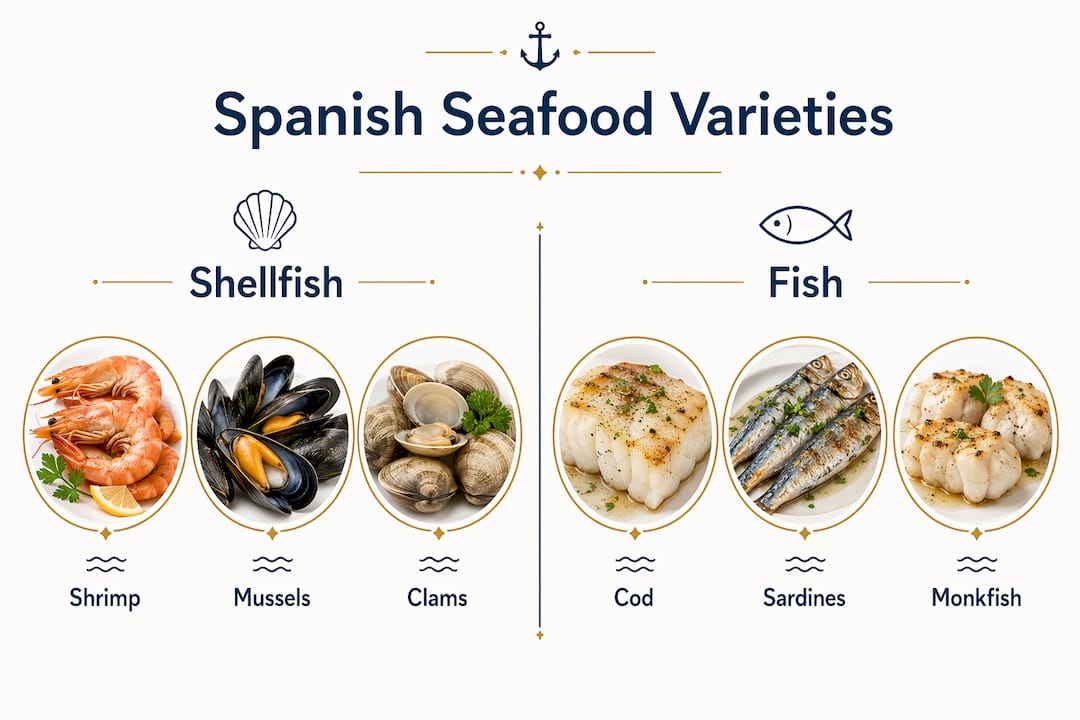
| Seafood | Spanish Name | Primary Region | Common Preparation |
|---|---|---|---|
| Prawns | Gambas | Nationwide | Grilled, sautéed in garlic and olive oil, in paella |
| Salted cod | Bacalao | Basque Country, nationwide | Bacalao a la Vizcaína, pil-pil sauce, fritters |
| Cuttlefish | Sepia | Mediterranean coast | Grilled, in rice dishes, with black ink |
| Squid | Calamar | Nationwide | Fried rings, stuffed, in its own ink |
| Octopus | Pulpo | Galicia | Boiled and dressed with paprika (pulpo a la gallega) |
| Mussels | Mejillones | Galicia | Steamed, in escabeche, canned |
| Clams | Almejas | Galicia, Basque Country | Steamed with white wine, in rice dishes |
| Barnacles | Percebes | Galicia | Boiled simply in seawater |
| Fried small fish | Pescaito frito | Andalusia | Deep-fried in olive oil, served as tapas |
Regional highlights worth knowing:
- Galicia produces some of Europe’s finest shellfish, thanks to the cold, nutrient-rich Atlantic waters of its rías (coastal inlets). Percebes, mussels, and scallops from this region carry a reputation for exceptional quality. Pulpo a la gallega, octopus boiled and dressed with olive oil, coarse salt, and smoked paprika, is Galicia’s most exported dish.
- Basque Country treats bacalao with near-religious reverence. The two defining preparations, Bacalao a la Vizcaína (in a rich red pepper sauce) and Bacalao al Pil-Pil (emulsified in its own gelatin with olive oil and garlic), require patience and technique that most home cooks spend years developing.
- Valencia and the Mediterranean coast anchor their seafood cooking in rice. Paella de marisco and fideuà (the noodle-based cousin of paella) both rely on the quality of the seafood broth and the freshness of the shellfish layered on top.
- Andalusia fries. Pescaito frito, a mix of small fish and seafood coated lightly in flour and fried in hot olive oil, is the defining street food of Cádiz and Málaga. The key is temperature control and the right fish: anchovies, small squid, and tiny sole.
Pro Tip: When ordering gambas in Spain, ask whether they are fresh or frozen. Coastal restaurants near fishing ports often receive daily catches, and the difference in flavor between a fresh gamba and a frozen one is immediately obvious.
What are the signature seafood dishes of Spain?
Spanish seafood recipes are not interchangeable. Each dish has a specific origin, a specific technique, and often a specific argument attached to it about the “correct” way to prepare it.
-
Paella de marisco. The Valencian original used rabbit and snails, not seafood. The seafood version developed along the Mediterranean coast and became its own distinct tradition. A proper seafood paella starts with a fumet, a concentrated fish stock made from prawn heads, fish bones, and aromatics. The rice absorbs this stock and the flavor of the shellfish layered on top. The socarrat, the caramelized crust that forms on the bottom of the pan, is the mark of a well-made paella.
-
Fideuà. Born in Gandía, on the Valencian coast, fideuà replaces rice with thin toasted noodles. The noodles are first dry-toasted in the pan (a technique called rossejat), then cooked in seafood stock. The result is a dish with a nuttier, more complex flavor than paella, and a texture that is entirely its own.
-
Mariscada. A Spanish-style shellfish platter, typically featuring steamed or grilled prawns, mussels, clams, crab, and whatever the local catch offers. It is less a recipe than a philosophy: buy the best shellfish available, cook it simply, and let the quality speak.
-
Bacalao a la Vizcaína. The Basque preparation of rehydrated salted cod in a sauce built from dried red peppers (choricero peppers), onions, and sometimes a touch of bread to thicken. The sauce is deep red, slightly sweet, and intensely savory. Getting the cod’s texture right, firm but yielding, is the technical challenge.
-
Pescaito frito. Andalusia’s answer to fast food, but done with care. The batter is minimal, often just seasoned flour, and the oil must be hot enough that the fish cooks instantly without absorbing grease. Served with lemon, it is one of the purest expressions of Spanish coastal cooking.
-
Modern influences: ceviche in Spain. Latin American immigration and Spain’s own culinary curiosity have brought ceviche into the mainstream. Spanish chefs adapted the technique, using local fish like sea bass or bream cured in citrus, often with a nod to traditional Spanish flavors like olive oil or pimentón. It sits comfortably alongside traditional dishes on contemporary menus without replacing them.
-
Arroz negro. Black rice, colored and flavored with squid ink, is a Valencian and Catalan specialty that turns a simple rice dish into something visually dramatic and deeply savory. Served with alioli, it is one of the most distinctive dishes in the Spanish seafood repertoire.
How is Spanish seafood cuisine changing today?
The tradition is alive, but it is not static. Several forces are reshaping how Spaniards eat seafood, and the changes are worth paying attention to.
-
Generational shifts in consumption. Older Spaniards consume significantly more seafood than younger generations. A 2023 survey by CEPESCA (the Spanish Fishing Confederation) flagged declining fish consumption among teenagers and children as a genuine concern for the industry’s long-term health.
-
Convenience packaging is growing fast. Younger consumers and smaller households are driving demand for ready-to-buy packaged fish in single or double portions. Clean-filleted fish, cooked octopus, and prepared mussels in refrigerated trays are expanding shelf space in Spanish supermarkets.
-
Food inflation hit premium seafood hardest. Rising costs pushed consumers toward cheaper varieties, with clams, crab, and octopus, traditionally viewed as indulgent, seeing the sharpest volume declines in retail. The shift is not permanent, but it has changed the mix of what people buy.
-
Foodservice is recovering strongly. Despite retail pressure, restaurant seafood demand grew in volume terms through 2024, driven by record tourist numbers and a consumer preference for dining out as an experience rather than a daily habit. Seafood is increasingly treated as a special-occasion food even by people who eat it less often at home.
-
Sustainability is reshaping fishing traditions. Overfishing concerns and EU quota regulations are forcing changes in what species are available and at what price. Some traditional catches are becoming scarcer, pushing chefs toward underused species and more sustainable sourcing. The food sustainability conversation is not abstract in Spain; it directly affects what ends up on the plate.
-
Fusion influences are landing. Sushi, ceviche, and Korean-style fried seafood have all found audiences in Spanish cities. Rather than displacing traditional dishes, they tend to coexist, often on the same menu. Spanish chefs are incorporating these techniques selectively, using local species and Spanish flavor profiles to create something genuinely hybrid.
-
Spain’s processing industry continues to lead. Spain is the second largest producer of canned fish worldwide and the largest in the EU’s frozen fish sector. That industrial strength means Spanish consumers have access to high-quality preserved seafood at every price point, which shapes home cooking habits in ways that fresh-fish-only markets cannot.
Authentic Spanish seafood gastronomy: insights from Kokcha Barcelona
At Kokcha, the approach to Spanish seafood cooking starts with a principle that culinary scholars have articulated clearly: authentic coastal cooking treats seafood as “landscape on the plate,” where the specific species, the local technique, and the intangible heritage of a place combine to create something that cannot be replicated with generic ingredients.
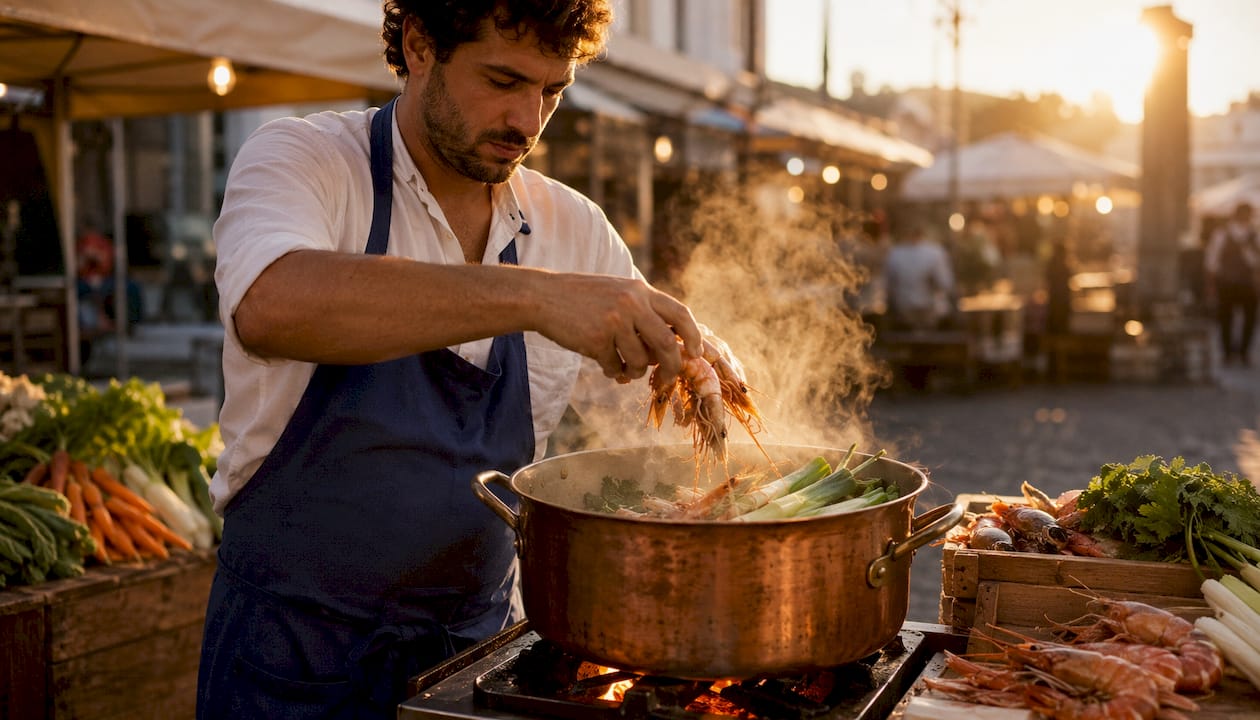
The fumet is where Kokcha’s seafood dishes begin. Prawn heads, fish bones, and aromatics go into the stock pot first, building the base that will carry the flavor of every rice dish and sauce that follows. This is not a shortcut step. A properly made fumet takes time and attention, and it is the difference between a paella that tastes like the sea and one that merely contains seafood.
Kokcha’s Mediterranean seafood menu reflects the regional diversity of Spanish tradition, drawing on Valencian rice techniques, Andalusian frying methods, and the broader Mediterranean pantry of olive oil, saffron, and fresh herbs. The gambas, sepia, and calamar that appear across the menu are treated according to their individual character: gambas get heat and simplicity, sepia benefits from longer cooking, and calamar is at its best when fried fast and served immediately.
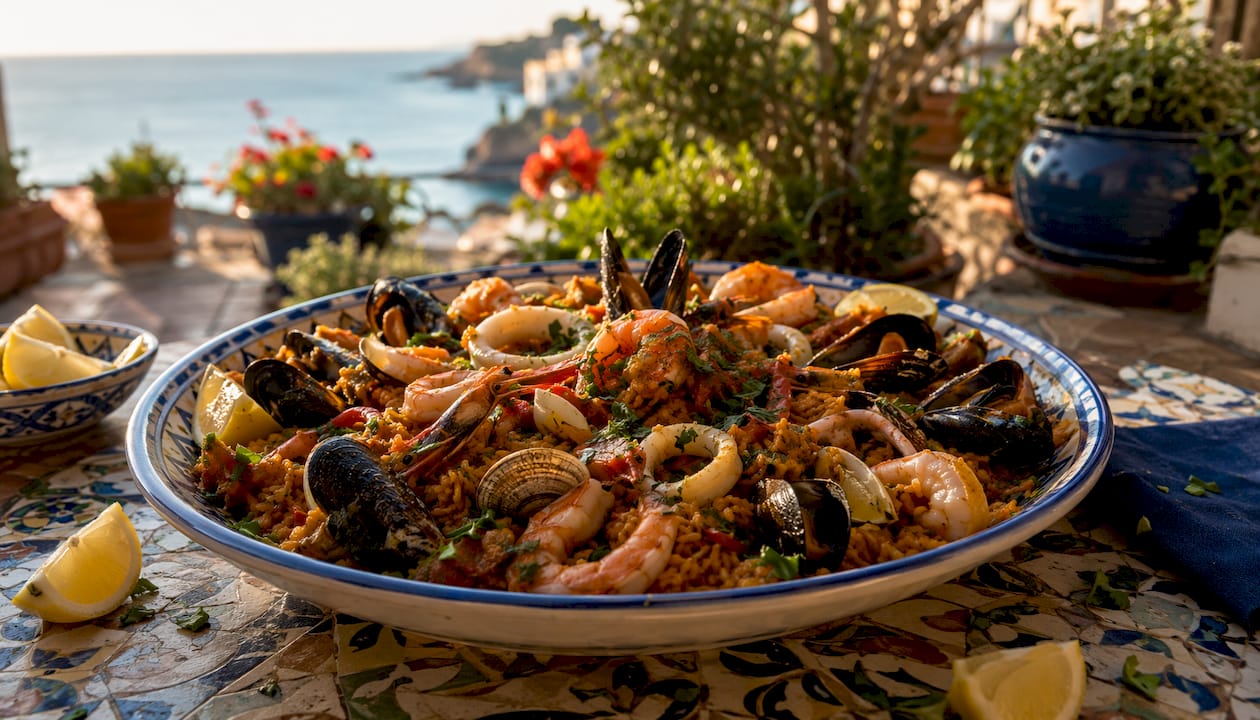
Pro Tip: When eating paella de marisco, look at the rice before you taste it. Properly cooked grains should be separate, slightly al dente, and deeply colored from the fumet. If the rice is mushy or pale, the stock was either too thin or added too quickly.
The balance between tradition and contemporary dining is something Kokcha takes seriously. The restaurant sits steps from the Sagrada Família, drawing both Barcelona residents and international visitors who want to understand what Spanish seafood cooking actually tastes like when it is done with care. The Spanish-style seafood guide on Kokcha’s site goes deeper into the regional distinctions that inform the kitchen’s approach.
Experience authentic Spanish seafood in Barcelona. Kokcha’s kitchen brings together the fishing traditions of Galicia, the Basque Country, and the Mediterranean coast in a single menu, steps from the Sagrada Família. Whether you are after a classic paella de marisco or want to explore the full range of Spanish mariscos, the table is ready. Reserve your seat at Kokcha and taste what centuries of coastal tradition actually produce.
Key Takeaways
Seafood’s role in Spanish gastronomy is inseparable from geography, history, and regional identity, making it one of the most culturally layered food traditions in Europe.
| Point | Details |
|---|---|
| Spain’s seafood consumption | At 41.92 kg per capita annually, Spain ranks second in the EU, behind only Portugal. |
| Regional identity drives dishes | Galicia specializes in shellfish and octopus; Basque Country in bacalao; Valencia in paella de marisco and fideuà. |
| Bacalao as culinary craft | Proper rehydration over 24–48 hours produces the velvety texture that defines Bacalao a la Vizcaína and other classic preparations. |
| Generational and market shifts | Older Spaniards consume more than double the seafood of younger generations; convenience packaging and restaurant dining are both growing. |
| Tradition meets innovation | Fumet-based cooking, rossejat noodle toasting, and heritage species remain central even as fusion influences like ceviche enter the mainstream. |