What are the top alternatives to restaurantelsporxos.com?
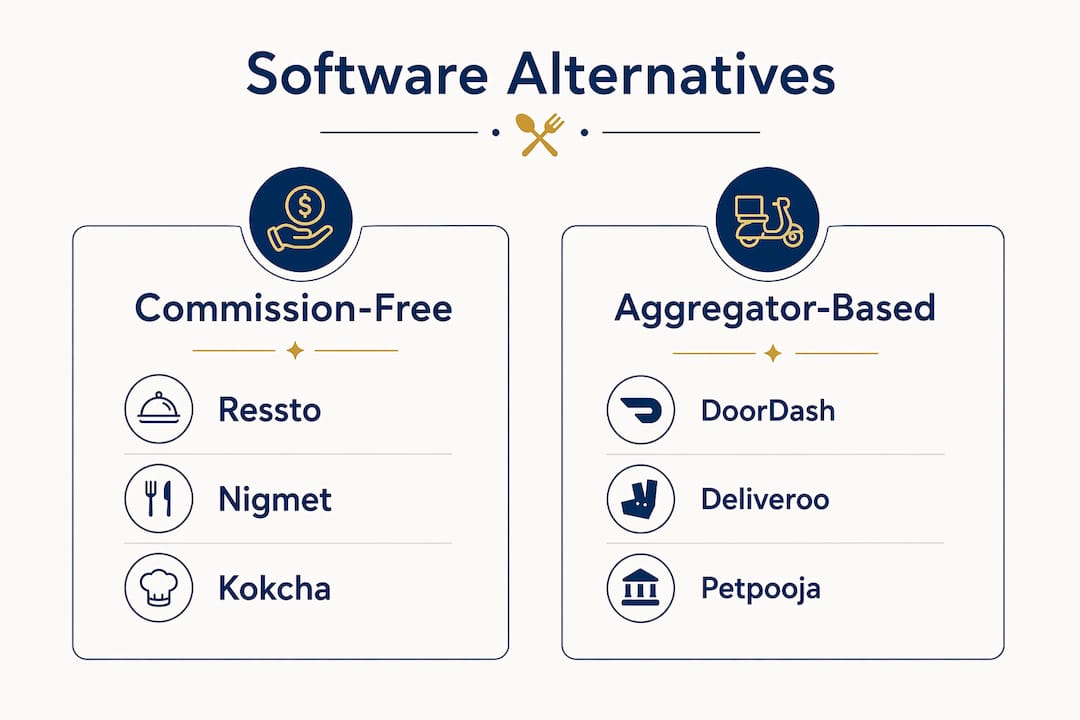
The strongest restaurantelsporxos.com alternatives for Central European restaurant owners in 2026 are commission-free, multilingual platforms that unify POS, online ordering, and delivery in one system. Ressto, Nigmet, and Guava lead the field for direct ordering without aggregator fees. Toast and Restroworks Restaurant POS cover full operational management for larger operations. The table below maps every major option across the dimensions that actually move the needle.
| Platform | Pricing | Commission Rate | Key Features | Multilingual | Delivery Management | Loyalty & Marketing |
|---|---|---|---|---|---|---|
| Restroworks Restaurant POS | Tiered plans | None (direct) | Full POS, KDS, inventory | Yes | Yes | Yes |
| Square Point of Sale | Free + paid tiers | None (direct) | POS, Square Online ordering | Limited | Via Square Online | Basic |
| Toast | Tiered plans | None (direct) | POS, delivery, marketing | Limited | Yes | Strong |
| Ressto | Subscription | 0% | Branded storefront, direct orders | Yes | Yes | Yes |
| Nigmet | 90-day free pilot | 0% | POS, KDS, QR ordering, fiscal compliance | 11 languages | Yes | Yes |
| Guava | Subscription | 0% | AI manager, unified ops, migration | Yes | Yes | Yes |
| TallyPrime | License-based | None | Accounting, inventory, POS integration | Limited | No | No |
| Petpooja POSS | Subscription | None | Kitchen mgmt, multi-channel delivery | Yes | Yes | Limited |
| JustBilling | Subscription | None | Billing, invoicing, compliance | Limited | No | No |
| GOFRUGAL POS | Tiered plans | None | POS, inventory, delivery scheduling | Yes | Yes | Limited |
| SlickPOS | Cloud subscription | None | Cloud POS, online ordering | Yes | Limited | No |
| PagarBook | Subscription | None | Payroll, attendance, HR | No | No | No |
| Restaurant365 | Enterprise pricing | None | Accounting, inventory, workforce | Limited | No | Yes |
| MyHotelLine PMS | Subscription | None | Hotel-restaurant integration | Yes | No | Limited |
| Wisely | Subscription | None | Guest CRM, loyalty, feedback | Limited | No | Strong |
| Resos | Subscription | None | Reservations, table mgmt, marketing | Yes | No | Yes |
| Zenchef | Subscription | None | Reservations, CRM, local visibility | Yes | No | Yes |
| GuestOnline | Subscription | None | Cloud reservations, guest mgmt | Yes | No | Limited |
| CoverManager | Subscription | None | Waitlist, table optimization | Yes | No | Yes |
| Quandoo | Commission-based | Per cover | Booking platform, marketing | Yes | No | Yes |
| ResDiary | Subscription | None | Reservations, analytics | Yes | No | Limited |
| OpenTable | Subscription + fees | Per cover | Large network, reservations | Yes | No | Yes |
| Superb | Subscription | None | Guest feedback, reputation mgmt | Yes | No | Limited |
| Shipt | Commission-based | Per order | Local delivery network | No | Yes | Limited |
| Zomato for Business | Commission-based | Per order | Listing, delivery, exposure | Limited | Yes | Limited |
| GrubHub | Commission-based | High | Aggregator delivery | No | Yes | Limited |
| Instacart | Commission-based | Per order | Grocery/restaurant delivery | No | Yes | No |
| DoorDash | Commission-based | High | Large aggregator delivery | No | Yes | Limited |
| Deliveroo | Commission-based | High | Premium urban delivery | No | Yes | No |
| foodora | Commission-based | Per order | European city delivery | Limited | Yes | No |
| Routific | Subscription | None | Route optimization, fleet mgmt | Limited | Yes | No |
| Toast POS | Tiered plans | None (direct) | POS, KDS, delivery integration | Limited | Yes | Strong |
| Square Point of Sale (Square Online) | Free + paid tiers | None (direct) | Online storefront, ordering | Limited | Yes | Basic |
Commission-free platforms like Ressto and Nigmet let you keep every euro from each order. Aggregators like DoorDash, Deliveroo, and GrubHub charge fees that cut 25–30% from each transaction, which compounds fast across a busy service.
Which online ordering and delivery platforms cut aggregator fees?
The shift away from third-party delivery apps is accelerating across Central Europe. Restaurants leaving delivery apps report reclaiming both margins and customer data that aggregators previously owned.
Ressto is built specifically for this: a branded online storefront with 0% commission and free migration support. You own the customer relationship from the first order. Nigmet takes a similar approach, letting customers order directly through your branded page while the platform handles fiscal compliance for Germany (KassenSichV/TSE) and Poland (Posnet fiscal printer integration). Its 90-day full-feature pilot requires no credit card and no commitment, which removes the usual switching risk.
For restaurants that still want aggregator reach alongside direct ordering, Petpooja POSS and GOFRUGAL POS both integrate multi-channel delivery into a single kitchen display. That way, a DoorDash order and a direct web order hit the same KDS screen without extra tablets.
Routific sits in a different lane entirely. It does not handle ordering; it optimizes the delivery routes for restaurants running their own fleets, cutting fuel costs and improving delivery windows.
Pro Tip: Before signing with any aggregator, calculate your monthly order volume multiplied by the commission rate. That figure, compared against a flat monthly subscription for a direct-ordering platform, usually makes the decision obvious.
How do POS and management platforms compare for full operations?
Restaurant management goes well beyond taking orders. The platforms that genuinely reduce operational friction connect POS, kitchen display, inventory, and staff management in one shared database. Data silos from disconnected apps can cost mid-sized restaurants more than €1,600 per month in margin leakage alone.
Restroworks Restaurant POS covers the full stack: POS, KDS, inventory, and multilingual support with local compliance features. Toast adds built-in marketing and loyalty programs, making it a strong fit for restaurants that want customer retention tools alongside operations. For enterprise chains, Restaurant365 goes deepest on financial reporting, workforce management, and accounting integration across multiple locations.

Guava takes a different angle. Its AI manager detects operational leaks worth €1,200–2,800 per month that standard reports miss entirely, and it migrates your menu, recipes, employees, and customer data as part of onboarding. That migration support matters more than most operators expect when switching platforms mid-year.
Key benefits of choosing a unified platform over a stack of disconnected tools:
- One shared database eliminates conflicting inventory counts between POS and ordering systems.
- Real-time kitchen display sync reduces ticket errors and speeds table turns.
- Staff scheduling and payroll in the same system simplifies compliance with local labor laws.
- Centralized reporting across locations gives multi-site operators a single view of performance.
TallyPrime suits managers who need strong accounting and inventory tracking alongside POS, particularly where backend financial reporting is the priority. PagarBook focuses narrowly on HR: attendance tracking, payroll, and shift management with labor law compliance baked in. MyHotelLine PMS connects hotel guest management with restaurant bookings, which is the right fit for food and beverage operations inside a hotel property.
For reservations specifically, CoverManager handles high-volume bookings with real-time table optimization and no-show reduction tools. OpenTable brings the largest diner network. Zenchef and GuestOnline are stronger fits for French and Benelux markets where local CRM integration matters.
How do you choose the right restaurant software alternative?
The wrong platform costs more than its subscription fee. Switching mid-year with no migration support means days of manual data re-entry and real service disruption.
Key criteria to evaluate before committing:
- Integration with your existing POS: Check whether the platform connects to your current hardware or requires proprietary terminals.
- Commission structure: A 0% commission platform at a flat monthly fee almost always beats a “free” aggregator taking 25–30% per order at meaningful volume.
- Multilingual support: For Central European teams with diverse staff, multilingual interfaces reduce errors and training time. Nigmet supports 11 languages including Arabic with right-to-left display.
- Fiscal compliance: Germany requires KassenSichV/TSE certification; Poland requires Posnet integration. Confirm compliance before signing.
- Migration assistance: Providers offering done-for-you menu, employee, and financial data migration reduce downtime significantly.
- Customer support SLA: Confirm response time guarantees and whether support is available in your operating language.
Pro Tip: Prioritize platforms where POS, inventory, and ordering share one database. Every disconnected tool you add creates a new point of failure and a new monthly fee.
What do operators in Central Europe say about software adoption?
Industry experts consistently point to connected ecosystems as the single biggest lever for restaurant profitability. The pattern is consistent: operators who consolidate onto one platform report faster service, lower food waste, and sharper financial visibility.
Guava’s AI manager, for example, surfaces revenue leaks of €1,200–2,800 per month that are invisible in standard POS reports. Those are real euros recovered from operational gaps like unrecorded voids, portion drift, and untracked staff meals.
Localization is a separate but equally important factor. Multilingual restaurant systems increase staff productivity and cut error rates in diverse teams, which is a practical reality for most Central European kitchens. Spanish HORECA operators also benefit from platforms that automate compliant shift tracking and tip distribution under collective agreements.
Practical recommendations for a successful platform switch:
- Run a parallel pilot for at least 30 days before fully cutting over.
- Confirm that historical financial data migrates cleanly, not just menu items.
- Train front-of-house and kitchen staff simultaneously to avoid a split-system period.
- Audit your current monthly spend across all disconnected tools before comparing against a unified platform’s subscription cost.
What customer support and SLAs should you expect?
Support quality varies sharply across this category. Nigmet and Guava both advertise onboarding assistance and ongoing support as part of their subscription. Nigmet’s 90-day pilot includes full access to POS, KDS, and ordering features with support included, so you can test the support quality before committing financially.
For enterprise platforms like Restaurant365 and Restroworks, dedicated account managers and formal SLAs are standard. Smaller platforms like SlickPOS and JustBilling typically offer email and chat support without guaranteed response windows. Before signing any contract, ask specifically for the written SLA, the support hours in your time zone, and whether support is available in your operating language. A platform that goes dark during a Friday dinner service is not a platform worth keeping.
What do Central European restaurant operators actually experience?
Direct feedback from Central European operators on platforms like Nigmet and Guava centers on two themes: the relief of dropping multiple disconnected apps, and the surprise at how much revenue was leaking before. For a comparison of similar platforms evaluated for the Barcelona and broader Iberian market, see restaurant management alternatives and BCN restaurant platform reviews.
Reservation-focused platforms like CoverManager and Resos receive consistent praise for reducing no-shows through automated reminders. OpenTable’s large diner network drives new covers but comes with per-cover fees that add up quickly for high-volume venues. Operators using takeaway ordering integrations alongside direct-ordering platforms report that the combination of branded web ordering and a third-party presence for discovery works better than either channel alone.
The clearest pattern across Central European case studies: restaurants that switched from aggregator-dependent models to direct ordering platforms recovered meaningful margin within the first quarter, and they retained customer data that previously belonged to the aggregator.
Kokcha offers a different kind of dining alternative
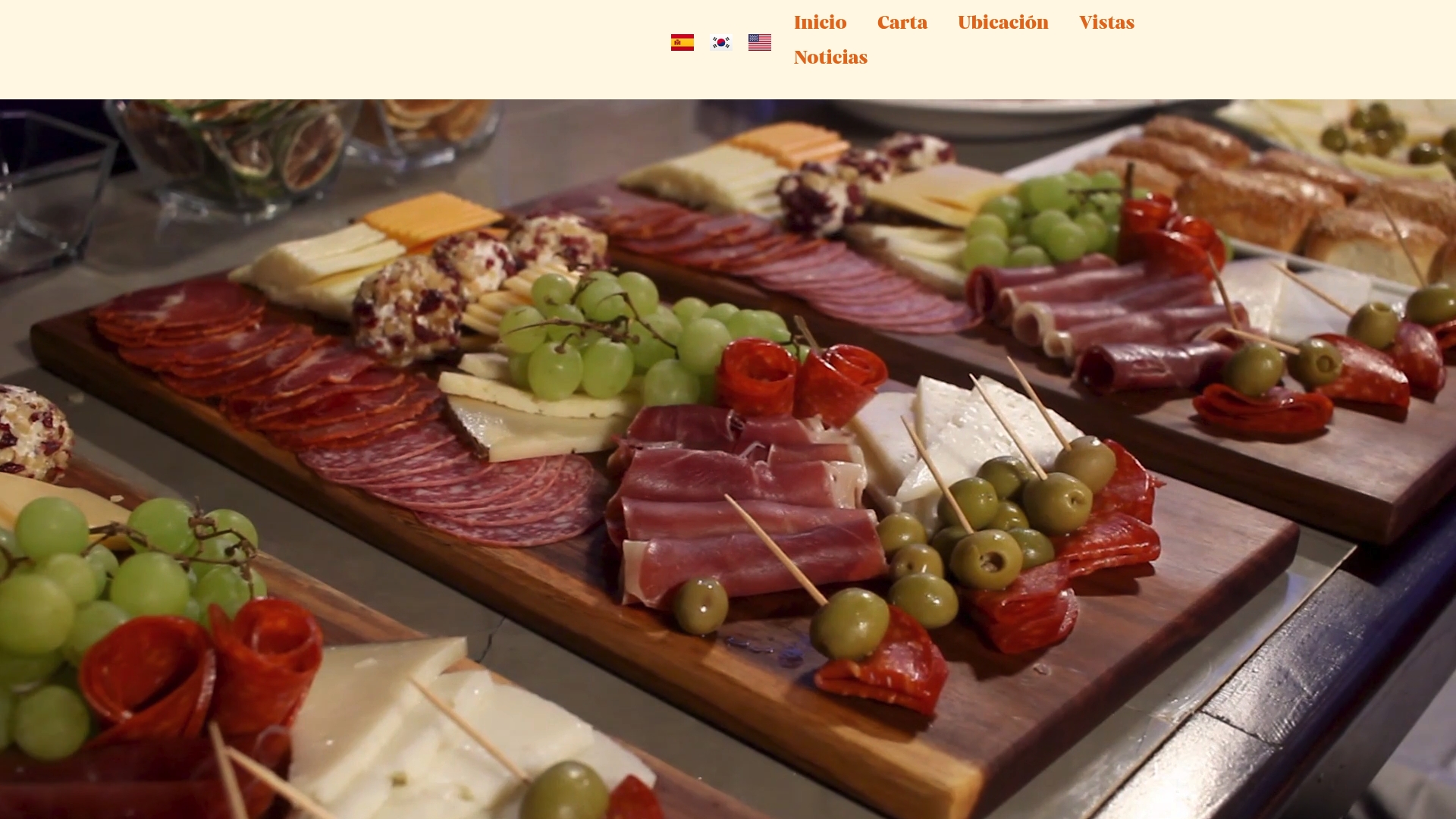
The platforms compared above handle the software side of running a restaurant. Kokcha is the other side of that equation: a Mediterranean dining experience in Barcelona, steps from the Sagrada Familia, where the food and atmosphere are the product. If you’re a restaurant owner evaluating software options and you want to see what a well-run Mediterranean concept looks like in practice, Kokcha’s terrace, menu, and approach to hospitality are worth experiencing firsthand. The Mediterranean menu spans paellas, tapas, seafood, and more, served in an interior and exterior space that balances warmth with a refined edge. It’s a different kind of reference point for what a restaurant can be.
Key Takeaways
Commission-free, multilingual, and fully integrated platforms are the strongest restaurantelsporxos.com alternatives for Central European operators in 2026.
| Point | Details |
|---|---|
| Commission-free ordering saves real money | Aggregators take a substantial commission per order; direct-ordering platforms like Ressto and Nigmet charge no commission. |
| Data silos cost more than you think | Disconnected apps can leak more than €1,600 per month in operational margin for mid-sized restaurants. |
| Multilingual support reduces errors | Nigmet supports 11 languages including Arabic with right-to-left display, cutting staff error rates in diverse teams. |
| Migration support is a deciding factor | Platforms offering done-for-you data migration reduce switching risk and downtime significantly. |
| Kokcha as a reference point | Kokcha is a Mediterranean restaurant near the Sagrada Familia in Barcelona, worth visiting to see a well-run concept in action. |