Barcelona rewards the curious eater at every turn, but nowhere more than at the end of a meal. This guide to Spanish desserts in Barcelona goes beyond the obvious tourist stops to cover what locals actually order, when they eat it, and where the best versions are hiding. The city’s sweet culture blends Catalan tradition with broader Spanish influence, creating a dessert scene that’s genuinely worth planning around. Whether you’re a first-timer or a repeat visitor, knowing the difference between a freshly torched crema catalana and a mediocre imitation will change your entire trip.
Table of Contents
- Key Takeaways
- Traditional Catalan desserts: key classics to try
- Popular Spanish desserts beyond Catalan specialties
- Planning your dessert crawl in Barcelona
- Dietary needs and modern dessert options
- My honest take on Barcelona’s dessert scene
- Experience authentic desserts at Kokcha Barcelona
- FAQ
Key Takeaways
| Point | Details |
|---|---|
| Start with Catalan classics | Crema catalana, mel i mató, and xuixo are the non-negotiable traditional desserts every visitor should try. |
| Time your visits carefully | Many Barcelona granjas close during midday siesta; Sunday afternoons are peak dessert hours. |
| Follow the merienda rhythm | Locals eat sweets in the late afternoon, making 5 p.m. to 7 p.m. the ideal window for churros and pastries. |
| Plan for seasonal specialties | Panellets appear around All Saints Day; mona de pascua arrives at Easter, so timing your trip matters. |
| Dietary needs are covered | Vegan and gluten-free dessert options exist at dedicated shops across the city without sacrificing flavor. |
Traditional Catalan desserts: key classics to try
The formal term for what you’re after is postres tradicionals catalans, though you’ll find these sweets labeled simply as “postre de la casa” on most menus. Each one tells a story about the region’s agricultural roots and Mediterranean pantry.
Crema catalana is the crown jewel. It’s a custard with caramelized sugar on top, flavored with lemon zest and cinnamon, and served at room temperature. Most people assume it’s the same as crème brûlée, but the flavor profile is completely different. French crème brûlée uses heavy cream and vanilla; crema catalana uses milk and leans citrusy and warm with spice. The difference hits you on the first spoonful.
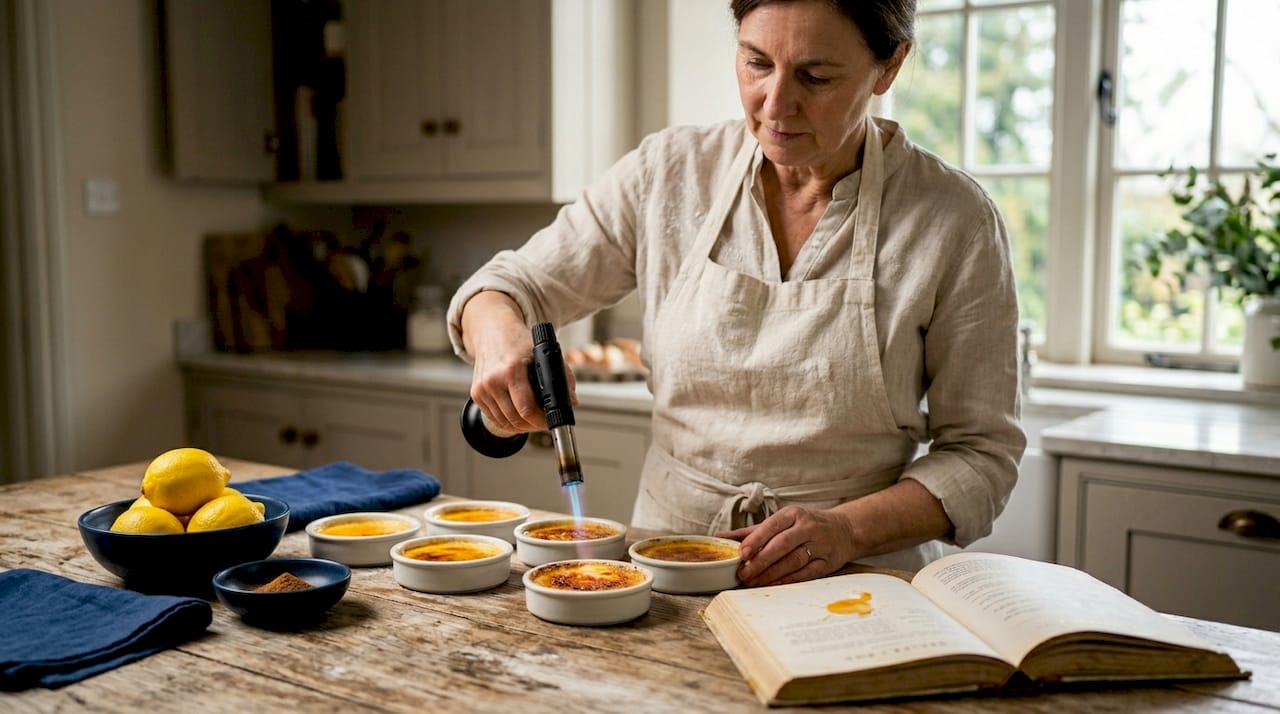
One detail most travelers miss: freshness matters enormously here. Order it freshly torched to get that sharp crack when you tap the sugar crust. A pre-burnt custard left sitting on a counter loses its textural contrast within minutes, and you’ll wonder what the fuss was about.
Mel i mató sits at the opposite end of the complexity spectrum. It’s a fresh cheese with honey, sometimes finished with walnuts, and it’s been on Catalan tables since medieval times. The cheese is made from goat’s milk, mild and slightly grainy, and the honey cuts through with floral sweetness. It’s the kind of dessert that makes you appreciate simplicity. You’ll find it on set-lunch menus throughout the city.
Xuixo is the underdog worth tracking down. This fried cream-filled pastry comes coated in crunchy granulated sugar and was created in Girona in the 1920s before spreading throughout Catalonia. Locals eat it for breakfast or as an afternoon snack, not after dinner. The outside shatters slightly when you bite in, giving way to a smooth custard interior. Pick one up from a good bakery early in the day before they sell out.
Other classics worth your attention:
- Panellets: Small almond paste balls rolled in pine nuts, eaten around All Saints Day in early November. Marcona almonds give them a rich, slightly sweet base that pairs beautifully with a glass of sweet Moscatel.
- Mona de pascua: An elaborately decorated Easter cake that doubles as edible art. Bakeries compete on design during the weeks before Easter, and the results can be stunning.
- Coca: A flat, sweet bread that appears in dozens of regional variations depending on the season and the neighborhood.
Pro Tip: Ask specifically for “crema catalana” rather than “crème brûlée.” Some tourist-focused restaurants use the French name for essentially the same dish, but the authentic Catalan version uses milk instead of cream and will always taste lighter and more citrus-forward.
Popular Spanish desserts beyond Catalan specialties
Barcelona doesn’t exist in a culinary bubble. The city absorbs influences from across Spain, and several non-Catalan desserts have become part of everyday life here.
Churros with hot chocolate top the list for most visitors, and for good reason. The ritual of dunking a fried dough strip into a thick, almost pudding-like chocolate is a sensory experience that photographs can’t capture. The key is knowing where to go, because quality varies wildly.
- Granja Dulcinea on Carrer del Petritxol in the Gothic Quarter is the classic choice for thick, serious chocolate. Go between 5 p.m. and 7 p.m. for the full merienda experience.
- La Pallaresa, also on Carrer del Petritxol, serves a whipped cream version called suís that’s lighter and more playful. The two shops are practically next door, so you can compare.
- Xurreria Laietana opens early in the morning, making it the right call if you want churros for breakfast rather than as an afternoon treat.
Each spot has its own operating hours and style, so checking before you go saves a wasted trip.
Flan appears on menus across the city in several forms. The classic version is a firm egg custard with a dark caramel sauce pooled underneath. Restaurant versions sometimes go softer and creamier, almost like a panna cotta in texture. Both are worth trying to understand the range.
Turrón is technically a Christmas confection from Alicante, but you’ll find it year-round in specialty shops and as a dessert ingredient. The hard variety is made from almonds and honey, while the soft version resembles marzipan. It’s a good edible souvenir that actually tastes like Spain rather than an airport gift shop.
Seasonal desserts like mona de pascua also reflect how deeply Barcelona’s sweet culture runs. These aren’t just holiday treats. They’re community rituals that connect people to place and time of year.
Pro Tip: Pair churros with a café amb llet (coffee with milk) instead of hot chocolate if you’re eating them in the morning. The chocolate version is rich enough to serve as dessert on its own, and locals often save it for the afternoon when the sweetness feels right.
Planning your dessert crawl in Barcelona
Building a good dessert route takes some thought. The city’s rhythm doesn’t match most tourists’ instincts, and showing up at the wrong time means locked doors and disappointment.
The concept of merienda is your organizing principle. This is the Spanish afternoon snack break, typically falling between 5 p.m. and 7 p.m. Granjas and pastry shops come alive during this window, and you’ll be eating alongside locals rather than other tourists. The merienda is specifically suited to lighter, fried, or ready-to-eat sweets like xuixo and churros rather than heavier custards, which feel more natural after lunch or dinner.
Here’s a practical comparison of timing and dessert types to guide your planning:
| Dessert | Best time to eat | Where to find it |
|---|---|---|
| Crema catalana | After lunch or dinner | Traditional restaurants, menú del día |
| Churros with chocolate | 5 p.m. to 7 p.m. | Granjas in Gothic Quarter, Eixample |
| Xuixo | Morning or merienda | Neighborhood bakeries (pastisseries) |
| Mel i mató | Lunch set menu | Traditional Catalan restaurants |
| Panellets | October to November | Pastisseries citywide |
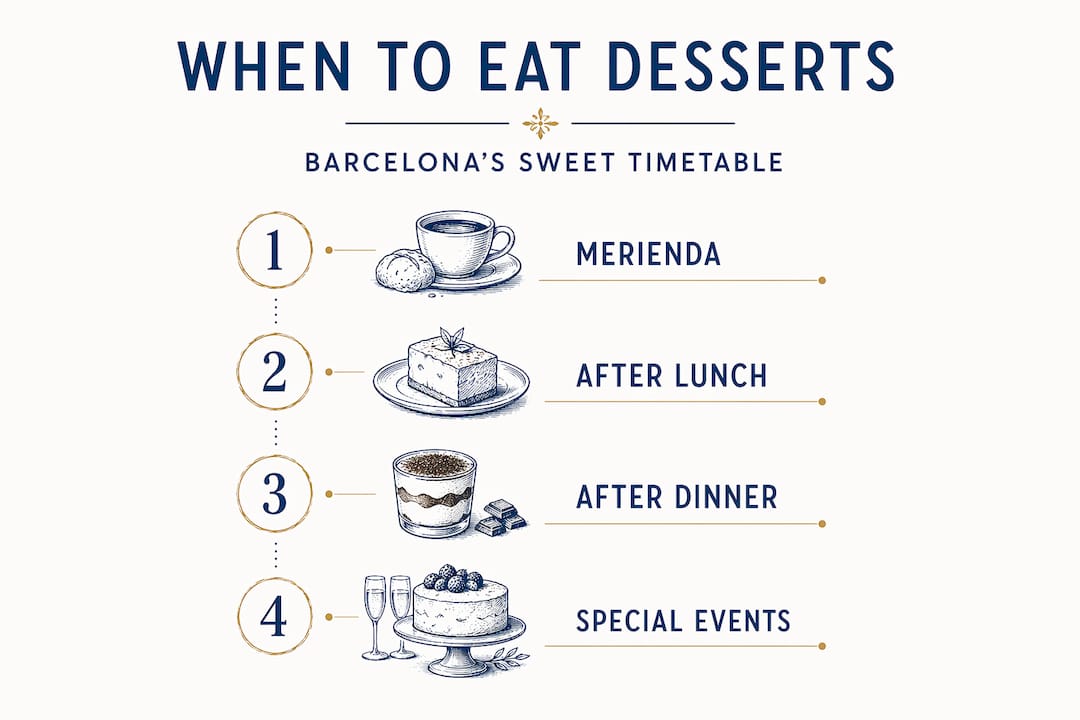
Neighborhood strategy matters too. The Gothic Quarter concentrates the most historic granjas, but the Eixample district offers a mix of traditional and contemporary pastry shops. Gràcia tends toward local and slightly less touristy options. If you’re already visiting the Sagrada Família area, several excellent pastry shops operate nearby with rotating daily specialties.
A few practical notes on timing and logistics:
- Many granjas close during midday siesta, typically from around 1 p.m. to 4 p.m. Plan your custard and churros stops outside this window.
- Sunday afternoons are peak times at most sweet shops. Expect lines at popular spots and bring patience.
- Bakeries often sell out of xuixo and other filled pastries by mid-morning on weekends.
Pro Tip: Build your route around texture variety. A balanced tasting experience moves from smooth custard to creamy cheese-honey to fried pastry rather than doubling up on similar textures. Your palate stays engaged longer, and you’ll eat more without feeling overwhelmed.
Dietary needs and modern dessert options
The assumption that traditional Spanish sweets are inaccessible to people with dietary restrictions is outdated. Barcelona has responded to changing needs without abandoning flavor.
Vegan and gluten-free options are now available at dedicated shops across the city:
- Hanai Vegana offers plant-based versions of classic Spanish pastries that hold up in both flavor and texture.
- Jansana carries a rotating selection of allergy-friendly sweets, including some traditional recipes adapted for gluten-free diets.
- CrudiCakes focuses on raw and vegan desserts that use ingredients like dates and nuts to recreate familiar flavor profiles.
- Several churros shops now operate certified gluten-free fryers, keeping your order separate from wheat-containing batches. The gluten-free shapes are often visually distinct so servers can tell them apart at a glance.
For communicating dietary needs, a few Spanish phrases go a long way. “Soy celíaco/a” (I have celiac disease) or “Soy vegano/a” (I am vegan) are understood at most modern establishments. In Catalan, “Tinc al·lèrgia a…” (I am allergic to…) followed by the ingredient works in the city’s more traditional spots.
Plant-based gelato has also become a reliable option at artisan gelateries throughout the city, with oat milk and coconut bases that don’t compromise on creaminess. Mel i mató is naturally dairy-based, but some vegan-friendly spots offer a nut milk curd with local honey as a close alternative.
My honest take on Barcelona’s dessert scene
I’ve eaten my way through Barcelona’s sweet spots more times than I can count, and the one thing I’d tell every food traveler is this: stop chasing the famous and start chasing the fresh.
The most memorable desserts I’ve had in this city weren’t at landmark granjas on well-worn tourist maps. They were at small neighborhood pastisseries where the xuixo came out of the fryer while I was still placing my order, or at a family-run restaurant where the crema catalana was torched at the table without anyone making a production of it.
The counterintuitive truth is that Barcelona’s dessert culture rewards patience and timing more than it rewards effort. You don’t need to find a secret spot. You just need to show up at the right hour, in the right state of appetite, and let the rhythm of the city guide you. Merienda is not a marketing concept. It’s a daily reset that locals genuinely observe, and sitting down for churros at 6 p.m. with a newspaper or a phone-free hour will give you a completely different experience than rushing in at noon.
I also think people underestimate how well traditional Catalan cooking sets up the desserts. Eating a proper meal first means the sweetness lands differently. You’re not compensating for anything. You’re completing something.
— Kokcha
Experience authentic desserts at Kokcha Barcelona
If you want to taste where traditional Mediterranean flavors and thoughtful dessert craftsmanship meet in one place, Kokcha is worth your time. Located steps from the Sagrada Família, the restaurant brings together the best of Catalan and broader Mediterranean cuisine in a setting that works equally well for a long lunch or a celebratory dinner.
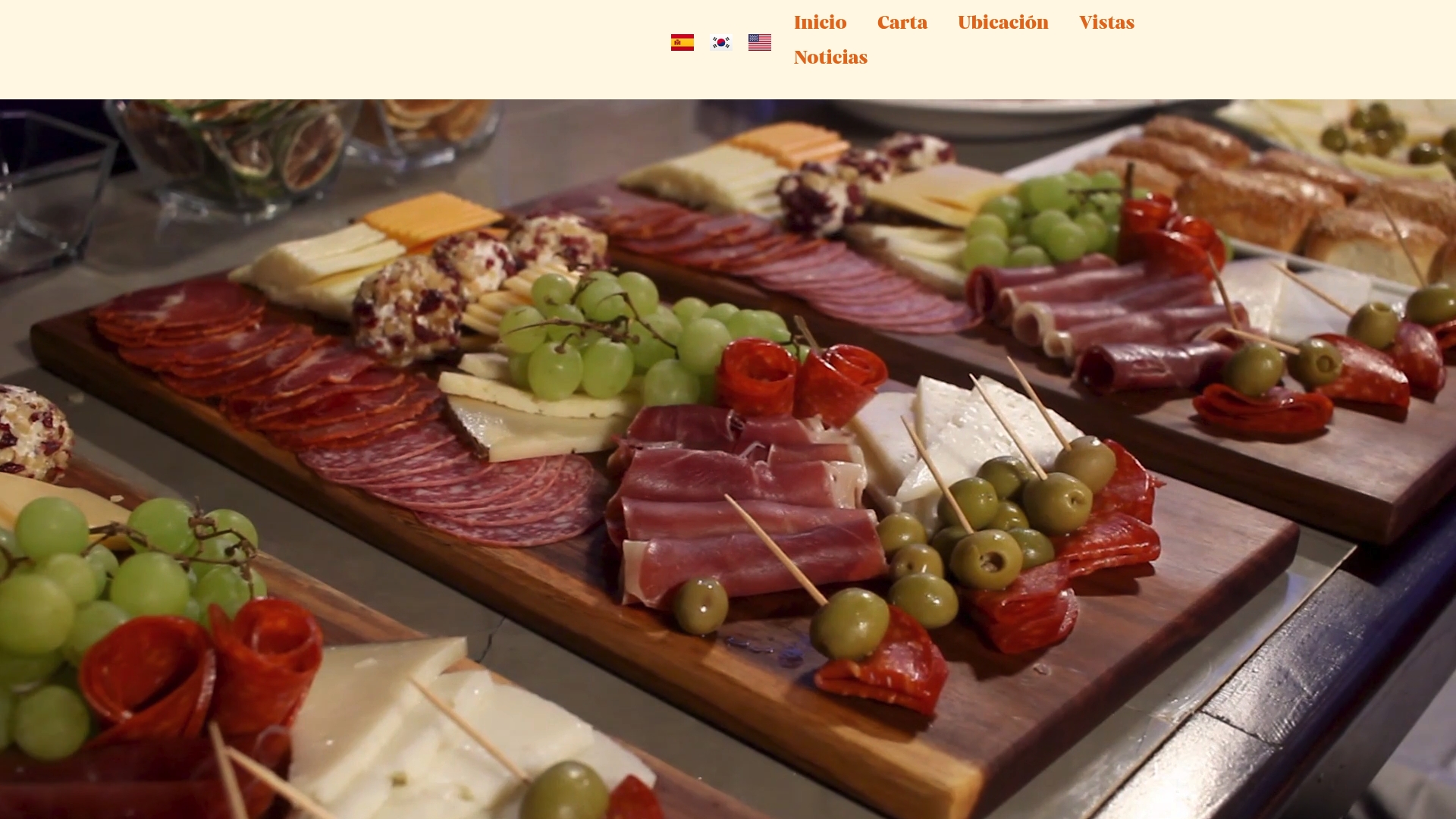
Kokcha’s dessert menu reflects the same respect for local tradition that defines the rest of the kitchen, with crema catalana prepared properly and seasonal sweets rotating throughout the year. The Mediterranean dining experience here extends well beyond the main course. Pair your dessert with a glass of something local, take a seat on the terrace, and you’ll understand why Barcelona’s food culture is worth the trip in the first place. Reservations are recommended, especially on weekends. Visit Kokcha’s full menu to plan your visit.
FAQ
What is a traditional Spanish dessert?
A traditional Spanish dessert is typically a regional sweet with roots in local ingredients and customs. Examples include crema catalana from Catalonia, flan from across Spain, churros with thick hot chocolate, and turrón from Alicante.
Where can you find churros in Barcelona?
The best spots for churros in Barcelona are concentrated in the Gothic Quarter, with Granja Dulcinea and La Pallaresa on Carrer del Petritxol being the most well-known. Xurreria Laietana opens early for morning visits.
When is the best time to eat desserts in Barcelona?
The best time is during merienda, the local afternoon snack break between 5 p.m. and 7 p.m. Heavier desserts like crema catalana are best enjoyed after lunch or dinner, while fried pastries like xuixo suit the morning or late afternoon.
Is crema catalana the same as crème brûlée?
No. While both feature a caramelized sugar crust, crema catalana uses milk instead of heavy cream and is flavored with lemon zest and cinnamon rather than vanilla, giving it a distinctly lighter, citrus-forward taste.
Are there vegan or gluten-free desserts available in Barcelona?
Yes. Shops like Hanai Vegana, Jansana, and CrudiCakes offer plant-based and allergy-friendly desserts. Some churros shops also use dedicated gluten-free fryers to prevent cross-contamination.